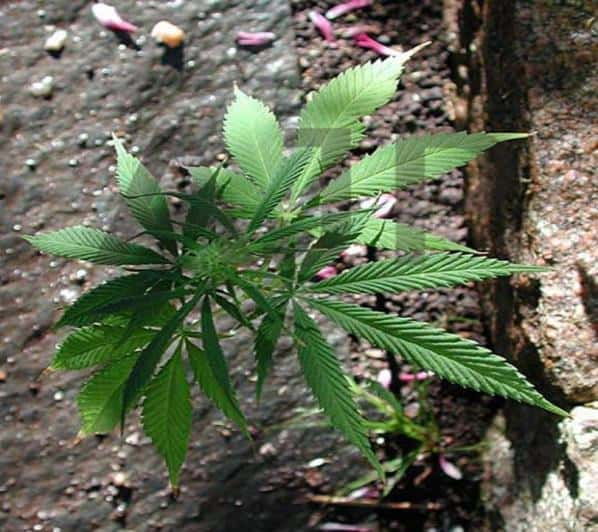
Botanical Name: Cannabis sativa Linn
Family : Cannabinaceae
Identification No.: SDACH/HG/010
Introduction:
Bhanga is a narcotic plant. It appears to be in abundant use during the period of Atharva Samhita. It mainly acts on CNS. Antidote for this plant are rare, so it is better to avoid its usage.
Synonyms:
“भङ्गा मातुलानी गञ्जा मादिनी च विजया।”
(Bhanga, Matulani, Ganja, Madini, Vijaya)
Vijayaa, Bhangaa, Maadani, Maatulaani, Indraasana,
Trailokya-vijayaa, Tribhuvanavijayaa, Shukranaashana, Ganjaa, Bhangaa.
Cannabis indica Linn
Names in Different Languages:
English : Hemp,Indian Hemp
Hindi : Bhang,ganja,caras
Kannada : Bhangi
Malayalam : Kancavu,sivamuli
Sanskrit : Bhanga
Tamil : Ganca, bhamgi
Telugu : Ganjay
Unani : Bhang,Charas,Qinnab
Morphology:
A tall annual herb, 1.2-4.9 m high;
stem— erect, angular.
Leaves— palmately divided.
Flowers— small, greenish, unisexual; male borne in long dropping panicles and female in short axillary spikes.
Fruit— an ovate flat seed-achene, having sping growth.
Flowers and fruits in April-May.
Habitat & Distribution:
Found in sub-Himalayan tract (Native of central and western Asia) in waste places. Also cultivated for narcotic drug.
Chemical constituents:
Cannabinol, tetrahydro-cannabiol, Cannabidiol, Cannabichromene, dehydro-tetrahydrocannabinol, eugenol, sesquiterpenes, cannabinoids etc.
Properties:
Rasa: Tikta
Guna: Laghu, Tiksna, Vyavãyi
Virya :Usna
Vipka : Katu
Karma : Kapha-vãtahara, Dipanapacana, Grahi
Hallucinogenic, hypnotic, nsedative, analgesic, anti-inflammatory
Indications:
Atisãra, Grahani, Agnimandya, Anidrã, Amlapitta, Jalasañtrãsa, Dhanusthambha, Nidranasa, Rakta pradara, Madãtyaya, süla etc.
Part Used: Leaves
Dosage: Bhanga leaf Powder 125-250 mg; Gañjã 60-125 mg; Charas 30 mg
Important Yogas or Formations:
Jätiphalãdi Curna, Madanänanda modaka
Important research work going on:
(1) action on CNS
(2)Sedative action
(3) prepare to use cancerous patients
(4) Analgestic action
Amayika Prayoga (Therapeutic Uses):
(1) Atisara— Bhañga is made into pills with Udumbara ksira will be useful (S.B.M.).
(2) Yoni sañkoca— Bhanga is kept in a piece of cloth and introduced into vagina for three hours. This will lead to contracture of vaginal musculature (Y.R.).
(3) Kustha— Bhanga should be taken with honey and ghee (V.M.).
IUCN Status:
Not evaluated (Cultivated widely, not endangered).
Research Updates (Past 5 Years):
1. 2021: Study on CBD for anxiety relief (Journal of Ayurveda).
2. 2019: Research on THC’s analgesic properties in chronic pain (AYU Journal).
3. 2020: Review on Bhang’s role in neurological disorders (CCRAS Publication).