Botanical Name: Hibiscus rosa-sinensis
Family: Malvaceae
Identification No.: SDACH/HG/041
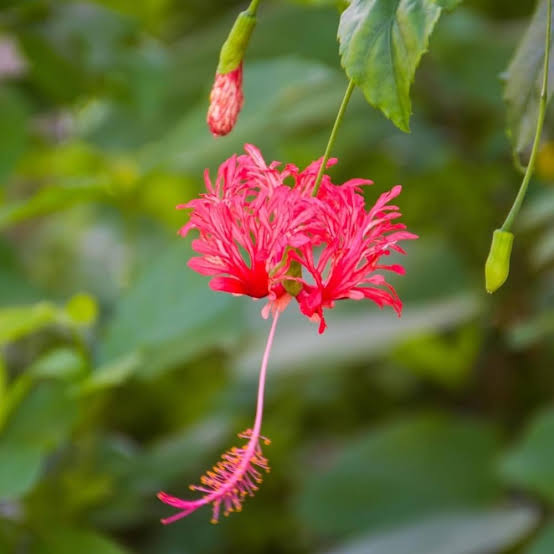
Introduction : Hibiscus rosa-sinensis is a bushy, evergreen shrub or small tree growing 2.5–5 m (8–16 ft) tall and 1.5–3 m (5–10 ft) wide, with glossy leaves and solitary, brilliant red flowers in summer and autumn. The 5-petaled flowers are 10 cm (4 in) in diameter, with prominent orange-tipped red anthers.
The flowers of Hibiscus rosa-sinensis are edible and are used in salads in the Pacific Islands.[citation needed] The flower is additionally used in hair care as a preparation. It is also used to shine shoes in certain parts of India. It can also be used as a pH indicator. When used, the flower turns acidic solutions to a dark pink or magenta color and basic solutions to green. It is also used for the worship of Devi, and the red variety is especially prominent, having an important part in tantra. In Indonesia, these flowers are called “kembang sepatu”, which literally means “shoe flower”. In several countries the flowers are dried to use in a beverage, usually tea.
Pink Hibiscus in South India
Hibiscus rosa-sinensis is considered to have a number of medical uses in Chinese herbology. It may have some potential in cosmetic skin care; for example, an extract from the flowers of Hibiscus rosa-sinensis has been shown to function as an anti-solar agent by absorbing ultraviolet radiation
Names in different Indian languages :
English : Rose-of-China, Shoe flower, Chinese Hibiscus.
Hindi : Jasum, java, odhul
Kannada : dasavala
Malayalam : chemparatti
Sanskrit : Japaa
Tamil : semparatti
Telugu : Dasana, mandara
Unani : Gul-e-Gurhal
Synonyms :
Japaa, Javaa, Odrapushpa, Rudrapushpa, Arunaa
Amayika Prayoga / Therapeutic Uses:
Internal uses :
used in impotency, bronchial catarrh emmenagogue. Leaf stimulates expulsion of placenta after childbirth; laxative, anodyne, used in menorrhagia.
Chemical constituents :
cyclopropanoids, methyl sterculate, methyl- hydroxysterculate, hydroxysterculate, malvalate and beta-sitosterol.
IUCN Status: Not Evaluated
Research Updates (Past 5 years):
1. 2023 – Journal of Herbal Medicine: Hibiscus extract studied for its potential in reducing oxidative stress in diabetic patients.
2. 2021 – Evidence-Based Complementary and Alternative Medicine: Japa flowers showed wound-healing activity in excision wound models.
3. 2019 – Pharmacognosy Reviews: Detailed review on Hibiscus rosa-sinensis highlighting its anti-fertility and hair growth-promoting effects.