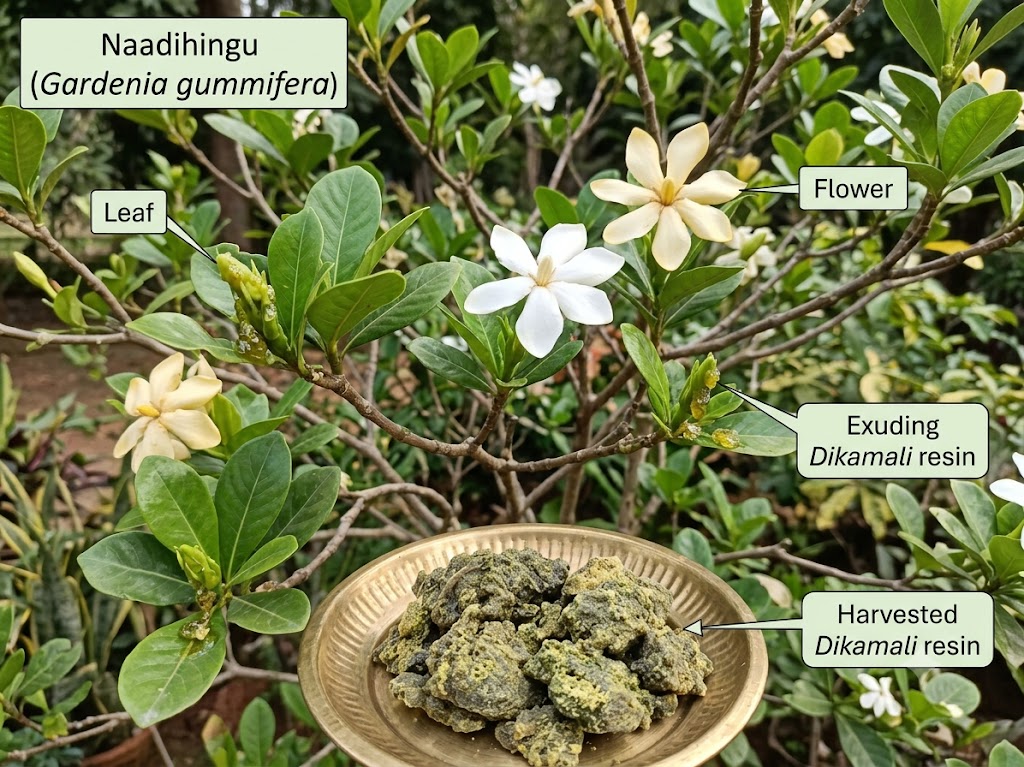
Botanical Name : Gardenia gummifera Linn. f.
Family : Rubiaceae
Identification No.: SDACH/HG/055
Introduction :
Latin name: Gardenia = (cape jasmin) American Dr. Garden (Gardinca was the favourite buttonhole of Edwardians); gummifera = oozing latex.
Scientific classification: Gardenias belong to the family Rubiaceae. The Cape jasmine is classified as Gardenia jasminoides. The two common greenhouse shrubs of the United States are classified as Gardenia thunbergia and Gardenia rothmannia. The dwarf species from Japan is classified as Gardenia radicans floreplana
Names in different Indian languages :
English : Gummy Cape Jasmine
Hindi : Dikamali
Kannada : Bikkegidha
Malayalam : Somanadikayam, gandharajan
Sanskrit : Naadihingu
Tamil : Dikkamalli, Kambil, Sinna Kambil.
Telugu : Cittamalli, bikki
Unani : Dikaamaali.
Synonyms :
Venupatrikaa, Naadihingu, Hingushi vaatikaa. Hingupatrikaa, Hingupatri
Gardenia arborea Roxb.
Gardenia inermis Dietr.
Varieties & adulterants – (CV – controversy, AD – adulterants) :
Gardenia resinifera
Morphology :
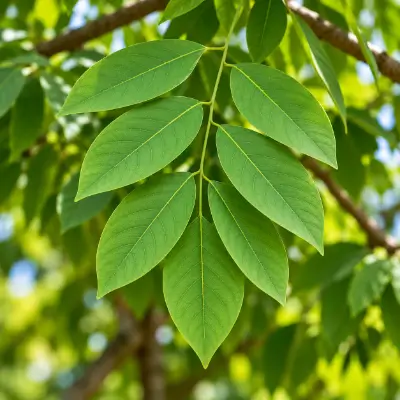
The shrub is small, leaves resembling guava leaves but are slightly big and long. A yellow coloured latex oozes out from its branches on piercing the bark and from the angles of leaf stalks. It solidifies on exposure to air. Since it has an odour similar to asafoetida, it is called hingupatri. A small tablet of dikamali held in the mouth does not dissolve easily.
Leaves – simple, elliptic-oblong
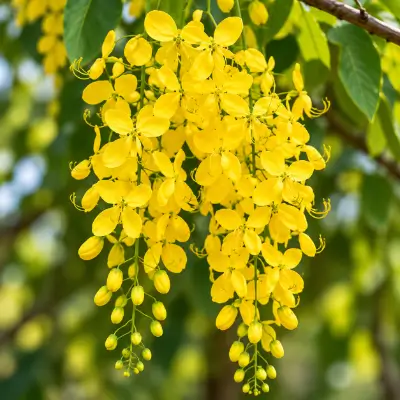
Flower – white, axillary
Fruit – berry
Distribution & Habitat :
Throughout India
Chemical constituents :
gardenin, de-Me-tangeretin , nevadensin; wogonins, isoscutellarein, apigenin , de-MeO-sudachitin
Properties :
Guns: laghu, ruksha, tikshna;
Rasa: katu, tikta;
Virya: ushna;
Vipaka:katu
Karma :
Hridya, kapha vatahara, dipanam
carminative, antispasmodic, stimulant, diaphoretic, anthelmintic, antiseptic, expectorant
Indication :
Manoroga, medas,
Nervous disorder, Ulcers, wounds, fever, skin disease, cough
Part used :
Resin
Dosage :
Powder 1-2 g
External uses :
It is antimicrobial, wound healing and analgesic. It is useful in toothache and teething problems of children (robbing latex to the gums).and anthelmintic.
Internal uses :
It is an appetite, indigestion, constipation, flatulence. ascites. piles, intestinal parasites etc. It is one of the best medicine . for the alimentary tract, It is useful in tape worms. Latex with lemon juice is useful in cardiac disorders and splenomegaly by expelling vata and enhancing peristalsis. It is also useful in chronic cough, breathlessness, hiccups and skin diseases. In malaria, it is used fur reducing the fever, cold and rigors. It is a lipolytic and therefore used in lipid disorders