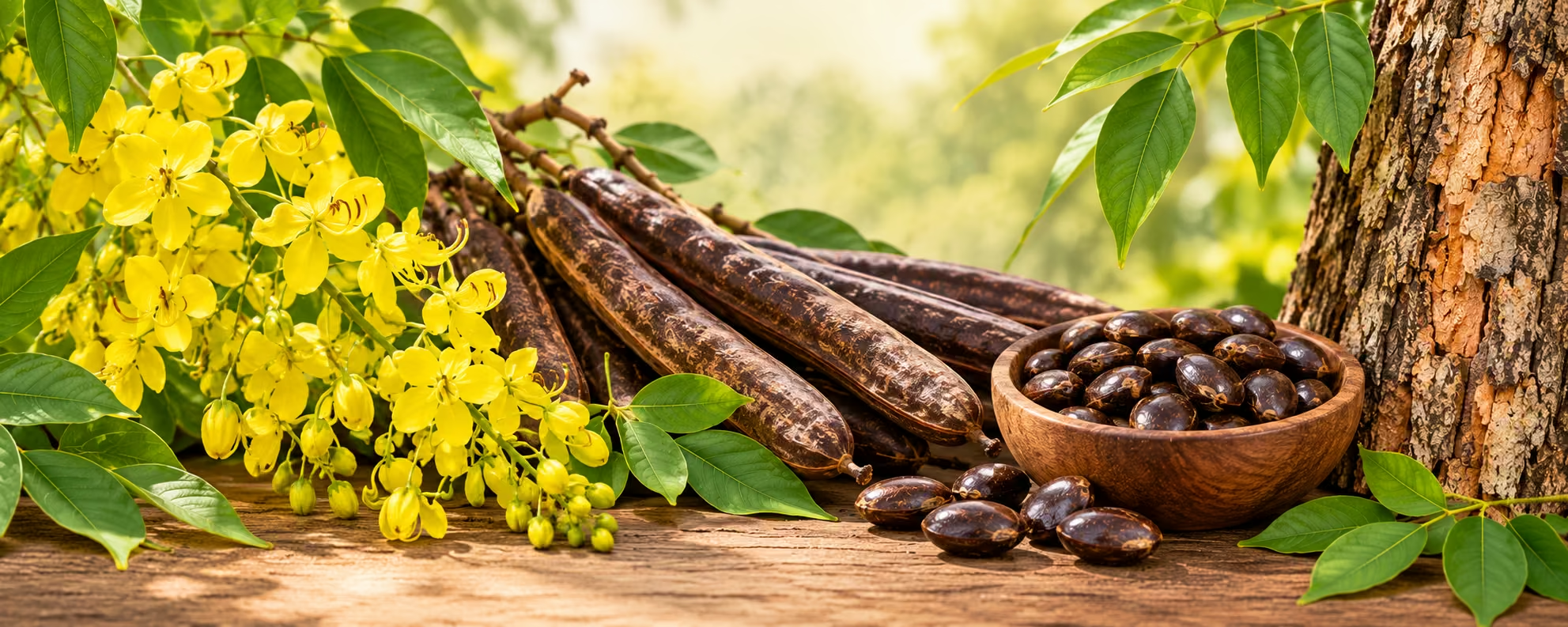
Botanical name: Ginkgo biloba L.
Family name: Ginkgoaceae
Identification No.: SDACH/HG/124
Introduction : Ginkgo biloba, or maidenhair, is a tree native to China that has been grown for thousands of years for a variety of uses. Because it’s the only surviving member of an ancient order of plants, it’s sometimes referred to as a living fossil. While its leaves and seeds are often used in traditional Chinese medicine, modern research primarily focuses on ginkgo extract, which is made from the leaves. Ginkgo supplements are associated with several health claims and uses, most of which focus on brain function and blood circulation.
12 Benefits of ginkgo biloba :
1. Contains Powerful Antioxidants
Ginkgo’s antioxidant content may be the reason behind many of its health claims. Ginkgo contains high levels of flavonoids and terpenoids, which are compounds known for their strong antioxidant effects. Antioxidants combat or neutralize the damaging effects of free radicals. Free radicals are highly reactive particles that are produced in the body during normal metabolic functions, such as converting food to energy or detoxification. Yet, they also have the potential to damage healthy tissues, contributing to accelerated aging and disease development.
Research on ginkgo’s antioxidant effects is promising. However, it remains unclear exactly how it works and how effective it may be at treating specific diseases.
SUMMARY
Ginkgo contains potent antioxidants, which fight the damaging effects of free radicals and may be behind most of its health claims.
2. Can Help Fight Inflammation
Inflammation is part of the body’s natural response to injury or invasion by a foreign substance. In the inflammatory response, various components of the immune system are recruited to fight against the foreign invader or heal the injured area.
Some chronic diseases trigger an inflammatory response even when there is no illness or injury present. Over time, this excessive inflammation can cause permanent damage to the body’s tissues and DNA.
Years of animal and test-tube research shows that ginkgo extract can reduce markers of inflammation in both human and animal cells in a variety of disease states (2Trusted Source, 5Trusted Source, 6Trusted Source).
Some specific conditions in which ginkgo extract has shown to reduce inflammation include:
Arthritis
Irritable bowel disease (IBD)
Cancer
Heart disease
Stroke
While this data is encouraging, human studies are needed before drawing concrete conclusions about ginkgo’s role in treating these complex diseases.
SUMMARY
Ginkgo has the ability to reduce inflammation caused by various conditions. This may be one of the reasons it has such broad health applications.
3. Improves Circulation and Heart Health
In traditional Chinese medicine, ginkgo seeds were used to open “channels” of energy to different organ systems, including the kidneys, liver, brain and lungs. Ginkgo’s apparent ability to increase blood flow to various parts of the body may be the origin of many of its supposed benefits.
One study in people with heart disease who supplemented with ginkgo revealed an immediate increase in blood flow to multiple parts of the body. This was attributed to a 12% increase in levels of circulating nitric oxide, a compound responsible for dilating blood vessels. Similarly, another study showed the same effect in older adults who were treated with ginkgo extract.
Additional research also points to ginkgo’s protective effects on heart health, brain health and stroke prevention. There are multiple potential explanations for this, one of which may be the anti-inflammatory compounds present in the plant. More research is needed to fully understand how ginkgo affects circulation and heart and brain health.
SUMMARY
Ginkgo can increase blood flow by promoting the dilation of blood vessels. This may have applications for the treatment of diseases related to poor circulation.
4. Reduces Symptoms of Psychiatric Disorders and Dementia
Ginkgo has been repeatedly evaluated for its ability to reduce anxiety, stress and other symptoms associated with Alzheimer’s disease and cognitive decline associated with aging. Overall, research results are inconsistent in this area. Some studies show a marked reduction in the rate of cognitive decline in people with dementia using ginkgo, but others fail to replicate this result.
A review of 21 studies revealed that when used in conjunction with conventional medicine, ginkgo extract may increase functional capabilities in those with mild Alzheimer’s. Another review evaluated four studies and found a significant reduction in a spectrum of symptoms associated with dementia when ginkgo was used for 22–24 weeks. These positive results could be related to the role that ginkgo may play in improving blood flow to the brain, especially as it relates to vascular types of dementia. Overall, it’s too soon to definitively state or refute ginkgo’s role in treating dementia, but recent research is beginning to make this piece clearer.
SUMMARY
It cannot be concluded that ginkgo treats Alzheimer’s and other forms of dementia, but it might help in some cases. The chances of it helping seem to increase when used alongside conventional treatment.
5. Improves Brain Function and Well-Being
There is some speculation that ginkgo may enhance brain function in healthy individuals. A handful of small studies support the notion that supplementing with ginkgo may increase mental performance and perceived well-being. Results from studies like these have given rise to claims linking ginkgo to improved memory, focus and attention span. However, a large review of research on this relationship concluded that supplementing with ginkgo did not result in any measurable improvements in memory, executive function or attention capacity. While supplementing with ginkgo may improve mental capability, there are no guarantees.
SUMMARY
Some research shows that ginkgo may improve mental performance in healthy people, but the data is inconsistent.
6. Can Reduce Anxiety
Some research indicates that supplementing with ginkgo may reduce symptoms of anxiety. A handful of animal studies have observed reductions in anxiety symptoms that may be attributed to the antioxidant content of ginkgo. In one study, 170 people with generalized anxiety were treated with either 240 mg or 480 mg of ginkgo or a placebo. The group treated with the highest dose of ginkgo reported a 45% greater reduction in symptoms of anxiety, compared to the placebo group. While supplementing with ginkgo may reduce anxiety, it’s still too early to draw any definitive conclusions from the available research.
SUMMARY
Some research shows that ginkgo may help treat anxiety, though this is likely due to its antioxidant content.
7. Can Treat Depression
A review of animal studies suggests that supplementing with ginkgo may help treat symptoms of depression. Mice who received ginkgo before an unavoidable stressful situation were less emotionally affected by the stress than the group that did not receive the supplement.
The study indicated that this effect was related to ginkgo’s anti-inflammatory properties, which improve the body’s ability to cope when stress hormone levels are high. Nonetheless, depression is a complex condition that may have a variety of root causes. More research is needed to better understand the relationship between ginkgo and how it may affect depression in humans.
SUMMARY
Ginkgo’s anti-inflammatory effects give it the potential to treat depression. More research is needed.
8. Can Support Vision and Eye Health
Very little research has investigated how ginkgo relates to vision and eye health. However, early results are promising. One review showed that people with glaucoma who supplemented with ginkgo experienced increased blood flow to the eye, but this didn’t necessarily translate to better vision.
Another review of two studies evaluated the effect of ginkgo extract on the progression of age-related macular degeneration. Some participants reported an improvement in vision, but this wasn’t statistically significant across the board.
Many of these positive results seem to be related to increased blood flow to the eye. It’s unclear if ginkgo would improve vision in those who don’t already suffer from vision impairment. More research is needed to determine whether ginkgo can increase vision capacity or slow the progression of degenerative eye disease.
SUMMARY
Some early research shows that supplementing with ginkgo may increase blood flow to the eyes but not necessarily improve vision. More research is needed.
9. Can Treat Headaches and Migraines
In traditional Chinese medicine, ginkgo is a very popular treatment for headaches and migraines. Very little research is available on ginkgo’s ability to treat headaches. However, depending on the root cause of the headache, it may help. For example, it’s well known that ginkgo has anti-inflammatory and antioxidant effects. If a headache or migraine is caused by excessive stress, ginkgo may be useful.
Additionally, if a headache is related to reduced blood flow or constricted blood vessels, ginkgo’s ability to dilate blood vessels may improve symptoms. On the contrary, some migraines are caused by the excessive dilation of blood vessels. In this situation, ginkgo may have little to no effect. But these examples are just inferences and don’t substitute hard evidence. If you want to try ginkgo for your migraines, it’s unlikely that it will cause much harm. Just be aware that it may not necessarily help.
SUMMARY
Because of its ability to increase blood flow and reduce inflammation, ginkgo may be an effective treatment for some types of headaches.
10. Can Improve Asthma and COPD Symptoms
Some research indicates that ginkgo may improve symptoms of asthma and other inflammatory respiratory diseases like COPD. This is attributed to the anti-inflammatory compounds in ginkgo, which may allow for reduced inflammation of the airways and increased lung capacity. One study in 75 people evaluated the use of ginkgo extract alongside glucocorticosteroid medication therapy for managing asthma symptoms.
The levels of inflammatory compounds in the saliva of those who received ginkgo were significantly lower than those who received traditional medication alone. Another study in 100 people evaluated the use of a mixture of Chinese herbs, which included ginkgo, for treating COPD symptoms. Those who used the herbal formula reported a considerable reduction in cough and bronchitis at a three-month follow-up, compared to the control group. At this point, it cannot be determined if this improvement can be attributed to ginkgo alone, or if it was a synergistic effect of the other herbs used in the treatment group formula. While these results are encouraging, more research on this specific application of ginkgo is needed.
SUMMARY
Ginkgo may treat symptoms associated with respiratory diseases because of its anti-inflammatory effects. More research is needed.
11. Reduces PMS Symptoms
Preliminary research indicates that ginkgo may help treat both the physical and psychological symptoms of premenstrual syndrome (PMS). One study in 85 college students revealed a 23% reduction in reported PMS symptoms when consuming ginkgo. Interestingly, the placebo group in this study also experienced a slight reduction in PMS symptoms, though it was much lower at 8.8%. Further research is needed to better understand the cause and effect relationship between ginkgo and PMS symptoms.
SUMMARY
Ginkgo may help reduce PMS symptoms, but more research is needed.
12. Treats Sexual Dysfunction
Some sources indicate that ginkgo may treat sexual dysfunction, such as erectile dysfunction or low libido. Ginkgo has the ability to improve blood levels of nitric oxide, which improves circulation via the dilation of blood vessels. As a result, ginkgo may also be useful for treating various symptoms of sexual dysfunction by improving blood flow to those areas of the body.
Some research has investigated using ginkgo to treat sexual dysfunction caused by the use of antidepressant drugs (SSRIs). Results indicated that ginkgo wasn’t any more effective than a placebo in these cases. Additionally, there may be an interaction between ginkgo and SSRI medications, which could render them less effective. One study evaluated the use of ginkgo to increase sexual desire and contentment in women who were concurrently undergoing sexual psychotherapy .
The combination of ginkgo and therapy were effective over a longer term compared to a placebo, but supplementing with ginkgo alone was not. The rationale for using ginkgo to treat sexual dysfunction makes sense, but research does not support it at this time.
SUMMARY
Ginkgo may improve symptoms of sexual dysfunction due to its impact on blood flow. However, research has not proven it to be effective.
Potential Side Effects :
It’s important to talk to your doctor before including ginkgo in your routine. For most adults, the risk associated with taking ginkgo is relatively low, but there are cases in which ginkgo could cause serious harm. If you are allergic to plants that contain alkylphenols or taking certain medications, you should not take ginkgo.
Possible side effects include :
Nausea
Diarrhea
Dizziness
Headaches
Stomach pain
Rash/allergic reaction
Ginkgo has the potential to interact unfavorably with certain medications. Some interactions could increase the risk of bleeding.
Possible adverse medication interactions include :
Blood thinners (Warfarin, aspirin)
SSRIs/MAOIs/antidepressants (Prozac, Zoloft)
NSAIDS (ibuprofen, Tylenol)
SUMMARY
As with any supplement, it’s important to consult your doctor before taking ginkgo biloba and stop use if you develop any negative side effects or adverse medication interactions.
Dosage and Supplement Forms :
Ginkgo biloba is commercially available in the following forms:
Capsules
Tablets
Liquid extracts
Dried leaves/tea
Most of the current research reflects results used with purified ginkgo extract. Do not eat raw ginkgo seeds, as they are poisonous. One of the limitations of the studies on ginkgo is that they did not use standardized dosing. However, the bulk of the evidence seems to support the safety of taking 120–240 mg divided into several doses throughout the day. There is no clearly defined maximum dosage, but it’s wise to start with a lower dose and work your way up to ensure tolerance. Most research has not evaluated doses greater than 600 mg per day, so it’s probably not a good idea to exceed this amount.
Remember, it can take up to six weeks before you begin to notice any effects.
SUMMARY
Ginkgo comes in various forms and seems to be most effective when taken in several doses throughout the day that total 120–240 mg.
The Bottom Line :
Ginkgo biloba has strong anti-inflammatory and antioxidant capacities and an ability to improve circulation. Together, these characteristics have the potential to affect numerous body systems and diseases, although the science behind it still has some catching up to do.
While ginkgo has been used for centuries, it’s not completely understood how it works. Much of the available research is inconsistent or inconclusive, and it’s important to keep that in mind. As with any herbal supplement, there are risks involved. Ginkgo could lead to serious health complications if you are allergic or taking certain medications. If you’re thinking of including ginkgo in your regimen, be sure to consult your doctor first.
IUCN Status: Endangered (wild populations); cultivated widely
Research updates:
1. 2020: Systematic review supports cognitive benefits in mild dementia (Frontiers in Aging Neuroscience).
2. 2021: Ginkgo extract showed neuroprotective activity in ischemic models (Journal of Ethnopharmacology).
3. 2023: Meta-analysis confirmed efficacy in tinnitus management (Phytomedicine).