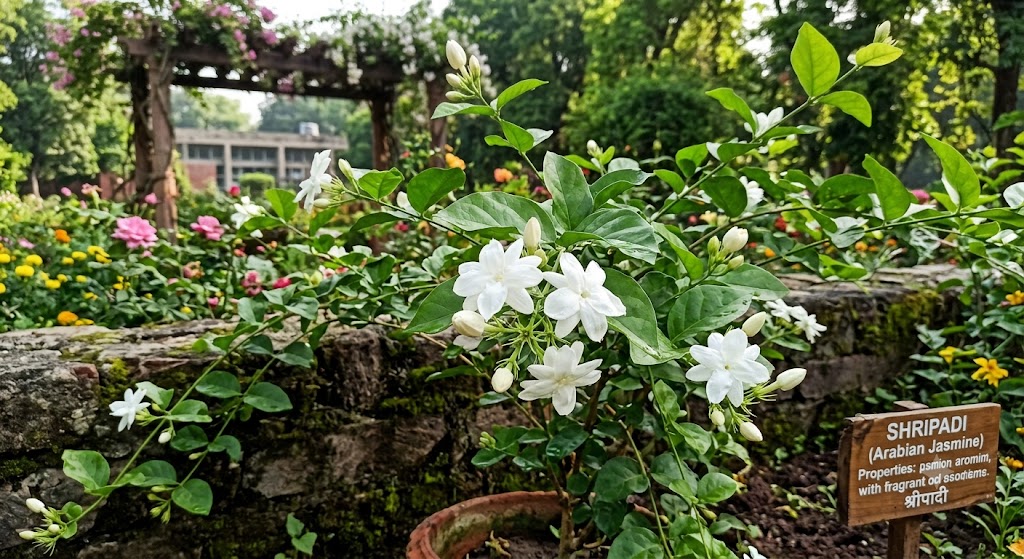
Sanskrit Name: Shripadi
Identification No: SDACH/HG/129
Botanical Name: Jasminum sambac
Family Name:
Oleaceae
Vernacular Names:
Hindi: Mogra, Chameli
Marathi: Jai
Tamil: Malligai
Kannada: Mallige
Telugu: Mallepuvu
Malayalam: Mullappoo
English: Arabian Jasmine
Other Names: Mallika, Madanmadini, Madanapriya
Classification
Bhavaprakasha: Pushpavarga (under swaran jati)
Habitat & Distribution:
Widely cultivated across tropical and subtropical regions of India. Prefers warm, sunny climates and well-drained soils. Grown in gardens and near temples for its aromatic and sacred flowers.
Morphology
Root: Woody, branched, fibrous
Stem: Erect or climbing shrub, green when young, turning woody
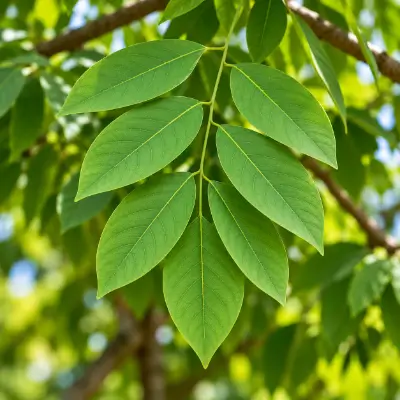
Leaves: Simple or trifoliate, ovate, opposite, smooth margin
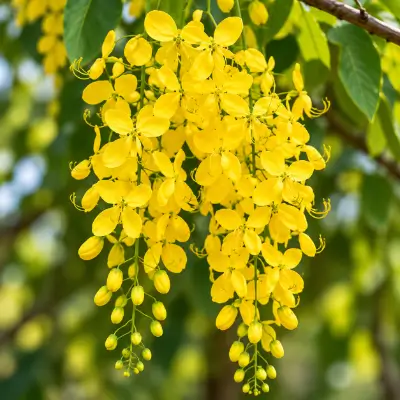
Flowers: White, fragrant, small, borne in clusters, bloom at night
Fruit: Rarely seen in cultivated varieties; small berries when present
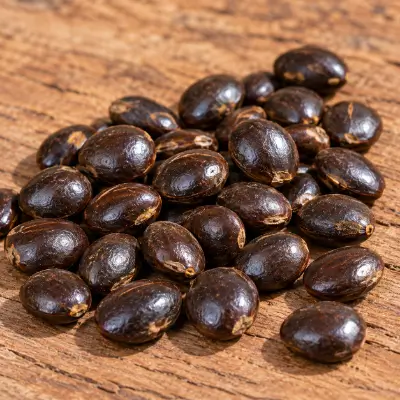
Seeds: Tiny, brownish-black, rarely formed
Varieties:
Substitute / Adulterant:
Substitute: Jasminum officinale (common jasmine)
Adulterant: Non-aromatic white flowering shrubs like Wrightia tinctoria
Phytochemicals:
- Essential oils (linalool, benzyl acetate, indole)
- Flavonoids
- Triterpenoids
- Saponins
- Alkaloids
- Sterols
- Coumarins
- Jasminin (glycoside)
Rasapanchaka:
Rasa: Madhura, Tikta
Guna: Laghu, Snigdha
Virya: Sheeta
Vipaka: Madhura
Prabhava: Hridya, Sugandhitva
Dosha Shamakta: Pitta-Vata shamak
Karma (Rogaghnata):
Varnya (enhances complexion)
Amayika Prayoga / Therapeutic Uses:
External:
Used in skin conditions for its cooling and anti-inflammatory effects
Applied as paste on wounds and swellings
Essential oil used in aromatherapy to relieve stress and anxiety
Infused flowers used for eye conditions and bathing
Internal:
Juice or decoction of flowers used for gastritis, indigestion
Helpful in cardiac debility, palpitations
Used in diarrhea and colitis
Mild sedative in insomnia and restlessness
Flower tea for stress relief and general wellness
Part Used:
Flowers, Leaves, Root
Dose:
Fresh flower juice: 10–15 ml
Leaf juice: 5–10 ml
Churna (powdered root or leaves): 1–3 g
Decoction: 20–40 ml
Essential oil: Few drops (aromatherapy/external use)
Yoga / Formulations:
- Mallika pushpa arka
- Jasmine tea
- Herbal oils with Mallika for massage and relaxation
- Used in many proprietary Ayurvedic beauty and stress-relief products
IUCN Status:
Not Evaluated (NE).
Research Updates
- Kumar et al., 2021 – Evaluated anxiolytic and antidepressant activity of J. sambac flower extract in mice; showed comparable effects to diazepam.
- Sharma & Gupta, 2020 – Demonstrated antimicrobial activity of J. sambac essential oil against Staphylococcus aureus and E. coli.
- Rao et al., 2019 – GC-MS analysis confirmed high presence of linalool and benzyl acetate; supports traditional use in aromatherapy and perfumery.