Botanical Name
Thymus vulgaris Linn.
Family Name
Lamiaceae
Identification No.: SDACH/HG/215
Vernacular Names
- English: Thyme, Common Thyme
- Hindi: Banajwain
- Marathi: Banajwain
- Tamil: Thaim Mooligai
Classical Classification
Not listed in Charaka, Sushruta, Vagbhata, or Bhavaprakasha.
Habitat & Distribution
Native to the Mediterranean region; now cultivated in India (mainly temperate zones), Europe, and North Africa. Grows well in dry, sunny areas.
Morphology (Based on standard botany and herbals)
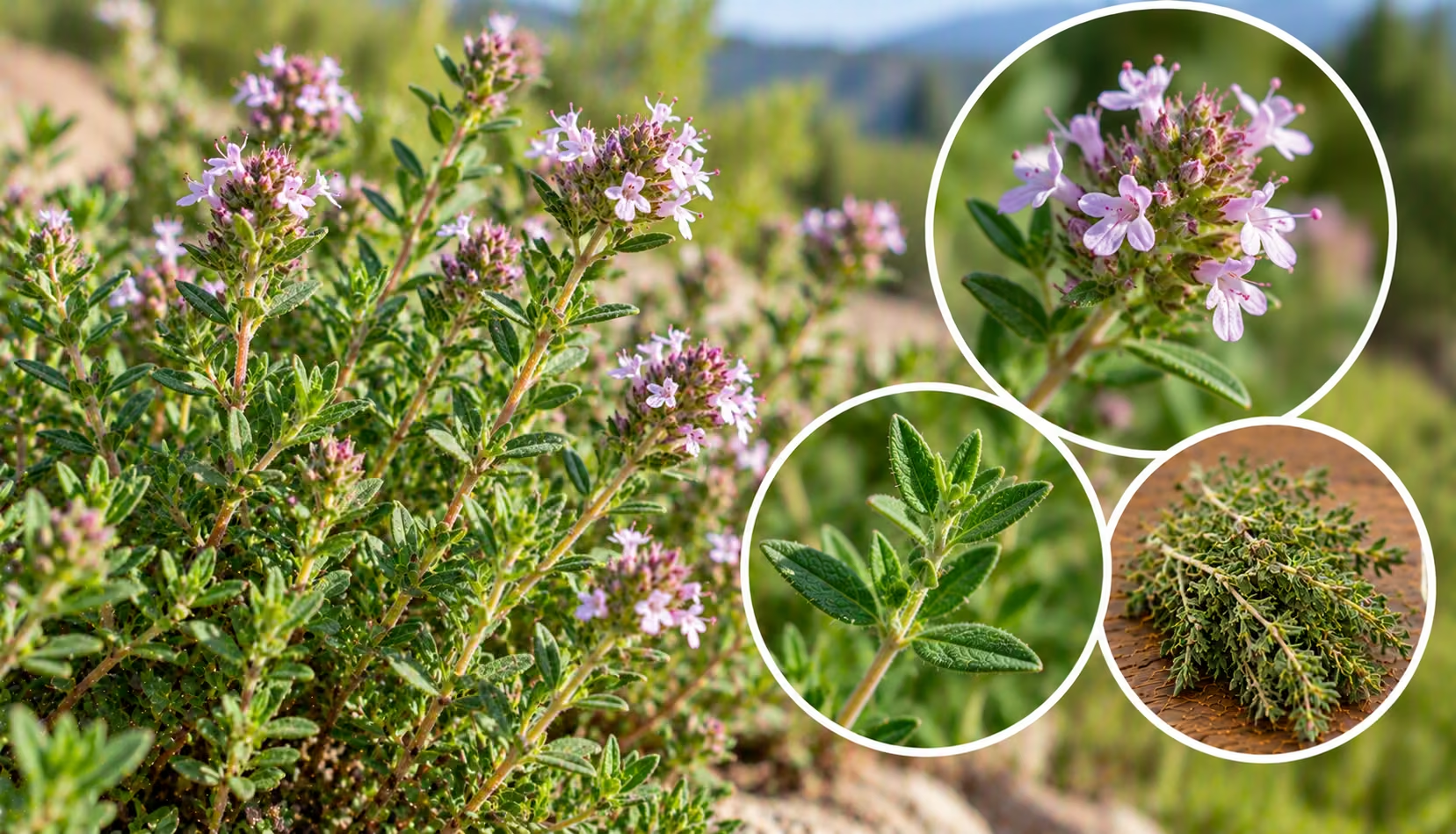
- Plant: Small, aromatic, evergreen shrub
- Leaves: Small, elliptical, green to grey-green, strongly aromatic
- Flowers: Small, tubular, pale pink to purple, in clusters
- Stem: Woody at the base with soft herbaceous branches
Varieties
- Thymus vulgaris var. citriodorus (Lemon thyme)
- Thymus serpyllum (Wild thyme)
- Thymus zygis
Substitute/Adulterant
Occasionally adulterated with Origanum or other aromatic herbs like Ocimum or Plectranthus.
Phytochemicals
Thymol, carvacrol, p-cymene, linalool, flavonoids, rosmarinic acid, ursolic acid, tannins, saponins
Raspanchaka
- Rasa: Katu, Tikta
- Guna: Laghu, Ruksha, Tikshna
- Virya: Ushna
- Vipaka: Katu
- Prabhava: Shwasahara, Krimighna
- Doshashamaka: Kapha-Vatahara
Karma (Rogaghnata)
- Krimighna
- Shwasahara
- Deepana
- Jvaraghna
- Kasahara
- Vranaropana
- Hridya
Amayika Prayoga / Therapeutic Uses
External
- Oil used for massage in respiratory conditions
- Antiseptic wash for wounds and ulcers
Internal
- Effective in cough, cold, bronchitis, asthma
- Used as a carminative and digestive stimulant
- Beneficial in intestinal parasites and indigestion
- Supports immunity and acts as an antioxidant
Part Used
Leaves and flowering tops
Dose
- Churna: 0.5–1 g
- Infusion: 50–100 ml
- Essential oil: 1–3 drops (diluted)
Yoga / Formulations
Used in various modern herbal teas, expectorants, and essential oil-based products. Incorporated into some proprietary Ayurvedic and Unani syrups for respiratory issues.
IUCN Status
Least Concern (LC)
Research Updates
- Potent antimicrobial activity: Thymol-rich extracts of Thymus vulgaris have been shown to inhibit a wide range of bacterial and fungal pathogens, supporting its use in infections and respiratory ailments.
- Antioxidant potential: The presence of flavonoids and phenolic compounds provides strong free radical scavenging activity, making it beneficial in preventing oxidative stress-related diseases.
- Respiratory support: Studies confirm its expectorant and bronchodilator effects, helping in the treatment of asthma, bronchitis, and chronic cough.