Botanical name : Cestrum diurnum
Family : Solanaceae
Identification No.: SDACH/HG/227
Introduction :
Cestrum diurnum is a species of Cestrum, native to the West Indies. Common names include day-blooming cestrum, day-blooming jessamine, and day-blooming jasmine. Also known as Din ka Raja (king of the day), in Urdu and Hindi. The scent of this quick-growing and evergreen woody shrub, often used for screens and borders, is released by day. Cestrum diurnum is easily propagated from the seed, which it produces in abundance.
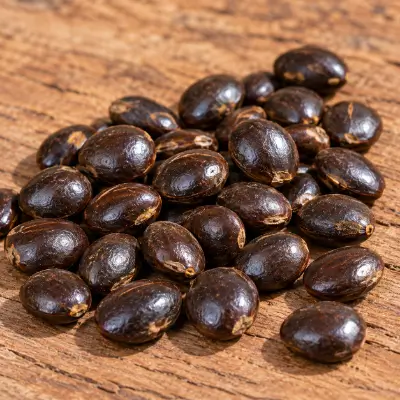
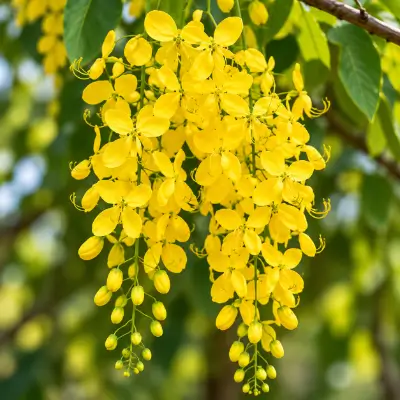
A lesser known cousin of the more famous night blooming jasmine (cestrum nocturnum) Cestrum diurnum’s clusters of tubular white flowers have a modest sweet fragrance, a chocolate scent – nothing like the intoxicating aroma of C. nocturnum, but pleasant. Unlike it cousine, this one is fragrant during the day. Day jasmine has an upright habit attaining a height of between 5 to 10 feet tall and 2 to 3 feet wide. The leaves are dark green and glossy. One inch, tubular, white, fragrant blooms appear in clusters in the summer. The bloom petals are bent backwards. The blooms are mildly fragrant during the day and the fragrance intensifies in the late evening and after dark. The blooms are followed by 1/4 inch green fruit which turn a glossy black or eggplant purple. The fruits are poisonous (affect the nervous system) to humans and other mammals.
Vernacular Names
- English: Day Jasmine, Wild Jessamine
- Hindi: Din-ka-Raja
- Marathi: Din Rani
- Tamil: Pagal Malligai
- Telugu: Pagala Malle
- Kannada: Dinada Mallige
- Malayalam: Pakal Malli
Morphology :
It is an erect evergreen woody shrub with numerous leafy branches. The branches, which are green and with well-marked white lenticels when young, fawn with age. The younger parts are covered with a very sparse glandular scruf.
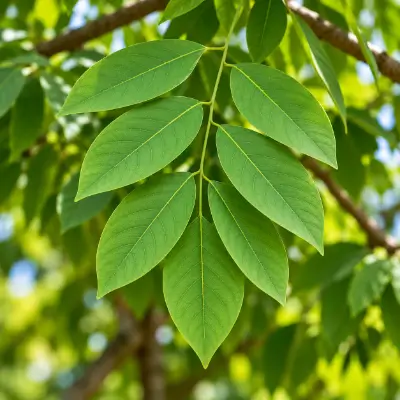
The leaves are simple, glabrous, entire, alternate, ex-stipulate, ovate-lanceolate in shape with obtuse apex and obtusely wedge-shaped below. They are dark green above and pale below and are generally 5 inches long by 1.5 inches wide. The leaves are petiolate with petioles of 0.5 inch length.
The Inflorescence consists of a long axillary peduncle which bears short clusters of sweet white-smelling flowers, each cluster supported by a leaf-like bract. The individual flowers are sessile and may be with or without bracteoles.
Calyx is gamo-sepalous, about 0.15 in long, somewhat puberulent, obtusely 5-ribbed and 5-lobed with obtuse, ciliate lobes.
Corolla tube is narrowly infundibuliform, white, sweet-scented, about half-inch lobed with five lobes. The lobes are very obtuse and completely recurved when the flower is fully open.
Stamens oblong, five in number, alternate with the corolla lobes, brown in colour, included. Filaments adnate to the tube, free for a very short distance.
Ovary seated on a nectar-secreting disk. The style is filiform and glabrous. The stigmas are truncate-capitate.
Cestrum diurnum has a black, nearly globular berry.
Distribution :
A native of the West Indies, it is widely cultivated in gardens throughout India.
Raspanchaka
- Rasa: Tikta, Kashaya
- Guna: Laghu, Ruksha
- Virya: Ushna
- Vipaka: Katu
- Prabhava: Vata-Kaphahara
- Doshashamaka: Kapha-Vatahara
Karma
- Shothahara
- Vishaghna
- Jwaraghna
- Krimighna
- Kushtaghna
Amayika Prayoga / Therapeutic Uses
External
- Leaf paste used for treating skin infections, swelling, and wounds
Internal
- Traditionally used in fevers, fungal infections, and skin diseases
- Caution advised due to presence of vitamin D analogs that may cause toxicity if overused
Part Used
Leaves, roots
Dose
- Leaf decoction: 20–30 ml
- Powder: 500 mg to 1 g (under supervision)
Yoga / Formulations
Used in ethnomedicine and regional folk practices; not part of classical Ayurvedic texts
IUCN Status
Not Evaluated (NE)
Research Updates
- Vitamin D source: Leaves contain active vitamin D analogs and are studied for potential use in treating hypocalcemia and rickets.
- Antimicrobial properties: Extracts exhibit inhibitory effects against various bacterial and fungal strains.
- Anti-inflammatory activity: Demonstrates reduction in experimentally induced inflammation and edema, supporting traditional use in swelling and joint issues.