Shri Dhanwantry Ayurvedic College

Author: Khushal

  • Bhandira

    Bhandira

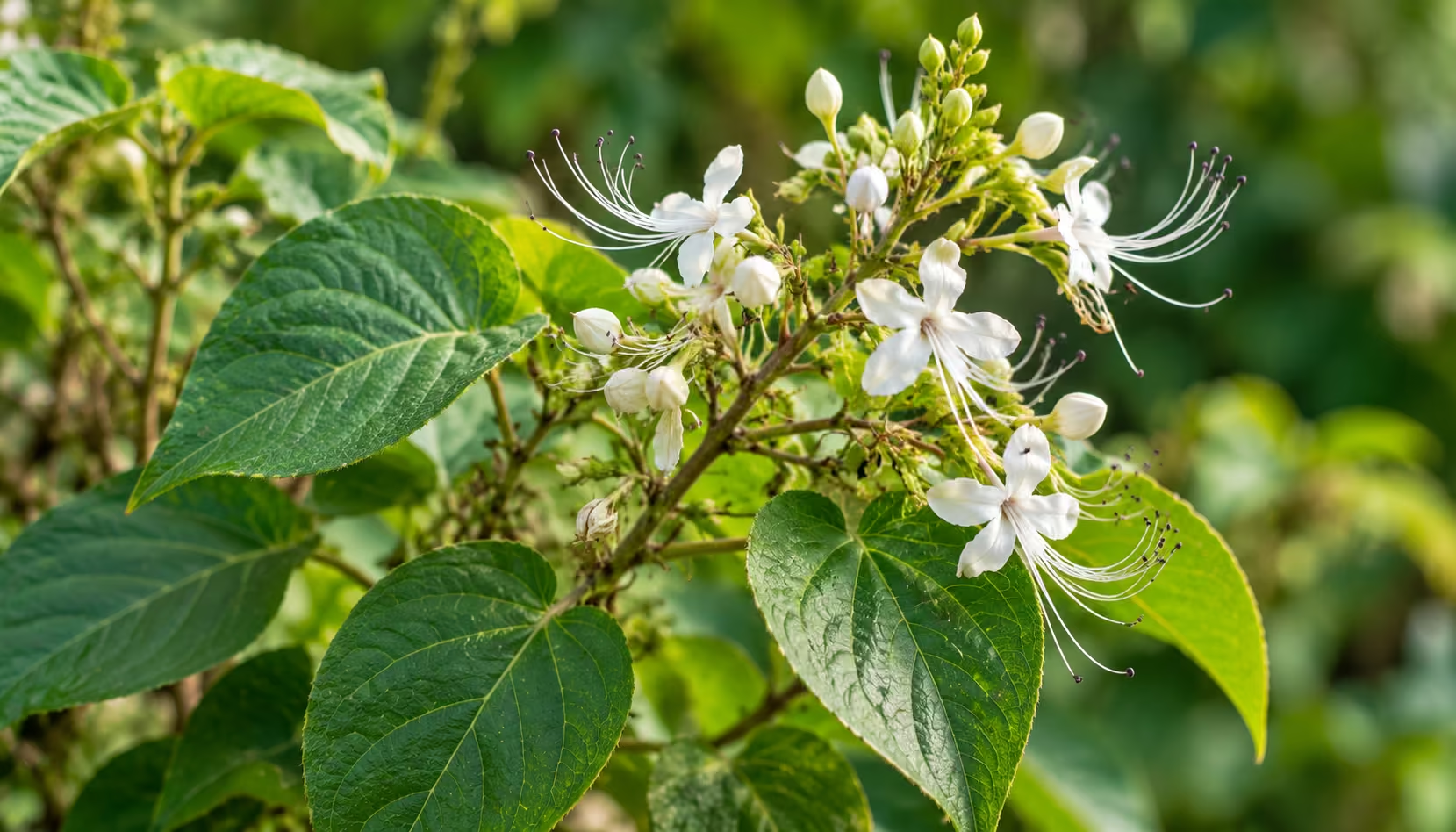
    Botanical Name : Clerodendrum infortunatum auct. non Linn. C.B.Clarke.

    Family : Verbenaceae.

    Identification No. – SDACH/HG/136

    Introduction :

    This plant used in Ayurveda, homeo and folk medicine for constipation and piles.

    Names in different Indian languages :

    Hindi : Titabhamt, Bhates

    Kannada : Basavana pada, ibbane

    Malayalam : Peruku

    Sanskrit : Bhandirah

    Tamil : Perukilai, Karukanni

    Telugu : Gurrapu katiyaku

    Synonyms :

    Bhaandira, Bhaandi, Kaari,

    C. viscosum auct. Non Vent.

    Varieties & adulterants – (CV – controversy, AD – adulterants) :

    C. serratum

    Morphology :

    It is a shrub grows 5-6 m

    Leaves – cordate, simple, hairy, large,

    Flower – white, terminal panicle

    Fruit – drupes

    Distribution & Habitat :

    All over India

    Chemical constituents :

    ceryl alcohol,clerodin, clerosterol and clerodendrin A

    Properties :

    RASA- tiktha, kashaya

    GUNA-laghu

    VIRYA-ushna

    VIPAKA-katu

    Karma : garbasangajith, krimighna, kasaghna

    Laxative, thermogenic, bitter , analgesic

    Internal uses :

    Digestive system: purgative

    Skin: Skin disease

    Indication :

    Krimi, jwara, madhumeha

    Alopecia, skin disease, worm infection, piles

    Part used :

    Leaves, root

    Dosage :

    1-2 g

    Amayika Prayoga (Therapeutic Uses):

    1. Leaves are prescribed in headache.

    2. Roots are given in cramps and rheumatism.

    3. water boiled with root used for ‘avaghaha’ for painful piles.

     IUCN – Current Status: Not Evaluated (NE)

    About Bhandira

    Botanical Name

    Clerodendrum infortunatum auct. non Linn. C.B.Clarke.

    Family

    Verbenaceae

    Identification No.

    SDACH/HG/136

    Parts Used

    Leaves, root

    Habitat

    All over India

    IUCN Status

    Not Evaluated (NE)

    Plant Photos

    Ayurvedic Properties

    Rasa

    tiktha, kashaya

    Guna

    laghu

    Virya

    ushna

    Vipãka

    katu

    Contact Now

    Have queries? Contact Us.

    Have queries? We’re here to help you every step of the way.

    Contact us to get the right guidance for your academic journey at Shri Dhanwantry Ayurvedic College.

  • Kusha

    Kusha

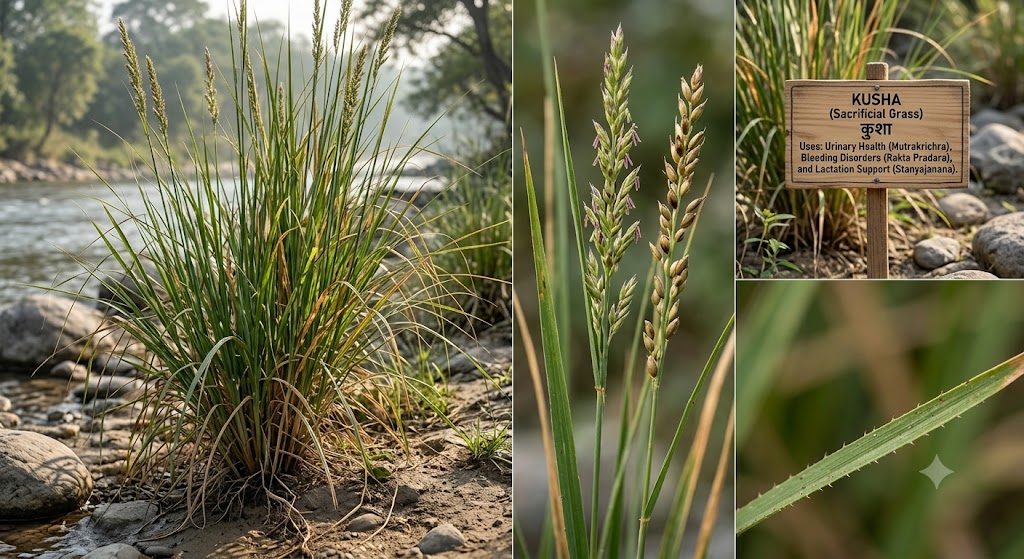
    Botanical Name : Desmostachya bipinnata Stapf.

    Family : Gramineae; Poaceae

    Identification No. SDACH/HG/134

    Introduction :

    Latin name: Desmostachya – desmo = woolly. stachyus = spiked; bipinnata – bi= two, pinnata = having feathers.

    Names in different Indian languages :

    English : Sacrificial Grass

    Hindi : Dab, davoli

    Kannada : Darbha

    Malayalam : Darbha, darbhappullu

    Sanskrit : Kusha, darbha

    Tamil : Tharubai, darbhaipul

    Telugu : Dharbha, kusa dharbha

    Synonyms :

    Kusha, Suuchyagra, Yagyabhuushana, Brahmapavitra, Tikshna, Kshurapatra, raja darbha

    Eragrostis cynosuroides Beauv.

    Morphology :

    A shrub 2.5 cms. to 2.5 mirs. high with a long lifespan.

    Roots – deep and strong.

    Leaves – arise from the root having length 1 mtrs and width 2 mtrs.

    They are pointed at the tip with tiny and string thorns on both the edges. flower stalk – 15 cm. to 45 cm. long and straight.

    Seeds – 0.75 cm. long, ovoid and flat, flowering in monsoon and fruits come in winter. Darbha belongs to the same variety. It has long and rough leaves.

    Distribution & Habitat :

    All over India

    Properties :

    Guna : laghu, snigdha;

    Rasa : madhur. kashaya;

    Vipaka : madhur;

    Virya : sheeta;

    Dosha   pittakaphaghna.

    Karma :

    Tridoshaghnam, sukla rakta shudikaram

    cooling, diuretic, galactagogue, astringent

    Indication :

    urinary calculi, menorrhagia, dysentery, diarrhea, skin diseases

    Part used :

    Root

    Dosage :

    Powder 2-4 g

    Decoction 50-100 ml

    Internal uses :

    As it is haemostatic, it is used in diarrhoea and dysentery with bleeding per rectum. menorrhagia and other bleeding disorders. It is a galactogoque. It has diuretic and lithotripsic properties. hence it is used in dysuria and calculi. Its decoction is helpful in skin disorders.

    Important Yogas or Formations :

    Trinapanchamool kwath, Kushavaleha. Kushadya ghrit.

    IUCN

    Current Status:Least Concern (LC)


    About Kusha

    Botanical Name

    Desmostachya bipinnata (L.) Stapf

    Family

    Poaceae (Gramineae)

    Identification No.

    SDACH/HG/134

    Parts Used

    Root

    Habitat

    India

    IUCN Status

    Least Concern

    Plant Photos

    Ayurvedic Properties

    Rasa

    Madhura, Kashaya

    Guna

    Laghu, Snigdha

    Virya

    Sheeta

    Vipãka

    Madhura

    Contact Now

    Have queries? Contact Us.

    Have queries? We’re here to help you every step of the way.

    Contact us to get the right guidance for your academic journey at Shri Dhanwantry Ayurvedic College.

  • Karamarda

    Karamarda

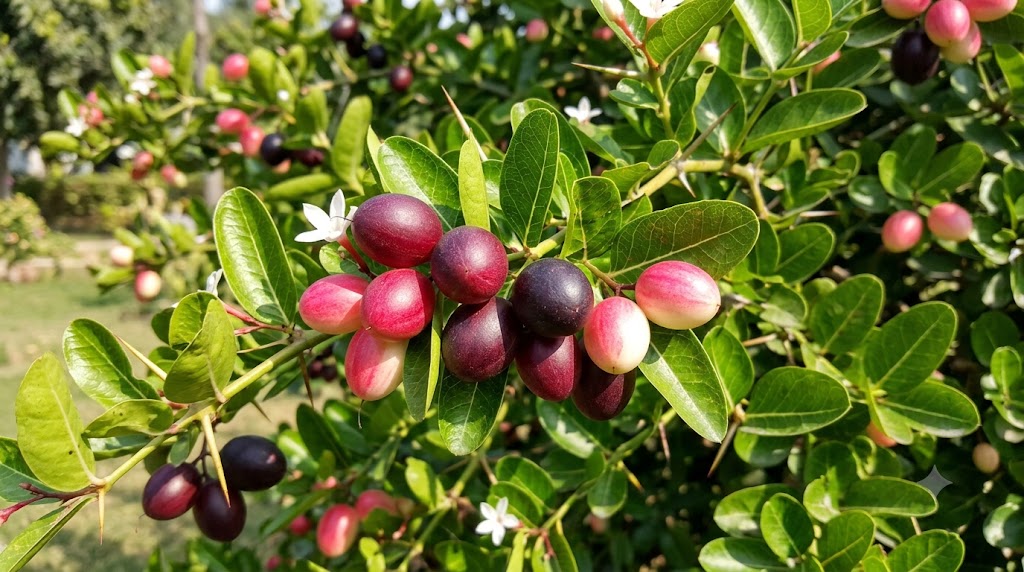
    Botanical Name : Carissa carandas Linn. Var congesta (Wt.) Bedd

    Family : Apocynaceae.

    Identification No. SDACH/HG/133

    Introduction :

    In BAVAPRAKASHA two types of karamardha mentioned as karamardha dwaya. In kerala C. spinarum  considered as the second. The Ayurvedic Pharmacopoeia of India indicated the stem bark in obstinate skin diseases, and the root in urinary disorders.

    Names in different Indian languages :

    English : Christ’s Thorn, Bengal Currant, karaunda, jasmine flowered carrisa

    Hindi : Karunta, karonti

    Kannada : karikayi

    Malayalam : Klavu, karanta, perumklavu

    Sanskrit : Karamardha, avighnah

    Tamil : Kalakke, perumkla

    Telugu : Peddakalavi, vaka

    Unani : Karondaa.

    Synonyms :

    Karinkaara, Karamarda, Krishnapaakphal, Kshirphena, Sushena,

    Varieties & adulterants – (CV – controversy, AD – adulterants) :

    C. spinarum Linn.

    Morphology :

    Evergreen shrub with paired throns

    Leaves – ovate, simple, opposite

    Flower – white, corymbose

    Fruit – globose- berry type

    Seed – two in number, compressed

    Distribution & Habitat :

    All over India

    Chemical constituents :

    Vit C

    Properties : 

    fruit

    RASA- amlam

    GUNA- guru

    VIRYA-ushna

    VIPAKA- katu

    Karma : ruchyam, deepana, pachana, krimighna

    Appetizer, antipyretic

    Internal uses :

    Digestive system : Constipating,

    Skin : Scabies

    Indication :

    Diarrhea, worm, cabbies, pruritus

    Used for acidity, flatulence, poor digestion, as a slimming diet. Juice of the fresh plant is used for infected wounds that refuse to heal.

    Part used :

    Root, fruit

    Dosage :

    Decoction – 60 -120 ml

    Powder 2-4 gm

    Therapeutic Uses (Amayika Prayoga)

    Internal Uses

    1. Aruchi (Loss of appetite) – Fruit juice or pickle stimulates digestive fire.

    2. Amlapitta (Acid reflux / Hyperacidity) – Ripe fruit is mildly cooling and balances Pitta when taken in moderation.

    3. Hridroga (Heart disorders) – Acts as a Hridya (cardiac tonic); improves cardiac strength.

    4. Pandu (Anemia) – Rich in iron; useful in iron deficiency-related fatigue.

    5. Atisara (Diarrhea) – Fruit pulp helps manage mild loose motions due to its astringent property.

    6. Kasa-Shwasa (Cough and asthma) – Its anti-inflammatory effect helps soothe respiratory passages.

    External Uses

    1. Vrana (Wounds & ulcers) – Fresh paste or juice of fruit applied for wound healing.

    2. Daha (Burning sensation) – Leaf juice used topically to relieve burning.

    3. Twak Roga (Skin diseases) – Paste used on fungal infections and itching.

    4. Prameha Vrana (Diabetic wounds) – Application of decoction or fruit extract helps in healing due to antibacterial activity.

    5. Oral ulcers – Gargle with diluted juice for mouth ulcers or gum problems.

     IUCN

    Current Status:Not Evaluated (NE) 
    About Karamarda

    Botanical Name

    Carissa carandas Linn. var. congesta (Wt.) Bedd.

    Family

    Apocynaceae

    Identification No.

    SDACH/HG/133

    Parts Used

    Root, Fruit

    Habitat

    India

    IUCN Status

    Not Evaluated

    Plant Photos

    Ayurvedic Properties

    Rasa

    Amla

    Guna

    Guru

    Virya

    Ushna

    Vipãka

    Katu

    Contact Now

    Have queries? Contact Us.

    Have queries? We’re here to help you every step of the way.

    Contact us to get the right guidance for your academic journey at Shri Dhanwantry Ayurvedic College.

  • Karpura Tulsi

    Karpura Tulsi

    Botanical Name : Ocimum kilimandscharicum Guerke.

    Family : Labiatae; Lamiaceae

    Identification No.: SDACH/HG/131

    Introduction :

    This plant have the smell of camphor, when leaves are crushed.

    Names in different Indian languages :

    English : Camphor Basil

    Hindi : Karpura Tulasi

    Kannada : Karpura Tulasi

    Malayalam : Karpura Tulasi

    Sanskrit : Karpura Tulasi

    Tamil : Karpura Tulasi

    Telugu : Karpura Tulasi

    Synonyms :

    Ocimum camphora Guerke

    Morphology :

    Branched, aromatic under shrub 30-50 cm high, sometimes woody, hairy.

    Leaves—simple, opposite, ovate-oblong, – entire or subserrate. Petioles slender hairy

    Flowers— very small, pale white, borne in terminal and axillary racemes.

    Fruits— subglobose or broadly oblong nutlets.

    Flowers and fruits almost throughout the year (mainly during September-February).

    Distribution & Habitat :

    Cultivated

    Chemical constituents :

    camphor, pinene, limonene, terpinolene, myrcene, beta-phellandrene, linalool, camphene, p-cymene, borneol and alpha-selinene

    Karma :

    spasmolytic, antibacterial, aromatic, antiviral

    Indication :

    Cough, ulcer, anorexia, infections

    Part used :

    Whole plant

    Dosage :

    Leaf juice 10-15 ml

    Powder 2-4 g

    Decoction 50-100 ml

    Amayika Prayoga (Therapeutic Uses)

     External:

     The essential oil is applied topically for its antiseptic and analgesic properties.

    Used in aromatherapy for respiratory relief.

     Internal:

    – Infusions made from the leaves are   consumed to alleviate cough, cold, and

    digestive issues

    -Acts as a general tonic to boost immunity

    IUCN

    – Current Status:Not Evaluated (NE)
    Research updates

    Medicinal & Pharmacological Research (2020–2024)* 

    Climate Resilience & Cultivation Studies (2021–2024)* 


    About Karpura Tulsi

    Botanical Name

    Ocimum kilimandscharicum Gürke

    Family

    Lamiaceae

    Identification No.

    SDACH/HG/131

    Parts Used

    Whole plant

    Habitat

    Cultivated

    IUCN Status

    Not Evaluated

    Plant Photos

    Ayurvedic Properties

    Rasa

    Katu, Tikta

    Guna

    Laghu, Ruksha

    Virya

    Ushna

    Vipãka

    Katu

    Contact Now

    Have queries? Contact Us.

    Have queries? We’re here to help you every step of the way.

    Contact us to get the right guidance for your academic journey at Shri Dhanwantry Ayurvedic College.

  • Barbari

    Barbari

    Botanical Name : Ocimum gratissimum Linn.

    Family : Labiatae; Lamiaceae

    Identification No. SDACH/HG/130

    Introduction :

    Its properties are similar to Ocimum tenuiiflorum

    Names in different Indian languages :

    English : Lemon basil, tea bush, Shrubby Basil.

    Malayalam : Kattuthulsi, malatulsi

    Sanskrit : Vriddha Tulasi

    Tamil : Elumicha-Tulasi, Peria Tulasi

    Synonyms :

    Raam-Tulasi, Raan-Tulasi, aranyatulsi ,bhrihatulasi

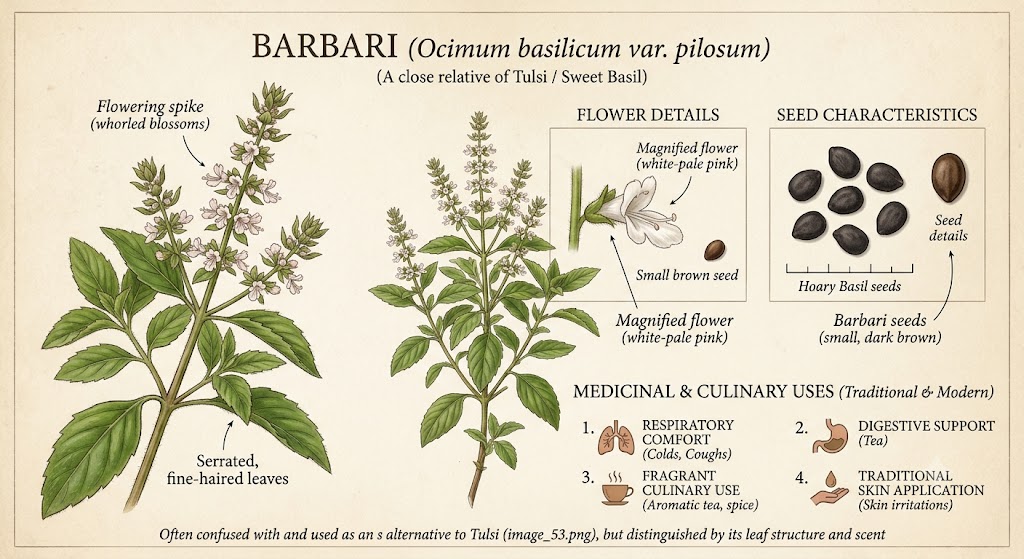
    Morphology :

    Branched, aromatic under shrub 30-50 cm high, sometimes woody, hairy.

    Leaves—simple, opposite, ovate, serrate, obtuse or acute, – entire or subserrate. Petioles slender hairy

    Flowers— very small,yellow,borne in terminal and axillary racemes.

    Fruits— subglobose or broadly oblong nutlets.

    Flowers and fruits almost throughout the year (mainly during September-February).

    Distribution & Habitat :

    All over India

    Chemical constituents :

    Clocimum, eugenol,methyl eugenol, eugenol acetate

    Properties :

    Its properties are similar to Ocimum tenuiiflorum

    Special indication :

    constipation, cough, fever, nasal catarrh, gonorrhoea with difficult urination.

    Amayika Prayoga (Therapeutic Uses)

    External Uses:

     Leaf paste applied to skin diseases andninsect bites

    Oil used for massage in rheumati conditions

    Internal Uses:

     Decoction used in respiratory disorders like cough and asthma

     Juice used to treat fever and digestive issues

    IUCN

    – Current Status:Not Evaluated (NE)
    Research updates

    Medicinal & Antimicrobial Research (2020–2024)

     Climate Resilience & Cultivation Studies (2021–2024)* 


    About Barbari

    Botanical Name

    Ocimum gratissimum L.

    Family

    Lamiaceae (formerly Labiatae)

    Identification No.

    SDACH/HG/130

    Parts Used

    Leaves, Whole plant

    Habitat

    India

    IUCN Status

    Not Evaluated

    Plant Photos

    Ayurvedic Properties

    Rasa

    Katu, Tikta

    Guna

    Laghu, Ruksha

    Virya

    Ushna

    Vipãka

    Katu

    Contact Now

    Have queries? Contact Us.

    Have queries? We’re here to help you every step of the way.

    Contact us to get the right guidance for your academic journey at Shri Dhanwantry Ayurvedic College.

  • Shripadi

    Shripadi

    Sanskrit Name: Shripadi

    Identification No: SDACH/HG/129

    Botanical Name: Jasminum sambac

    Family Name:
    Oleaceae

    Vernacular Names:
    Hindi: Mogra, Chameli
    Marathi: Jai
    Tamil: Malligai
    Kannada: Mallige
    Telugu: Mallepuvu
    Malayalam: Mullappoo
    English: Arabian Jasmine

    Other Names: Mallika, Madanmadini, Madanapriya

    Classification
    Bhavaprakasha: Pushpavarga (under swaran jati)

    Habitat & Distribution:
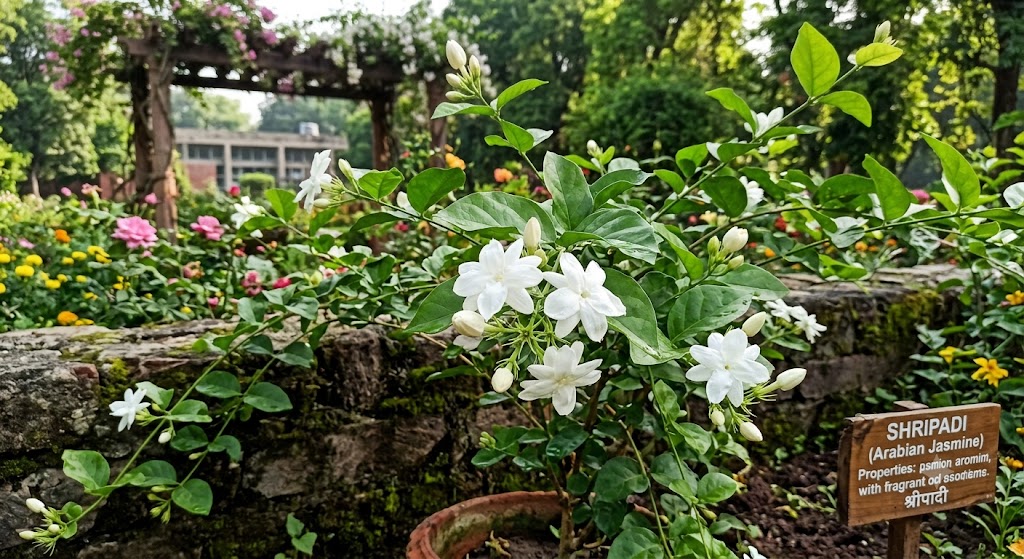
    Widely cultivated across tropical and subtropical regions of India. Prefers warm, sunny climates and well-drained soils. Grown in gardens and near temples for its aromatic and sacred flowers.

    Morphology
    Root: Woody, branched, fibrous
    Stem: Erect or climbing shrub, green when young, turning woody
    Leaves: Simple or trifoliate, ovate, opposite, smooth margin
    Flowers: White, fragrant, small, borne in clusters, bloom at night
    Fruit: Rarely seen in cultivated varieties; small berries when present
    Seeds: Tiny, brownish-black, rarely formed

    Varieties:

    • Jasminum grandiflorum

    Substitute / Adulterant:
    Substitute: Jasminum officinale (common jasmine)
    Adulterant: Non-aromatic white flowering shrubs like Wrightia tinctoria

    Phytochemicals:

    • Essential oils (linalool, benzyl acetate, indole)
    • Flavonoids
    • Triterpenoids
    • Saponins
    • Alkaloids
    • Sterols
    • Coumarins
    • Jasminin (glycoside)

    Rasapanchaka:
    Rasa: Madhura, Tikta
    Guna: Laghu, Snigdha
    Virya: Sheeta
    Vipaka: Madhura
    Prabhava: Hridya, Sugandhitva
    Dosha Shamakta: Pitta-Vata shamak

    Karma (Rogaghnata):
    Varnya (enhances complexion)

    Amayika Prayoga / Therapeutic Uses:

    External:
    Used in skin conditions for its cooling and anti-inflammatory effects
    Applied as paste on wounds and swellings
    Essential oil used in aromatherapy to relieve stress and anxiety
    Infused flowers used for eye conditions and bathing

    Internal:
    Juice or decoction of flowers used for gastritis, indigestion
    Helpful in cardiac debility, palpitations
    Used in diarrhea and colitis
    Mild sedative in insomnia and restlessness
    Flower tea for stress relief and general wellness

    Part Used:
    Flowers, Leaves, Root

    Dose:
    Fresh flower juice: 10–15 ml
    Leaf juice: 5–10 ml
    Churna (powdered root or leaves): 1–3 g
    Decoction: 20–40 ml
    Essential oil: Few drops (aromatherapy/external use)

    Yoga / Formulations:

    • Mallika pushpa arka
    • Jasmine tea
    • Herbal oils with Mallika for massage and relaxation
    • Used in many proprietary Ayurvedic beauty and stress-relief products

    IUCN Status:
    Not Evaluated (NE).

    Research Updates

    1. Kumar et al., 2021 – Evaluated anxiolytic and antidepressant activity of J. sambac flower extract in mice; showed comparable effects to diazepam.
    2. Sharma & Gupta, 2020 – Demonstrated antimicrobial activity of J. sambac essential oil against Staphylococcus aureus and E. coli.
    3. Rao et al., 2019 – GC-MS analysis confirmed high presence of linalool and benzyl acetate; supports traditional use in aromatherapy and perfumery.

    About Shripadi

    Botanical Name

    Jasminum sambac (L.) Aiton

    Family

    Oleaceae

    Identification No.

    SDACH/HG/129

    Parts Used

    Flowers, Leaves, Root

    Habitat

    India

    IUCN Status

    Not Evaluated

    Plant Photos

    Ayurvedic Properties

    Rasa

    Madhura, Tikta

    Guna

    Laghu, Snigdha

    Virya

    Sheeta

    Vipãka

    Madhura

    Contact Now

    Have queries? Contact Us.

    Have queries? We’re here to help you every step of the way.

    Contact us to get the right guidance for your academic journey at Shri Dhanwantry Ayurvedic College.

  • Raat ki Rani

    Raat ki Rani

    Botanical Name : Cestrum nocturnum

    Family : Solanaceae

    Identification No.: SDACH/HG/128

    Introduction :

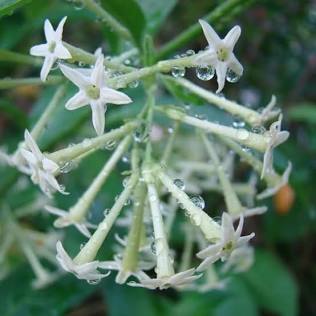
    Cestrum nocturnum is a garden shrub from the family Solanaceae, commonly known as “lady of the night” which is used as a remedy for different health disorders. This sprawling shrub has glossy simple leaves, vine like stems, greenish-creamy white tubular flowers and fleshy berries. The berries are marfil white or aubergine in colour. The species name ‘nocturnum’ refers to the species’ habit of opening its small, heavily-scented flowers at night. The flowers release powerful sweet perfume at night. It is made into a rare attar (raat ki rani) which is used in Indian and Middle East perfumery. It is said to be the world’s strongest smelling plant. Indeed the scent can reach up to 165 feet away from the location of plant. The genus name Cestrum is thought to be derived from the Greek word ‘kestron’, for similarity to a plant of that name, or ‘kestrum’, a tool used for engraving, which the plant’s anthers resemble. Like several other members of the Cestrum genus, C. nocturnum is of Neotropical origin. While night blooming jasmine is a gorgeous plant with charming blooms, the scent also produces severe allergic reactions in some individuals.

    According to WHO, more than 80% of developing country’s population depends on plant based medicines for their health care needs. From the time immemorial, this shrub is used as a traditional medicine. In India the Malasar people use its juice for cataracts. It contains secondary metabolites such as saponins, flavonoids, cardiac glycosides, alkaloids, steroids and tannins which have biological activity, kindling scientific interest.

    Names in different Indian languages :

    English : Night Blooming Jasmine, Night-blooming cestrum, Lady of the night

    Bengali : Hasna hana

    Hindi : Rat ki rani

    Kannada : Raatri raani

    Konkani : Raatrani

    Manipuri : Thabal lei

    Marathi : Raatrani

    Mizo : Zanlalnu

    Synonyms :

    Cestrum multiflorum

    Cestrum scandens

    Distribution :

    It is widely cultivated in tropical and subtropical regions of the world.

    Morphology :

    Night Blooming Jasmine is a sprawling shrub that has glossy, smooth, simple leaves 4-8 inches long. Vine-like stems reach up to 12 ft in its native habitat, but it seldom reaches more than a 4 ft mound in a single season. It blooms in cycles throughout warm weather. Greenish-creamy white tubular flowers rise from above leaves along the stem, followed by shiny white, fleshy berries. Although the flowers are not showy to the eye, their sweet scent can overpower. The perfume is distinctly powerful at night – this feature has had its influence on its common name in all languages. The Hindi name translates to queen of the night, while the Manipuri name means moon flower. No fragrant garden is complete without this nocturnal beauty. While night blooming jasmine is a gorgeous plant with charming blooms, the scent also produces severe allergic reactions in some individuals. Night Blooming Jasmine is native to Mexico to Venezuela, widely cultivated in tropical climates.

    Chemical constituents :

    Flowers distilled oil contains phenylethyl alcohol (27%), benzyl alcohol (12%), eicosane (5.6%), eugenol (5.6%), n-tetracosane (4.4%), caryophyllene oxide (3.1%), 1-hexadecanol (2.7%), methoxyeugenol (2.45%), benzaldehyde (2.32%). Flowers alcohol extract contains cytotoxic steroids.

    Uses :

    In traditional medicine, leaves of Cestrum nocturnum have been used for their pharmacological significance in burns and swellings.

    It is also used for treating epilepsy.

    Pharmacological studies on the plant proved that the leaves have significant analgesic and bactericidal activity.

    The volatile oil is known to be mosquito-repellent and hence C. nocturnum is used to prevent malaria in several African Nations.

    Local anaesthetic effect, inhibitory effect on central nervous system and cardiac arrthymic effect of plant are also documented. Zhong et al., in 2008 reported that n-butanol and polysaccharide extracts from C. nocturnum has tumor inhibition ability.

    IUCN Status

    As of the latest available data, Cestrum nocturnum (commonly known as Raat ki Rani, Night-Blooming Jasmine, or Queen of the Night) does not have a dedicated IUCN Red List assessment.


    About Raat ki Rani

    Botanical Name

    Cestrum nocturnum L.

    Family

    Solanaceae

    Identification No.

    SDACH/HG/128

    Parts Used

    Leaves, Flowers

    Habitat

    Mexico, Venezuela

    IUCN Status

    Not Evaluated

    Plant Photos

    Ayurvedic Properties

    Rasa

    Tikta (Bitter), Katu (Pungent)

    Guna

    Laghu (Light), Ruksha (Dry)

    Virya

    Ushna (Heating)

    Vipãka

    Katu (Pungent)

    Contact Now

    Have queries? Contact Us.

    Have queries? We’re here to help you every step of the way.

    Contact us to get the right guidance for your academic journey at Shri Dhanwantry Ayurvedic College.

  • Jambupatra Sariva

    Jambupatra Sariva

    Botanical name – Cryptolepis buchanani

    Family name – Asclepiadaceae

    Identification No.: SDACH/HG/127

    Vernacular names

    Indian sarsaparilla, wax-leaved climber

    Hindi: kala bel, karanta

    Kannada: medhaguli hambu 

    Malayalam: katupaalvalli

    Marathi: dudh-vel

    Habitat & Distribution

    Habitat- Garden/ Urban/ Wild/ Type-Wild, Bottom – Hill rock.

    Morphology-

    It is a large climbing shrub with glabrous, shining leaves. Stem is cylindrical; branches pale, glabrous, milky latex present, basal portion black and dotted. The external surface of the root is dark brown or blackish with few transverse cracks. Bark adheres closely to the wood and is odourless. Leaves are 7.5 – 12.5 cm X 3.8 – 6.3 cm in size, elliptic, oblong or oblong – lanceolate, apex retuse or acute, apiculate, green above and whitish beneath.

    Amayika Prayoga/Therapeutic Uses

    Root is demulcent, alterative, tonic and is useful in loss of appetite, fever and skin diseases. It is considered as a blood purifier and extensively used in skin diseases and leprosy. It is prescribed to children for rickets.

    Part used – Roots, Mature Stem

    Dose: 1–5 mL up to 3 times daily

    Standard adult dose is often around 2–3 mL, 2–3 times/day in chronic use.

    2. Capsule or powder form:

    Standardized extract: often 400–600 mg per capsule

    Dose: 400–1200 mg, 1–3 times per day

    IUCN Status

    Not Evaluated (NE)

    Research Updates (Past 5 Years) 

    1.Antimicrobial Activity (2023) 

       – A study demonstrated significant antibacterial effects against Staphylococcus aureus and E. coli, validating its traditional use in wound healing . 

    2. Anti-inflammatory Properties (2022)

       – Root extracts showed COX-2 inhibition comparable to standard drugs, supporting its use in Ayurveda for inflammatory conditions like arthritis . 

    3.Phytochemical Profiling (2021) 

       – Identified novel triterpenoids (e.g., cryptolepinone) with potential hepatoprotective effects in preclinical trials . 

    About Jambupatra Sariva

    Botanical Name

    Cryptolepis buchanani Roem. & Schult.

    Family

    Asclepiadaceae

    Identification No.

    SDACH/HG/127

    Parts Used

    Roots, Mature Stem

    Habitat

    India

    IUCN Status

    Not Evaluated

    Plant Photos

    Ayurvedic Properties

    Rasa

    Tikta, Madhura

    Guna

    Guru, Snigdha

    Virya

    Sheeta

    Vipãka

    Madhura

    Contact Now

    Have queries? Contact Us.

    Have queries? We’re here to help you every step of the way.

    Contact us to get the right guidance for your academic journey at Shri Dhanwantry Ayurvedic College.

  • Chirabilva

    Chirabilva

    About Chirabilva

    Botanical Name

    Holoptelea integrifolia Planch.

    Family

    Ulmaceae

    Identification No.

    SDACH/HG/126

    Parts Used

    Bark, Leaves, Root

    Habitat

    India

    IUCN Status

    Not Evaluated

    Plant Photos

    Ayurvedic Properties

    Rasa

    Tikta, Kashaya

    Guna

    Laghu, Ruksha

    Virya

    Ushna

    Vipãka

    Katu

    Contact Now

    Have queries? Contact Us.

    Have queries? We’re here to help you every step of the way.

    Contact us to get the right guidance for your academic journey at Shri Dhanwantry Ayurvedic College.

  • Nandyavarta

    Nandyavarta

    Botanical Name : Tabernaemontana divaricata

    Family : Apocynaceae

    Identification No.: SDACH/HG/125

    Names in other languages :

    Kannada : Nandi battalu

    Hind : Chandni

    Tamil : Nandiar vattai

    Gujarathi : Sagar

    Sanskrit : Nandyaavarta

    English : Crape jasmine

    Synonyms:

    शुभ्रपुष्पा सुरभिगन्धा नन्दिवृक्षा मनोरमा।गुल्मा पुष्पप्रिया चैव मंदारसदृशा शुभा॥

    Properties :

    Rasa

    Tikta (Bitter), Kashaya (Astringent)

    Guna

    Laghu (Light), Ruksha (Dry), Tikshna (Sharp)

    Veerya

    Ushna (Hot)

    Vipaka

    Katu (Pungent)

    Karma :

    Kapha, Vata

    Morphology :

    Leaf

    The leaves are oval, 8 to 15 cm (3 to 6 in) long, dark glossy green, prominently veined and have a leathery texture

    Flower

    Unisexual 4 cm Yellow 5 The flowers are trumpet-shaped, about 4 cm (1.6 in ) across, with five waxy white petals in a pin-wheel arrangement.

    Fruit

    General            7 cm The fruit are rare but when produced are curved, ribbed

    Distribution :

    Mountain areas, Sparse forest areas.

    Chemical Composition :

    Voafinidine (C20H28N2O2) and voalenine in minor amounts and a new 2-acylindole alkaloid, ervaticine. Coronaridine, voacristine, tabernaemontanine, dregamine; α-amyrin, lupeol, β-sitosterol, voacangine and voaphylline have also been isolated from leaves

    Parts Used :

    Dried folaige, Whole herb.

    Uses :

    Wounds, Cuts, Snakebites, Liver disorders, Skin eruptions, Blotches, Pimples, Diarrhea, Sore throats

    IUCN Status : Least Concern

    Research updates :

    1. Antimicrobial potential of T. divaricata leaf extract (2021, Journal of Herbal Medicine)

    2. Evaluation of antioxidant and anti-inflammatory properties of T. divaricata flowers (2020, AYU Journal)

    3. Pharmacognostical profile and therapeutic potential in wound healing (2022, International Journal of Ayurveda Research)


    About Nandyavarta

    Botanical Name

    Tabernaemontana divaricata (L.) R.Br. ex Roem. & Schult.

    Family

    Apocynaceae

    Identification No.

    SDACH/HG/125

    Parts Used

    Dried foliage, Whole herb

    Habitat

    India, Sri Lanka,

    IUCN Status

    Least Concern

    Plant Photos

    Ayurvedic Properties

    Rasa

    Tikta, Kashaya

    Guna

    Laghu, Ruksha, Tikshna

    Virya

    Ushna

    Vipãka

    Katu

    Contact Now

    Have queries? Contact Us.

    Have queries? We’re here to help you every step of the way.

    Contact us to get the right guidance for your academic journey at Shri Dhanwantry Ayurvedic College.