Shri Dhanwantry Ayurvedic College

Category: Dravyaguna Vigyan Blogs

  • Milk Thistle

    Milk Thistle

    Botanical Name : Silybum marianum

    Family : Asteraceae

    Identification No. – SDACH/HG/139

    Introduction :

    Due to unmatched availability of chemical diversity, natural products from medicinal herbs (as pure compounds or standardized extracts) provide unlimited opportunities for therapeutic usage. Botanical preparations for medicinal purposes contain various types of bioactive compounds, of which natural polyphenols have attracted increasing attention as potential agents for the prevention and treatment of liver diseases. Among them, flavonolignans (i.e., naturally occurring hybrid molecules biogenetically originating from flavonoids and lignans) are the most common class of compounds present in milk thistle extract that has long been used for hepatoprotection. Besides this, many other health promoting actions of the extract give it the opportunity to be an interesting alternative source for pharmaceutical and medicinal applications.

    Names in different Indian languages :

    English: cardus marianus, milk thistle, blessed milkthistle, Marian thistle, Mary thistle, Saint Mary’s thistle, Mediterranean milk thistle, variegated thistle, Scotch thistle

    Binomial Name :

    Silybum marianum (L.) Gaertn.

    Synonyms :

    Carduus marianus L.

    Chemical constituents :

    Traditional milk thistle extract is made from the seeds, which contain approximately 4–6% silymarin. The extract consists of about 65–80% silymarin (a flavonolignan complex) and 20–35% fatty acids, including linoleic acid. Silymarin is a complex mixture of polyphenolic molecules, including seven closely related flavonolignans (silybin A, silybin B, isosilybin A, isosilybin B, silychristin, isosilychristin, silydianin) and one flavonoid (taxifolin). Silibinin, a semipurified fraction of silymarin, is primarily a mixture of 2 diastereoisomers, silybin A and silybin B, in a roughly 1:1 ratio.

    Morphology :

    Grow in average, moderately fertile, well-drained soils in full sun. Tolerates poor soils. Remove seed heads promptly after bloom to prevent self-seeding. This plant is a biennial that can be grown as an annual. For growth as a biennial, sow seed directly in the garden from May to August (flowers will not appear until the second year). For growth as an annual, sow seed indoors in March for planting outside at last spring frost date (flowers will appear in late summer followed by seed). Flowering plants may spread by self-seeding unless flowers are promptly deadheaded after bloom.

    Distribution & Habitat :

    S. marianum is native to the Mediterranean region of Europe including Greece (mostly in Crete), east into Iran and Afghanistan. It is possibly native near the coast of southeast England. S. marianum has been widely introduced outside its natural range, for example into North America, Hawaii, Australia, New Zealand, Colombia where it is considered an invasive weed.

    Milk thistle has been potentially observed to modify fire regimes in its invasive range. Its invasion into new habitats may also be encouraged by fire.

    The “giant thistle of the Pampas” reported by Darwin in the Voyage of the Beagle is thought by some to be Silybum marianum.

    Amayika Prayoga/Therapeutic Uses

    External

     Not commonly used externally in traditional practices.

    Internal

    Liver Disorders: Hepatitis, cirrhosis, fatty liver disease.

    Digestive Issues: Indigestion, loss of appetite

    Skin Conditions: Psoriasis, eczema.

    Metabolic Disorders: Diabetes, high cholesterol.

    IUCN – Current Status: Not Evaluated (NE)

    About Milk Thistle

    Botanical Name

    Silybum marianum

    Family

    Asteraceae

    Identification No.

    SDACH/HG/139

    Habitat

    Greece, east into Iran and Afghanistan

    IUCN Status

    Not Evaluated (NE)

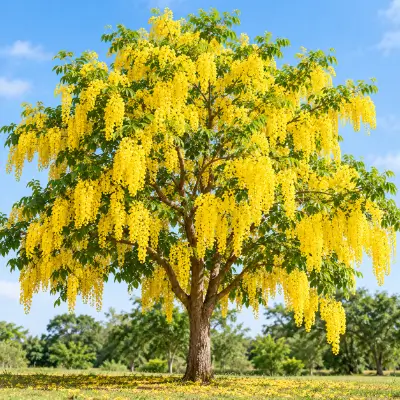
    Plant Photos
    Contact Now

    Have queries? Contact Us.

    Have queries? We’re here to help you every step of the way.

    Contact us to get the right guidance for your academic journey at Shri Dhanwantry Ayurvedic College.

  • KAKUBHA

    KAKUBHA

    Botanical Name: Terminalia myriocarpa Van Heurck & Müll. Arg.
    Family: Combretaceae
    Identification No.: SDACH/HG/138

    Introduction:

    Terminalia myriocarpa, commonly known as East Indian Almond, is a large evergreen tree native to Southeast Asia. Traditionally, its bark has been used in folk medicine for its diuretic, cardiac stimulant, and antioxidant properties. Recent studies have highlighted its potential antidiabetic, anti-inflammatory, and hepatoprotective effects.

    Scientific classification:

    • Order: Myrtales
    • Family: Combretaceae
    • Genus: Terminalia
    • Species: myriocarpa

    Names in different Indian languages:

    • English: East Indian Almond
    • Hindi: Panisaj
    • Manipuri: Mezok
    • Bengali: Panisaj
    • Arunachal Pradesh (Local): Hilika

    Varieties & Adulterants :

    • AD: Other Terminalia species like T. arjuna, T. chebula, and T. bellerica may be used as substitutes or adulterants.

    Morphology:

    • Habit: Large evergreen tree, up to 40 meters tall
    • Bark: Greyish-brown, smooth to slightly fissured
    • Leaves: Simple, alternate, oblong to elliptic, with entire margins
    • Flowers: Small, greenish-white, in terminal spikes or panicles
    • Fruit: Winged drupe, oblong, with two lateral wings

    Habitat & Distribution:

    Widely distributed in Southeast Asia, including India (especially in Arunachal Pradesh, Assam, and other northeastern states), Myanmar, Thailand, and Laos. Prefers tropical and subtropical climates, often found in mixed deciduous forests.

    Chemical composition:

    • Phenolic acids: Gallic acid, Cinnamic acid
    • Flavonoids: Quercetin, Rutin, Myricetin, Isovitexin, Vitexin, Orientin
    • Tannins: Ellagic acid, Flavogallonic acid
    • Triterpenoids: Alphitolic acid, Asiatic acid, Arjunic acid
    • Others: Methyl gallate, Ethyl gallate, Epigallocatechin gallate

    Properties:

    • Rasa: Kashaya (astringent), Tikta (bitter)
    • Guna: Laghu (light), Ruksha (dry)
    • Virya: Ushna (hot)
    • Vipaka: Katu (pungent)
    • Karma: Shothahara (anti-inflammatory), Jvarahara (antipyretic), Hridaya sthambhana (cardiac tonic), Mehahara (antidiabetic)

    Indications:

    • Jvara (fever)
    • Shotha (inflammation)
    • Hridaya roga (heart diseases)
    • Prameha (diabetes)
    • Yakrit vikara (liver disorders)
    • Vrana (wounds)
    • Twak vikaras (skin diseases)

    External uses:

    • Bark extract: Applied topically for chest pain and inflammation
    • Leaf paste: Used for wound healing and skin infections

    Internal uses:

    • Digestive system: Aids in digestion, alleviates diarrhea
    • Circulatory system: Acts as a cardiac stimulant, improves blood circulation
    • Nervous system: Provides relief in neurological disorders
    • Liver: Exhibits hepatoprotective activity
    • Urinary system: Acts as a diuretic, beneficial in urinary disorders

    Srotogamitwa:

    • Dosha: Balances Kapha and Pitta
    • Dhatu: Rasa, Rakta
    • Srotas: Raktavaha, Mutravaha, Manovaha

    Parts used:

    Bark, leaves, fruits

    Dosage:

    • Kwatha (Decoction): 50–100 ml
    • Churna (Powder): 3–6 g
    • Swarasa (Juice): 10–20 ml

    Important Yogas or Formulations:

    • Terminalia myriocarpa kwatha – Used traditionally for its antidiabetic and hepatoprotective effects
    • Bark paste – Applied externally for chest pain and inflammation

    Therapeutic Uses:

    1. Prameha (Diabetes) – Leaf extract exhibits α-glucosidase inhibitory activity, aiding in blood sugar regulation
    2. Shotha (Inflammation) – Ethanolic leaf extract reduces nitric oxide production, indicating anti-inflammatory potential
    3. Yakrit vikara (Liver disorders) – Ellagitannins from bark show hepatoprotective effects against CCl₄-induced liver damage
    4. Jvara (Fever) – Traditional use in reducing fever due to its antipyretic properties
    5. Vrana (Wounds) – Leaf paste promotes wound healing due to its antioxidant and antimicrobial properties

    IUCN Status – Not Evaluated

    Research Updates:

    1. Antidiabetic Potential (2024) – Leaf extract of T. myriocarpa showed strong α-glucosidase inhibitory activity, isolating active compounds such as quercetin and flavogallonic acid, suggesting efficacy in controlling postprandial blood sugar.
    2. Anti-inflammatory and Antioxidant Activity (2021) – Ethanolic extract of leaves significantly reduced nitric oxide production and ROS in RAW 264.7 macrophages, indicating anti-inflammatory potential via NF-κB inhibition.
    3. Hepatoprotective Effects (2002) – Ellagitannins from bark showed protective action against CCl₄-induced liver damage in rats by reducing oxidative stress markers and improving liver enzyme profiles.

    About Kakubha

    Botanical Name

    Terminalia myriocarpa Van Heurck & Müll. Arg.

    Family

    Combretaceae

    Identification No.

    SDACH/HG/138

    Parts Used

    Bark, leaves, fruits

    Habitat

    India, Myanmar, Thailand, and Laos

    IUCN Status

    Not Evaluated

    Plant Photos

    Ayurvedic Properties

    Rasa

    Kashaya (astringent), Tikta (bitter)

    Guna

    Laghu (light), Ruksha (dry)

    Virya

    Ushna (hot)

    Vipãka

    Katu (pungent)

    Karma

    Shothahara (anti-inflammatory), Jvarahara (antipyretic), Hridaya sthambhana (cardiac tonic), Mehahara (antidiabetic)

    Contact Now

    Have queries? Contact Us.

    Have queries? We’re here to help you every step of the way.

    Contact us to get the right guidance for your academic journey at Shri Dhanwantry Ayurvedic College.

  • Morpankhi

    Morpankhi

    Botanical Name : Platycladus orientalis

    Family : Cupressaceae (Cypress family)

    Identification No. –SDACH/HG/137

    Introduction :

    Thuja orientalis (Commonly- Morpankhi, Family- Cu-pressaceae) is a genus of coniferous trees. T. orientalis is an evergreen, monoecious trees or shrubs growing to 10-60 feet tall. The shoot are flat, leaves are scale like. The leaves are arranged in flattened fan shaped growing with resine glands. Their leaves contain essential oils used to treat fungus infections, cancer, moles and parasitic worms. The essential oil derived from the leaves is toxic. α-thujone is useful as an insecticide and an antihelminthic agent for the treatment of parasitic worms. However, α -thujone is a toxic substance that disrupts neurological signals in the brain. Ingestion of the essential oils of Thuja  leaves can cause death. Seed with a pair of narrow lateral wings, seedlings produce 2 cotyledons. The wood is light, soft and aromatic. Thuja poles also often used to make fence posts and rails. The wood of Thuja is commonly used for guitar sound boards. It is used as a medicinal plant in various forms of traditional medicines like folk medicine, homeopathy and treatment of bronchial catarrh, enuresis, cystitis, psoriasis, uterine carci-nomas, amenorrhea and rheumatism. Oil of Thuja contains thujone which has been studied for its GABA (gamma-aminobutyric acid) receptor antagonistic, with potentially lethal properties. A yellow dye is obtained from the young branches. Thuja is also occasionally used for treating diseases of skin, blood, gastrointestinal tract, kid-ney, brain, warty excrescences, spongy tumors.

    Names in different Indian languages :

    English : Morpankhi, Oriental thuja, Oriental arborvitae

    Hindi : Morpankhi, mayurpankhi

    Manipuri : Lairikheibi

    Synonyms :

    Thuja orientalis

    Biota orientalis

    Morphology :

    Morpankhi is a plant which is found in every small garden in India. Belonging to the cypress family, it is a densely branched evergreen conifer that can become 50 ft tall with a spread of 20. However, it is commonly grown as a smaller, bushier shrub. It tends to have several to many stems, but can be trimmed to a single leader stem creating a treelike form. The overall shape is conical, with the crown becoming more irregular and spreading with age. The bark is rusty-brown and fibrous. The numerous slender ascending branches support shoots that spread out in flat, vertical planes. The leaves are like little scales overlapping and tightly packed on the shoots. The cones are 15-25 mm long, green ripening brown in about 8 months from pollination, and have 6-12 thick scales arranged in opposite pairs.

    Amayika Prayoga/Therapeutic Uses

     External: Used in topical applications for its antimicrobial properties

     Internal: Employed in traditional medicine systems for treating respiratory infections skin conditions, and as a diuretic.

    Yoga/Formulations

    While Platycladus orientalis is not commonly featured in classical Ayurvedic formulations, it is used in traditional Chinese medicine. Its extracts are incorporated into various herbalremedies for their therapeutic properties

    IUCN

    Current Status: Least Concern (LC)

    Research Status

    • Pharmacological Research (2020-2024)
    • Neuroprotective Effects (2022)
    • Anti-cancer Potential (2021)
    • Ecological Impact Studies
    • Horticultural Developments

    About Morpankhi

    Botanical Name

    Platycladus orientalis

    Family

    Cupressaceae (Cypress family)

    Identification No.

    SDACH/HG/137

    Habitat

    India

    IUCN Status

    Least Concern (LC)

    Plant Photos

    Contact Now

    Have queries? Contact Us.

    Have queries? We’re here to help you every step of the way.

    Contact us to get the right guidance for your academic journey at Shri Dhanwantry Ayurvedic College.

  • Kadali

    Kadali

    Botanical Name : Botanical Name: Musa paradisiaca Linn.

    Family : Musaceae

    Identification NO.: SDACH/HG/132

    Introduction :

    latin name : Musa = muza – from the Egyptian name: paradistaca of paradise.

    Scientific classification: Bananas make up the genus Musa of the family Musaceae. The plantain, or cooking banana, is classified as Musa paradisiaca. The Manila hemp is classified as Musa textilis.

    Banana, common name for any of a genus of tropical, treelike herbs and also for their fruit. Species of the genus are native to Southeast Asia but are now grown extensively in all tropical countries for their fruit, fiber, or foliage. The banana is a large, herbaceous plant with a perennial root, or rhizome, from which the plant is perpetuated by sprouts or suckers. In the tropics the stems are annual—that is, they die after perfecting the fruit, and new stems are developed from buds in the rootstock. These stems, or buds, are the common means of propagating and making new plantations, and the growth is so rapid that the fruit is usually ripe within ten months after the offsets are planted. When fully grown the stem attains a height of 3 to 12 m (10 to 40 ft) and is surmounted by a crown of large oval leaves up to 3 m (10 ft) long, with a strong fleshy footstalk and midrib. The flowers spring in great spikes from the center of the crown of leaves and are arranged in whorl-like clusters along the spike; the female flowers occupy the base of the spike, and the male the apex. The fruits vary in length from about 10 to 30 cm (about 4 to 12 in). The average weight of a bunch is about 11 kg (about 25 lb), but individual bunches often exceed 18 kg (40 lb). A stalk bears only once, dies down, and is replaced by sprouts, two or three of which are allowed to bear fruit.

    The fruit of the plantain, or cooking banana, is larger, coarser, and less sweet than the kinds that are generally eaten raw. The edible part of the banana contains, on the average, 75 percent water, 21 percent carbohydrate, and about 1 percent each of fat, protein, fiber, and ash. Other parts of the plant abound in fiber, which can be used in the manufacture of paper and cordage. One species is the source of Manila hemp.

    Half of the world’s banana crops are grown in Asia, and much of the produce is used locally. The leading banana-export regions are Central America and northern South America.

    Names in different Indian languages :

    English: Banana, Plantain, kadali

    Hindi: Kela

    Kannada: Balehannu

    Malayalam: Kadalivala, vazha, kshetrakadali

    Sanskrit: Kadali

    Tamil: Kadali vazhai

    Telugu: Ariti, kadalamu

    Unani: Kelaa, Mouz

    Synonyms :

    Kadali, Rambhaa, Sakrtphala, Vaaranaa, Mochaa, Ambusaara, Anshumatiphal

    Musa Sapientum Linn

    Varieties & adulterants – (CV – controversy, AD – adulterants) :

    Kadali: Sweet variety commonly consumed

    Rambha: A type known for its larger fruits.

     Mocha: Variety with smaller fruits, often used in cooking

    Morphology :

    It is an annual herb, grows up to 3-7 m height

    Leaves – oblong, large size

    Flowers – unisesual,

    Fruit – berry, parhenocarpic

    Distribution & Habitat :

    Throughout India , cultivated

    Chemical constituents :

    Sugar, minerals, vitamins, Dietary fibre, anti-ulcerogenic acylsterylglycoside, sitoindoside IV,  uronic acid

    Properties :

    Guna: snigdha

    Rasa: madhur, kashaya

    Veerya : sheeta

    Vipaka: madhur

    Karma :

    Vrishyam, balyam,, mehaghnam (apakva), raktapittaharam, ruchyam, grahi carminative, digestive, astingent, bitter, aphrodisiac, decreases lipid cholesterol level, blood purifier, antipyretic, antimicrobial, antifungal

    (brimban).

    Mala: Purisha (in cholera, juice of stalk rn usçd), dysuria (stalk juice), manovahasrotas (hysteria and epilepsy – stalk ) – shamak and brain tonic).

    Antidote: Juice of stalk is given in morphine and arsenic toxicity.

    Indication :

    Urustamba, kandu, kusta, netraroga, pradara, udavartha, gulma, karna sula, keshya, raktapitta dysuria, polyuria , menstrual disorders, asthma, bleeding disorders, leucorrhoea

    Part used :

    Rhizome, fruit, leaves, stem (inner hard white core), inflorescence

    Dosage :

    Leaf juice 10-15 ml

    Powder 2-4 g

    Decoction 50-100 ml

    Amayika Prayoga (Therapeutic Uses)IUCN Red List Status –   – Status: Least Concern

    m applied on burnt injuries. In dysuria, paste of the rhizome is applied on the lower abdomen. Mixture of turmeric and bananakshar is applied on sidhma kushta. Its kshara acts as a lekhan dratya.

    Internal uses: Being shamak and brain tonic, juice of stalk is used in hysteria and epilepsy. Raw as well as ripe banana are used in diarrhoea and dysentery. In excessive think, sharbat of ape busts is given. In cholera, its juice is given to reduce thirst.

    Flowers and ripe fruits are used in bleeding disorders. Ripe fruit acts as an expectorant if given in dry cough. Juice is used in dysuria while fruit in urinary disorders. In seminal debility, vaginal discharges and burning sensation, ripe banana is useful. juice of stalk is an antidote to morphine and arsenic toxicity.

    IUCN –  Status: Least Concern

    About Kadali

    Botanical Name

    Musa paradisiaca Linn.

    Family

    Musaceae

    Identification No.

    SDACH/HG/132

    Parts Used

    Rhizome, fruit, leaves, stem (inner hard white core), inflorescence

    Habitat

    Throughout India , cultivated

    IUCN Status

    Least Concern

    Plant Photos

    Ayurvedic Properties

    Rasa

    madhur, kashaya

    Guna

    snigdha

    Virya

    sheeta

    Vipãka

    madhur

    Contact Now

    Have queries? Contact Us.

    Have queries? We’re here to help you every step of the way.

    Contact us to get the right guidance for your academic journey at Shri Dhanwantry Ayurvedic College.

  • Bhandira

    Bhandira

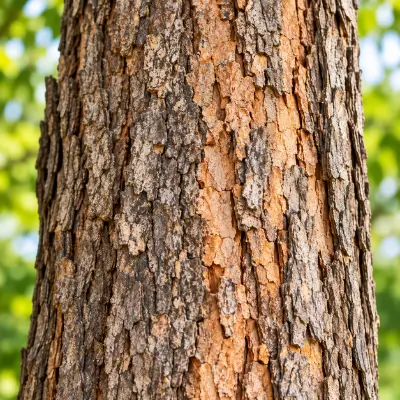
    Botanical Name : Clerodendrum infortunatum auct. non Linn. C.B.Clarke.

    Family : Verbenaceae.

    Identification No. – SDACH/HG/136

    Introduction :

    This plant used in Ayurveda, homeo and folk medicine for constipation and piles.

    Names in different Indian languages :

    Hindi : Titabhamt, Bhates

    Kannada : Basavana pada, ibbane

    Malayalam : Peruku

    Sanskrit : Bhandirah

    Tamil : Perukilai, Karukanni

    Telugu : Gurrapu katiyaku

    Synonyms :

    Bhaandira, Bhaandi, Kaari,

    C. viscosum auct. Non Vent.

    Varieties & adulterants – (CV – controversy, AD – adulterants) :

    C. serratum

    Morphology :

    It is a shrub grows 5-6 m

    Leaves – cordate, simple, hairy, large,

    Flower – white, terminal panicle

    Fruit – drupes

    Distribution & Habitat :

    All over India

    Chemical constituents :

    ceryl alcohol,clerodin, clerosterol and clerodendrin A

    Properties :

    RASA- tiktha, kashaya

    GUNA-laghu

    VIRYA-ushna

    VIPAKA-katu

    Karma : garbasangajith, krimighna, kasaghna

    Laxative, thermogenic, bitter , analgesic

    Internal uses :

    Digestive system: purgative

    Skin: Skin disease

    Indication :

    Krimi, jwara, madhumeha

    Alopecia, skin disease, worm infection, piles

    Part used :

    Leaves, root

    Dosage :

    1-2 g

    Amayika Prayoga (Therapeutic Uses):

    1. Leaves are prescribed in headache.

    2. Roots are given in cramps and rheumatism.

    3. water boiled with root used for ‘avaghaha’ for painful piles.

     IUCN – Current Status: Not Evaluated (NE)

    About Bhandira

    Botanical Name

    Clerodendrum infortunatum auct. non Linn. C.B.Clarke.

    Family

    Verbenaceae

    Identification No.

    SDACH/HG/136

    Parts Used

    Leaves, root

    Habitat

    All over India

    IUCN Status

    Not Evaluated (NE)

    Plant Photos
    Ayurvedic Properties

    Rasa

    tiktha, kashaya

    Guna

    laghu

    Virya

    ushna

    Vipãka

    katu

    Contact Now

    Have queries? Contact Us.

    Have queries? We’re here to help you every step of the way.

    Contact us to get the right guidance for your academic journey at Shri Dhanwantry Ayurvedic College.

  • Kusha

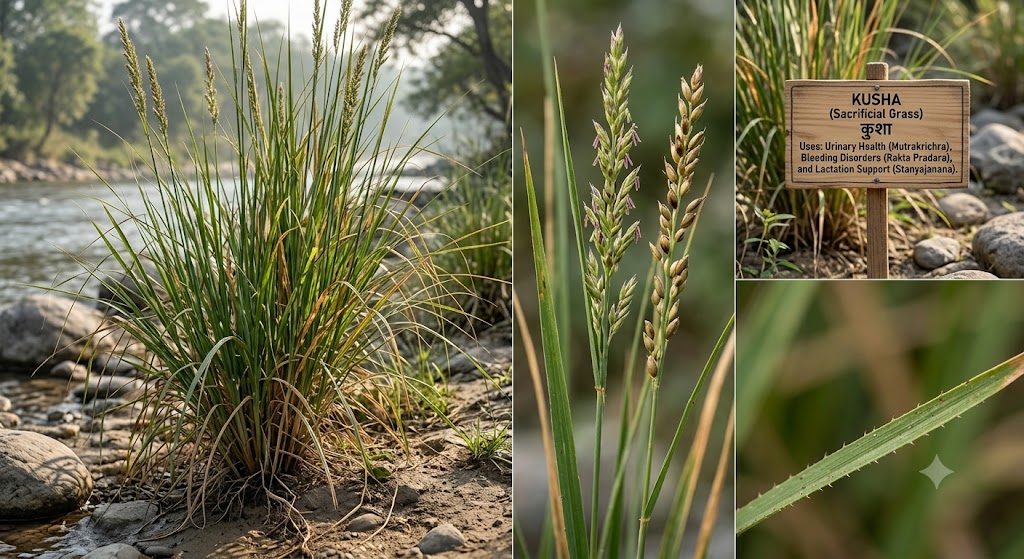
    Kusha

    Botanical Name : Desmostachya bipinnata Stapf.

    Family : Gramineae; Poaceae

    Identification No. SDACH/HG/134

    Introduction :

    Latin name: Desmostachya – desmo = woolly. stachyus = spiked; bipinnata – bi= two, pinnata = having feathers.

    Names in different Indian languages :

    English : Sacrificial Grass

    Hindi : Dab, davoli

    Kannada : Darbha

    Malayalam : Darbha, darbhappullu

    Sanskrit : Kusha, darbha

    Tamil : Tharubai, darbhaipul

    Telugu : Dharbha, kusa dharbha

    Synonyms :

    Kusha, Suuchyagra, Yagyabhuushana, Brahmapavitra, Tikshna, Kshurapatra, raja darbha

    Eragrostis cynosuroides Beauv.

    Morphology :

    A shrub 2.5 cms. to 2.5 mirs. high with a long lifespan.

    Roots – deep and strong.

    Leaves – arise from the root having length 1 mtrs and width 2 mtrs.

    They are pointed at the tip with tiny and string thorns on both the edges. flower stalk – 15 cm. to 45 cm. long and straight.

    Seeds – 0.75 cm. long, ovoid and flat, flowering in monsoon and fruits come in winter. Darbha belongs to the same variety. It has long and rough leaves.

    Distribution & Habitat :

    All over India

    Properties :

    Guna : laghu, snigdha;

    Rasa : madhur. kashaya;

    Vipaka : madhur;

    Virya : sheeta;

    Dosha   pittakaphaghna.

    Karma :

    Tridoshaghnam, sukla rakta shudikaram

    cooling, diuretic, galactagogue, astringent

    Indication :

    urinary calculi, menorrhagia, dysentery, diarrhea, skin diseases

    Part used :

    Root

    Dosage :

    Powder 2-4 g

    Decoction 50-100 ml

    Internal uses :

    As it is haemostatic, it is used in diarrhoea and dysentery with bleeding per rectum. menorrhagia and other bleeding disorders. It is a galactogoque. It has diuretic and lithotripsic properties. hence it is used in dysuria and calculi. Its decoction is helpful in skin disorders.

    Important Yogas or Formations :

    Trinapanchamool kwath, Kushavaleha. Kushadya ghrit.

    IUCN

    Current Status:Least Concern (LC)


    About Kusha

    Botanical Name

    Desmostachya bipinnata (L.) Stapf

    Family

    Poaceae (Gramineae)

    Identification No.

    SDACH/HG/134

    Parts Used

    Root

    Habitat

    India

    IUCN Status

    Least Concern

    Plant Photos

    Ayurvedic Properties

    Rasa

    Madhura, Kashaya

    Guna

    Laghu, Snigdha

    Virya

    Sheeta

    Vipãka

    Madhura

    Contact Now

    Have queries? Contact Us.

    Have queries? We’re here to help you every step of the way.

    Contact us to get the right guidance for your academic journey at Shri Dhanwantry Ayurvedic College.

  • Karamarda

    Karamarda

    Botanical Name : Carissa carandas Linn. Var congesta (Wt.) Bedd

    Family : Apocynaceae.

    Identification No. SDACH/HG/133

    Introduction :

    In BAVAPRAKASHA two types of karamardha mentioned as karamardha dwaya. In kerala C. spinarum  considered as the second. The Ayurvedic Pharmacopoeia of India indicated the stem bark in obstinate skin diseases, and the root in urinary disorders.

    Names in different Indian languages :

    English : Christ’s Thorn, Bengal Currant, karaunda, jasmine flowered carrisa

    Hindi : Karunta, karonti

    Kannada : karikayi

    Malayalam : Klavu, karanta, perumklavu

    Sanskrit : Karamardha, avighnah

    Tamil : Kalakke, perumkla

    Telugu : Peddakalavi, vaka

    Unani : Karondaa.

    Synonyms :

    Karinkaara, Karamarda, Krishnapaakphal, Kshirphena, Sushena,

    Varieties & adulterants – (CV – controversy, AD – adulterants) :

    C. spinarum Linn.

    Morphology :

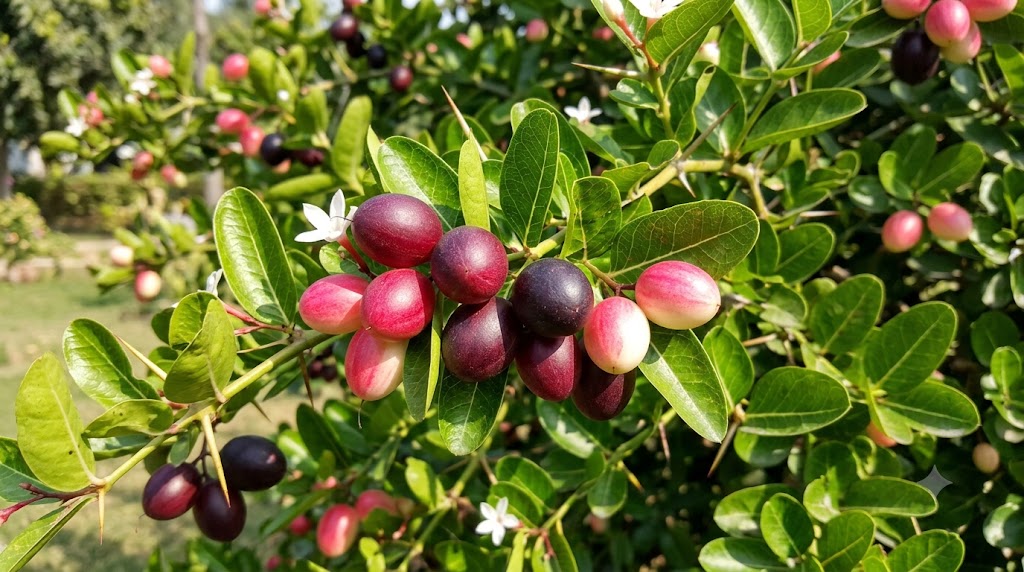
    Evergreen shrub with paired throns

    Leaves – ovate, simple, opposite

    Flower – white, corymbose

    Fruit – globose- berry type

    Seed – two in number, compressed

    Distribution & Habitat :

    All over India

    Chemical constituents :

    Vit C

    Properties : 

    fruit

    RASA- amlam

    GUNA- guru

    VIRYA-ushna

    VIPAKA- katu

    Karma : ruchyam, deepana, pachana, krimighna

    Appetizer, antipyretic

    Internal uses :

    Digestive system : Constipating,

    Skin : Scabies

    Indication :

    Diarrhea, worm, cabbies, pruritus

    Used for acidity, flatulence, poor digestion, as a slimming diet. Juice of the fresh plant is used for infected wounds that refuse to heal.

    Part used :

    Root, fruit

    Dosage :

    Decoction – 60 -120 ml

    Powder 2-4 gm

    Therapeutic Uses (Amayika Prayoga)

    Internal Uses

    1. Aruchi (Loss of appetite) – Fruit juice or pickle stimulates digestive fire.

    2. Amlapitta (Acid reflux / Hyperacidity) – Ripe fruit is mildly cooling and balances Pitta when taken in moderation.

    3. Hridroga (Heart disorders) – Acts as a Hridya (cardiac tonic); improves cardiac strength.

    4. Pandu (Anemia) – Rich in iron; useful in iron deficiency-related fatigue.

    5. Atisara (Diarrhea) – Fruit pulp helps manage mild loose motions due to its astringent property.

    6. Kasa-Shwasa (Cough and asthma) – Its anti-inflammatory effect helps soothe respiratory passages.

    External Uses

    1. Vrana (Wounds & ulcers) – Fresh paste or juice of fruit applied for wound healing.

    2. Daha (Burning sensation) – Leaf juice used topically to relieve burning.

    3. Twak Roga (Skin diseases) – Paste used on fungal infections and itching.

    4. Prameha Vrana (Diabetic wounds) – Application of decoction or fruit extract helps in healing due to antibacterial activity.

    5. Oral ulcers – Gargle with diluted juice for mouth ulcers or gum problems.

     IUCN

    Current Status:Not Evaluated (NE) 

    About Karamarda

    Botanical Name

    Carissa carandas Linn. var. congesta (Wt.) Bedd.

    Family

    Apocynaceae

    Identification No.

    SDACH/HG/133

    Parts Used

    Root, Fruit

    Habitat

    India

    IUCN Status

    Not Evaluated

    Plant Photos

    Ayurvedic Properties

    Rasa

    Amla

    Guna

    Guru

    Virya

    Ushna

    Vipãka

    Katu

    Contact Now

    Have queries? Contact Us.

    Have queries? We’re here to help you every step of the way.

    Contact us to get the right guidance for your academic journey at Shri Dhanwantry Ayurvedic College.
  • Karpura Tulsi

    Karpura Tulsi

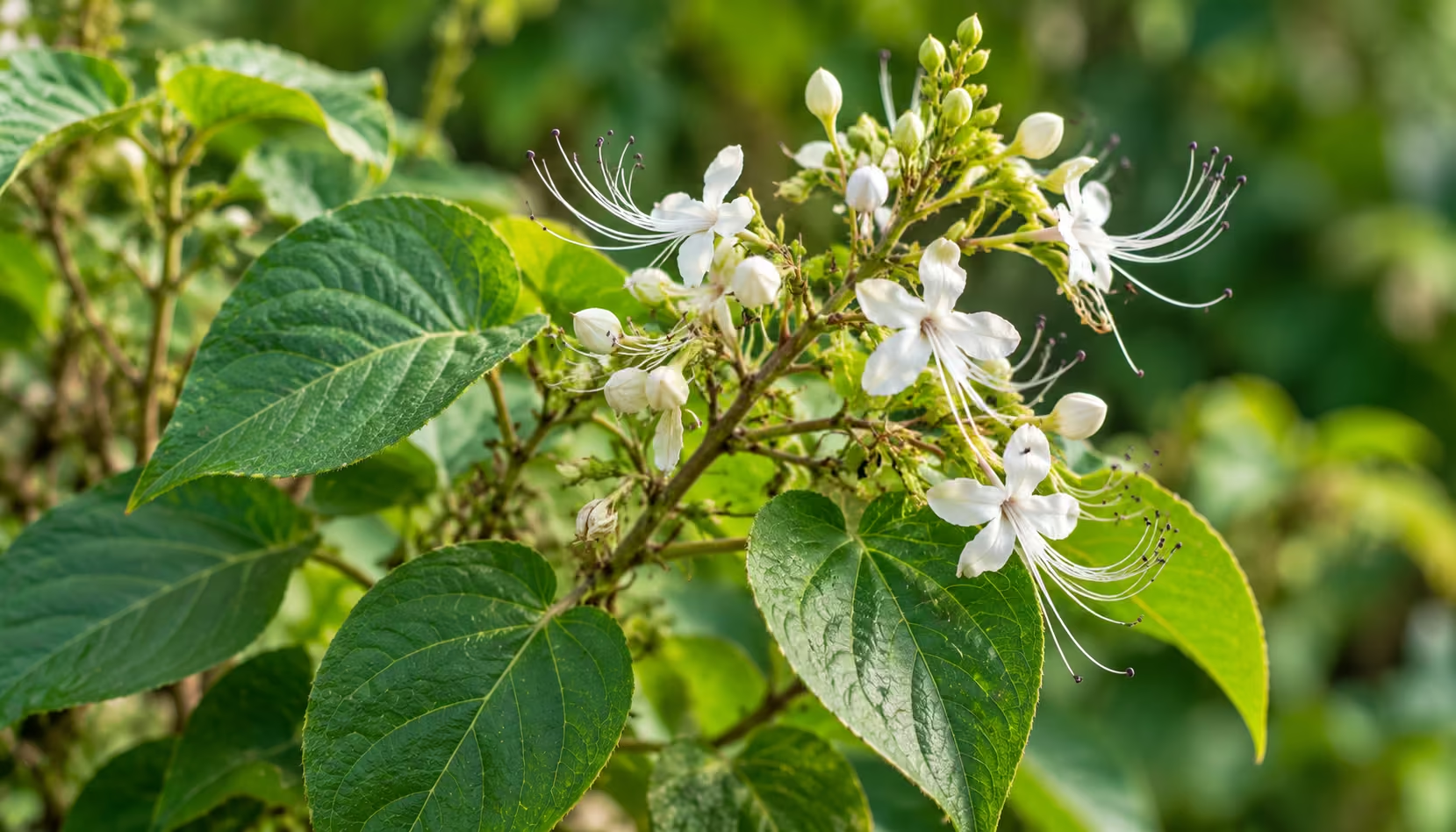
    Botanical Name : Ocimum kilimandscharicum Guerke.

    Family : Labiatae; Lamiaceae

    Identification No.: SDACH/HG/131

    Introduction :

    This plant have the smell of camphor, when leaves are crushed.

    Names in different Indian languages :

    English : Camphor Basil

    Hindi : Karpura Tulasi

    Kannada : Karpura Tulasi

    Malayalam : Karpura Tulasi

    Sanskrit : Karpura Tulasi

    Tamil : Karpura Tulasi

    Telugu : Karpura Tulasi

    Synonyms :

    Ocimum camphora Guerke

    Morphology :

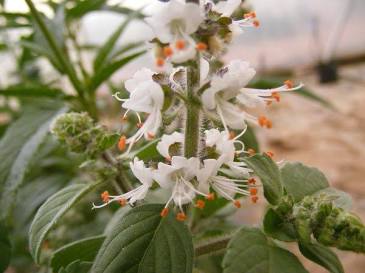
    Branched, aromatic under shrub 30-50 cm high, sometimes woody, hairy.

    Leaves—simple, opposite, ovate-oblong, – entire or subserrate. Petioles slender hairy

    Flowers— very small, pale white, borne in terminal and axillary racemes.

    Fruits— subglobose or broadly oblong nutlets.

    Flowers and fruits almost throughout the year (mainly during September-February).

    Distribution & Habitat :

    Cultivated

    Chemical constituents :

    camphor, pinene, limonene, terpinolene, myrcene, beta-phellandrene, linalool, camphene, p-cymene, borneol and alpha-selinene

    Karma :

    spasmolytic, antibacterial, aromatic, antiviral

    Indication :

    Cough, ulcer, anorexia, infections

    Part used :

    Whole plant

    Dosage :

    Leaf juice 10-15 ml

    Powder 2-4 g

    Decoction 50-100 ml

    Amayika Prayoga (Therapeutic Uses)

     External:

     The essential oil is applied topically for its antiseptic and analgesic properties.

    Used in aromatherapy for respiratory relief.

     Internal:

    – Infusions made from the leaves are   consumed to alleviate cough, cold, and

    digestive issues

    -Acts as a general tonic to boost immunity

    IUCN

    – Current Status:Not Evaluated (NE)

    Research updates

    Medicinal & Pharmacological Research (2020–2024)* 

    Climate Resilience & Cultivation Studies (2021–2024)* 


    About Karpura Tulsi

    Botanical Name

    Ocimum kilimandscharicum Gürke

    Family

    Lamiaceae

    Identification No.

    SDACH/HG/131

    Parts Used

    Whole plant

    Habitat

    Cultivated

    IUCN Status

    Not Evaluated

    Plant Photos

    Ayurvedic Properties

    Rasa

    Katu, Tikta

    Guna

    Laghu, Ruksha

    Virya

    Ushna

    Vipãka

    Katu

    Contact Now

    Have queries? Contact Us.

    Have queries? We’re here to help you every step of the way.

    Contact us to get the right guidance for your academic journey at Shri Dhanwantry Ayurvedic College.
  • Barbari

    Barbari

    Botanical Name : Ocimum gratissimum Linn.

    Family : Labiatae; Lamiaceae

    Identification No. SDACH/HG/130

    Introduction :

    Its properties are similar to Ocimum tenuiiflorum

    Names in different Indian languages :

    English : Lemon basil, tea bush, Shrubby Basil.

    Malayalam : Kattuthulsi, malatulsi

    Sanskrit : Vriddha Tulasi

    Tamil : Elumicha-Tulasi, Peria Tulasi

    Synonyms :

    Raam-Tulasi, Raan-Tulasi, aranyatulsi ,bhrihatulasi

    Morphology :

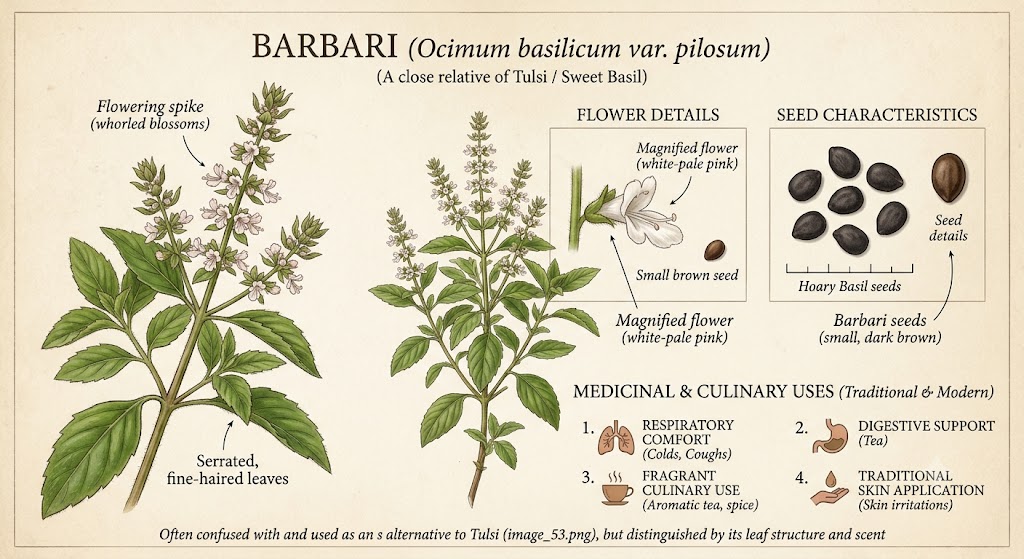
    Branched, aromatic under shrub 30-50 cm high, sometimes woody, hairy.

    Leaves—simple, opposite, ovate, serrate, obtuse or acute, – entire or subserrate. Petioles slender hairy

    Flowers— very small,yellow,borne in terminal and axillary racemes.

    Fruits— subglobose or broadly oblong nutlets.

    Flowers and fruits almost throughout the year (mainly during September-February).

    Distribution & Habitat :

    All over India

    Chemical constituents :

    Clocimum, eugenol,methyl eugenol, eugenol acetate

    Properties :

    Its properties are similar to Ocimum tenuiiflorum

    Special indication :

    constipation, cough, fever, nasal catarrh, gonorrhoea with difficult urination.

    Amayika Prayoga (Therapeutic Uses)

    External Uses:

     Leaf paste applied to skin diseases andninsect bites

    Oil used for massage in rheumati conditions

    Internal Uses:

     Decoction used in respiratory disorders like cough and asthma

     Juice used to treat fever and digestive issues

    IUCN

    – Current Status:Not Evaluated (NE)

    Research updates

    Medicinal & Antimicrobial Research (2020–2024)

     Climate Resilience & Cultivation Studies (2021–2024)* 


    About Barbari

    Botanical Name

    Ocimum gratissimum L.

    Family

    Lamiaceae (formerly Labiatae)

    Identification No.

    SDACH/HG/130

    Parts Used

    Leaves, Whole plant

    Habitat

    India

    IUCN Status

    Not Evaluated

    Plant Photos

    Ayurvedic Properties

    Rasa

    Katu, Tikta

    Guna

    Laghu, Ruksha

    Virya

    Ushna

    Vipãka

    Katu

    Contact Now

    Have queries? Contact Us.

    Have queries? We’re here to help you every step of the way.

    Contact us to get the right guidance for your academic journey at Shri Dhanwantry Ayurvedic College.
  • Shripadi

    Shripadi

    Sanskrit Name: Shripadi

    Identification No: SDACH/HG/129

    Botanical Name: Jasminum sambac

    Family Name:
    Oleaceae

    Vernacular Names:
    Hindi: Mogra, Chameli
    Marathi: Jai
    Tamil: Malligai
    Kannada: Mallige
    Telugu: Mallepuvu
    Malayalam: Mullappoo
    English: Arabian Jasmine

    Other Names: Mallika, Madanmadini, Madanapriya

    Classification
    Bhavaprakasha: Pushpavarga (under swaran jati)

    Habitat & Distribution:
    Widely cultivated across tropical and subtropical regions of India. Prefers warm, sunny climates and well-drained soils. Grown in gardens and near temples for its aromatic and sacred flowers.

    Morphology
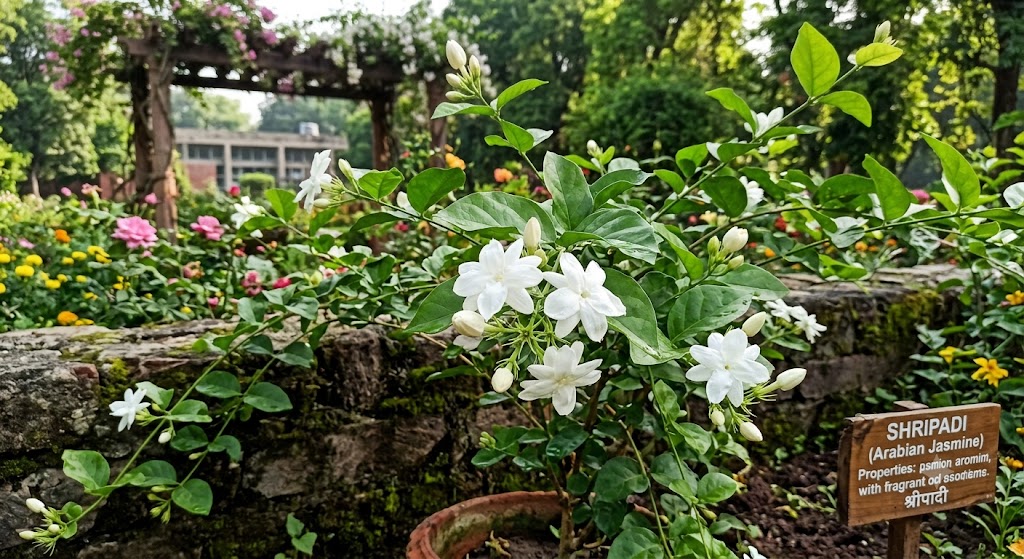
    Root: Woody, branched, fibrous
    Stem: Erect or climbing shrub, green when young, turning woody
    Leaves: Simple or trifoliate, ovate, opposite, smooth margin
    Flowers: White, fragrant, small, borne in clusters, bloom at night
    Fruit: Rarely seen in cultivated varieties; small berries when present
    Seeds: Tiny, brownish-black, rarely formed

    Varieties:

    • Jasminum grandiflorum

    Substitute / Adulterant:
    Substitute: Jasminum officinale (common jasmine)
    Adulterant: Non-aromatic white flowering shrubs like Wrightia tinctoria

    Phytochemicals:

    • Essential oils (linalool, benzyl acetate, indole)
    • Flavonoids
    • Triterpenoids
    • Saponins
    • Alkaloids
    • Sterols
    • Coumarins
    • Jasminin (glycoside)

    Rasapanchaka:
    Rasa: Madhura, Tikta
    Guna: Laghu, Snigdha
    Virya: Sheeta
    Vipaka: Madhura
    Prabhava: Hridya, Sugandhitva
    Dosha Shamakta: Pitta-Vata shamak

    Karma (Rogaghnata):
    Varnya (enhances complexion)

    Amayika Prayoga / Therapeutic Uses:

    External:
    Used in skin conditions for its cooling and anti-inflammatory effects
    Applied as paste on wounds and swellings
    Essential oil used in aromatherapy to relieve stress and anxiety
    Infused flowers used for eye conditions and bathing

    Internal:
    Juice or decoction of flowers used for gastritis, indigestion
    Helpful in cardiac debility, palpitations
    Used in diarrhea and colitis
    Mild sedative in insomnia and restlessness
    Flower tea for stress relief and general wellness

    Part Used:
    Flowers, Leaves, Root

    Dose:
    Fresh flower juice: 10–15 ml
    Leaf juice: 5–10 ml
    Churna (powdered root or leaves): 1–3 g
    Decoction: 20–40 ml
    Essential oil: Few drops (aromatherapy/external use)

    Yoga / Formulations:

    • Mallika pushpa arka
    • Jasmine tea
    • Herbal oils with Mallika for massage and relaxation
    • Used in many proprietary Ayurvedic beauty and stress-relief products

    IUCN Status:
    Not Evaluated (NE).

    Research Updates

    1. Kumar et al., 2021 – Evaluated anxiolytic and antidepressant activity of J. sambac flower extract in mice; showed comparable effects to diazepam.
    2. Sharma & Gupta, 2020 – Demonstrated antimicrobial activity of J. sambac essential oil against Staphylococcus aureus and E. coli.
    3. Rao et al., 2019 – GC-MS analysis confirmed high presence of linalool and benzyl acetate; supports traditional use in aromatherapy and perfumery.

    About Shripadi

    Botanical Name

    Jasminum sambac (L.) Aiton

    Family

    Oleaceae

    Identification No.

    SDACH/HG/129

    Parts Used

    Flowers, Leaves, Root

    Habitat

    India

    IUCN Status

    Not Evaluated

    Plant Photos

    Ayurvedic Properties

    Rasa

    Madhura, Tikta

    Guna

    Laghu, Snigdha

    Virya

    Sheeta

    Vipãka

    Madhura

    Contact Now

    Have queries? Contact Us.

    Have queries? We’re here to help you every step of the way.

    Contact us to get the right guidance for your academic journey at Shri Dhanwantry Ayurvedic College.