Shri Dhanwantry Ayurvedic College

Category: Dravyaguna Vigyan Blogs

  • Daruharidra

    Daruharidra

    Botanical Name : Berberis lycium

    Family : Berberidaceae.

    Identification No.: SDACH/HG/118

    Introduction :

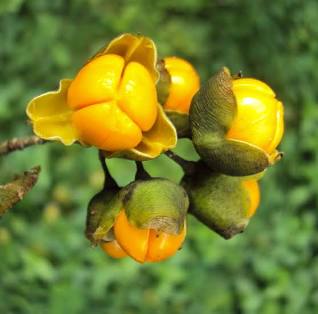
    Usually ‘Dãruharidrã’ along with Haridrã uses external application. Cocinium fenestratum (MENISPERMACEA) is used in South India as Dãruharidrã but in North India Berberis aristata uses as Dãruharidrã.

    Scientific classification: Barberries make up the family Berberidaceae. The representative genus is Berberis. The common barberry is classified as Berberis vulgaris, the American barberry as Berberis canadensis, and the Colorado barberry as Berberis fendleri. The Japanese barberry is classified as Berberis thunbergii, the Magellan barberry as Berberis buxifolia, and the wintergreen barberry as Berberis julianae.IndianBarberries as Barberies aristata.

    Names in different Indian languages :

    English : Indian Barberry

    Hindi : Jhar –i-haldi

    Kannada : Maradasina

    Malayalam : Maramannal

    Sanskrit : Daruharidra, darvi

    Tamil : Maramancal, mancalkoti

    Telugu : Manu pasupu

    Unani : Daarhald, Rasaut (extract), Zarishk (fruit).

    Synonyms :

    Pitachandana, Pitasaara, Harichandana, Kaaliyaka, Kalambaka, Daaruharidraa, Daaru, Daarvi, Daarunishaa, Daarurajani, Vrahitaphala, Valliphala, Sthirphala. Pushpaphala, Somakaa, Parjanyaa, Parjani, Kantkateri, Taarthya, Pachampachaa. Kaaliyaka

    Berberis asiatica Roxb. ex DC

    Classification according to Charaka, Susrutha & Vagbhata :

    Charaka

    Arsoghna, Kandüghna, Lekhaniya Läksadi

    Susrutha

    Haridrãdi, Mustadi

    Vagbhata

    Haridrãdi, Mustadi

    Varieties & adulterants – (CV – controversy, AD – adulterants) :

    Plants using in South India & North India are well identified, there is no confusion of this two drugs.

    (1) The rocky mountain group B. aquifolium Pursh

    (2) Dãruharidrã   – The Asiatic group i.e.; B. aristata

    (3) The European group i.e.; B. vulgaris Linn.

    (4)Berberis chitra.

    (5)Berberis lycium.

    (6) Kãliyaka  – Cosinium fenestratum   – South India

    Berberis actinacantha

    Berberis wilsonae

    Berberis ottawensis

    Morphology :

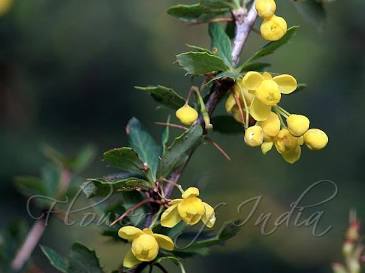
    A large deciduous shrub, 2-3.6m high. Twigs whitish or pale yellowish brown,

    Leaves- simple, 4-10 cm by 1.5-3 cm, obovate or elliptic, entire or toothed, base gradually narrowed, dark green above, pale beneath. Petiole 0-3 mm.

    Inflorescence a simple drooping raceme, 3-6 cm. long. Densely flowered.

    Fruit 7- 10 mm. long, ovoid, blue-black, distinct style.

    Distribution & Habitat :

    Northwestern Himalayas, Nilgiris, Kulu and Kumaon

    Chemical constituents :

    Berberine hydrochloride and sulphate, Berberine, Karachine (a protoberberine alkaloid), taxilamine, berberine, palmatine,jatrorrhizine, oxycanthine,

    Properties :

    Rasa Tikta, Kasaya

    Guna Laghu, Rüksa

    Virya Usna

    Vipäka Katu

    Karma :

    Kapha-pittahara, Chedana, vranahara, varnya

    stomachic, diuretic, hypotensive, antidysenteric, antibacterial, antifungal, bitter tonic in dyspepsia and debility.

    Indication :

    Prameha, Kustha, Netra roga, veta pradara, Kãmalã, Vrana, Visarpa

    Fractures, for dressing wounds and ulcers, cutaneous leishmaniasis.

    Part used :

    Root, Stem, Fruit – extract (Rasãnjana)

    Dosage :

    Decoction 50-100ml;

    fruit powder 5-l0g; extract-3g.

    External uses :

    Reduces inflammation or oedema. removes pain, cures and heals ulcers, also used for eye diseases like conjunctivitis, as rasajana

    Internal uses :

    Digestive system : liver stimulant. A larger dose is laxative. The fruit is very tasty. Daruharidra is a superior medicine in agnimandya, dysentery, jaundice and other liver disorders.

    Circulatory system : Blood purifier and haemostatic agent. haridra acts on rakta dhatu.

    Respiratory system : It is useful in the treatment of cough

    Reproductive system : Useful in uterine inflammations and vaginal discharges.

    Skin : Daruharidra decoction is useful in cleaning wounds. . It is  useful in ulcer.

    Temperature : Diaphoretic and is a prophylactic treatment for typhoid, hence it is useful in common fever This preserves and increases the patient’s strength

    Important Yogas or Formations :

    Darvyadikwath, Darwadilaila. Rasanjanshuddhi Rasanjan                     

    Therapeutic Uses :

    (1) svëta pradara- Decoction of Dãruharidrã is given with honey (G.N.)

    (2) meha- Decoction of Haridrã and Dãrtiharidrä is useful (S.S.Ci.)

    (3) Vriddhi (kaphaja)- Däruharidrä paste is taken with cow’s urine (Vr.Mã.)

    (4) Mütrákrichra- Juice of Dãruharidrã and Amalaki with honey (C.SCi.26)

    IUCN Status : Least Concern

    Research updates:

    1. “Berberine in Berberis aristata and its antimicrobial potential” – Journal of Ethnopharmacology, 2022

    2. “Anti-diabetic effects of Berberis aristata extracts” – Phytotherapy Research, 2021

    3. “Berberine and its role in metabolic syndrome” – International Journal of Ayurveda Research, 2023
    About Daruharidra

    Botanical Name

    Berberis lycium Royle

    Family

    Berberidaceae

    Identification No.

    SDACH/HG/118

    Parts Used

    Root, Stem, Fruit

    Habitat

    India

    IUCN Status

    Least Concern

    Plant Photos
    Ayurvedic Properties

    Rasa

    Tikta, Kashaya

    Guna

    Laghu, Ruksha

    Virya

    Ushna

    Vipãka

    Katu

    Contact Now

    Have queries? Contact Us.

    Have queries? We’re here to help you every step of the way.

    Contact us to get the right guidance for your academic journey at Shri Dhanwantry Ayurvedic College.

  • Shimshapa

    Shimshapa

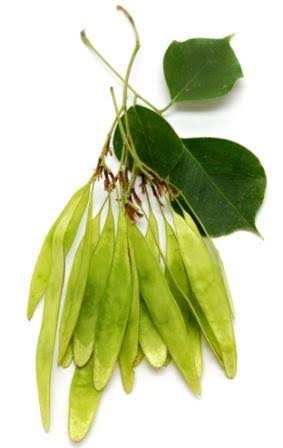
    Botanical Name : Dalbergia sissoo Roxb ex DC.

    Family : Papilionaceae; Fabaceae

    Identification No. – SDACH/HG/117

    Introduction :

    Latin name : Dalbergia Mr. Nicholas Dalberg; sissoo = from the Indian name shisav, or D.Iatifolia.

    Names in different Indian languages :

    English : Sissoo, South Indian Redwood, Sissoo

    Hindi : Sisam, sisu

    Kannada : Agaru, biridi

    Malayalam : Irupul, sisam

    Sanskrit : Shimshapaa

    Tamil : Irupoolai

    Telugu : Errasissu, simsupa

    Unani : Seesham

    Synonyms :

    शिंशपा सिसवो वृक्षा तिक्तोष्णा कफवातनुत्।

    शोथकुष्ठहरा रुक्षा रक्तपित्तविनाशिनी॥

    Shimshapaa, Krishnashimshapaa, Picchilaa

    Varieties & adulterants – (CV – controversy, AD – adulterants) :

    Dalbergia lanceolaria

    Morphology :

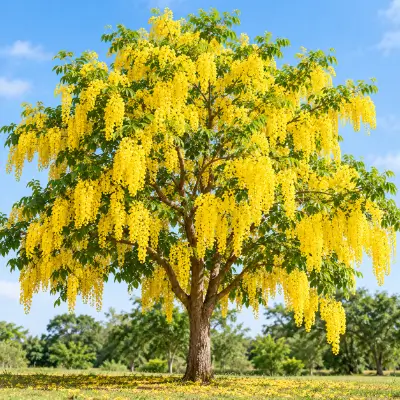
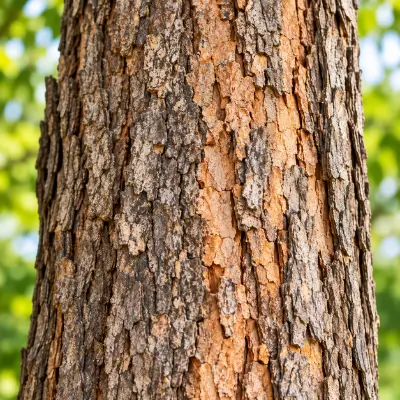
    The tree grows to 15 – 20 mtrs. in height. Its synonyms like krishnasaraand shyamla are suggestive of its appearance. It is also known as shisham. shishu. sisam, rosewood etc. Trunk- sturdy and round. Bark is fissured. Core is thick, hard and blackish in colour (good for making furniture). Branches tender, pointing downwards. Stalk of leaf – long, wavy with 3.5 leaflets flowers small. yellowish or whitish. Legume- thin with a single seed. On chewing a thin branch, the colour changes from white to yellow and finally it becomes red.

    Varieties:

    1) Krishnasara

    2) Kapilsara

    Distribution & Habitat :

    throughout India

    Chemical constituents :

    Sissotrin, di-Me-tectorigenin,palmitic, stearic , oleic, linolenic , linoleic

    Properties :

    Guna: laghu. ruksha:

    Rasa: kashaya. Katu, Tikta;

    Vipãka:katu.

    Virya: Usna.

    Karma :

    Dushtavrana hara, balyam, ruchyam, varnyam

    carminative, digestive,astingent,cooling,diuretic, antimicrobial, antifungal, anthelmintic,

    Indication :

    Sopham, vrana, kusta, daha, medhas, vasti ruja

    Ulcers, wounds, fever, skin disease, cough, piles, leucorrhoea

    Part used :

    Bark, heartwood, leaves, root

    Dosage :

    Leaf juice 10-15 ml

    Powder 2-4 g

    Decoction 50-100 ml

    Uses :

    Since it pacifies all the three doshas. it is used in dermatoses, as an anthelmintic and a wound cleanser. Root. constipative. Leaves, appetizer, antimenorrhagic. Trunk – blood purifier, anti-inflammatory and is useful in dysmenorrhoea and menstrual disorders. Decoction o the leaves is used in burning sensation, while in fever, decoction of the trunk is used

    IUCN Status : Least Concern

    Research Updates :

    1. 2021 – Dalbergia sissoo bark extract studied for anti-diabetic activity in rat models (Journal of Ethnopharmacology)

    2. 2022 – Evaluation of antioxidant and hepatoprotective potential of D. sissoo leaves (Indian Journal of Experimental Biology) 3. 2023 – Antibacterial effects of D. sissoo extract against multi-drug resistant strains (Phytomedicine Research)


    About Shimshapa

    Botanical Name

    Kashaya, Katu, Tikta

    Family

    Fabaceae (Papilionaceae)

    Identification No.

    SDACH/HG/117

    Parts Used

    Bark, Heartwood, Leaves, Root

    Habitat

    India

    IUCN Status

    Least Concern

    Plant Photos
    Ayurvedic Properties

    Rasa

    Kashaya, Katu, Tikta

    Guna

    Laghu, Ruksha

    Virya

    Ushna

    Vipãka

    Katu

    Contact Now

    Have queries? Contact Us.

    Have queries? We’re here to help you every step of the way.

    Contact us to get the right guidance for your academic journey at Shri Dhanwantry Ayurvedic College.

  • Jyotismati

    Jyotismati

    Botanical Name : Celastrus paniculatus Willd.

    Family : Celastraceae

    Identification No.: SDACH/HG/116

    Introduction :

    This drug considered as medya, rasayana , mangment of sidgma kustha & bhagandara. It mentioned in vedic literature . It is seen that intelligence promoting drugs are usually agnivardhak.

    It is seen that intelligence promoting drugs are usually agnivardhak and this agni is sadhakagni. (Sadhak is one of the types of pitta). A person of pitta prakruti has sharp agni. He/she feels more thirsty and more hungry. Pitta prakruti people are intelligent.

    Names in different Indian languages :

    English : Staff tree, Intellect tree

    Hindi : Malkangani

    Kannada : kariganne

    Malayalam : Paluruvam, cheru punna

    Sanskrit : Jyothismati, pitataila

    Tamil : Valulavai

    Telugu : Danti cettu, gundumida

    Unani : Malkkangani

    Synonyms :

    Paaraavatpadi. Kangunikaa, Kanguni, Vegaa, Maalkaanguni, Svarnalatikaa, Kaakaandaki, Katuveekaa

    Classification according to Charaka, Susrutha & Vagbhata :

    Charaka

    Sirovirecana

    Susrutha

    Arkädi, Adhobhãgahara, Sirovirecana

    Vagbhata

    Arkãdi

    Varieties & adulterants – (CV – controversy, AD – adulterants) :

    1. Alavana

    2. Salavanã

    3. Rakta Phanha

    4. Raktaphala.

    5. Kãkãdani(Kãkamardanikã) – Cardiospermum helicacabum Linn.

    6. Tejovati— Zanthoxylum budrunga wall.

    Morphology :

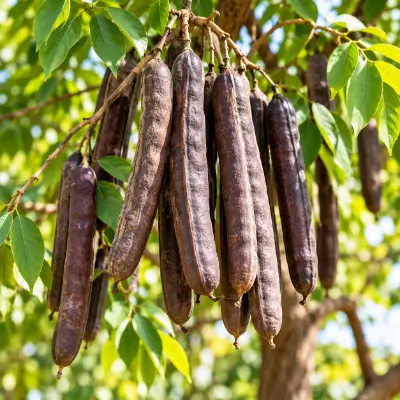
    It is a climbing or scrambling shrub, the young shoots and branches pendulous.

    Leaves—glabrous, broadly ovate or obovate, acuminate or acute.

    Flowers—unisexual, yellowish-green, borne in terminal, pendulous panicles.

    Fruit— capsule, globose, 3-valved, 3-celled, 3-6 seeded.

    Seeds are enclosed in complete red, ovoid, brown. (Flowers throughout the year).

    Distribution & Habitat :

    Tropical and subtropical Himalayas upto 1500m (Punjab to Assam) & Bihar and South India

    Chemical constituents :

    celastrine and paniculatine

    Root-bark & stem— pristimerin

    Seeds— celapagine, celapanigine, celapanine, celastrol, celastrine, paniculatine,malkanguniol, malkangunin, paniculatadiol, 1-amyrin, beta—sitosterol; acetic, benzoic, formic, linoleic acids etc.

    Properties :

    Rasa: Katu, Tikta

    Guna: Tiksna

    Virya: Ushna

    Vipãka: Katu

    Karma : Kapha-vätahara, Dipana, Medhya, Rasãyana, nervine and brain tonic, diaphoretic, febrifugal, emetic.

    Indications :

    Kustha, Vatavyadhi, Udara, Gulma

    mental depression, hysteria , memory; also used for scabies, eczema, wounds, rheumatic pains, paralysis.

    Dosage :

    Powder 3-5 g. oil 5-15 drops

    Part Used :

    whole plant

    Internal use :

    Nervous System : Improves memory , enhances grasping power. Cow’s ghee and jyotishmati oil mixture is used as a memory enhancer.

    Digestive System : Appetizer, Snigdha and ushna gunas improve peristalsis and are therefore useful in overcoming constipation and abdominal distension (flatulence).

    Circulatory System : cardio tonic. improves cardiac output. Therefore useful in bradycardia and oedema, Black oil of jyotishmati is useful in breathlessness; yellow oil is used in osteoarthritis (external use).

    Respiratory system : It is used for nasya also useful in asthma and bronchitis.

    Urinary System : increase renal circulation ,it acts as a diuretic.

    Reproductive System : Aphrodisiac. It is used in infertility (impotency).

    Skin : Diaphoretic and cures skin disorders. It is used as antipyretic.

    Temperature : diaphoretic, it is used as antipyretic. Within 3-4 hrs. it reduces fever by promoting sweating.

    Important Yogas :

    Jyotismati tailm.

    Important research work going on :

    1. skin diseases

    2. antispermatogenic effect

    Therapeutic Uses :

    (1) Artava ksaya:  Consumption of Jyotismati leaves (fried) along with Kanjika relieves amenorrhoea (C.D.).

    (2) Sidhma: Jyotismati oil processed with Apamarga ksãra jala for 7 times may be applied locally (A.H.Ci.19).

    (3) Udara:  Jyotismati oil, Sarjaksãra and Hingu should be taken with milk (S.S.Ci.14).

    IUCN Status : Least Concern

    Research updates :

    1. Neuroprotective effects of Celastrus paniculatus seed extract in Alzheimer’s model (2020).

    2. Antioxidant and anti-inflammatory studies validating its cognitive enhancing effects (2021).

    3. Evaluation of antidiabetic and hepatoprotective properties in experimental models (2022).


    About Jyotismati

    Botanical Name

    Celastrus paniculatus Willd.

    Family

    Celastraceae

    Identification No.

    SDACH/HG/116

    Parts Used

    Whole plant

    Habitat

    India

    IUCN Status

    Least Concern

    Plant Photos
    Ayurvedic Properties

    Rasa

    Katu, Tikta

    Guna

    Tikshna

    Virya

    Ushna

    Vipãka

    Katu

    Contact Now

    Have queries? Contact Us.

    Have queries? We’re here to help you every step of the way.

    Contact us to get the right guidance for your academic journey at Shri Dhanwantry Ayurvedic College.

  • Musta

    Musta

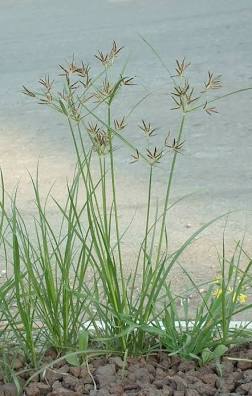
    Botanical Name : Cyperus rotundus Linn.

    Family : Cyperaceae

    Identification No.: SDACH/HG/115

    Introduction :

    Musta used in skin infections, vachikarana  drug, liver & lung diseases. Root powder is used for epilepsy. Decoction is used in gonorrhoea and also in syphilitic infections

    Names in different Indian languages :

    English : Nut Grass

    Hindi : Motha, Nagarmotha

    Kannada : Tungegadde, tungahulli, badramusti

    Malayalam : Muttangha

    Sanskrit : Musta, mustaka

    Tamil : Muthakach, Korai

    Telugu : Tunga mustalu;

    Unani : Naagarmothaa, Saad-e-Kufi

    Synonyms :

    Mustaka, Abda, Ambuda, Ambhoda, Ambodhara, Bhadra, Bhadraa, Bhadramusta, Bhadramustaa, Bhadramustaka, Ghana, Jalada, Jaldhara, Meghaahvaa, Nirada, Vaarida, Vaarivaaha, Payoda, Balaahaka. Ganda-Duurvaa

    Classification according to Charaka, Susrutha & Vagbhata :

    Charaka

    Lekhaniya, Trsnãnigrahana, Kandughna, Stanyasödhana

    Susrutha

    Mustãdi, Vacãdi

    Vagbhata

    Mustãdi, Vacãdi

    Varieties & adulterants – (CV – controversy, AD – adulterants) :

    1. Nagara Mustã— C. scariosus (Nut hedge)

    2. Bhadra Mustä— C. rotundus (Nut grass)

    3. Kaivarta or Jala Mustã— C. esculentus (Earth almond).

    C. esculentus

    C. esculentus

    Kyllinga bulbosa

    cyperaceae-kyllinga bulbosa.JPG

    Kyllinga monocephala

    Morphology :

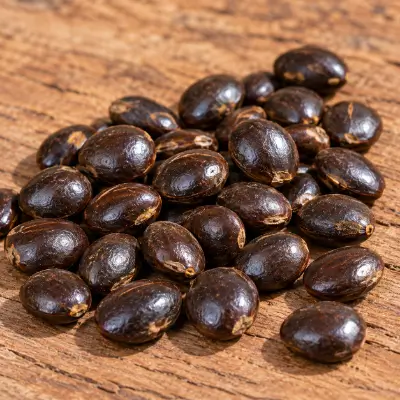
    Perennial slender herb.

    Stem— at base nodosely thickened and suddenly constricted into rhizome, subsolitary, triquestrous at top.

    Leaves— long, often overtopping stem.

    Flowers—, in. compound. umbel, spikes loosely spicate of 3- 8 spikelets.

    Seeds— trigonous nuts.

    Habitat & Distribution :

    Common in rice fields, low lands, water logged places throughout India. s

    Chemical Constituents :

    Cineol (+) copadiene, copaene, cyperen I & II, cyperenone, isopatchoulenone, cyperotundone, cyperol, cyperolone, a-cyperone, (+) epoxyguaiene, isocyperol, isokobusone, kobusone, mustakone, patchulene, (+) rotundone, selinene, sugenol, beta-sitosterol etc.

    Properties :

    Rasa Tikta, Katu, Kasaya

    Guna Laghu, Ruksa

    Virya sita

    Vipaka Katu

    Karma Kapha-pitta hara, Dipana-Pãcana, Grãhi, Lekhana

    Carminative, astringent, anti-inflammatory, antirheumatic, hepatoprotective, diuretic, antipyretic, analgesic, hypotensive, emmenagogue , nervine tonic

    Indications : Jvara, Krimi, Trsnã, Atisra, Kandu, Grahani, Kãsa, Nidranãsa,  Rakta vikara. Visarpa. Apasmara, Kustha.

    Fever, skin disease, intestinal worms, ulcer, diarrhea, dysentery

    Part Used :

    Tubers

    Dosage :

    Powder 3-6 g; decoction 50-100 ml.

    External uses :

    Deodorant, corrosive when applied and rubbed on the skin and as a galactagogue when applied on the breast. In obese patients, powder is used for massage. Local application helps in skin disorders as well as in eye diseases.

    Internal uses :

    Nervous system : Brain and nervine tonic, hence its paste alone with milk is given in brain impairment and convulsions. –

    Digestive system : Mustak is the best medicine for digestive system. Being bitter, it is appetizer, digestive, astringent, anthelmintic and antidiabetic. Hence it is used in anorexia, vomiting, indigestion, sprue and diarrhoea. Large dose is required for expelling worms. A mixture of mustak, karkatshringi and ativisha is good for infantile digestive disorders (balsanjivani churna).

    Circulatory system : It is useful in blood disorders by enhancing rakta dhadu.

    Respiratory system : It is found to be useful in respiratory disorders arising out of gastrointestinal pathology.

    Urinary system : Diuretic, hence useful in dysuria, mainly when it is associated with digestive disorders,

    Reproductive system : It is known to promote uterine muscle contractions and also breast milk purifier and promoter. Hence it is used in treating number of gynecological and post-partum conditions.

    Skin : it is useful in number of skin disorders viz. pruritus, scabies and oedema etc. Temperature control. Even the Ayurvedic texts and senior Ayurvedic physicians say that mustak is the first drug which should be used in any type of fever.

    Satmikaran : Useful as a general tonic and antidote. It is used as a rasayan in teething period with Karkatasrngi, ativisha and pippali.

    Important Yogas or Formations :

    Mustakadi kadha. Balasanjivani churna, Shadangodak Mustãrista, Gangädhara cürna, Sadanga paniyam, Mustãdivati,  Mustadi Kaãya, Mustakãdi curna, Kandarpasundararas.

    Important research work going on :

    (1) estrogenic activity.

    (2) Action on uterus

    (3) anti-bacterial activity

    (4) Diuretic effect

    (5) tranquillizing activity

    (6) Action on heart muscles

    (7) anti-inflammatory activity

    (8) anti-fungal activity

    (9) hydrocortisone activity

    (10) Action on CNS

    (11) Anti cancerous effect.

    Therapeutic Uses :

    (I) Jvara— Mustã and Parpãtaka are used either with Sunthi or Goksura in the form of infusion (A.H.Ci.).

    (2) Atisãra— Decoction of Mustã given with honey (S.S.Ut.)

    (3) Halimaka— Loha bhasma, Mustã powder are administered with the decoction of Khadira (B. P.).

    IUCN Status : Least Concern

    Research updates :

    1. Evaluation of antidiarrheal activity in Musta extract – Journal of Ethnopharmacology (2021)

    2. Antioxidant and anti-inflammatory properties of Cyperus rotundus – Pharmacognosy Reviews (2020)

    3. Neuroprotective effects in animal models – Indian Journal of Experimental Biology (2022)

    About Musta

    Botanical Name

    Cyperus rotundus L.

    Family

    Cyperaceae

    Identification No.

    SDACH/HG/115

    Parts Used

    Tubers

    Habitat

    India

    IUCN Status

    Least Concern

    Plant Photos
    Ayurvedic Properties

    Rasa

    Tikta, Katu, Kashaya

    Guna

    Laghu, Ruksha

    Virya

    Sheeta

    Vipãka

    Katu

    Contact Now

    Have queries? Contact Us.

    Have queries? We’re here to help you every step of the way.

    Contact us to get the right guidance for your academic journey at Shri Dhanwantry Ayurvedic College.

  • Palandu

    Palandu

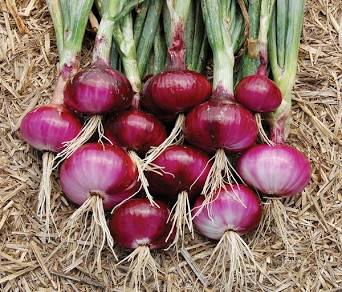
    Botanical Name : Allium cepa Linn.

    Family : Liliaceae; Alliaceae

    Identification No.: SDACH/HG/114

    Introduction :

    Latin name: Album (onion) all = hot, burning; cepa = tomb(shaped like the dome of a mosque).

    Scientific classification: Onions make up the genus Allium, of the family Liliaceae. The true onion is classified as Allium cepa; the nodding wild onion as Allium cernuum; the shallot as Allium ascalonicum; the chive as Allium schoenoprasum; and the green onion, or common leek, asAllium ampeloprasum.

    Onion, common name for any of a genus of biennial herbs, of the lily family, native to Asia but cultivated in temperate and subtropical regions for thousands of years. The true onion is a bulb-bearing plant. Its long, hollow leaves with thickened bases make up most of the bulb. The white or pink flowers, which are borne in umbels, have six sepals, six petals, six stamens, and a solitary pistil. In the varieties known as top onions, the flowers are supplanted by bulblets, which may be grown to obtain new plants. The plant contains sulfurous, volatile oils that give it a characteristic pungent taste; one component readily dissolves in water to produce sulfuric acid, which may be produced in the eyes and induce tears.

    Onions are one of the most versatile vegetables. They are eaten raw in salads, are cooked or pickled in a variety of ways, and are used as a flavoring or seasoning. Dehydrated onion products provide popular flavorings for soups and stews. Recent scientific studies indicate that onions may confer health benefits because they are rich in antioxidants, molecules that may have anticancer properties.

    Onions raised in warm areas are planted as winter crops and are milder in taste and odor than onions planted during the summer in cooler regions. Yellow Bermuda and white Spanish onions are among the mildest cultivated onions.

    Onions are easily grown from seed that may be either field-grown directly or planted in beds to produce small bulbs, or sets. These are commonly dried and shipped to gardeners and commercial growers. Onions are adaptable to temperature and can be planted year-round as long as the soil is rich and moist. They are sown four to six weeks before the last frost in the spring or are planted in late summer for a fall crop.

    The crop is allowed to ripen in the field until tops begin to bend and break. The bulbs are then pulled up and spread or hung in a dry area to cure. Once dry, they are normally stored and shipped in slotted or open-mesh bags to keep them dry enough to prevent sprouting. United States commercial production of onions at the beginning of the 21st century exceeded 3,000,000 metric tons.

    Other onions in the genus include the nodding wild onion, the shallot, the chive, and the green onion, or common leek. Both the shallot and the green onion, which have small bulbs, are also known as scallions.

    Names in different Indian languages :

    English : Onion

    Hindi : Pyaj

    Kannada : Nirulli

    Malayalam : Cuvannulli, cheriya ulli

    Sanskrit : Palaandu, Durgandh

    Tamil : Venkaayam

    Telugu : Ullipaya, ulligadda, erragadda

    Unani : Piyaaz

    Synonyms :

    पलाण्डु यवनेष्टश्च दुर्गन्धो मुखदूषकः।स्वादुः पाके रसेऽम्लश्च कफकृन्नातिपित्तलः॥

    Tikshnakanda, Mukhadushana, Shudrapriya, Krumighna. Deepan. Mukhagandhaka, Durgandh

    Varieties & adulterants – (CV – controversy, AD – adulterants) :

    Varieties: 1) Red – raktaraj palandu – smaller in size and 2) White- shwetakshir palandu – larger in size.

    Morphology :

    The shrub grows to a height of 60 to 90 cms.

    Leaves – thick, round and green with green coloured flower stalk at the top. It bears white flowers in clusters. These produce triangular seeds. Flowering and fruiting occurs after winter.

    Distribution & Habitat :

    All over India. Onions growing in Maharashtra are large in size.

    Chemical constituents :

    It contains an oil having pungent taste and offensive smell, sulphur. quercetin. sylapicrin. syliamarin, syllanineCycloallin, quercetin, oleanolic acid , allicin, alliin; flavonoids; phenolic acids and sterols

    Properties :

    Guna: Guru, snigdha:

    Rasa: madhur. katu;

    Virya: ushna

    Vipaka: madhur;

    Onions decrease vata and increase pitta.

    Karma :

    Krimighna, arsoghna, vatahara, deepana, pachana,

    Antibiotic, antibacterial, antisclerotic, anticoagulant, anti-inflammatory, antiasthmatic, expectorant, carminative, antispasmodic, diuretic, hypotensive, antidiabetic.

    Indication :

    Krimi, arsas, medhas,

    Ulcers, wounds, fever, skin disease, cough, piles, leucorrhoea, mouth ulcers,Eczema, ,pruritus, diabetes ,leucoderma,anorexia

    Part used :

    Bulb

    Uses :

    Analgesic, anti-inflammatory, tonic, enhances eyesight and reduces otalgia. Pain due to bronchitis is controlled with a warm poultice of grated onion. In skin infections, onion is applied externally as a poultice. In weak eyesight, onion juice mixed with honey is used as eye drops. In ear ache, warm onion juice is. used as eardrops.

    Internal uses : Onions reduce vata and cause an increase in raja and tama. It is therefore useful in arthritic pain, sciatica, hysteria and hydrophobia. It improves digestion and helps in constipation, piles and jaundice. Onions are also used in rectal prolapse. It is useful in cardiac debility, bleeding disorders, dry cough, dysuria, azoospermia, irripotency, dysmenorrhoea, cholera, plague and skin. diseases.

    Onions are not beneficial to those with pittaprakruti and brain weakness. The antidote in these cases is pomegranate juice.

    Dosage : Dose: Juice – 10 to 30ml. Seed powder – 1 to 3 gms.

    IUCN Status : Not Evaluated

    Research updates:

    1. Study on antihypertensive effect of Allium cepa extract – Journal of Ethnopharmacology, 2021

    2. Antimicrobial and antioxidant activity of onion phytochemicals – Phytomedicine Reports, 2022

    3. Clinical trial on hypoglycemic effect of onion juice in Type-2 Diabetes – AYU Journal, 2023

    About Palandu

    Botanical Name

    Allium cepa L.

    Family

    Amaryllidaceae

    Identification No.

    SDACH/HG/114

    Parts Used

    Bulb

    Habitat

    India

    IUCN Status

    Not Evaluated

    Plant Photos

    Ayurvedic Properties

    Rasa

    Madhura, Katu

    Guna

    Guru, Snigdha

    Virya

    Ushna

    Vipãka

    Madhura

    Contact Now

    Have queries? Contact Us.

    Have queries? We’re here to help you every step of the way.

    Contact us to get the right guidance for your academic journey at Shri Dhanwantry Ayurvedic College.

  • Vasa

    Vasa

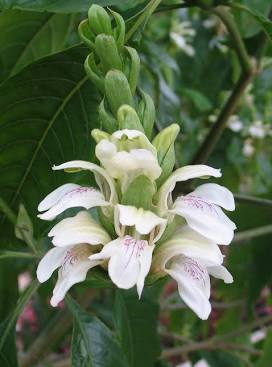
    Botanical Name : Adhatoda vasica Nees.

    Family : Acanthaceae

    Identification No.: SDACH/HG/112

    Introduction :

    This drug used for the agraya oushada of Rakta pita. It also show action in respiratory system treatment for Ksaya and Kãsa

    Names in different Indian languages :

    Hindi : Adusa

    Telugu : Addasaramu

    Tamil : Adutota

    English : Malabar Nut

    Bengali : Bakas

    Punjabi : Vamsa

    Marathi : Adulsa

    Kanada : Sanna adusoge

    Malayalam : Atalodakam, cittaladokam

    Unani : Arusaa

    Synonyms :

    Vaasaa, Vaasaka, Vaasikaa, Simhaasya, Simhaparni, Simhavadanaa, Vaajidanta, Vrisha, Aataruushaka.

    Adhatoda zeylanica Medic.

    Justicia adhatoda Linn

    Classification according to Charaka, Susrutha & Vagbhata :

    Charaka

    Tikta skañdha

    Susrutha

    Vagbhata

    Durvadigana

    Varieties & adulterants – (CV – controversy, AD – adulterants) :

    1. Ailanthus excelsa  -[AD]

    2. A. beddomi

    3. Justacia gendarussa  -[CV]

    4. Justicia picta  -[CV]

    Morphology :

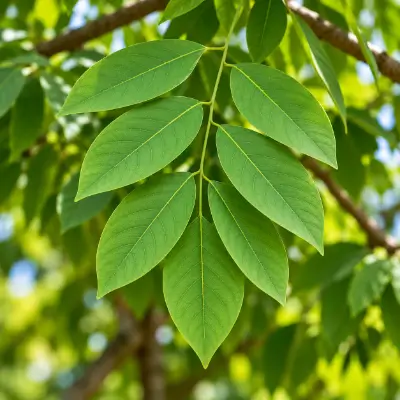
    A dense glabrous  shrub up to 0.5 to 1 m.

    Leaves— alternate,simple,opposite, elliptic or elliptic-lanceolate, acuminate.

    Flowers—white, in dense spikes, white; bracts ovate or obovate; calyx deeply five-lobed; stamens glabrous.

    Fruits— four seeded capsules with a solid base.

    Seeds— glabrous.

    Flowering and fruiting between.February-May.

    Distribution & Habitat :

    Found throughout India.

    Chemical constituents :

    aminophylline, isoprenaline,Vasicinone, Vasicine (peganine), vasicinine, beta-sitosterol, Kaempferol, beta- sophoroside, luteolin, tritriaecontane, adhatodic acid, Carotene, vasakin, vasicinol 1 q-hydroxyvasicine, vasicinone, vit-C, vasicol, vasicinol, vasicinolone, adhatodine, adhavasinone, anisotine, vasicolone, vasicolinone

    Properties :

    Rasa Tikta, Kasäya

    Guna Laghu, Ruksa

    Virya sita

    Vipaka Katu

    Karma : Kapha-pittahara, Hrdya, Svarya

    expectorant diuretic, antispasmodic, depurative, it is useful in bleeding diarrhoea, cough, asthma.

    Indication :

    sväsa, Kasa; Jvara; Chardi, Prameha, Kustha, Ksaya, Pãndu, Raktapitta

    Part Used :

    Leaf, root, flower

    Dosage :

    Leaf juice 10-20 ml; root decoction 50-100 ml; flower juice 10-20 ml

    External uses :

    Paste is anti inflammatory , antibacterial & analgesic

    Internal use :

    Nervous System : Vaso dilation, stimulates vagus nerve and lowers B.P.

    Digestive System : Anti diarrhoeal

    Circulatory System : Useful in bleeding disorder, vasodialator, blood purifier

    Respiratory System : Expectorant useful in asthma

    Urinary system : Diuretic

    Temperature

    Used in fever

    Important Yogas or Formations :

    Vãsãkantakãri lehya, Vasavalehya, Vãsärista Vasaghrta, Vãsãdya grhta, Vãsãmüladi taila.

    Therapeutic Uses :

    (1) Rasãyana— oil prepared with root decoction of Vasã will be useful (S.S.Ci. 28).

    (2) Raktapitta— Powder of Vãsa flowers (shade dried) should be given with honey (S.B.M.).

    (3) Sthoulya— Vãsã leaf juice is mixed either with Sankha cürna or leaf juice of Bilva will be useful (B.P. & V.M.).

    IUCN Status: Not Evaluated

    Research updates:

    1. Antitubercular potential of Adhatoda vasica – 2021

    2. Anti-inflammatory activity in respiratory diseases – 2020

    3. Bronchodilator effects of vasicine alkaloids – 2019


    About Vasa

    Botanical Name

    Adhatoda vasica Nees.

    Family

    Acanthaceae

    Identification No.

    SDACH/HG/112

    Parts Used

    Leaves, Root, Flowers

    Habitat

    India

    IUCN Status

    Least Concern

    Plant Photos
    Ayurvedic Properties

    Rasa

    Tikta, Kashaya

    Guna

    Laghu, Ruksha

    Virya

    Shita

    Vipãka

    Katu

    Contact Now

    Have queries? Contact Us.

    Have queries? We’re here to help you every step of the way.

    Contact us to get the right guidance for your academic journey at Shri Dhanwantry Ayurvedic College.

  • Sheeta

    Rohitaka

    About Rohitaka

    Botanical Name

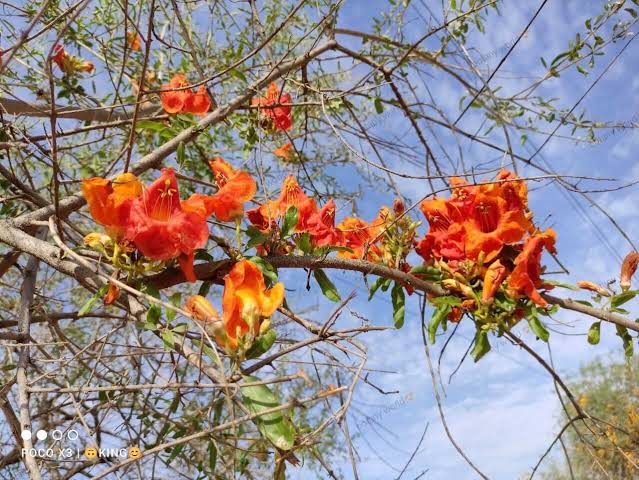
    Tecomella undulata (Sm.) Seem.

    Family

    Bignoniaceae

    Identification No.

    SDACH/HG/111

    Parts Used

    Stem bark

    Habitat

    India

    IUCN Status

    Endangered

    Plant Photos

    Ayurvedic Properties

    Rasa

    Katu, Tikta, Kashaya

    Guna

    Laghu, Ruksha

    Virya

    Sheeta

    Vipãka

    Katu

    Contact Now

    Have queries? Contact Us.

    Have queries? We’re here to help you every step of the way.

    Contact us to get the right guidance for your academic journey at Shri Dhanwantry Ayurvedic College.

  • Panasa

    Panasa

    Botanical Name : Artocarpus heterophyllus Lam.

    Family : Moraceae

    Identification No.: SDACH/HG/110

    Introduction :

    Latin name: Artocarpus – artos = bread, carpos = fruit, bread fruit; heterophyllus – hetero = unequal, dissimlar leaved.

    Names in different Indian languages :

    English : Jackfruit, Jack tree

    Hindi : Kathal, cakki

    Kannada : Halasu

    Malayalam : Plavu, pilavu

    Sanskrit : Panasa

    Tamil : Murasabalam, plamaram

    Panasa

    Folk : Katahal, Phanasa

    Synonyms :

    Panasa, Kantakiphala, Ativrihatphala, Aamaashayaphala, Mahasaija, Phalin, Phalavrukshak, Kashtaphala, Aashay, Garbhakantak,Bruhatphal, Sthulkantaphala.

    Artocarpus integrifolia Linn. f.

    Varieties & adulterants – (CV – controversy, AD – adulterants) :

    Artocarpus altilis

    Morphology :

    A huge tree grows 15 – 20 mts. high.

    Leaves – simple,alternate,  thick with three veins.

    flowers – unisexual.

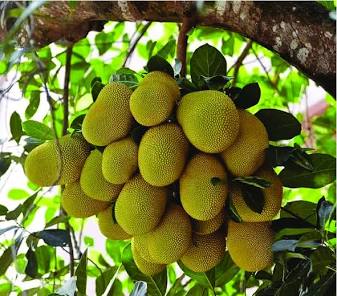
    Fruit – multiple, 10-20 cms. long and 16-30 cm. broad having thorns all over the surface.

    It weighs about 5 to 20 kg. Pulp of unripe fruit is white while that of ripe is yellow. Seeds – 2.5 to 3 cm. long, slightly triangular and contains oil. It bears flowers in November and fruits in April and May. Fruits also hang from the trunk. Fruits and seeds are edible Seeds are roasted and eaten while fibrous part is cooked as vegetable.

    Fruits come in a wide range of sizes, shapes, and colors. The tiny floating plants known as water-meal are only 1 to 2 mm (0.04 to 0.08 in) wide and have very small flowers. Their miniature ovaries develop into fruits that are barely visible. Watermelons, on the other hand, may be more than 60 cm (24 in) long and weigh more than 20 kg (45 lb). Jackfruits, found in the tropics, can weigh more than 40 kg (90 lb). Diverse fruit shapes abound, including round grapefruits, oval eggplants, elongated bean pods, and star-shaped star anise. Pale to intense shades of orange, red, yellow, and even purple can be found in fleshy fruits, while dry fruits display many tones of brown.

    Distribution & Habitat :

    All over in India. specially in southern region.

    Chemical constituents :

    cycloartenone, cycloartenol ,  beta-sitosterol,flavonoids, artocarpesin , norartocarpetin

    Properties :

    Guna : guru. snigdha:

    Rasa : madhur, kashaya;

    Vipaka : madhur:

    Virya : sheeta:

    Dosha:vatapittashamak. (Raw fruit. kaphavatavardhak).

    Karma : rucyam, tarpanam, bramhanam, vrishyam, balyam, hridyam

    acrid, astringent,thermogenic, laxative, diurtic

    Indication :

    Kandu, kusta, murakrichram

    diarrhoea, asthma, skin diseases, mouth ulcers, Eczema,T.B, tumour,pruritus, diabetes, leucoderma, anorexia

    Part used :

    Whole plant

    Dosage :

    Leaf juice 10-15 ml

    Powder 2-4 g

    Decoction 50-100 ml

    External use :

    Latex is used as anti-inflammatory and wound healing agent. Phanasamba is effective in stomatitis.

    Internal uses :

    Pulp is guru and constipative Decoction of root is an astringent and is given in diarrhoea. Ripe fruit is spermatogenic, brimhana and used in bleeding disorders. Decoction of roots and leaves is useful in skin disorders while decoction of leaves is given as antidote to poisons.

    IUCN Status : Not evaluated

    Research updates:

    1. Study on antioxidant activity and phytochemicals in A. heterophyllus fruit (2021)

    2. Evaluation of antidiabetic potential of jackfruit seed extract in experimental models (2020)

    3. Antibacterial and anti-inflammatory properties of A. heterophyllus latex (2019)


    About Panasa

    Botanical Name

    Artocarpus heterophyllus Lam.

    Family

    Moraceae

    Identification No.

    SDACH/HG/110

    Parts Used

    Whole plant

    Habitat

    India

    IUCN Status

    Not Evaluated

    Plant Photos

    Ayurvedic Properties

    Rasa

    Madhura, Kashaya

    Guna

    Guru, Snigdha

    Virya

    Sheeta

    Vipãka

    Madhura

    Contact Now

    Have queries? Contact Us.

    Have queries? We’re here to help you every step of the way.

    Contact us to get the right guidance for your academic journey at Shri Dhanwantry Ayurvedic College.

  • Matulunga

    Matulunga

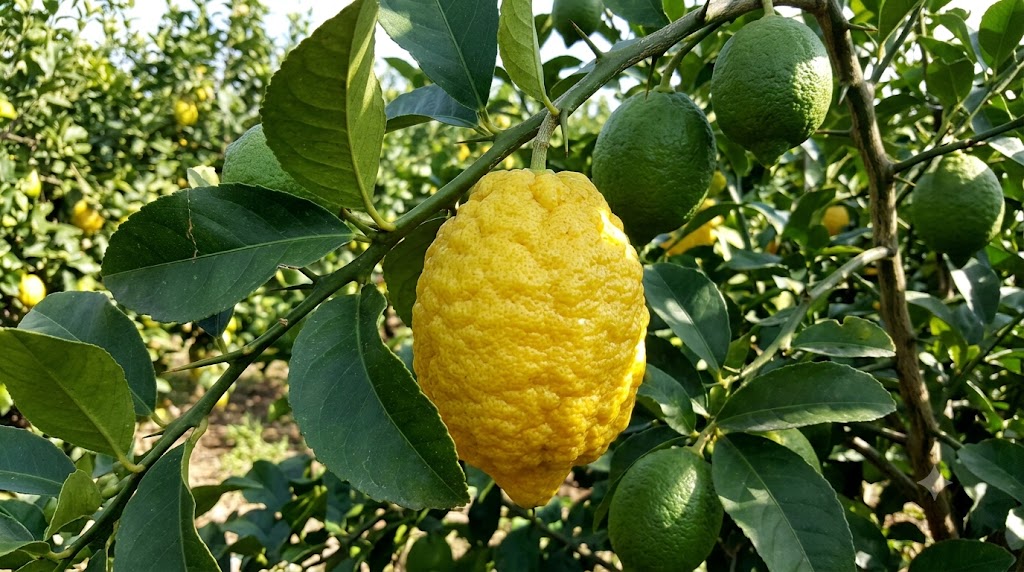
    Botanical Name : Citrus medica Linn

    Family : Rutaceae

    Identification No.: SDACH/HG/109

    Introduction :

    This drug commonly used in Rasa sãstra . it coming under Amla varga. Its juice is considered to be Vyadhi-viparitarthakãri cikitsa in Amlapittai Süla.this herb have high Vitamin -C value.

    Names in different Indian languages :

    English : Citron

    Hindi : Baranimbu, bijaura

    Kannada : Madala, mahaphala

    Malayalam : ganapatinarakam

    Sanskrit : Maatulunga

    Tamil : Kadaranarattai, Naarthankai, Thurinjippazham

    Telugu : madiaphalamu

    Unani : Turanj

    Folk : Bijoraa

    Synonyms :

    “मातुलुङ्गो घनः स्वादुः कटुका सिक्तिको भवेत्।दीपनः पाचनः स्वादुः ग्रहणो वृष्य उच्यते॥”

    Maatulunga, Lunga,Maatulaka, Mahaalunga, Bijpuura, Bijaahva.

    Classification according to Charaka, Susrutha & Vagbhata :

    Charaka

    Phala Varga, Amla varga

    Susrutha

    Phala varga

    Vagbhata

    Phala varga

    Varieties & adulterants – (CV – controversy, AD – adulterants) :

    (1) Vana Jambira (wild lime)-. Atalantia malabarica (Rafin.) Tanaka or A. monophylla correa.

    (2) Jambira (lime)— Citrus aurantifolla (Christm) Single or mediaca Linn. Var. acida watt.

    (3) MistanimbUphaja (sweet lime)— Citrus limetta Risso.

    (4) Naranga (orange)— Citrus reticulata Blanco or C. aurantium Linn. Var. aurantium.

    (5) Madhukarkati (pummelo or paradise apple)— Citrus maxima (Burm). Merr.

    (6) Nimbuka (lemon)— Citrus limon (L.) Burm. f

    (7) Bijapüra (citron)— Citrus medica Linn. or C. niedica var. medica Watt.

    (8) Svalpa Jambirikã

    (9) Mistaphala

    Morphology :

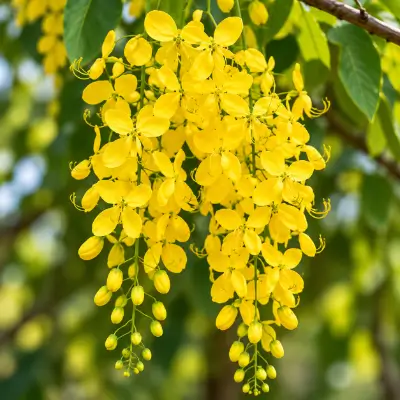
    This shrub has thorn, brownish bark

    Leaves – elliptic, simple, alternate , aromatic

    Flower – whitish pink

    Fruit – berry , fleshy  , broke when ripen

    Seed – smooth, each compartment have one

    Distribution & Habitat :

    All over India

    Chemical constituents :

    Vit –c, coumarins, limettin, scoparone, scopoletin and umbelliferon, nobiletin, limonin, diosmin, beta-sitosterol and beta-Dglucoside. campesterol,stigmasterol, sitosterol and cholesterol.

    Properties :

    RASA- amla, madhura

    GUNA-laghu

    VIRYA-ushna

    VIPAKA-amla

    Karma : Vãta-Kapha hara, Dipana-pacana, Chaksusya, kasahara, hridya

    Internal uses :

    Digestive system : It increase the absorption of iron.

    Respiratory system : Useful in asthma

    Urinary system:

    Reproductive system:

    Skin:

    Indication :

    Fruit—antiscorbutic, refrigerant, astringent, carminative, stomachic, antibacterial. Used for dyspepsia, bilious vomiting, cold, fever, hiccough.

    Root— anthelmintic.

    Flowers and buds— astringent.

    Part used :

    Fruit, leaves, bark

    Dosage :

    10-20 ml juice of fruit.

    Therapeutic Uses :

    Fruit useful in scurvy

    IUCN Status – Not Evaluated

    Research updates :

    1. Sharma et al. (2020): Anti-inflammatory and antioxidant potential of Citrus medica peel extract.

    2. Patel et al. (2021): Antimicrobial activity of Matulunga juice against gastrointestinal pathogens.

    3. Rao et al. (2023): Evaluation of hepatoprotective effect in animal models.

    About Matulunga

    Botanical Name

    Citrus medica L.

    Family

    Rutaceae

    Identification No.

    SDACH/HG/109

    Parts Used

    Fruit, Leaves, Bark

    Habitat

    Not Evaluated

    IUCN Status

    Least Concern

    Plant Photos
    Ayurvedic Properties

    Rasa

    Amla, Madhura

    Guna

    Laghu

    Virya

    Ushna

    Vipãka

    Amla

    Contact Now

    Have queries? Contact Us.

    Have queries? We’re here to help you every step of the way.

    Contact us to get the right guidance for your academic journey at Shri Dhanwantry Ayurvedic College.