Shri Dhanwantry Ayurvedic College

Author: admin

  • BHANDIR

    BHANDIR

    BHANDIR

    Family- Lamiaceae

    Udar Roga, Atisar, Jvar

    Atisar- Root powder is given along with buttermilk

    Kustha- Thick paste of root is applied externally

    About BHANDIR

    Botanical Name

    Clerodendrum infortunatum

    Family

    Lamiaceae

    Parts Used

    leaf and root

    Plant Photos

    Contact Now

    Have queries? Contact Us.

    Have queries? We’re here to help you every step of the way.

    Contact us to get the right guidance for your academic journey at Shri Dhanwantry Ayurvedic College.

  • Badiyan

    Badiyan

    Badiyan

    Botanical Name : Illicium verum

    Family : Magnoliaceae

    Illicium comes from the Latin illicio meaning “entice” or “seduce”. Verum means “true” or “genuine”. Badiyan or Star anise oil, known for its strong fragrance, is widely used in cooking, perfumery, soaps, toothpastes, mouthwashes, and skin creams.

    English – Star anise

    Hindi- Badiyan

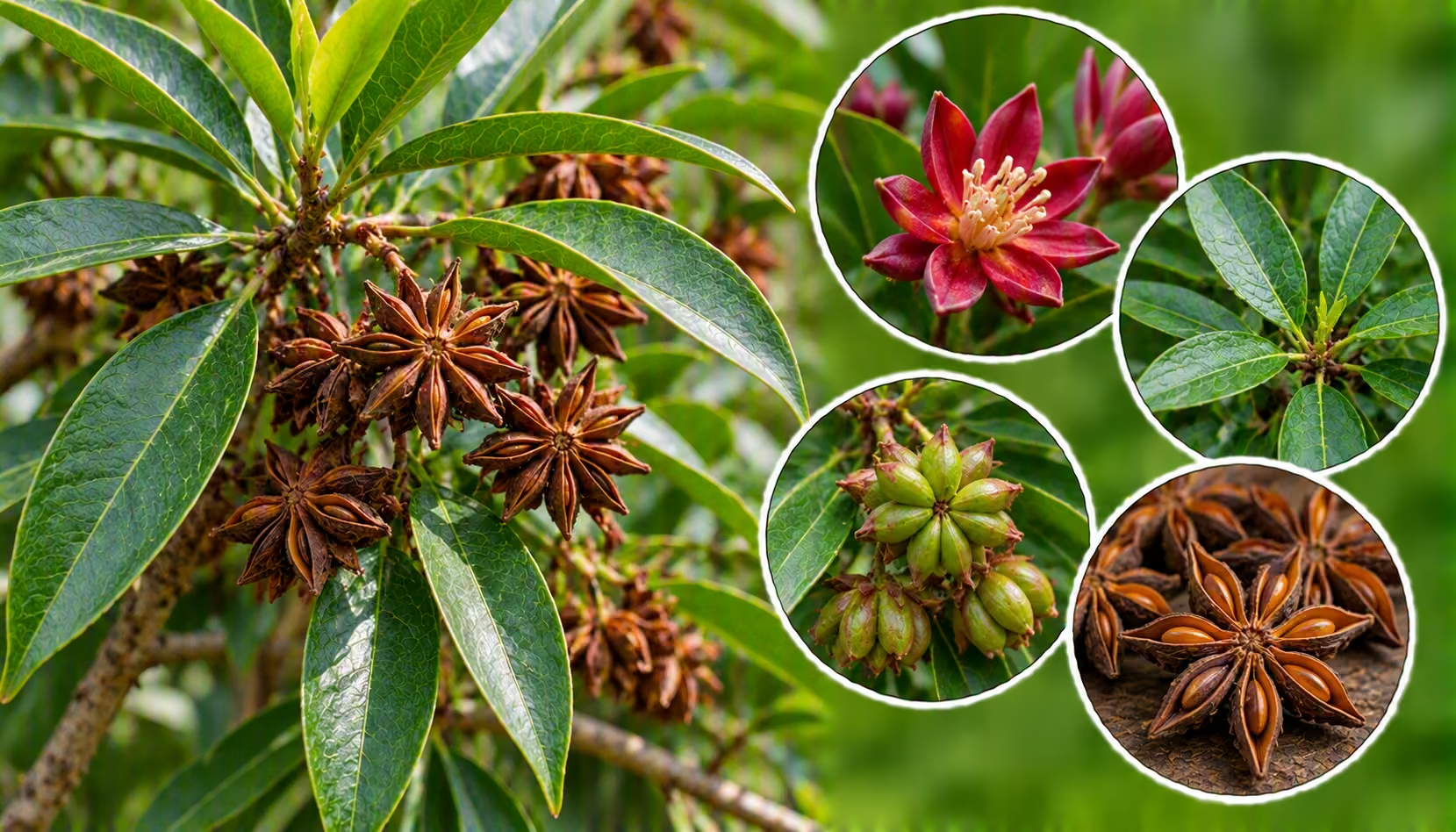
    It is a medium-sized evergreen tree. The leaves are aromatic, simple, lanceolate to obovate-elliptic, measuring 5–15 cm × 2–5 cm, and coriaceous. Flowers are solitary, bisexual, pink to dark red, with 7–12 spiral perianth lobes, 11–20 stamens, and typically 8 free carpels. Tepals are broadly elliptic, and anthers measure 1–1.5 mm. The fruit is a star-shaped, reddish-brown follicetum, consisting of 6–8 boat-shaped follicles, each containing one seed. Seeds are brown, smooth, shiny, and brittle, about 8–9 mm × 6 mm.

    South china and north east Vietnam.

    volatiles, seco-prezizaane-type sesquiterpenes, phenylpropanoids, lignans, flavonoids.

    Madhur kashaya rasa

    Vatashamak, Deepana, Pachana, Mutrala.

    Daurgandhya, Danta shula, Puti danta, Pratishyaya, Karna shula

    Fruit

    Powder- 250-500 mg

    Oil – 1-2 drops

    Cold (Rhinitis) – Drinking a decoction made from star anise can help alleviate symptoms of cold.

    Earache – Putting 1-2 drops of star anise oil in the ear can relieve earache.

    Toothache – Applying 1-2 drops of star anise seed oil to the teeth (as a local application) can alleviate toothache.

    About Badiyan

    Botanical Name

    Illicium verum

    Family

    Magnoliaceae

    Parts Used

    Fruit

    Habitat

    South china and north east Vietnam.

    Plant Photos

    Ayurvedic Properties

    Rasa

    Madhur kashaya

    Contact Now

    Have queries? Contact Us.

    Have queries? We’re here to help you every step of the way.

    Contact us to get the right guidance for your academic journey at Shri Dhanwantry Ayurvedic College.

  • Katuki

    Katuki

    Katuki

    Botanical Name : Picrorhiza kurroa

    Family : Scrophulariaceae

    “Katuki” is a Sanskrit term meaning “bitter.” It is a valuable herb commonly used in Ayurvedic treatments and belongs to the Plantaginaceae family.

    Sanskrit name – Katuki, Katurohini, Katvi, Katumbhra, Thiktha, Ashokarohini, Arishta, Chaakrangi

    English Name – Picrorrhiza, Hellebore, Yellow gentian

    Hindi Name – Kutki, Katuka

    Gujarati Name – Kadu, Katu

    Bengali Name – Katuki, Katki

    Malayalam name – Kadugurohini

    Punjabi Name – Kaundd, Kaud, Karru

    Katuki is a perennial herb with a long, greyish-brown rhizome, 2.5 to 12 cm in length and 0.3 to 1 cm thick, featuring furrows and root scars. The rhizome has vascular bundles of xylem and phloem, with buds at the tips enclosed by leaf crowns. Leaves are alternate, 5 to 10 cm long, and the plant has terminal spikes. Flowers are pale blue-white, with a five-part calyx and a bilobate corolla. Flowering occurs from June to August, and the fruit is a 12 mm capsule that splits into four valves. Seeds are numerous, ellipsoid, with a thick coat. Roots are tubular, curved, and linked to the rhizome.

    Himalayas region like from Garwal to Bhutan and Kashmir to Sikkim, Pakistan, Tibet, west of China and north Burma.

    d-mannitol, kutkiol, kutkisterol, apocyanin.

    Tikta rasa, Laghu, Ruksha guna, Sheeta veerya, Katu vipaka. It balances Kapha and Pitta dosas; bhedani, deepana, Hridya.

    Prameha, Swash, Kasa, Kustha, Krimi.

    Root

    0.5-1 g

    Root powder mixed with honey given to treat upper respiratory infections.

    Equal quantity of katuki and haridra treats Prameha.

    About Katuki

    Botanical Name

    Picrorhiza kurroa

    Family

    Scrophulariaceae

    Parts Used

    Root

    Habitat

    Garhwal to Bhutan and Kashmir to Sikkim, Pakistan, Tibet, west of China and north Burma

    IUCN Status

    Least Concern

    Plant Photos

    Ayurvedic Properties

    Rasa

    Tikta

    Guna

    Laghu, Ruksha

    Virya

    Sita

    Vipãka

    Katu

    Contact Now

    Have queries? Contact Us.

    Have queries? We’re here to help you every step of the way.

    Contact us to get the right guidance for your academic journey at Shri Dhanwantry Ayurvedic College.

  • SHANKH PUSHPI

    SHANKH PUSHPI

    SHANKH PUSHPI

    BOTANICAL NAME- Convolvulus pluricaulis Chois
    FAMILY- Convolvulaceae
    NAMES IN DIFFERENT INDIAN LANGUAGES-

    English → Speed wheel
    Hindi → Shankhahuli
    Kannada → Vishnukranti
    Malayalam → Vishnukranti
    Marathi → Shankhavali
    SYNONYMS- Bhulagna, supushpi
    CLASSIFICATION ACCORDING TO CHARAK AND SUSHRUT-
    Caraka- Not included
    Suśruta- Not included
    CONTROVERSY–

    1. Convolvulus pluricaulis chois Convolvulaceae

    2. Evolvlulus alsinoides Linn. Convolvulaceae

    3. Canscora diffusa R.Br. Gentianaceae

    4.Clitoria ternatea Linn Papilionaceae

    5. Lavendula bipinnata Okze Lamiaceae
    MORPHOLOGY-Perennial prostate herb.
    Root-Tap root, branched
    Stem-Prostrate, aerial, herbaceous, weak, branched, cylindrical, solid, hairy and green.
    Leaf-Simple, alternate, sub-sessile, exstipulate, oblong or oblanceolate, entire, hairy, acute,
    coriaceous with unicostate reticulate venation.
    Inflorescence- Dichasial cyme.
    Flowers-Pedicellate, actinomorphic, regular, bisexual, complete, pentamerous, hypogynous and light
    purple in colour. Sepals are 5, polysepalous, hairy and green. Petals are 5, gamo- petalous,
    infundibuliform. Andorecium contains 5 stamens, polyandrous and epipetalous. Gynoecium is
    bicarpellary, syncarpous, superior ovary.
    Fruit- A capsule
    Seed-Endospermic
    CHEMICAL CONSTITUENTS-Sankhapuspi has Carbohydrate-D-Glucose, Maltose, Rhamnose, Glacial acetic acid, Scopoletin, Bsitosterol, Tropane alkaloids. Kaemferol, Convoline, Convolidine, Convolvine, Confoline, Convosine
    and tetratriacontanoic acid.
    PROPERTIES-Rasa- Kashaya, Katu, Tikta
    Guna- Snigdha, Pichila, Guru, Sara
    Vipäka- Madhura
    Virya- Sheeta
    Prabhava- Medhya
    KARMA-
    Vātasämaka, Medhya, Vrisya, Rasayana, Smriti- Vardhaka, Kantivardhaka, Balya, Kusthaghna,
    Krimighna, Visaghna, Kasahara, Swarya.
    Anti-depressant, Neuroprotective, Antioxidant, Anti- Ulcerogenic
    INDICATIONSManasika Vikāras, Unmada, Apasmāra, Dourbalya, Kuştha, Krimi, Viṣavikāra, Kasa, Swarabheda.
    PART USED- Whole Herb
    DOSAGE- Curna (Powder)- 3 to 5 g, Swarasa (Juice)- 10 to 20 ml, Phanta (Hot infusion)- 40 to 80 ml
    IMPORTANT YOGAS OR FORMULATIONSSankhapuspi taila, Manasa mitra vaṭaka, Brahma Rasayana, Aindri Rasayana, Saraswata curna
    THERAPEUTIC USES- 1. Medhya Rasayana (Intellect promoter)
    a) Different preparations of Sañhapuspi, (Convolvulus pluricaculis) helps in promoting memory.
    b) Ghee processed with juice of Sankhapuşpi (Convolvulus pluricaulis) if used regularly improves
    intellect.

    Unmada (Insanity) and Apasmāra (Epilepsy)
    Puranaghrita processed with juice of Brahmi, Powder of Vaca & Kuştha and paste of Sankhapuspi is
    efficacious in alleviating insanity and epilepsy.

    About Shankh Pushpi

    Botanical Name

    Convolvulus pluricaulis Chois

    Family

    Convolvulaceae

    Parts Used

    Whole Herb

    Habitat

    India

    Plant Photos

    Ayurvedic Properties

    Rasa

    Kashaya, Katu, Tikta

    Guna

    Snigdha, Pichila, Guru, Sara

    Virya

    Sita

    Vipãka

    Madhura

    Contact Now

    Have queries? Contact Us.

    Have queries? We’re here to help you every step of the way.

    Contact us to get the right guidance for your academic journey at Shri Dhanwantry Ayurvedic College.

  • Talispatra

    Talispatra

    Talispatra

    BOTANICAL NAME: Taxus baccata.
    FAMILY- CONIFERAE
    NAMES IN DIFFERENT INDIAN LANGUAGES-
    English → Himalayan Yew
    Hindi → Birmi
    Kannada → Talisa patri
    Malayalam → Talisapatram
    Marathi → Birmi
    SYNONYMS-
    Dhatri patri, patradhya
    CLASSIFICATION ACCORDING TO CHARAK, SUSHRUT AND VAGBHATT-
    Not mentioned by these three acharayas.
    CONTROVERSIES-
    Abbies webbiana
    MORPHOLOGY-
    A small or medium sized evergreen tree.
    Stem-Fluted
    Branches- Horizontal, wide spreading, not whorled
    Leaves- 2.5 to 4 cm long, linear, flattened, distichous, acute, narrowed into a short petiole which is decurrent along the twig, dark green and shin- ing above, pale yellowish brown or rusty red below.
    Inflorescence- Male in- florescence is Catkin, female is with solitary flower.
    Flowers- Male flowers subglobose, 10 stamens, with 5 to 9 pollen sacs.
    CHEMICAL CONSTITUENTS-
    Taxinine, taxine- A, ephedrine, tannin, hydrocyanic acid, taxicatin, betuloside, lycopene.
    PROPERTIES-
    Rasa- Katu Tikta Madhura
    Guna- Snigdha, Guru
    Vipäka- Madhura
    Virya- Uşna
    KARMA-
    Tridoṣaśāmaka, Swasahara, Kasahara, Rucikara, Dipana, Gulmaroga nāšaka, Mukharogahara, Hridya, Krimighna, Hikkanigrahana, Chardinigrahana.
    Antispasmodic, Emmenagogue, Antilithic, Antipyretic, Carminative, Expectorant, Stomachic, Anticancer, Antifungel, Antibacterial, Antinflammatory.
    INDICATIONS-
    Śwāsa, Kāsa, Hikka, Hridroga, Chardi, Aruci, Mukharoga, Agnimandya and Gulma.
    PART USED- Leaves
    DOSAGE- Curna (Powder) 3 to 6 g
    IMPORTANT YOGAS OR FORMULATIONS-
    Talisapatrādi curna, Talisadya curna, Talisādi guțikā
    THERAPEUTIC USES-
    1. Kaas- Powder of Talisa (Abies webbiana) mixed with juice of Vāsa (Adhatoda vasica) leaves if taken it alleviates Kasa (Cough) caused by Kapha and Pitta. This combination is very useful in all respiratory disorders.
    2. Aruchi-Tablets prepared from powder of Talisa (Abies webbiana), Karpura (Cinnamom camphora) and Sugarcandy promotes taste.

    About Talispatra

    Botanical Name

    Taxus baccata.

    Family

    CONIFERAE

    Parts Used

    Leaves

    Habitat

    India

    Plant Photos

    Ayurvedic Properties

    Rasa

    Katu Tikta Madhura

    Guna

    Snigdha, Guru

    Virya

    Uşna

    Vipãka

    Madhura

    Contact Now

    Have queries? Contact Us.

    Have queries? We’re here to help you every step of the way.

    Contact us to get the right guidance for your academic journey at Shri Dhanwantry Ayurvedic College.

  • AMLAVETASA

    AMLAVETASA

    AMLAVETASA

    BOTANICAL NAME : Garcinia pedunculata Roxb.
    FAMILY : Clusiaceae
    NAMES IN DIFFERENT INDIAN LANGUAGES:

    English → Common sorel
    Hindi → Amlaveda
    Kannada → Amlavetasa
    Malayalam → Nerinjampuli
    Marathi → Chuka
    SYNONYMS: Shatvedhi, sehestravedhi


    CLASSIFICATION ACCORDING TO CHARAK AND SUSHRUT:

    Caraka: Hridya varga, Dipaniya varga, Śwasahara varga
    Suśruta: Mentioned in Amla varga


    CONTROVERSIES:

    1. Rheum emodi (Polygonaceae)

    2. Solena heterophylla (Cucurbitaceae)

    3. Rumex vesicarius (Polygonaceae)

    4. Cissus repens (Vitaceae)

    5. Cissus vitiginea (Vitaceae)

    6. Ampelocissus latifolia (Vitaceace)

    7. Cayratia trifolia (Vitaceae)


    MORPHOLOGY: A tall tree grows upto 60 ft in height. Branches are short and spreading.
    Leaf- Obovate or oblanceolate shaped, 6 to 12 cm long and 3 to 5 cm broad, with short midrib and
    leathery texture.
    Flower- Flowers are light green in colour.
    Fruit Fruits are spherical or subglobose, 3 to 5 cm in diameter, yellow in colour with 8 to 10 seeds.
    Pericarp is fleshy.
    Seeds- 8 to 10 in one fruit embedded in pulp.


    CHEMICAL CONSTITUENTS:

    Fruit contains Garcinol, Cambogin, Peduncalol, Citric acid, Mallic acid and Xanthones. Leaf yielded
    Friedelin, B-sitosterol, Mackirin and Cambogin.
    PROPERTIES:
    Rasa- Amla, Kashaya
    Guna- Laghu, Ruksha
    Vipäka- Amla
    Virya- Usna
    KARMA- Vatahara due to Uşna virya, Amla vipaka and Amlarasa
    Antioxidant, Cardiotonic, Carminative, Digestant and An- thelmintic.
    INDICATIONS- Agnimandya, Sula, Hridroga, Gulma, Śwāsa, Käsa, Hikka, Arśas, Aruci and Krimi.
    PART USED- Phala (Fruit) and Patra (Leaf).
    DOSAGE- Swarasa (Juice) – 5 to 10 ml, Curna (Powder) 3 to 6 g
    IMPORTANT YOGAS OR FORMULATIONS: Lavana Bhaskara curna, Vyosadi vati, Hingwādi vați
    THERAPEUTIC USES : 1. Udavarta & Adhmana
    Food should be mixed with matalunga, amlavetas, hingu, pilu, bida lavana

    ArshasIn case of Aršas (Piles) one should take hot water with Tripatu (Three types of salts), Hingu , Trikatu
    and Amlavetasa.

    About Amlavetasa

    Botanical Name

    Garcinia pedunculata Roxb.

    Family

    Clusiaceae

    Parts Used

    Phala (Fruit) and Patra (Leaf)

    Habitat

    India

    Plant Photos

    Ayurvedic Properties

    Rasa

    Amla, Kashaya

    Guna

    Laghu, Ruksha

    Virya

    Usna

    Vipãka

    Amla

    Contact Now

    Have queries? Contact Us.

    Have queries? We’re here to help you every step of the way.

    Contact us to get the right guidance for your academic journey at Shri Dhanwantry Ayurvedic College.

  • Vetra

    Vetra

    Vetra

    Calamus rotang L.

    Etymology – Its generic name derives from Greek calamos = reed, with reference to its slender stem much like bamboo canes. Its specific name refers to the native name for the material obtained from the stem (rattan).

    Area of origin – South-western Asia

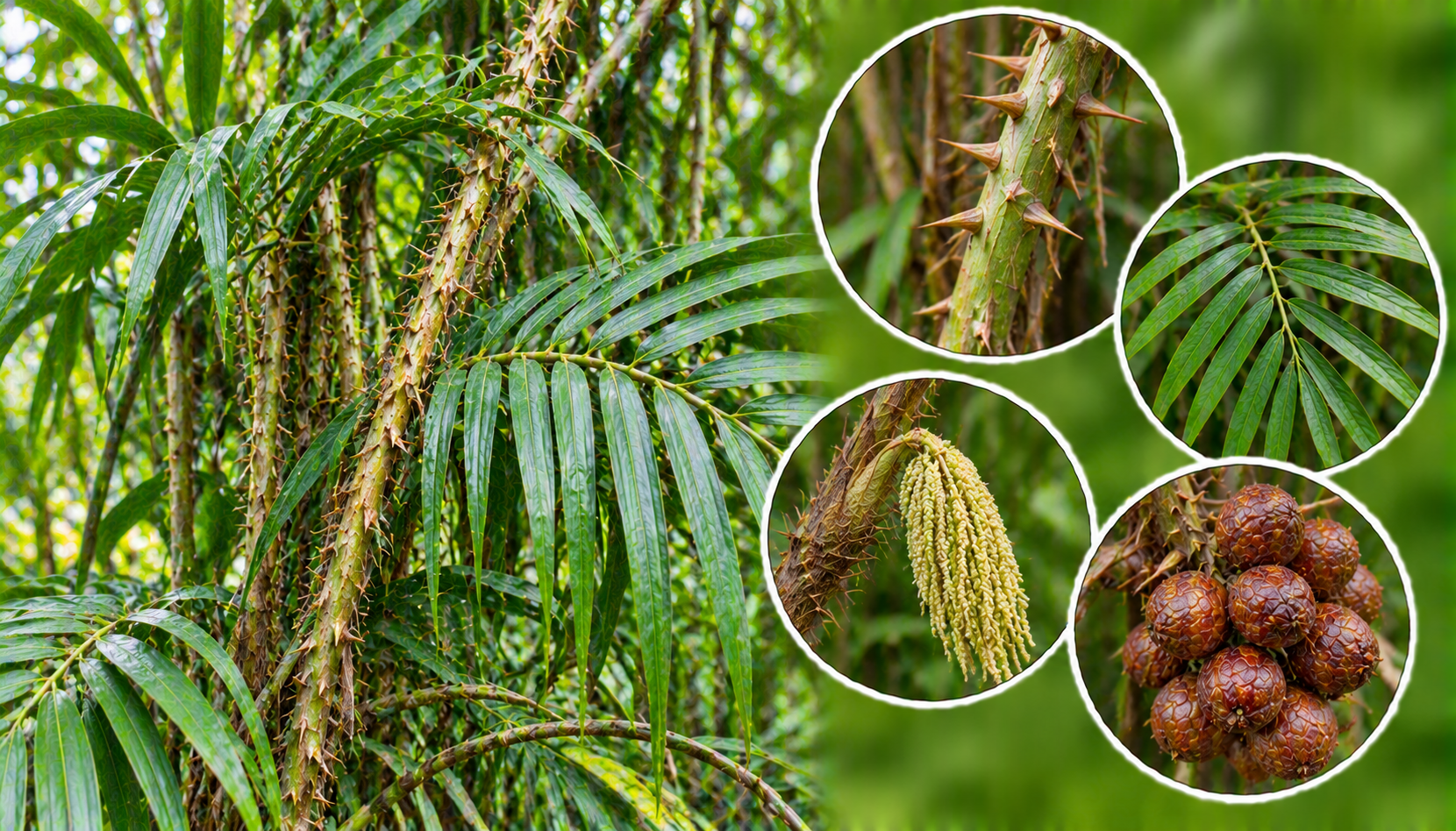
    Botanical description – Climbing palm exhibiting a slender stem ranging from a few millimetres to some centimetres in diameter, flexible, sometimes more or less armed with spines. Its leaves are pinnate, alternately arranged at regular intervals along the stem, 60-80 cm long, consisting of linear-lanceolate segments, 15-30 cm long, armed with two ranks of spines on upper face. Its sheath and thin petiole are armed with whitish spines, whose function is that of support and climbing organs. Flowers, unisexual on dioecious plants, are clustered in showy unbranched inflorescences, enveloped by spiny spathes. In other species (for example Calamus ciliaris) some inflorescences are sterile and they form a kind of spiny whip by which the plant easily climbs over nearby trees. Its fruits are subrounded, thoroughly covered with glossy, red-brown scales.

    Uses – Its slender and cylindrical stem, properly worked, is the source of the well known rattan, a valuable and expensive material, much appreciated for the making of furniture, walking-sticks, umbrellas and wickerwork. However, similar products are often made out of stems of many other plants, mostly Gramineae (particularly Bamboos), Juncaceae (rushes) or, finally, out of tender and slender branches of willows (wicker).

    About Vetra

    Botanical Name

    Calamus rotang L.

    Parts Used

    South-western Asia

    Plant Photos

    Contact Now

    Have queries? Contact Us.

    Have queries? We’re here to help you every step of the way.

    Contact us to get the right guidance for your academic journey at Shri Dhanwantry Ayurvedic College.

  • DEVADALI

    DEVADALI

    DEVADALI

    Botanical Name : Luffa echinata

    Family : Cucurbitaceae

    Vernacular names

    Common name: Bitter Sponge Gourd, bitter luffa, bristly luffa, rag gourd

    • Bengali: deyatada

    • Hindi:bindaal,ghagarbel,kakora

    • Kannada:daivadaali

    • Marathi:devadali,devadangari

    • Nepali: Chyunke van toriya

    • Sanskrit: jimuta

    • Tamil: pey-p-pirkku

    • Telugu: panibira

    Morphology

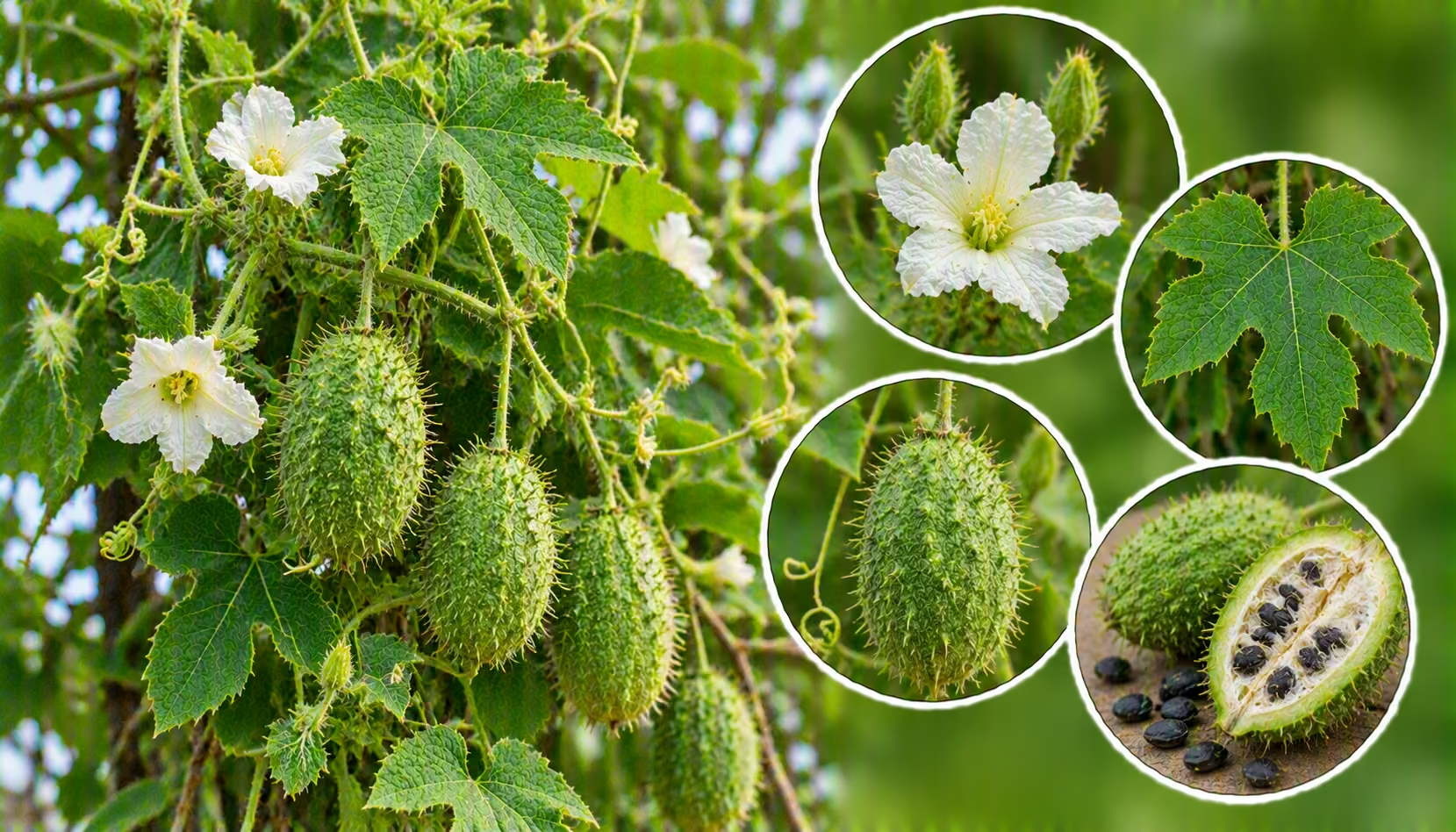
    Bitter Sponge Gourd is a climber with bifid bristly or smooth tendrils.

     Stem is sulcate, slightly hairy to smooth. Leaves are kidney-shaped, round, shallowly or deeply 5-lobed.

    Tip is rounded or rarely pointed.

    Leaves are bristly on both surfaces, margin is minutely toothed.

     Leaf stalk is stout, bristly, up to 12 cm long.

    Flowers are white, stalked, about 2.5 cm across.

    Male flowers are borne in 5-12-flowered, up to 15 cm long raceme.

    Sepal tube is about 5.6 mm long, hairy, sepals lance-shaped.

    Petals are ovate, 1-1.2 cm long, blunt, hairy at the base.

    Stamens are 3, with filaments united, 3-9 mm long, anthers entire or ± bifid.

    Ovary is ovoid.

    Fruit is ashy, oblong, ovoid, 2-5 cm long, densely covered with 4-7 mm long bristles.

    Seeds are ovate, black 4-5 mm long, 3-5 mm broad and 2 mm thick.

    The fruit is intensely bitter and used medicinally.

    Flowering: August-September.

    Ethnomedical Uses

    Jaundice Fruit Fruit powder of described plant 250mg, with Whey, 2 times a day,

    and nasal drops 4-4 drops of cold infusion, or snuff of fruit powder

    250mg, is beneficial.

    Enlargement of liver and spleen-Fruit Tincture of fruit of described plant 10-20 drops, 3 times a day, is beneficial.

    Paralysis: Leaves Local application of paste, made of juice of leaves of described plant

    and pure Mercury, for 15 minutes. If reddish occurs, apply some clarified butter. Repeat after 12 hours.

    Leucoderma : Fruit Fruit powder of described plant 250 mg, seed powder of Alangium

    salvifolium 250 mg, sugar cube powder 5g, with water, after 3 hours,
    About Devadali

    Botanical Name

    Luffa echinata

    Family

    Cucurbitaceae

    Habitat

    India, Sri Lanka, Nepal

    Plant Photos

    Contact Now

    Have queries? Contact Us.

    Have queries? We’re here to help you every step of the way.

    Contact us to get the right guidance for your academic journey at Shri Dhanwantry Ayurvedic College.

  • Chincha

    Chincha

    Chincha

    Botanical name : Tamarindus indicus

    Family : Caesalpiniaceae

    Vernacular names

    Common name: Tamarind

    • Hindi: Imli

     • Bengali: Amli

    • Kannada: Hunise,Hunase,Hunuse,Hunasi,Hulise

     • Manipuri:Mange

    • Sanskrit: Chinchaa, Tintrini

     • Tamil: Puli

    • Telugu: Chinta

    • Marathi: Chinch

    Morphology

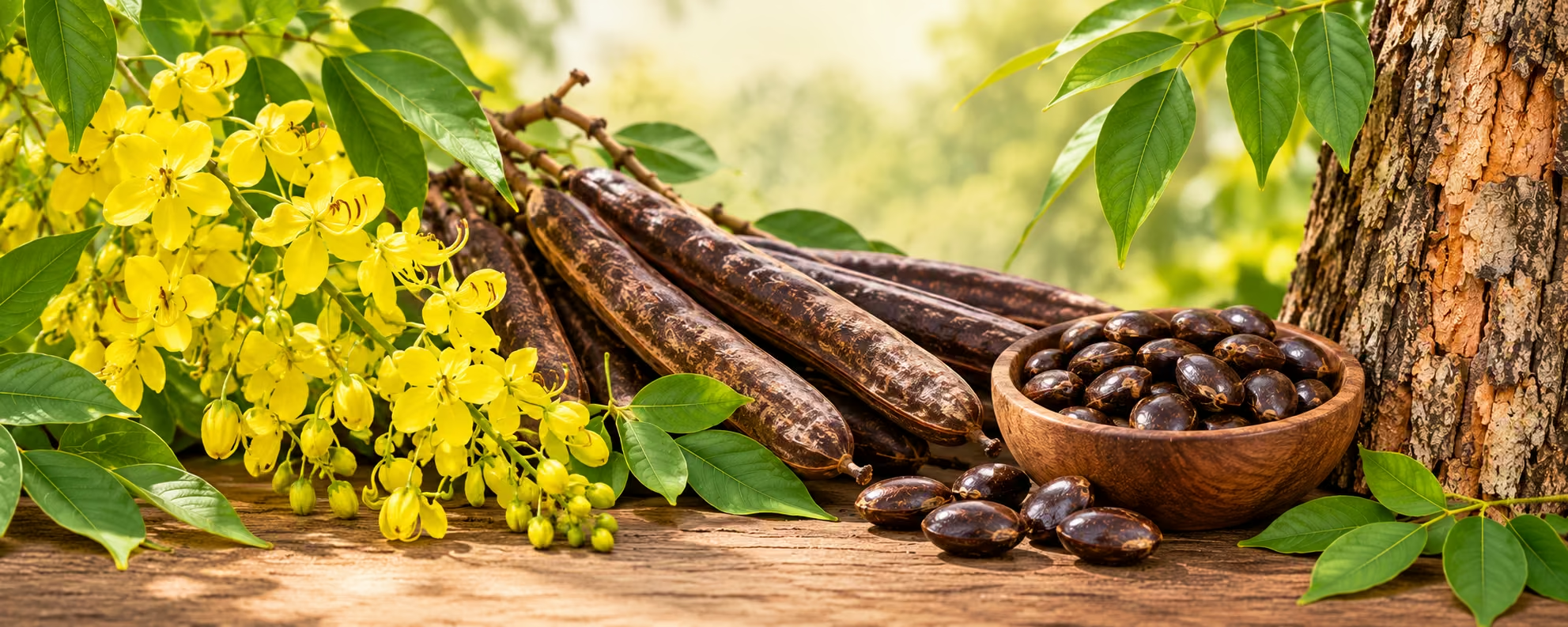
    Tamarind is a very common large tree with a short massive trunk, ferny pinnate leaves, small yellow flowers and fat reddish brown pods.

    The tree can get 90 ft tall but is usually less than 50 ft. It has a short, stocky trunk, drooping branches and a domed umbrella shaped crown about as wide as the tree’s height.

    The leaves are about 10 in long with 10-18 pairs of 1 in oblong leaflets.

    Tamarind drops its leaves in pronounced dry seasons; in climates without a dry season it stays evergreen.

    The flowers are about 1 in across, pale yellow with purple or red veins.

    They have five unequal lobes and borne in small drooping clusters. The velvety cinnamon brown pods are 2-6 in long, sausage shaped and constricted between the seeds.

    The pulp that surrounds the 8-10 seeds is both sweet and extremely sour.

    General description

    It originated in tropical Africa, including Sudan and parts of the Madagascar dry deciduous forests. It was introduced into India so long ago that it has often been reported as indigenous here, and it was apparently from India that it reached the Persians and the Arabs who called it “tamar hind” (Indian date, from the date-like appearance of the dried pulp), giving rise to both its common and generic name. The species name indica also gives the misleading impression that it originated in India.

    Therapeutic Uses

    Anorexia: Jaggery water mixed with Amleeka and spiced with twak (Cinnamomum zeylanicum), ela (Elettaria cardamom), and marica (Piper nigram) should be kept in mouth.

    Diarrhea: covering of Amleeka seeds, dried ginger,rock salt and yavani (Hyocyamis niger) are mixed together and taken with fresh buttermilk.

    Bleeding piles: The paste of tender leaves of Amleeka is mixed with water, strained and added with salts and taken. Leaves of Amleeka fried with oil and ghee, cooked in curd and pomegranate and added with dhanyaka (Coriandum sativum) and sunti

    (Zingiber officinale) should be given. Liquid gruel soured with amleeka is also used.

    Rectal prolapse: Fried Amleeka seeds are rubbed with water and pasted on anus.

    Cough: Epicarp of Amleeka fruit 1part, haridra (Curcuma longa) 2 part, sarja rasa 3 part,punarnnava (Boerhavia diffusa) 1 part, and Jati(Myristica fragrans) leaves 1 part this is made into a wick and fumigated.

    Accidental wounds: Swelling caused by accidental injury subsides by application of bolus of wheat flour and salt with fruit and leaf juice of Amleeka

    Fracture: External application of hot paste of Amleeka fruit mixed with sour gruel and oil sudates and relieves pain and swellings. Fruit pulp of Amleeka is finely pressed and mixed with lime. This is applied at the site of injury followed by fomentation.

    Freckles: Application of paste of root bark of Amleeka removes freckles.

    Soma roga: The seeds of Amleeka are soaked with water the previous day and pounded with milk. This paste if taken regularly alleviates soma roga (leucorrhoea).

    Pox: Haridra and Amleeka leaves taken with cold water prevent pox.

    About Chincha

    Botanical Name

    Tamarindus indicus

    Family

    Caesalpiniaceae

    Parts Used

    Fruit

    Habitat

    India

    Plant Photos

    Contact Now

    Have queries? Contact Us.

    Have queries? We’re here to help you every step of the way.

    Contact us to get the right guidance for your academic journey at Shri Dhanwantry Ayurvedic College.

  • Gangeruki

    Gangeruki

    Gangeruki

    Botanical name : Grewia tenax

    Family : Tiliaceae

    Vernacular names :

    Common name: White Crossberry, Phalsa Cherry, Raisin bush

    Hindi: Gondni,Ganger,Gangeti,Chavaini,Chainari

    Telugu: Kaladi

    Kannada: Kanger

    Morphology

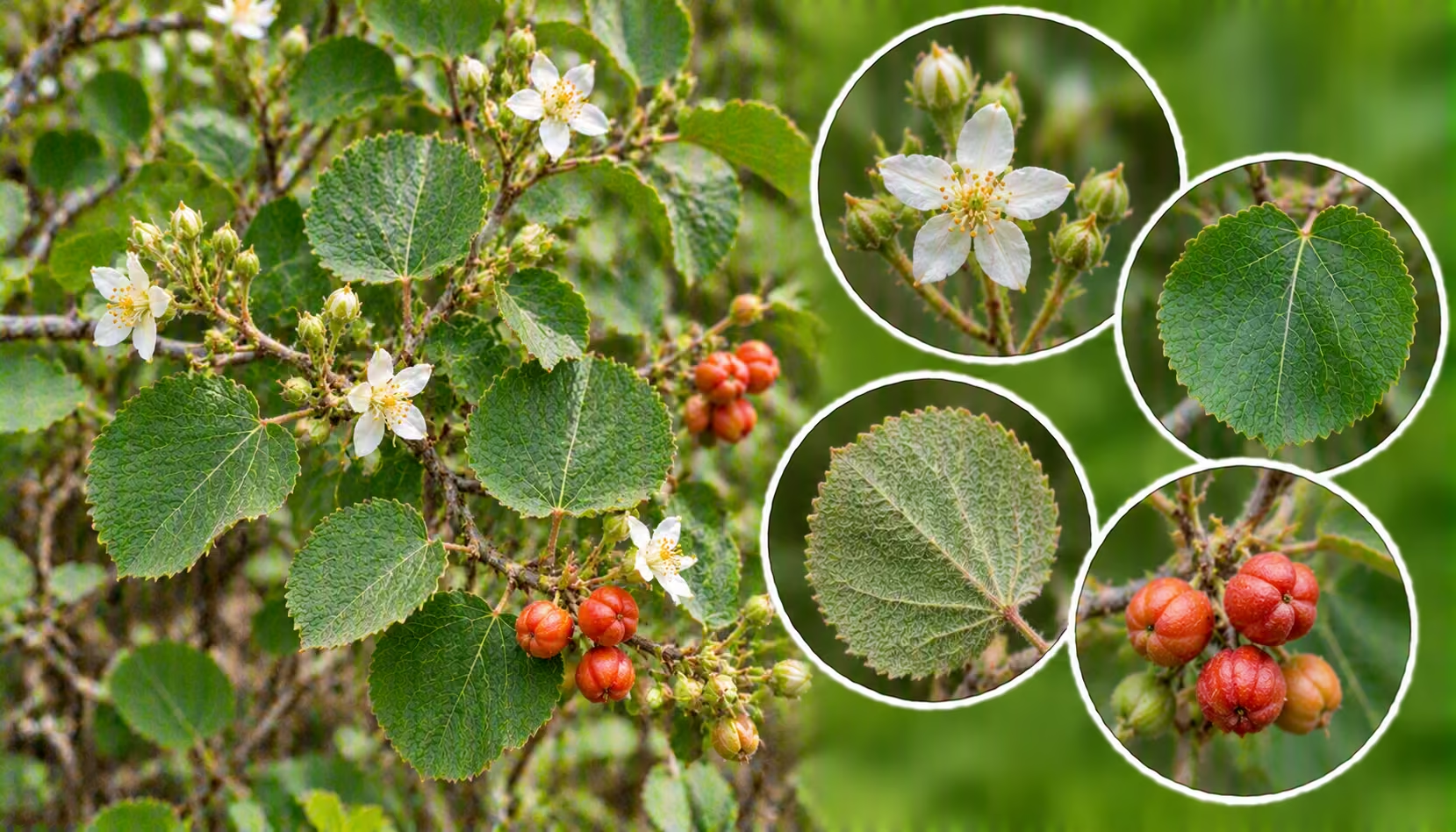
    White Crossberry is a multistemmed shrub up to 2 m tall. 

    Bark smooth, grey, very fibrous so that twigs are hard to break.

    Leaves alternate, almost circular in outline, 1.5-4 cm in diameter, margins toothed and prominently tri-nerved at the base, often hairy, particularly beneath with star shaped hairs.

    Stipules inconspicuous, falling early.

    Flowers solitary or in pairs, axillarily placed, petals white, about 1 cm long; sepals long and recurved.

    Fruit orange-red at maturity, with 1-4 spheroid lobes.

    Description

    The genus was named after Nehemiah Grew (1641-1712), one of the founders of plant physiology. White Crossberry is highly drought resistant and occurs in the driest savannas at desert margins. In Delhi, it is found growing wild in the rocky areas.

    The fruits consumed by man and animals contain a large amount of iron and can be made into a refreshing drink. Fruit storage can be extended by drying. The dead leaves are eaten, but only while they remain on the plant. Young leaves are consumed by livestock, they are slightly palatable at the end of dry seasons, and have fairly good feed value.

    PROPERTIES AND ACTION

    Rasa : Madhura, Amla, Katu, Tikta, Kasaya

    Guna : Guru

    Virya : Usna

    Vipaka : Katu

    Karma : Tridosahara, Sangrahaka

    IMPORTANT FORMULATIONS – Jirakadi Modaka.

    THERAPEUTIC USES – Vrana, Pittavikara.

    DOSE – 2-3 g. of the drug in powder form.

    About Gangeruki

    Botanical Name

    Grewia tenax

    Family

    Tiliaceae

    Parts Used

    Fruit

    Habitat

    India

    IUCN Status

    Least Concern

    Plant Photos

    Ayurvedic Properties

    Rasa

    Madhura, Amla, Katu, Tikta, Kasaya

    Guna

    Guru

    Virya

    Usna

    Vipãka

    Katu

    Contact Now

    Have queries? Contact Us.

    Have queries? We’re here to help you every step of the way.

    Contact us to get the right guidance for your academic journey at Shri Dhanwantry Ayurvedic College.