Author: admin
-

Vrnataka
Vrnataka
Botanical Name : Solanum melongena Linn.
Family : Solanaceae
Identification No.: SDACH/HG/258
Synonyms :
Bhantaki, Bhantaa, Vaartaaka, Vaartaaku, Vaartaakini, Vrintaaka
Solanum ovigerum Dunal
Solanum trongum Poir.
Morphology :
The eggplant is a delicate, tropical perennial often cultivated as a tender or half-hardy annual in temperate climates. The stem is often spiny. The flower is white to purple, with a five-lobed corolla and yellow stamens. The egg-shaped glossy purple fruit has white flesh with a meaty texture. The cut surface of the flesh rapidly turns brown when the fruit is cut open.
It grows 40 to 150 cm (1.3 to 4.9 ft) tall, with large, coarsely lobed leaves that are 10 to 20 cm (3.9 to 7.9 in) long and 5 to 10 cm (2.0 to 3.9 in) broad. Semi-wild types can grow much larger, to 225 cm (7.38 ft) with large leaves over 30 cm (12 in) long and 15 cm (5.9 in) broad. On wild plants, the fruit is less than 3 cm (1.2 in) in diameter, but much larger in cultivated forms: 30 cm (12 in) or more in length
Uses :
liver complaints and for amenorrhoea. The fruit reduces blood cholesterol level
Chemicals :
Steroidal saponins, melongosides were isolated from seeds; tigogenin, diosgenin , Quercetin, 3-O-rhamnoside, kaempferol- 3-O-rutinoside.
Amayika Prayoga/Therapeutic Uses:
External – Paste of roasted fruit applied on boils and ulcers
Internal – Used in indigestion, intestinal worms, anemia, inflammation, male infertility, and anorexia
Part used: Fruit, root
Dose:
Churna – 3–5 grams
Swarasa – 10–15 ml (fruit juice)
Saka (as vegetable) – 50–100 grams cooked
Yoga/Formulations:
Vrintaka Saka
Vrintaka Churna
IUCN Status: Not Evaluated (NE)
Research updates:
- Noda Y, Kaneyuki T, Mori A. Antioxidant activity of nasunin in eggplant peels. Biosci Biotechnol Biochem.
- Sadek KM. Antioxidant and immunostimulant effects of Solanum melongena in rats. J Appl Pharm Sci.
- Akanitapichat P, Phraibung K, Nuchklang K. Antioxidant and hepatoprotective activities of eggplant extracts. Food Chem Toxicol
About Vrnataka
Botanical Name
Solanum melongena Linn.
Family
Solanaceae
Identification No.
SDACH/HG/258
Parts Used
Fruit, root
Habitat
India
IUCN Status
Not Evaluated (NE)
Plant Photos
plant
Bark
Fruits
Seed
Leaves
Flowers Contact Now
Have queries? Contact Us.
Have queries? We’re here to help you every step of the way.
Contact us to get the right guidance for your academic journey at Shri Dhanwantry Ayurvedic College.
-

Karavellaka
Karavellaka
Botanical Name : Momordica charantia Linn.
Family : Cucurbitaceae
Identification No.: SDACH/HG/257
Introduction :
Latin name : Momordica – original Latin name mordeo one bite, appears jagged as if bitten; charantia.
Synonyms :
कारवेल्लं कठिल्लं स्यात्कारवेल्ली
Kaaravellaka, Kaaravella, Kaathilla, Sushaavi
Varieties & adulterants – (CV – controversy, AD – adulterants)
Varieties : There are two varieties –
1) large – karavellali
2) small – karavelli.
Morphology :
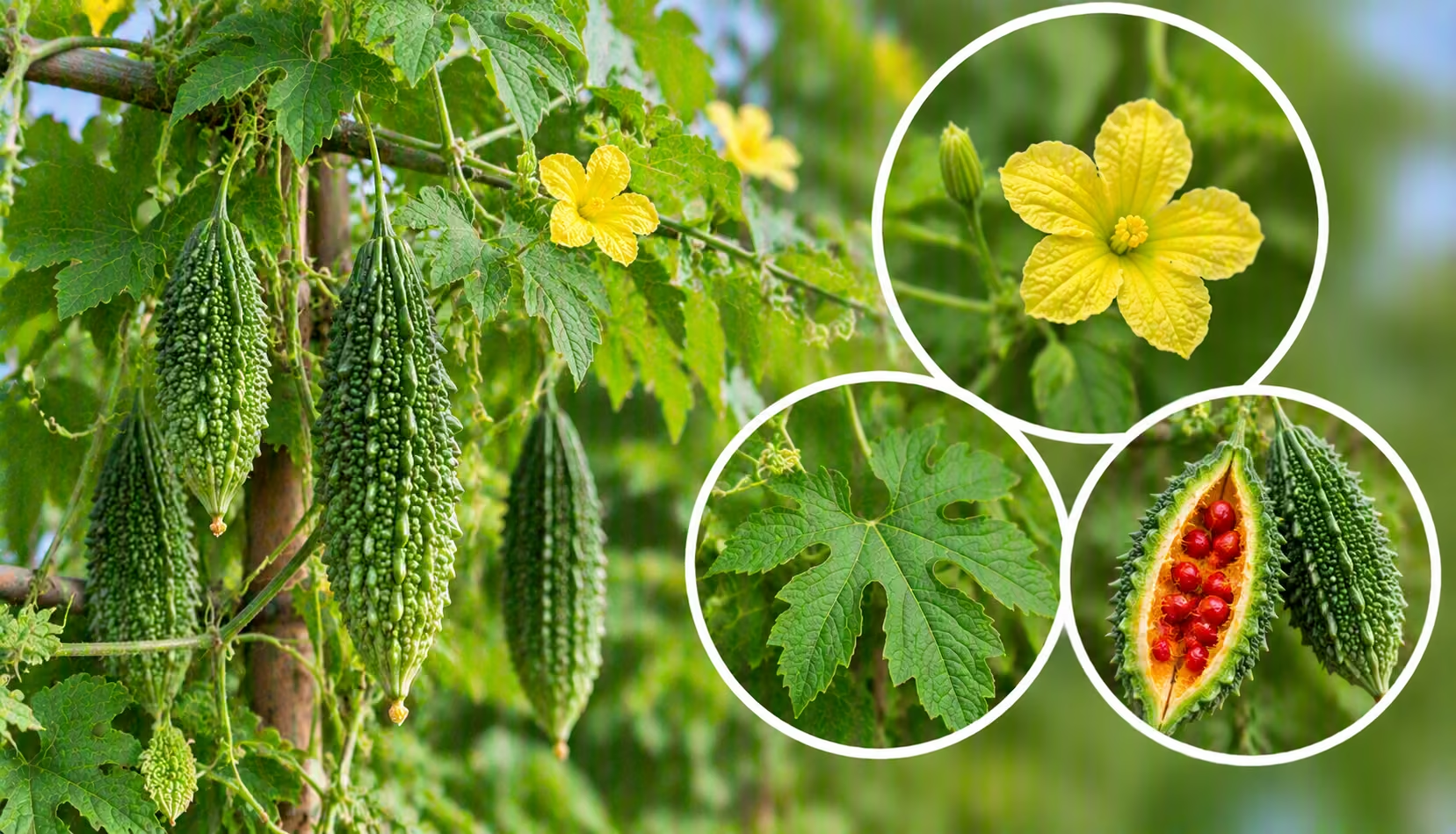
Annual creeper with tendrils.
Leaves – simple, entire, cordate-round. with irregular margins.
Flowers – yellow, unisexual
Fruits – 2.5 to 7 cms. long, green with tapering ends and triangular spikes on the surface.
Seeds – 05.-1 cm. in size, flat.
Fruits are used as vegetable.
Distribution & Habitat :
Throughout India cultivated
Chemical constituents :
Rich in iron and minerals, Hydroxyl tryptamine, charantin, diosgenin, cholesterol, lanosterol , betasitosterol, cucurbitacin glycosides
Properties :
Guna: laghu, ruksha;
Rasa : tikta;
Veerya : ushna;
Vipaka – katu
Karma :
Dipani, bedaka, pachana, vishaghna, krimi-kustaghna
stomachic, laxative, antibilious, emetic, anthelmintic
Srotogamitva :
Dosha : Tridoshashamak,
Dhatu : Rasa (galadogogue, dysmenorrhoea, amenorrhoea), wound healing, rakta, meda (anaemia), rakta (dermatoses), liver disorders, high blood sugar, bleeding disorders).
Mala : Mutra (calculi, urinary disorders). purisha (helminthiasis), Organ : Intestine.
Indication :
Kamala, pandu, kusta, kandu, jwara, swasa, kasa, vrana, prameha, visha,
fever, skin disease, cough, piles, leucorrhoea,vomiting, dysentery, gout, burning sensation
Part used :
Whole plant
Dosage :
Leaf juice 10-15 ml
Powder 2-4 g
Decoction 50-100 ml
Uses :
External uses : It has analgesic, wound cleaning and healing properties. It is useful in burning sensation. dermatoses and piles. It is beneficial to the eyes. Leaf juice is applied on eyes in night blindness.
Internal uses : Being an appetizer, digestive, cholagogue, purgative and anthelmintic, it is used in anorexia, loss of appetite, ama dosha, liver disorder&, piles and helminthiasis. It is a blood purifier, anti-inflammatory, diuretic, emmenagogue and galactogogue. It alleviates kapha hence It is useful in blood disorders, inflammation, asthma, cough, dysmenorrhoea, amenorrhoea, disorders of lactation, urinary disorders, dermatoses. fever, obesity and poisoning. Experience has shown that it is an excellent remedy for high sugar levels in blood and urine.
IUCN Status: Not Evaluated
Research updates:
- Joseph B, Jini D. Antidiabetic effects of Momordica charantia in animal models and clinical trials. Asian Pac J Trop Dis.
- Grover JK, Yadav S, Vats V. Medicinal plants of India with anti-diabetic potential. J Ethnopharmacol.
- Rathi SS, Grover JK, Vats V. Prevention of experimental diabetic cataract by Indian medicinal plant extracts. Phytother Res.
About Karavellaka
Botanical Name
Momordica charantia Linn.
Family
Cucurbitaceae
Identification No.
SDACH/HG/257
Parts Used
Whole plant
Habitat
India
IUCN Status
Not Evaluated
Plant Photos
plant
Bark
Fruits
Seed
Leaves
Flowers Ayurvedic Properties
Rasa
laghu, ruksha
Guna
tikta
Virya
ushna
Vipãka
Katu
Contact Now
Have queries? Contact Us.
Have queries? We’re here to help you every step of the way.
Contact us to get the right guidance for your academic journey at Shri Dhanwantry Ayurvedic College.
-

GANDIRA
GANDIRA
Sanskrit name: Gandira
Botanical name: Coleus forskohlii Briq. (Plectranthus barbatus)
Family name: Lamiaceae
Identification No.: SDACH/HG/256
Vernacular names:
Hindi – Mainpati, Patharchur
English – Indian Coleus
Kannada – Makandiberu
Tamil – Karpuravalli
Habitat & Distribution:
Native to India, especially found in subtropical Himalayas. Widely cultivated in India (Assam, Gujarat, Maharashtra, Karnataka, Tamil Nadu). Prefers dry, hilly, open areas.
Morphology:
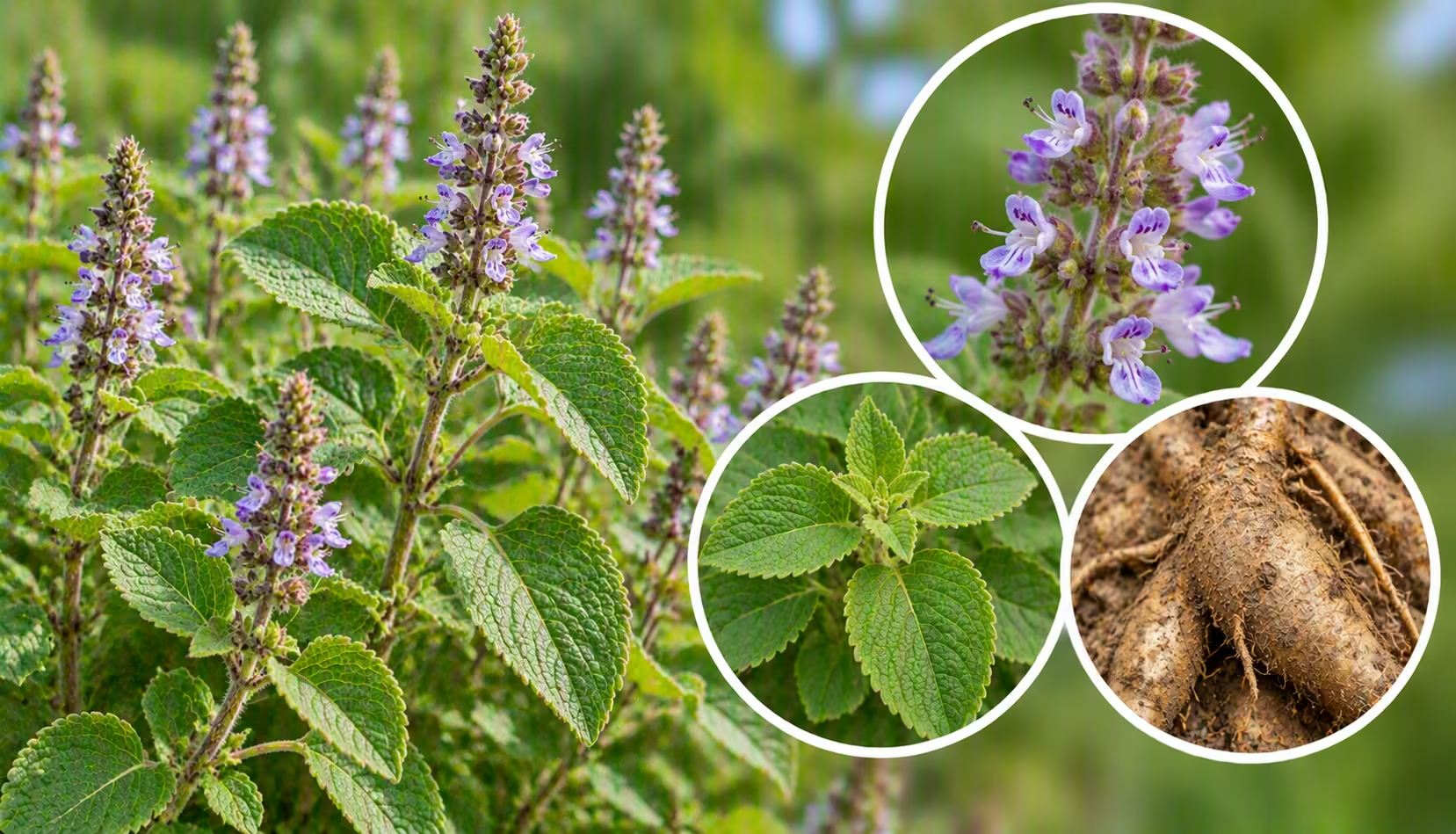
An aromatic, branched herb growing 30–90 cm tall. Leaves are ovate, fleshy, and aromatic with toothed margins. Flowers are bluish-purple, borne on terminal spikes. Roots are tuberous, thick, and have a camphoraceous aroma, roots should be free from fungal growth, possess characteristic odor, and be light brown externally.
Phytochemicals:
Major constituent – Forskohlin (labdane diterpene)
Others – Essential oils, flavonoids, tannins, rosmarinic acid, and phytosterols
Raspanchaka:
Rasa – Tikta, Katu
Guna – Laghu, Snigdha
Virya – Ushna
Vipaka – Katu
Prabhava – Hridya, Shothahara
Dosha shamakta – Kapha-Vata shamak
Karma – Rogaghnata:
Hridya, Deepana, Shothahara, Lekhana, Shoolahara, Asthapanopaga
Amayika Prayoga/Therapeutic Uses:
External – Root paste applied for localized swelling and pain
Internal – Used in hypertension, obesity, asthma, hypothyroidism, cardiac disorders, and digestive weakness
Part used: Root
Yoga/Formulations:
Makandighrita
Makandarishta
IUCN Status: Not Evaluated
Research updates:
- Godard MP, Johnson BA, Richmond SR. Body composition and hormonal adaptations associated with forskolin consumption in overweight men. Obes Res.
- Pugliese A, Beltrami P, Bocchino M. The effects of Coleus forskohlii extract on metabolic parameters and insulin resistance in obese subjects. Nutr Metab Cardiovasc Dis.
- Srinivasan K, Muruganandan S, Lal J. Antihypertensive and cardioactive properties of forskolin isolated from Coleus forskohlii. Phytother Res.
About Gandira
Botanical Name
Coleus forskohlii Briq. (Plectranthus barbatus)
Family
Lamiaceae
Identification No.
SDACH/HG/256
Parts Used
Root
Habitat
Assam, Gujarat, Maharashtra, Karnataka, Tamil Nadu
IUCN Status
Not Evaluated
Plant Photos
plant
Bark
Fruits
Seed
Leaves
Flowers Ayurvedic Properties
Rasa
Tikta, Katu
Guna
Laghu, Snigdha
Virya
Ushna
Vipãka
Katu
Contact Now
Have queries? Contact Us.
Have queries? We’re here to help you every step of the way.
Contact us to get the right guidance for your academic journey at Shri Dhanwantry Ayurvedic College.
-

Marubak
Marubak
Botanical name: Origanum majorana L.
Family name: Lamiaceae
Identification No.: SDACH/HG/255
Vernacular names:
Hindi – Marwa
English – Sweet Marjoram
Arabic – Marzanjosh
Tamil – Maruvam
Gujarati – Maruaa
Synonyms:
मारुतोऽसौ मरुबको मरुन्मरुरपि स्मृतः।
फणी फणिज्जकश्चापि प्रस्थपुष्पः समीरणः
Bhavaprakasha – Pushpha varga
Habitat & Distribution:
Native to the Mediterranean region. Cultivated in parts of India, especially in gardens and herbal farms in Rajasthan, Maharashtra, Karnataka, and Tamil Nadu. Prefers dry, sunny locations with well-drained soil.
Morphology:
A small, aromatic, perennial herb growing up to 30–60 cm in height. Leaves are small, grey-green, and ovate with a soft texture. Flowers are small, white to pale pink, arranged in clusters. Whole plant emits a sweet, spicy aroma.
Varieties:
No classical Ayurvedic varieties mentioned; modern classifications refer to wild and cultivated forms.
Substitute/ Adulterant:
Sometimes substituted with Origanum vulgare (oregano). Adulterants include similar Lamiaceae members like Thymus vulgaris.
Phytochemicals:
Contains essential oils (carvacrol, thymol, terpinene), flavonoids, tannins, phenolic acids, and ursolic acid
Raspanchaka:
Rasa – Tikta, Katu
Guna – Laghu, Ruksha
Virya – Ushna
Vipaka – Katu
Prabhava – Krimighna, Nasya-prabhava
Dosha shamakta – Kapha-Vata shamak
Karma – Rogaghnata:
Krimighna, Deepana, Shirovirechaka, Kasa-Shwasahara, Shoolahara, Kushtaghna
Amayika Prayoga/Therapeutic Uses:
External – Used as oil or poultice for muscle pain, skin infections, and headaches
Internal – Used in indigestion, cold, asthma, cough, dysmenorrhea, and as an expectorant
Part used: Panchang
Dose:
Swarasa 5-10 drops
Panchang 1-4 gm
Essential oil – 2–6 drops (
Yoga/Formulations:
Maruvadi Taila
Maruvaka Churna
IUCN Status: Not Evaluated (NE)
Research updates:
- Al-Sereiti MR, Abu-Amer KM, Sena P. Pharmacology of Origanum majorana essential oil: Antioxidant and antimicrobial activities. J Ethnopharmacol.
- Mota ML, Thomas G, Barbosa F. Anti-inflammatory action of marjoram extract in experimental models. Planta Med.
- Mohammed F, Rizvi MA, Khan MS. Evaluation of anxiolytic and antidepressant potential of Origanum majorana in rodent models. Biomed Pharmacother.
About Marubak
Botanical Name
Origanum majorana L.
Family
Lamiaceae
Identification No.
SDACH/HG/255
Parts Used
Panchang
Habitat
Rajasthan, Maharashtra, Karnataka, and Tamil Nadu
IUCN Status
Not Evaluated (NE)
Plant Photos
plant
Bark
Fruits
Seed
Leaves
Flowers Ayurvedic Properties
Rasa
Tikta, Katu
Guna
Laghu, Ruksha
Virya
Ushna
Vipãka
Katu
Contact Now
Have queries? Contact Us.
Have queries? We’re here to help you every step of the way.
Contact us to get the right guidance for your academic journey at Shri Dhanwantry Ayurvedic College.
-

DHULI KADAMBA
DHULI KADAMBA
Botanical Name: Mitragyna parviflora (Roxb.) Korth.
Family: Rubiaceae
Identification No.: SDACH/HG/254Introduction:
Mitragyna parviflora, commonly known as Kaim, is a medium to large deciduous tree used in traditional Ayurvedic medicine for its analgesic, anti-inflammatory, wound-healing, and hepatoprotective properties. It is considered sacred in rural communities and has diverse ethnomedicinal applications, especially in treating fevers, skin conditions, wounds, and liver disorders.
Scientific classification:
- Order: Gentianales
- Family: Rubiaceae
- Genus: Mitragyna
- Species: parviflora
Names in different Indian languages:
- English: Kaim tree
- Hindi: Kaim, Kadamb
- Kannada: Nidgida
- Malayalam: Kaimaram
- Sanskrit: Kaim, Nipa
- Tamil: Nay-karumpuliyamaram
- Telugu: Konda-kadamba
Synonyms:
Kaim, Kadamb, Nipa, Nipa-kadamba, Karmasha
Classification according to Charaka, Susrutha & Vagbhata:
- Charaka: Not explicitly mentioned
- Susrutha: Useful in wounds and skin diseases
- Vagbhata: Mentions in formulations for healing and anti-inflammatory applications
Varieties & Adulterants :
- Mitragyna tubulosa – CV
- Neolamarckia cadamba – AD (closely related species, sometimes confused)
- Terminalia tomentosa – AD
Morphology:
- Habit: Medium to large deciduous tree, up to 20 m tall
- Bark: Greyish-brown, rough with vertical fissures
- Leaves: Opposite, ovate to elliptic, 10–15 cm long, glabrous, entire
- Flowers: Tiny, creamy-white, in dense globose heads, axillary or terminal
- Fruit: Capsule, containing minute seeds
- Seeds: Numerous, minute, oblong
Habitat & Distribution:
Widely distributed in tropical and subtropical regions of India, especially in Madhya Pradesh, Maharashtra, Odisha, Bihar, and Uttar Pradesh. Found in dry deciduous forests and along riverbanks.
Chemical composition:
- Indole alkaloids: Mitraphylline, Isomitraphylline
- Tannins
- Flavonoids
- Glycosides
- Phenolic compounds
- Saponins
Properties:
- Rasa: Tikta, Kashaya
- Guna: Laghu, Ruksha
- Virya: Ushna
- Vipaka: Katu
- Karma: Vedanasthapana (analgesic), Shothahara (anti-inflammatory), Vrana hara (wound healing), Yakrituttejaka (hepatoprotective)
Indications:
- Jvara (fever)
- Vrana (wounds)
- Twak vikaras (skin diseases)
- Yakrit vikara (liver disorders)
- Shotha (inflammation)
- Daha (burning sensation)
- Arsha (piles)
- Shula (pain)
External uses:
- Leaf paste: Applied to wounds, boils, and inflamed swellings
- Bark decoction: Used for cleaning chronic ulcers and fungal infections
- Crushed leaves: Used in insect bites and minor injuries
Internal uses:
- Digestive system: Acts as a bitter tonic, aids liver function, helps relieve dyspepsia
- Circulatory system: Purifies blood and aids in wound healing
- Nervous system: Analgesic, used in body pain and neuralgia
- Liver: Stimulates liver activity and used in jaundice
- Temperature: Effective in intermittent and chronic fevers
Srotogamitwa:
- Dosha: Kapha-Pittahara
- Dhatu: Rasa, Rakta, Mamsa
- Srotas: Raktavaha, Yakritvaha, Twakvaha
Parts used:
Bark, leaves, root, seeds
Dosage:
- Kwatha (Decoction): 50–100 ml
- Churna (Powder): 3–6 g
- Swarasa (Juice): 10–20 ml
Important Yogas or Formulations:
- Kaim kwatha – Traditionally used in fever and inflammation
- Nipa Kalka – Leaf paste for wound dressing
- Kaimarishta – Mentioned in folklore for liver disorders
- Mitra-yakrit lepa – External application for ulcers
Therapeutic Uses:
- Jvara (fever) – Decoction with Guduchi and Vasa
- Vrana – Leaf paste or bark decoction used externally for healing
- Yakrit vikara (liver) – Decoction with Bhumyamalaki
- Shotha (swelling) – Topical paste for joint swelling and abscesses
IUCN Status – Least Concern
Research Updates :
- Anti-inflammatory Effect (2021) – Bark extract reduced inflammation in animal models
- Wound Healing (2022) – Leaf extract accelerated epithelial regeneration in rats
- Hepatoprotective (2023) – Alcoholic bark extract protected liver cells against paracetamol-induced damage
- Antipyretic (2024) – Clinical trial showed reduction in fever with kaim bark decoction
- Antimicrobial Activity (2025) – Effective against E. coli and Staphylococcus aureus
About Dhuli Kadamba
Botanical Name
Mitragyna parviflora (Roxb.) Korth.
Family
Rubiaceae
Identification No.
SDACH/HG/254
Parts Used
Bark, leaves, root, seeds
Habitat
Madhya Pradesh, Maharashtra, Odisha, Bihar, and Uttar Pradesh
IUCN Status
Least Concern
Plant Photos
plant
Bark
Fruits
Seed
Leaves
Flowers Ayurvedic Properties
Rasa
Tikta, Kashaya
Guna
Laghu, Ruksha
Virya
Ushna
Vipãka
Katu
Contact Now
Have queries? Contact Us.
Have queries? We’re here to help you every step of the way.
Contact us to get the right guidance for your academic journey at Shri Dhanwantry Ayurvedic College.
-

Shalmali
Shalmali
Sanskrit Name
शाल्मली (Shalmali), also known as Shimbal
Identification No : SDACH/HG/253
Botanical Name
Bombax ceiba L. (Synonym: Bombax malabaricum)
Family Name
Malvaceae
Vernacular Names
- Hindi: Semal
- English: Red Silk Cotton Tree
- Bengali: Shimul
- Marathi: Sawar
- Tamil: Ilavamaram
- Malayalam: Ilavu
Synonyms – Bhav Prakash
शाल्मलिस्तु भवेन्मोचा पिच्छिला पूरणीति च |
रक्तपुष्पा स्थिरायुश्च कण्टकाढ्या च तूलिनी ||
(Bhavaprakasha Nighantu – Guduchyadi Varga)Classification
- Bhavaprakasha: Mentioned in Guduchyadi Varga; known for its kandughna, vrana ropana, shukravardhaka actions
Habitat & Distribution
- Found throughout tropical and subtropical India up to 1500 m elevation
- Common in forests, along roadsides, and cultivated for shade and fiber
- Widely distributed in Southeast Asia, China, and tropical Africa
Morphology
- Tree: Large deciduous tree up to 30–40 m tall
- Trunk: Covered with sharp conical prickles when young
- Leaves: Palmately compound with 5–7 leaflets
- Flowers: Bright red, large, bell-shaped, blooming before leafing
- Fruits: Long capsules containing silky cotton
- Seeds: Blackish, smooth
- Bark: Grey-brown, rough
- Roots: Used in Vajikarana
- Thorns and gum (mocharasa) are also medicinal
Varieties
- Bombax insigne is a close relative but not equivalent
Substitute / Adulterant
- Substitute: Ceiba pentandra (White silk cotton tree – not equivalent)
- Adulterant: Sterculia spp., Ceiba spp. in powdered bark or gum
Phytochemicals
- Tannins
- Flavonoids (quercetin, kaempferol)
- Steroids
- Terpenoids
- Alkaloids
- Gallic acid
- Mucilage
- Saponins
- Gum-resin (mocharasa) contains complex polysaccharides
Raspanchaka
- Rasa: Kashaya, Tikta
- Guna: Laghu, Ruksha
- Virya: Sheeta
- Vipaka: Katu
- Prabhava: Vrana-ropana
- Dosha Shamakta: Kapha-Pitta hara
Karma – Rogaghnata
- Vrana ropana (wound healing)
- Kandughna (anti-pruritic)
- Shukravardhaka (semen enhancer)
- Stambhana (astringent, anti-diarrheal)
- Raktapitta hara (anti-hemorrhagic)
- Garbhasthapana (uterine tonic – traditional use)
- Prameha hara (anti-diabetic – root bark)
Amayika Prayoga / Therapeutic Uses
External
- Bark decoction or paste used in skin diseases and wounds
- Thorn powder paste in acne and pimples
- Mocharasa used in topical burns and inflammation
Internal
- Decoction of bark used in leucorrhoea, diarrhea, and diabetes
- Root powder as an aphrodisiac
- Gum used as general tonic and in pediatric care
- Flower decoction in bleeding disorders and dysentery
Part Used
- Bark
- Root
- Flower
- Gum (Mocharasa)
- Thorns (in cosmetics/traditional formulations)
Dose
- Churna (powder): 3–6 g
- Kwatha (decoction): 40–60 ml
- Mocharasa: 1–3 g
- Fresh juice (swarasa): 10–20 ml (bark)
Yoga / Formulations
- Shalmali Rasayana
- Mocharasa Yoga
IUCN Status
- Least Concern(LC).
Research Updates
- 2020 – Indian Journal of Pharmacognosy
Ethanolic extract of
About Shalmali
Botanical Name
Bombax ceiba L. (Synonym: Bombax malabaricum)
Family
Malvaceae
Identification No.
SDACH/HG/253
Parts Used
Bark, Root, Flower, Gum (Mocharasa), Thorns (in cosmetics/traditional formulations)
Habitat
India, Southeast Asia, China, and tropical Africa
IUCN Status
Least Concern
Plant Photos
plant
Bark
Fruits
Seed
Leaves
Flowers Ayurvedic Properties
Rasa
Kashaya, Tikta
Guna
Laghu, Ruksha
Virya
Sita
Vipãka
Katu
Contact Now
Have queries? Contact Us.
Have queries? We’re here to help you every step of the way.
Contact us to get the right guidance for your academic journey at Shri Dhanwantry Ayurvedic College.
-

Vikankata
Vikankata
Sanskrit Name: Vikantaka (विकण्टक)
Other Sanskrit synonyms include Vikata, Kantaki, Shriphala (regionally)Identification No : SDACH/HG/252
Botanical Name: Flacourtia jangomas (Lour.)
Family Name: Salicaceae
Vernacular Names
- Hindi: Vikankata, Paniala
- English: Indian Coffee Plum, Governor’s Plum
- Bengali: Paniala
- Marathi: Paniala
- Kannada: Karanji
Habitat & Distribution
- Native to India and Southeast Asia
- Common in tropical and subtropical regions of India: Uttar Pradesh, Bihar, Assam, Bengal, Kerala, Karnataka, and Tamil Nadu
- Found in forests, hilly areas, and often cultivated for fruits or as a hedge plant
Morphology
- Tree/Shrub: Medium-sized thorny shrub or small tree up to 6–10 m
- Leaves: Simple, ovate-lanceolate, finely serrate
- Flowers: Small, greenish-white, unisexual
- Fruits: Globose drupe, reddish-purple when ripe, edible with acidic-sweet taste
- Bark: Greyish, rough, with inner reddish tinge
- Thorns: Strong, straight or curved spines on branches
- Roots: Woody, fibrous; traditionally used
Varieties
- Botanically related species:
- Flacourtia indica
- Flacourtia ramontchi
- Flacourtia cataphracta (regional usage)
Substitute / Adulterant
- Substitute: Flacourtia indica (commonly used interchangeably)
- Adulterants: Other wild Flacourtia spp. or non-edible berries may be mixed in fruit powders
Phytochemicals
- Flacourside
- Tannins
- Flavonoids (quercetin, rutin)
- Saponins
- Sterols
- Polyphenols
- Gallic acid
- Essential oils (in leaves and bark)
- Vitamin C (in fruits)
Raspanchaka
- Rasa: Kashaya, Tikta, Amla
- Guna: Laghu, Ruksha
- Virya: Sheeta
- Vipaka: Katu
- Prabhava: Vrana ropana, Krimighna
- Dosha Shamakta: Tridoshaghna (especially Kapha-Pitta hara)
Karma – Rogaghnata
- Krimighna – Anthelmintic
- Shothahara – Anti-inflammatory
- Raktapittahara – Anti-hemorrhagic
- Stambhana – Astringent
- Vrana ropana – Wound healing
- Trishna nigrahana – Quenches excessive thirst
- Shukravardhaka – Enhances semen quality
- Pramehaghna – Useful in diabetes
Amayika Prayoga / Therapeutic Uses
External
- Bark decoction used for washing wounds and ulcers
- Paste of leaves used in skin allergies, boils
- Crushed bark or root as a poultice in abscesses
Internal
- Bark decoction used for diarrhea, dysentery, bleeding disorders
- Root decoction in urinary tract infections and diabetes
- Fruit juice or syrup for anemia, fatigue, and liver disorders
- Powdered bark in worm infestations
Part Used
- Bark
- Root
- Fruit
- Leaves (less commonly)
Dose
- Bark decoction: 40–60 ml
- Powder (bark/root): 3–6 g
- Fresh fruit juice: 10–20 ml
- Fruit (raw or cooked): 25–50 g
Yoga / Formulations
- Used in regional classical formulations for Prameha, Vrana, and Krimi
- Found in tribal medicine as part of anti-inflammatory and anti-diabetic combinations
IUCN Status
- Not Evaluated
Research Updates
- 2020 – Journal of Medicinal Plants Studies
Methanolic bark extract showed potent antioxidant and anti-inflammatory activities. - 2021 – Asian Pacific Journal of Tropical Biomedicine
Fruit extract demonstrated hypoglycemic effects in streptozotocin-induced diabetic rats. - 2023 – Journal of Ethnopharmacology
Ethanolic extract of leaves showed promising
About Vikankata
Botanical Name
Flacourtia jangomas (Lour.)
Family
Salicaceae
Identification No.
SDACH/HG/252
Parts Used
Bark, Root, Fruit, Leaves (less commonly)
Habitat
Uttar Pradesh, Bihar, Assam, Bengal, Kerala, Karnataka, and Tamil Nadu
IUCN Status
Not Evaluated
Plant Photos
plant
Bark
Fruits
Seed
Leaves
Flowers Ayurvedic Properties
Rasa
Kashaya, Tikta, Amla
Guna
Laghu, Ruksha
Virya
Sita
Vipãka
Katu
Contact Now
Have queries? Contact Us.
Have queries? We’re here to help you every step of the way.
Contact us to get the right guidance for your academic journey at Shri Dhanwantry Ayurvedic College.
-

Avartani
Avartani
Sanskrit Name: Avartini
Identification No: SDACH/HG/251
Botanical Name: Helicteres isora L.
Family Name: Sterculiaceae
Vernacular Names:
Hindi – Marorphali, Murudsheng
Marathi – Murudshenga
Tamil – Valampuri, Idachamaram
Telugu – Adavimudra
Kannada – Koondalkayi
English – Indian Screw TreeHabitat & Distribution:
Widely distributed throughout tropical and sub-tropical regions of India. Found in dry deciduous forests, open lands, and hilly terrains across Maharashtra, Andhra Pradesh, Madhya Pradesh, Odisha, and Tamil Nadu.Morphology
A small deciduous shrub or tree, up to 3–5 meters tall.
Leaves are ovate, serrated, and densely hairy on both surfaces.
Flowers are reddish or pink, axillary, with twisted petals.
Fruits are characteristically twisted (screw-like), 5–10 cm long, dark brown when mature.
Seeds are black, angular, and enclosed in fibrous pods.Substitute / Adulterant:
No classical substitutes.
Adulterants – Unrelated twisted fruits or seedpods may be used in local markets.Phytochemicals:
- Tannins (20–30%)
- Flavonoids (quercetin, rutin)
- Saponins
- Sterols (β-sitosterol)
- Gallic acid, caffeic acid
- Alkaloids
Raspanchaka:
Rasa: Tikta, Kashaya
Guna: Laghu, Ruksha
Virya: Sheeta
Vipaka: Katu
Prabhava: Grahi, Krimighna
Dosha Shamakta: Kapha-Pitta haraKarma – Rogaghnata:
- Grahi (absorbent)
- Krimighna (anthelmintic)
- Shoolahara (analgesic)
- Raktasodhana (blood purifier)
- Atisaraghna (anti-diarrheal)
- Stambhana (astringent)
Amayika Prayoga / Therapeutic Uses
External:
- Powder applied on wounds and ulcers for healing
- Paste applied over skin infections
- Decoction used for vaginal douche in leucorrhoea
Internal:
- Decoction or powder used in diarrhea, dysentery, and irritable bowel syndrome
- Useful in Grahani, Atisara, and Krimi
- Given with honey in cough and sore throat
- Traditional use in diabetes and intestinal colic
Part Used:
Fruits, Roots, BarkDose:
Churna – 3 to 6 grams
Kwatha – 40 to 50 mlYoga / Formulations:
- Avartinī Churna
- Local tribal remedies for diarrhea and colic
IUCN Status:
Least Concern(LC)Research Updates
- 2020 – Antidiabetic activity of Helicteres isora fruit extract in STZ-induced diabetic rats (Journal of Ayurveda and Integrative Medicine)
- 2021 – Evaluation of antimicrobial activity of ethanolic fruit extract (Pharmacognosy Journal)
- 2023 – In vitro antioxidant and anti-inflammatory properties studied on various extracts (Journal of Herbal Medicine)
About Avartani
Botanical Name
Helicteres isora L.
Family
Sterculiaceae
Identification No.
SDACH/HG/251
Parts Used
Fruits, Roots, Bark
Habitat
Maharashtra, Andhra Pradesh, Madhya Pradesh, Odisha, and Tamil Nadu.
IUCN Status
Least Concern
Plant Photos
plant
Bark
Fruits
Seed
Leaves
Flowers Ayurvedic Properties
Rasa
Tikta, Kashaya
Guna
Laghu, Ruksha
Virya
Sita
Vipãka
Katu
Contact Now
Have queries? Contact Us.
Have queries? We’re here to help you every step of the way.
Contact us to get the right guidance for your academic journey at Shri Dhanwantry Ayurvedic College.
-

Jati
Jati
Botanical Name: -Jasminum offcianarum
Family Name: -Oleaceae
Identification No.: SDACH/HG/250
Vernacular Names:
– Hindi: Chameli, Jati
– English: Spanish Jasmine
– Tamil: Malligai
– Telugu: Mallepuvvu
– Kannada: Mallige
– Malayalam: Mulla
Synonyms :
जाती सुमना हृद्या मालती चेटिका तथा।
राजपुत्री च सा प्रोक्ता पुष्पेषु गुणवत्तरा॥
– Bhav Prakash Reference:
Classification in Ayurvedic Texts:
– Charaka: Not explicitly mentioned; generally grouped under aromatic flowers.
– Sushruta: Listed in Pushpa Varga (group of flowers).
– Vagbhata: Considered cooling and fragrant.
– Bhav Prakash: Classified under Pushpa Varga, used for its soothing and aromatic properties.
Habitat & Distribution:
– Native to tropical and subtropical regions.
– Cultivated widely in India, especially in Tamil Nadu, Karnataka, and West Bengal.
Morphology
– Leaves: Opposite, pinnate, with 5-7 leaflets.
– Flowers: White, fragrant, tubular with 5-8 lobes.
– Stem: Slender, woody, climbing.
Varieties:
– Jasminum officinale (Common Jasmine)
– Jasminum sambac (Arabian Jasmine)
Substitute/Adulterant:
– Jasminum auriculatum (adultrant in some regions).
Phytochemicals:
– Essential oils (linalool, benzyl acetate, jasmon).
– Alkaloids, flavonoids, and glycosides.
Rasapanchaka:
– Rasa (Taste): Tikta (bitter), Kashaya (astringent)
– Guna (Quality): Laghu (light), Snigdha (unctuous)
– Virya (Potency): Sheeta (cooling)
– Vipaka (Post-digestive effect): Katu (pungent)
– Prabhava (Special effect): Fragrance enhances mood.
– Dosha Shamakta: Balances Pitta and Kapha.
Karma
– Anti-inflammatory, analgesic, aphrodisiac.
– Useful in skin disorders, headaches, and fever.
Amayika Prayoga (Therapeutic Uses)
External
– Flower paste for skin inflammation.
– Essential oil for aromatherapy and stress relief.
Internal:
– Flower decoction for fever and digestive issues.
– Used in Arishtha (fermented formulations) for detoxification.
Part Used:
- Flowers, leaves, and essential oil.
Dose:
– Powder: 1-3 grams.
– Decoction: 50-100 ml.
– Oil: 1-2 drops for topical use.
Yoga/Formulations:
- Jati Taila: For headaches and nasal congestion.
- Chameli Ark: Used in perfumery and skincare.
Mentioned in Chandanadi Taila and Eladi Churna.
IUCN Status:
– Not evaluated (cultivated widely, not threatened).
Research Updates :
Anti-inflammatory and Antimicrobial Effects:
Antioxidant and Antiulcer Properties:
Analgesic and Anticonvulsant Activities
About Jati
Botanical Name
Jasminum offcianarum
Family
Oleaceae
Identification No.
SDACH/HG/250
Parts Used
Flowers, leaves, and essential oil.
Habitat
Tamil Nadu, Karnataka, and West Bengal.
IUCN Status
Not evaluated (cultivated widely, not threatened).
Plant Photos
plant
Bark
Fruits
Seed
Leaves
Flowers Ayurvedic Properties
Rasa
Tikta (bitter), Kashaya (astringent)
Guna
Laghu (light), Snigdha (unctuous)
Virya
Sita
Vipãka
Katu (pungent)
Contact Now
Have queries? Contact Us.
Have queries? We’re here to help you every step of the way.
Contact us to get the right guidance for your academic journey at Shri Dhanwantry Ayurvedic College.