Shri Dhanwantry Ayurvedic College

Author: admin

  • DAMANAK

    DAMANAK

    DAMANAK

    Sanskrit name: Damanaka

    Botanical name: Artemisia vulgaris L.

    Family name: Asteraceae

    Identification No.: SDACH/HG/209

    Vernacular names: Mugwort (English), Naga-daman (Hindi), Damanaka (Sanskrit), Davana (Marathi), Jwarhar (Unani)

    Synonyms:

    उक्तो दमनको दान्तो मुनिपुत्रस्तपोधनः । गन्धोत्कटो ब्रह्मजटो विनीतः कलपत्रकः

    Classification

    Bhav Prakash: pushpa varga

    Habitat & Distribution:

    Widely distributed throughout temperate regions of Europe, Asia, and North America. In India, commonly found in the Himalayas, northeastern states, and temperate zones up to 3,600 meters. Grows wild in uncultivated and hilly areas.

    Morphology:

    A perennial aromatic herb or shrub growing up to 1.5 meters high. Stems are erect, often purplish, and grooved. Leaves are pinnately lobed, dark green on top and silvery-white underneath. Inflorescence is panicle-shaped with numerous small, yellow to reddish flower heads.

    Varieties:

    No formally documented varieties, though local morphological differences exist across regions.

    Substitute/ Adulterant:

    Substitute – Artemisia absinthium

    Adulterant – Parthenium hysterophorus, other non-aromatic Artemisia spp.

    Phytochemicals:

    Camphor, cineole, thujone, borneol, flavonoids (quercetin, rutin), sesquiterpene lactones, essential oils, tannins, coumarins

    Raspanchaka:

    Rasa – Tikta, Kashaya

    Guna – Laghu, Ruksha

    Virya – Ushna

    Vipaka – Katu

    Prabhava – Krimighna

    Dosha shamakta – Tridosh shamak

    Karma – Rogaghnata:

    Krimighna, Jwaraghna, Deepana, Pachana, Vatahara, Kaphahara, Vedanasthapana

    Amayika Prayoga/Therapeutic Uses:

    External:

    Used as poultice or oil in arthritis, wounds, and muscular pain. Dhoopana (fumigation) for disinfection and respiratory issues.

    Internal:

    Infusion used in fevers, indigestion, worm infestation, menstrual disorders, epilepsy, and hysteria. Also used to stimulate appetite and treat anemia.

    Part used:

    Leaves, roots, flowering tops

    Dose:

    Swarasa: 5-10 drops

    Yoga/Formulations:

    Damanakarishta, Damanaka churna, Unani formulations like Majoon-e-Damanak, Damanak taila (for uterine disorders)

    IUCN Status: Not Evaluated

    Research updates:

    Kumar A, Singh VK, Pandey AK. Antioxidant and anthelmintic potential of Artemisia vulgaris leaf extract. J Herb Med.

    Rana VS, Blazquez MA. Chemical composition and antimicrobial activity of essential oil of Artemisia vulgaris. Nat Prod Res.

    Sultana S, Ahmad S, Jahangir T. Protective effect of Artemisia vulgaris on liver and renal oxidative stress induced by acetaminophen. Hum Exp Toxicol.

    About Damanak

    Botanical Name

    Artemisia vulgaris L.

    Family

    Asteraceae

    Identification No.

    SDACH/HG/209

    Parts Used

    Leaves, roots, flowering tops

    Habitat

    India, Europe, Asia, and North America

    IUCN Status

    Not Evaluated

    Plant Photos

    Ayurvedic Properties

    Rasa

    Tikta, Kashaya

    Guna

    Laghu, Ruksha

    Virya

    Ushna

    Vipãka

    Katu

    Contact Now

    Have queries? Contact Us.

    Have queries? We’re here to help you every step of the way.

    Contact us to get the right guidance for your academic journey at Shri Dhanwantry Ayurvedic College.

  • SAGE

    SAGE

    SAGE

    Sanskrit name: Sage

    Botanical name: Salvia officinalis L.

    Family name: Lamiaceae

    Identification No.: SDACH/HG/208

    Vernacular names: Sage (English), Sefakuss (Unani), Salvia (Hindi), Garden Sage.

    Habitat & Distribution:

    Native to the Mediterranean region; widely cultivated in Europe, North America, and parts of India (temperate zones and herbal farms in Uttarakhand and Himachal Pradesh)

    Morphology:

    A perennial, evergreen subshrub with grayish leaves, woody stems, and blue to purplish flowers. Leaves are oblong, aromatic, and slightly hairy. The plant reaches a height of 30–60 cm and gives off a strong camphoraceous aroma due to its essential oils.

    Varieties:

    Salvia officinalis var. purpurascens (Purple Sage)

    Salvia officinalis var. tricolor (Tricolor Sage)

    Substitute/ Adulterant:

    Substitute – Salvia sclarea (Clary Sage)

    Adulterant – Salvia glutinosa, Salvia pratensis

    Phytochemicals:

    Thujone, cineole, camphor, rosmarinic acid, caffeic acid, ursolic acid, flavonoids, tannins, diterpenes, essential oils

    Raspanchaka:

    Rasa – Tikta, Katu

    Guna – Laghu, Ruksha

    Virya – Ushna

    Vipaka – Katu

    Prabhava – Hridya, Medhya

    Dosha shamakta – Kapha-Vata shamak

    Karma – Rogaghnata:

    Kasa hara, Jwara hara, Krimighna, Shothahara, Hridya, Rasayana, Medhya, Shiro-rogaghna

    Amayika Prayoga/Therapeutic Uses:

    External:

    Used as a gargle for sore throat, mouth ulcers, and gingivitis. Essential oil used in massage for anti-inflammatory effect.

    Internal:

    Used in teas and decoctions for digestive issues, cough, cold, memory enhancement, menopausal symptoms, and anxiety.

    Part used:

    Leaves

    IUCN Status: Least Concern

    Research updates:

    Baricevic D, Sosa S, Della Loggia R. Evaluation of anti-inflammatory and antioxidant activity of Salvia officinalis leaf extract. J Pharm Pharmacol.

    Delamare AP, Moschen-Pistorello IT, Artico L. Antibacterial activity of the essential oils of Salvia officinalis against multiresistant bacteria. Food Chem.

    Perry NS, Bollen C, Perry EK. Salvia for cognitive enhancement in Alzheimer’s disease: A review of phytochemistry and pharmacology. Phytother Res.

    About Sage

    Botanical Name

    Salvia officinalis L.

    Family

    Lamiaceae

    Identification No.

    SDACH/HG/208

    Parts Used

    Leaves

    Habitat

    Uttarakhand and Himachal Pradesh

    IUCN Status

    Least Concern

    Plant Photos

    Ayurvedic Properties

    Rasa

    Tikta, Katu

    Guna

    Laghu, Ruksha

    Virya

    Ushna

    Vipãka

    Katu

    Contact Now

    Have queries? Contact Us.

    Have queries? We’re here to help you every step of the way.

    Contact us to get the right guidance for your academic journey at Shri Dhanwantry Ayurvedic College.

  • BRAHMA KAMAL

    BRAHMA KAMAL

    BRAHMA KAMAL

    Sanskrit name: Brahmakamal

    Botanical name: Saussurea obvallata (DC.) Edgew.

    Family name: Asteraceae

    Identification No.: SDACH/HG/207

    Vernacular names: Brahmakamal (Hindi), Dudhaphool (Nepali), Kapalphool (Kumaoni), Bhramakamal (Garhwali)

    Habitat & Distribution:

    Found in the Himalayan region between 3,000 – 4,600 meters. Commonly seen in Uttarakhand, Sikkim, Himachal Pradesh, and parts of Tibet and Bhutan. Grows in alpine meadows and rocky terrains.

    Morphology :

    An erect perennial herb, reaching 15–30 cm in height. The plant has large, showy, white to creamy bracts that form a flower head which appears lotus-like. Leaves are oblong or lanceolate, with a slightly hairy surface. The inflorescence is capitate with dense clusters of purple florets surrounded by translucent bracts.

    Varieties:

    No officially documented botanical varieties, though phenotypic variation is observed across altitudinal gradients.

    Substitute/ Adulterant:

    Substitute – Nymphaea alba

    Adulterant – Local white flowering species resembling Saussurea species

    Phytochemicals:

    Flavonoids, sesquiterpene lactones, alkaloids, tannins, saponins, essential oils, and phenolic compounds.

    Amayika Prayoga/Therapeutic Uses:

    External:

    Paste applied over wounds, ulcers, and inflamed skin conditions for healing and cooling effect.

    Internal:

    Used in decoctions or as powder for treating fevers, bleeding disorders, gastric ulcers, and spiritual neuro-psychological ailments.

    Part used:

    Flower, root

    Yoga/Formulations:

    Brahmakamaladi kwatha, Brahmakamala Churna, and used in traditional Lepa yogas in Himalayan folk medicine

    IUCN Status: Endangered

    Research updates:

    Rana S, Rawat MSM. Phytochemical screening and antioxidant activity of Saussurea obvallata. Indian J Tradit Knowl.

    Sharma A, Singh RK, Joshi GC. Antimicrobial potential of Himalayan medicinal herb Saussurea obvallata. J Ethnopharmacol.

    Negi JS, Bisht VK, Bhandari AK. Evaluation of hepatoprotective effect of Saussurea obvallata extract in experimental models. Pharm Biol.

    About Brahma Kamal

    Botanical Name

    Saussurea obvallata (DC.) Edgew.

    Family

    Asteraceae

    Identification No.

    SDACH/HG/207

    Parts Used

    Flower, root

    Habitat

    Uttarakhand, Sikkim, Himachal Pradesh, Tibet, Bhutan

    IUCN Status

    Endangered

    Plant Photos

    Contact Now

    Have queries? Contact Us.

    Have queries? We’re here to help you every step of the way.

    Contact us to get the right guidance for your academic journey at Shri Dhanwantry Ayurvedic College.

  • Ustkhudus

    Ustkhudus

    Ustkhudus

    Botanical name – Lavandula stoechas Linn.

    Family name – Labiatae

    Identification No. – SDACH/HG/206

    Vernacular names – Hindi: Urdu/Arabic: Ustukhuddus; Tamil: Lavangapattai; Unani: Ustukhuddus; English: Lavender, Spanish:Lavender

    Synonyms – Lavandula stoechas var. pedunculata; Ustukhuddus

    Habitat & Distribution – Native to the Mediterranean region including Spain, France, and North Africa. Cultivated in temperate regions including parts of India (Himachal Pradesh, Kashmir). Prefers sunny, well-drained habitats.

    Morphology – Aromatic perennial shrub with narrow, gray-green, lanceolate leaves. Flowers are purple to violet, held on short stalks with distinct tufted bracts resembling butterfly wings. Strong, pleasant, camphoraceous aroma.

    Varieties –

    • L. stoechas var. pedunculata
    • L. stoechas subsp. luisieri
    • Other cultivars under ornamental and medicinal classifications

    Substitute/ Adulterant – Substituted with Lavandula angustifolia or Lavandula officinalis in formulations; adulteration with synthetic lavender oil or camphor is common

    Phytochemicals – Linalool, Linalyl acetate, Camphor, 1,8-Cineole, Borneol, Flavonoids, Tannins, Rosmarinic acid

    Raspanchaka –

    Rasa: Tikta, Katu

    Guna: Laghu, Ruksha

    Virya: Ushna

    Vipaka: Katu

    Prabhava: Medhya

    Dosha Shamakta, Vatahara

    Karma (Rogaghnata) –

    Medhya (brain tonic), Nidrakaraka (sedative), Kasahara (cough reliever), Shirovirechana (nasal decongestant), Krimighna (antimicrobial), Hridya (cardiotonic), Shothahara (anti-inflammatory), Mansavardhaka (muscle tonic)

    Amayika Prayoga/Therapeutic Uses –

    External –

    • Essential oil used in aromatherapy for insomnia, anxiety, and stress
    • Applied topically for skin infections, burns, insect bites, and muscular pain

    Internal –

    • Used for headache, cold, catarrh, epilepsy, hysteria, digestive issues
    • Acts as a nervine tonic, mild laxative, and expectorant

    Part used – Flowers, leaves

    Dose –

    Powder: 3-6 g

    Yoga/Formulations –

    • Sharbat
    • Arka

    IUCN Status – Least Concern

    Research updates –

    Dababneh BF, et al. Evaluation of antimicrobial activity of Lavandula stoechas essential oil. J Ethnopharmacol. 120(2):223–229.

    Sayyah M, et al. Anti-convulsant and anti-anxiety effects of Lavandula stoechas extract. Phytomedicine. 13(6):410–416.

    Benabdelkader T, et al. Chemical composition and antioxidant activity of Lavandula stoechas essential oil. Ind Crops Prod. 61:212–218.

    About Ustkhudus

    Botanical Name

    Lavandula stoechas Linn.

    Family

    Labiatae

    Identification No.

    SDACH/HG/206

    Parts Used

    Flowers, leaves

    Habitat

    India, Spain, France, and North Africa

    IUCN Status

    Least Concern

    Plant Photos

    Ayurvedic Properties

    Rasa

    Tikta, Katu

    Guna

    Laghu, Ruksha

    Virya

    Ushna

    Vipãka

    Katu

    Contact Now

    Have queries? Contact Us.

    Have queries? We’re here to help you every step of the way.

    Contact us to get the right guidance for your academic journey at Shri Dhanwantry Ayurvedic College.

  • VANA LAHSUN

    VANA LAHSUN

    VANA LAHSUN

    Sanskrit name – Vana lahsun

    Botanical name – Allium leptophyllum

    Family name –Liliaceae

    Identification No. – SDACH/HG/205

    Vernacular names – Commonly referred to as wild onion; no well-established vernacular names in Indian languages due to limited traditional use

    Synonyms – लशुनस्तु रसोनः स्यादुग्रन्धो महौषधम् । अरिष्टो म्लेच्छकन्दश्च यवनेष्टो रसोनकः

    Classification:

    Bhavprakash – Haridakyadi varga

    Habitat & Distribution – Native to parts of North America; found in arid and semi-arid grasslands, roadsides, and open prairies. Not naturally found or traditionally used in India.

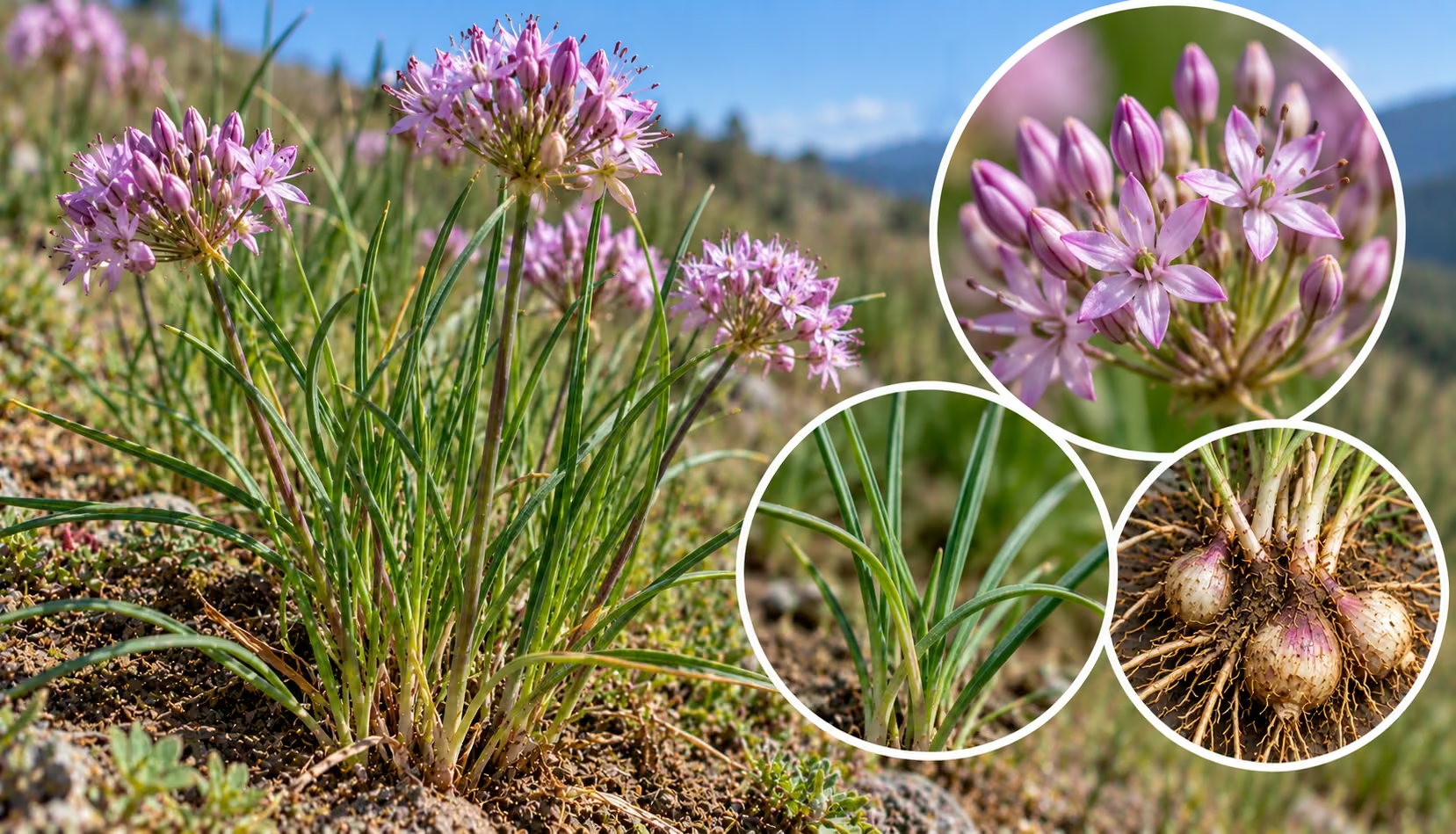
    Morphology – Perennial herb with narrow, thread-like (leptophyllous) leaves, bulbous underground parts, and pink to purplish flowers arranged in umbels. Has a strong garlic or onion-like odor.

    Varieties – No cultivated varieties; exists in wild forms only

    Phytochemicals – Likely to contain sulfur compounds (allicin-like), flavonoids, saponins, phenolics (limited published data available)

    Raspanchaka –

    Rasa: Katu, Tikta (assumed based on genus characteristics)

    Guna: Guru, Tikshna

    Virya: Ushna

    Vipaka: Katu

    Prabhava: Krimighna (presumed based on traditional Allium actions)

    Dosha Shamakta: Kapha-Vatahara (inferred)

    Karma (Rogaghnata) –

    Based on genus traits: Krimighna (antimicrobial), Deepana (digestive stimulant), Kandughna (anti-pruritic), Raktashodhaka (blood purifier)

    Amayika Prayoga/Therapeutic Uses –

    External –

    • Traditionally used in folk medicine in North America for wounds and skin infections (non-Ayurvedic context)

    Internal –

    • Occasionally used for respiratory and digestive issues in local herbal traditions (not standardized in Ayurveda)

    Part used – Bulb

    IUCN Status – Not Evaluated

    Research updates –

    Sakagami H, et al. Cytotoxic and antioxidant activities of wild onion species. In Vivo. 22(3):305–310.

    Liu J, et al. Chemical profiling of wild Allium species and their potential health effects. J Food Sci Technol. 55(7):2761–2767.

    Turner NJ. Ethnobotanical study of native North American Allium species. Econ Bot. 40(4):397–408.

    About Vana Lahsun

    Botanical Name

    Allium leptophyllum

    Family

    Liliaceae

    Identification No.

    SDACH/HG/205

    Parts Used

    Bulb

    Habitat

    North America

    IUCN Status

    Not Evaluated

    Plant Photos

    Ayurvedic Properties

    Rasa

    Katu, Tikta

    Guna

    Guru, Tikshna

    Virya

    Ushna

    Vipãka

    Katu

    Contact Now

    Have queries? Contact Us.

    Have queries? We’re here to help you every step of the way.

    Contact us to get the right guidance for your academic journey at Shri Dhanwantry Ayurvedic College.

  • Antmool

    Antmool

    Antmool

    Botanical Name : Tylophora indica (Burm. f.) Merrill.

    Family : Asclepiadaceae

    Identification No.: SDACH/HG/204

    Introduction :

    In folk it is used for whooping cough and asthma.

    Names in different Indian languages :

    English : Emetic Swallow Wort, Indian Ipecacuanha, Country Ipecacuanha

    Hindi : Jamgli pikvam, antamul

    Kannada : Nipaladaberu, antamula

    Malayalam : Vallippala

    Sanskrit : Lataksiri

    Tamil : Nay Palai, Nangilaippiratti, nancharuppan

    Telugu : Vettipala, verripala, tellayadala, kakapala

    Synonyms :

    लताक्षीरी क्षीरीदुग्धा स्तन्यदा बलदा स्मृता।

    श्वेतगन्धा गुरु स्निग्धा मधुरा शीतला शुभा॥

    Antamuula, Muulini, Arkaparni.

    Tylophora asthamatica Wight & Arn.

    Morphology :

    It is a lactiferous slender, climber

    Leaves – simple, opposite, oblong-ovate

    Flower- yellowish, umbel

    Fruits – fusiform

    Distribution & Habitat :

    All over India

    Chemical constituents :

    tylophorine, tylphorinine, desmethyl tylophorine,desmethyl tylophorinine, kaempferol. tylophorinidine and gamma-fagarine.

    Karma :

    Anti cancerous, emetic, aromatic, purgative, expectorant

    Chemical named Desmethyltylophorine gave good results in leukemia.

    Indication : Asthma, gout, ulcer, piles, whooping cough

    Part used : Whole plant

    Dosage :

    Leaf juice 10-15 ml

    Powder 2-4 g

    Decoction 50-100 ml

    Therapeutic Uses :

    Decoction useful in whooping cough.

    IUCN Status: Least Concern (LC)

    Research updates:

    1. Singh et al. (2022). Tylophora asthmatica leaf extract shows significant anti-asthmatic activity via mast cell stabilization. Journal of Ethnopharmacology.

    2. Roy et al. (2021). Evaluation of immunomodulatory effects of Tylophora indica in experimental models. Phytomedicine.

    3. Kumar et al. (2020). Comparative phytochemical profiling of Tylophora species using HPTLC and LC-MS. Indian Journal of Natural Products.

    About Antmool

    Botanical Name

    Tylophora indica (Burm. f.) Merrill.

    Family

    Asclepiadaceae

    Identification No.

    SDACH/HG/204

    Parts Used

    Whole plant

    Habitat

    All over India

    IUCN Status

    Least Concern (LC)

    Plant Photos

    Contact Now

    Have queries? Contact Us.

    Have queries? We’re here to help you every step of the way.

    Contact us to get the right guidance for your academic journey at Shri Dhanwantry Ayurvedic College.

  • TRAYAMAN

    TRAYAMAN

    TRAYAMAN

    Sanskrit name: Trayamana

    Botanical name: Gentiana kurroo Royle

    Family name: Gentianaceae

    Identification No.- SDACH/HG/203

    Vernacular names:

    • Hindi: kadu,
    • English: Indian Gentian
    • Kashmir: Neelkanth

    Synonyms- बलभद्रा त्रायमाणा त्रायन्ती गिरिजाऽनुजा ।

    Classification

     Bhav Prakash- Guduchyadi varga

    Habitat & Distribution: Endemic to alpine and subalpine regions of the western Himalayas (Jammu & Kashmir, Himachal Pradesh, Uttarakhand) at elevations of 1,800 to 3,000 meters. Found in open grassy slopes, rocky crevices, and forest edges.

    Morphology- A perennial herb with a thick rootstock. Leaves are lanceolate, opposite, and simple. Flowers are large, blue or purplish-blue, bell-shaped and solitary or in small clusters. Root is thick, short, and bitter in taste.

    Varieties: No recorded taxonomical varieties; other Gentiana species such as Gentiana pedicellata may resemble it.

    Substitute/ Adulterant: Other Gentian species (G. pedicellata, G. tenella) and even non-Gentian bitter roots may be used as substitutes or adulterants.

    Phytochemicals: Rich in bitter secoiridoid glycosides like gentiopicroside, amarogentin, swertiamarin, and sweroside; xanthones, flavonoids, and alkaloids also present.

    Raspanchaka-

    Rasa: Tikta

    Guna: Laghu, Ruksha

    Virya: Ushna

    Vipaka: Katu

    Prabhava: Krimighna, Jvarahara

    Dosha shamakta: Kapha-Vata hara

    Karma– Rogaghnata: Deepana (appetizer), Pachana (digestive), Krimighna (anthelmintic), Jvaraghna (antipyretic), Shothahara (anti-inflammatory), Vranaropana (wound healing)

    Amayika Prayoga/Therapeutic Uses

    External: Root paste used for non-healing wounds and local inflammation

    Internal: Indicated in fever, dyspepsia, worm infestation, liver disorders, loss of appetite, skin diseases, and respiratory afflictions

    Part used: Root

    Dose: Churna: 1–3 g

    Yoga/Formulations: Used in Tikta Ghrita, Jwarahara Kashaya, and various tribal herbal decoctions

    IUCN Status: Critically Endangered

    Research updates:

    1. Sharma P, Samant SS. Diversity, distribution and indigenous uses of medicinal plants of Indian western Himalaya. J Ethnopharmacol. doi:10.1016/j.jep.2013.12.014.
    2. Singh B, Bani S, Gupta DK, Chandan BK, Kaul A, Koul A. Anti-inflammatory activity of the iridoids fraction of Gentiana kurroo in experimental models. Phytother Res. doi:10.1002/ptr.1301.
    3. Ahmad M, Zafar M, Sultana S, Khan MA, Jabeen A, Yaseen G. Ethnomedicinal survey of plants used by the ethnic communities of Kashmir Himalayas. J Ethnopharmacol. doi:10.1016/j.jep.2008.10.032.

    About Trayaman

    Botanical Name

    Gentiana kurroo Royle

    Family

    Gentianaceae

    Identification No.

    SDACH/HG/203

    Parts Used

    Root

    Habitat

    Jammu & Kashmir, Himachal Pradesh, Uttarakhand

    IUCN Status

    Critically Endangered

    Plant Photos

    Ayurvedic Properties

    Rasa

    Tikta

    Guna

    Laghu, Ruksha

    Virya

    Ushna

    Vipãka

    Katu

    Contact Now

    Have queries? Contact Us.

    Have queries? We’re here to help you every step of the way.

    Contact us to get the right guidance for your academic journey at Shri Dhanwantry Ayurvedic College.

  • BASANT

    BASANT

    BASANT

    Botanical name: Hypericum perforatum L.

    Family name: Hypericaceae

    Identification No.– SDACH/HG/202

    Vernacular names:

    • Hindi: Basant, Pitphool
    • English: St. John’s Wort
    • Sanskrit (regional adaptation): Naagratha, Pitapushpa
    • Marathi: Topliwel
    • Tamil: Nilaveerai

    Habitat & Distribution: Native to Europe, West Asia, and North Africa. Widely naturalized in temperate parts of India (Himachal Pradesh, Kashmir, Uttarakhand). Found in dry, sunny meadows, forest edges, and hilly slopes at altitudes between 1,500–3,000 meters.

    Morphology– Erect, perennial herb growing 30–100 cm high. Stem is woody at the base with opposite branches. Leaves are oblong with numerous translucent oil glands appearing as “perforations” when held against light. Flowers are bright yellow, five-petaled with black dots on margins, arranged in cymes. Fruit is a capsule with many seeds.

    Phytochemicals: Rich in naphthodianthrones (hypericin, pseudohypericin), phloroglucinols (hyperforin), flavonoids (quercetin, rutin), xanthones, tannins, essential oils, and phenolic acids.

    Amayika Prayoga/Therapeutic Uses

    External: Used as oil for burns, wounds, neuralgia, skin inflammations

    Internal: Used in mild to moderate depression, anxiety, insomnia, menopausal mood disturbances, neuralgic pain

    Part used: Aerial parts including flowering tops

    Yoga/Formulations: Used in contemporary Ayurveda as single drug extract in capsule/oil form; not part of classical formulations

    IUCN Status: Not Evaluated

    Research updates:

    1. Butterweck V, Schmidt M. St. John’s Wort: role of active compounds for its mechanism of action in depression. Wien Med Wochenschr. doi:10.1007/s10354-007-0406-5.
    2. Wurglics M, Schubert-Zsilavecz M. Hypericum perforatum: a “modern” herbal antidepressant: pharmacokinetics of active ingredients. Clin Pharmacokinet. doi:10.2165/00003088-200443090-00001.
    3. Sarris J, Panossian A, Schweitzer I, Stough C, Scholey A. Herbal medicine for depression, anxiety and insomnia: a review of psychopharmacology and clinical evidence. Eur Neuropsychopharmacol. doi:10.1016/j.euroneuro.2011.08.008.

    About Basant

    Botanical Name

    Hypericum perforatum L.

    Family

    Hypericaceae

    Identification No.

    SDACH/HG/202

    Parts Used

    Aerial parts including flowering tops

    Habitat

    Himachal Pradesh, Kashmir, Uttarakhand

    IUCN Status

    Not Evaluated

    Plant Photos

    Contact Now

    Have queries? Contact Us.

    Have queries? We’re here to help you every step of the way.

    Contact us to get the right guidance for your academic journey at Shri Dhanwantry Ayurvedic College.

  • CHORAKA

    CHORAKA

    CHORAKA

    Sanskrit name: Choraka

    Botanical name: Angelica glauca Edgew.

    Family name: Apiaceae (Satapushpa Kula)

    Identification No.– SDACH/HG/201

    Vernacular names:

    • Hindi: Choraka
    • English: Smooth Angelica, Himalayan Angelica
    • Urdu: Chora
    • Kashmiri: Choraka

    Synonyms- चोरकः शङ्कितश्चण्डो दुष्पत्रः क्षेमको रिपुः

    Shloka from Bhav Prakash:

    चोरकः कटुको तिक्तो लघुश्चोष्णो विशेषतः।

    दीपनः पाचनः कफवातहरः कृमिनाशनः॥

    Classification :

    Bhav Prakash- Karpuradi varga

    Habitat & Distribution: Grows in temperate to alpine regions of the Western and Central Himalayas. Found in Jammu & Kashmir, Himachal Pradesh, Uttarakhand, Sikkim, Nepal, and Bhutan at altitudes of 2,000–3,500 meters. Prefers moist slopes, forest clearings, and streamside habitats.

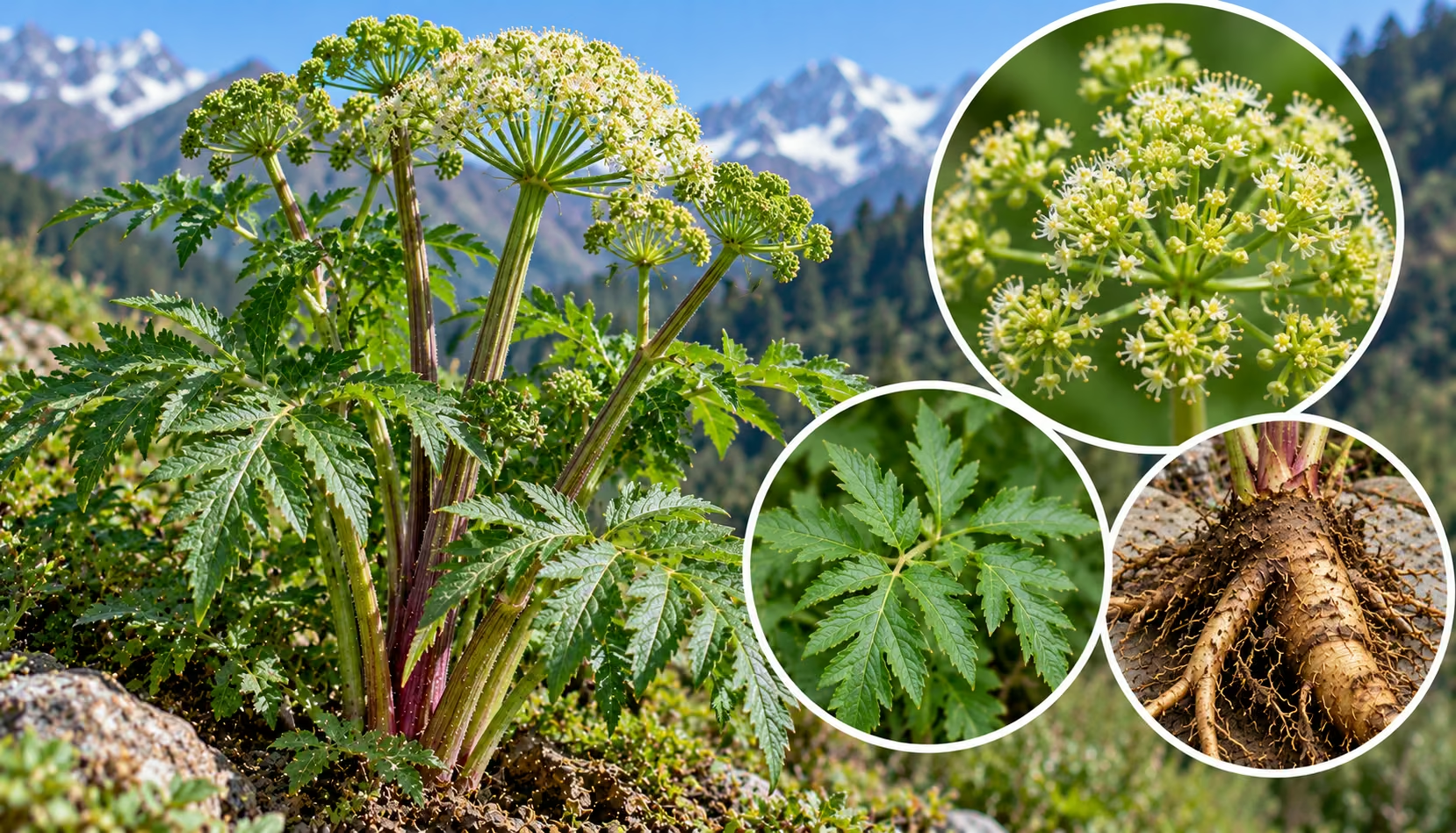
    Morphology- A stout, erect, aromatic perennial herb up to 2.5 m tall. Stem grooved, hollow, purplish. Leaves large, triangular, thrice pinnate. Inflorescence compound umbel; flowers small, yellowish-white. Roots thick, tapering, with strong aromatic odor.

    Varieties: No officially described varieties. Related species like Angelica archangelica used in similar applications.

    Substitute/ Adulterant: Common substitutes include Angelica archangelica. Adulterants may include roots of other Apiaceae family members.

    Phytochemicals: Contains volatile oils rich in β-phellandrene, limonene, (Z)-ligustilide, α-pinene, β-caryophyllene, α-terpineol, coumarins like bergapten and xanthotoxin.

    Raspanchaka

    Rasa: Tikta (bitter), Katu (pungent)

    Guna: Laghu (light), Tikshna (sharp)

    Virya: Ushna (hot)

    Vipaka: Katu (pungent)

    Prabhava: Krimighna

    Dosha shamakta: Kapha-Vata hara

    Karma- Rogaghnata: Krimighna, Jvaraghna, Shothahara, Deepana, Pachana, Vatanulomana, Shwasahara

    Amayika Prayoga/Therapeutic Uses

    External: Applied as paste for wounds, fungal infections, and inflammation

    Internal: Used for digestive disorders, worm infestation, cough, asthma, and fever

    Part used: Root

    Dose: Churna: 1–3 g

    Yoga/Formulations: Mahasudarshan Churna, Krimimudgar Rasa, Shwasakuthar Rasa

    IUCN Status: Endangered

    Research updates:

    1. Khan A, Lone SH, Ahmad S, Ahamad SR. Bronchodilator potential of Angelica glauca essential oil in experimental asthma models. Phytomedicine Plus. doi:10.1016/j.phyplu.2022.100129.
    2. Devi N, Dey A. Pharmacological overview and conservation perspectives of Angelica glauca: An endangered medicinal plant of the Himalayas. Journal of Herbal Medicine. doi:10.1016/j.hermed.2021.100497.
    3. Negi VS, Maikhuri RK, Phondani PC, Rawat LS. Ethnobotany and conservation strategies for Angelica glauca in Western Himalaya. Indian Journal of Traditional Knowledge. doi:10.56042/ijtk.v20i4.36637.
    About Choraka

    Botanical Name

    Angelica glauca Edgew.

    Family

    Apiaceae (Satapushpa Kula)

    Identification No.

    SDACH/HG/201

    Parts Used

    Root

    Habitat

    Jammu & Kashmir, Himachal Pradesh, Uttarakhand, Sikkim, Nepal, and Bhutan

    IUCN Status

    Endangered

    Plant Photos

    Ayurvedic Properties

    Rasa

    Tikta (bitter), Katu (pungent)

    Guna

    Laghu (light), Tikshna (sharp)

    Virya

    Ushna (hot)

    Vipãka

    Katu (pungent)

    Contact Now

    Have queries? Contact Us.

    Have queries? We’re here to help you every step of the way.

    Contact us to get the right guidance for your academic journey at Shri Dhanwantry Ayurvedic College.

  • Hemavati

    Hemavati

    Hemavati

    Botanical Name: Paris polyphylla

    Family:

    Melanthiaceae

    Identification No: SDACH/HG/200

    Introduction: Paris polyphylla is a high-altitude herb traditionally used in Himalayan and northeastern folk medicine. Known as the “Herbal King” in some regions of China, it has significant importance in traditional medicine for treating inflammation, pain, wounds, snakebites, and tumors. It is an endangered plant due to overexploitation.

    Scientific Classification:

    • Kingdom: Plantae
    • Order: Liliales
    • Family: Melanthiaceae
    • Genus: Paris
    • Species: P. polyphylla

    Names in Different Indian Languages:

    • English: Love Apple, Chinese Paris
    • Hindi (Folk): Satuwa
    • Nepali: Satuwa
    • Sanskrit: Not classically recorded; often equated to local names in ethnomedicine

    Varieties & Adulterants:

    • CV: Paris quadrifolia (European)

    Morphology:

    • Type: Erect, rhizomatous herb
    • Height: 30–100 cm
    • Leaves: Whorled at top of stem, 4–8 in number, elliptic-lanceolate
    • Flowers: Solitary, greenish to dark purple
    • Fruits: Berry-like, turns reddish-black when ripe
    • Rootstock: Thick, jointed, yellowish rhizomes

    Habitat & Distribution:

    Found in Eastern Himalayas, Northeast India (Sikkim, Arunachal Pradesh), Bhutan, Nepal, and China. Grows in moist forest floors and shady high-altitude slopes (1800–3300 m).

    Chemical Composition:

    • Steroidal saponins (polyphyllins A–F)
    • Diosgenin
    • Flavonoids
    • Alkaloids
    • Tannins
    • Sterols

    Properties:

    • Rasa: Tikta, Kashaya
    • Guna: Laghu, Ruksha
    • Virya: Ushna
    • Vipaka: Katu
    • Karma: Vedanasthapana, Jantughna, Vrana-hara, Shothahara, Rakta-stambhaka

    Indications:

    • Pain and inflammation
    • Wound healing
    • Snakebite, scorpion sting
    • Bleeding disorders
    • Fever
    • Abscess
    • Tumors (used in traditional systems, subject to ongoing research)

    External Uses:

    • Paste of rhizome applied to wounds, abscesses, insect bites
    • Powder used as styptic on bleeding injuries
    • Rhizome decoction used as wash in skin infections

    Internal Uses:

    • Decoction or powder for internal bleeding, fever, and respiratory infections
    • Traditional use in cancer and liver disorders (under research validation)
    • Used in small doses due to potent steroidal content

    Srotogamitwa:

    • Dosha: Kapha-Vatahara
    • Dhatu: Rasa, Rakta
    • Mala: Controls excess bleeding and pus

    Parts Used:

    Rhizome

    Dosage:

    • Powder: 250–500 mg (strictly under supervision)
    • Decoction: 20–30 ml (diluted and cautiously used)

    Important Yogas or Formulations:

    • Not part of classical Ayurvedic formulations, but included in local tribal and Tibetan medical recipes for fever, bleeding, and poison bites.

    Therapeutic Uses:

    1. Snakebite & Scorpion sting: Rhizome paste used topically or mixed with warm water
    2. Bleeding disorders: Powder used to arrest bleeding
    3. Fever: Decoction used traditionally as febrifuge
    4. Tumor & Ulcer: Folk medicine uses paste internally and externally

    IUCN Status: Vulnerable

    Research Updates :

    1. Antitumor Activity (2021): Polyphyllin D induces apoptosis in cancer cells via mitochondrial pathways.
    2. Wound Healing (2020): Rhizome extract accelerates wound contraction and granulation in animal models.
    3. Anti-inflammatory Effects (2022): Steroidal saponins suppress inflammatory markers in experimental rats.
    4. Antibacterial Properties (2023): Methanolic rhizome extract effective against Staphylococcus aureus and E. coli.
    5. Hepatoprotective Potential (2024): Study showed protection against CCl₄-induced liver injury in mice.

    About Hemavati

    Botanical Name

    Paris polyphylla

    Family

    Melanthiaceae

    Identification No.

    SDACH/HG/200

    Parts Used

    Rhizome

    Habitat

    Sikkim, Arunachal Pradesh, Bhutan, Nepal, and China

    IUCN Status

    Vulnerable

    Plant Photos

    Ayurvedic Properties

    Rasa

    Tikta, Kashaya

    Guna

    Laghu, Ruksha

    Virya

    Ushna

    Vipãka

    Katu

    Contact Now

    Have queries? Contact Us.

    Have queries? We’re here to help you every step of the way.

    Contact us to get the right guidance for your academic journey at Shri Dhanwantry Ayurvedic College.