Shri Dhanwantry Ayurvedic College

Category: Dravyaguna Vigyan Blogs

  • Bala

    Bala

    Botanical Name : Sida cordifolia Linn.

    Family : Malvaceae

    Identification No.: SDACH/HG/88

    Introduction :

    In North India Sida cordifolia considered as bala, but in south Sida rhombifolia Linn. Considered as bala. Whatever be, both of them have same use.

    Names in different Indian languages :

    English : Country Mallow

    Hindi : Khirainti, Bariyara

    Kannada : Hettuti

    Malayalam : Vellurum

    Sanskrit : Bala , maha bala

    Tamil : Nilatutti

    Telugu : Chittamutti, Mattavapulagam

    Unani : Bariyaara, Khirhati, Khireti, Kunayi.

    Synonyms :

    बला स्थूलबीजा स्थूलपर्णा स्थूलमूलिका।

    क्षुधा बलवहामेहकृच्छ्रशोथविनाशिनी॥

    वातपित्तहरा हृद्याश्लेष्मला शुक्रदा गुरु।

    बृंहणी वाजीकरणी शुक्रार्तिनिबृंहणी॥

    Balaa, Sumanganaa, Kharayashtikaa, Balini, Bhadrabalaa, Bhadraudani, Vaatyaalikaa

    Classification according to Charaka, Susrutha & Vagbhata :

    Charaka

    Balã, Brmhaniya, Prajãsthapana, Madhuraskandha

    Susrutha

    Vãtasamgamana

    Vagbhata

    malvaceae-sida root storage (5)

    Varieties & adulterants – (CV – controversy, AD – adulterants) :

    1. S.acuta Burm

    2. S.rombifolia

    3. S.restusa

    4. S.spinosa

    S. spinosa ( considered as mahabala)

    Bhãvamisra mentioned four varieties

    (i) Balã

    (ii) Atibalã

    (iii) Nãgabala

    (iv) Mahã balã

    S. cordifolia

    Abution indicum

    S. veronicaefolia

    S. rhombifolia

    Morphology :

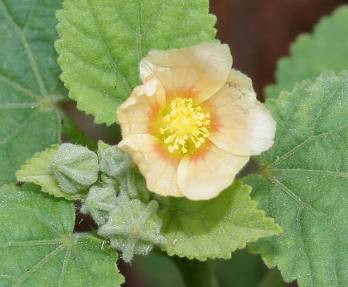
    A small downy erect herb or shrub, 1.2 m. in height, with long branches, sometimes rooting at nodes.

    Leaves- cordate, oblong, ovate or ovate oblong, very downy on both surfaces; petiole as long as the blade.

    Flowers small, tawny yellow or white, carpels 10.

    Fruits- with a pair of awns on each carpel. (Flowers and grows wild along the roadsides, throughout sub-tropical and tropical India, ascending up to 1,200 m.)

    Distribution & Habitat :

    All over India

    Chemical constituents :

    Major components of seeds are alkaloids. Alkaloid contains mainly ephedrine. It also contains fatty acid, mucin, potassium nitrate and resin, hypaphorine, vasicinone, vascicine, vasicinol, choline, betaine, phytosterol, phytosterols, resin, resin acids, mucin and potassium nitrate. etc.

    Properties :

    RASA-madhur, kashaya

    GUNA- Laghu, Snigdha, Picchila

    VIRYA-sita

    VIPAKA-madhur

    Karma –balya, vranahara, rasayana, stambana, vrisya

    Sour, astringent, acrid, spermatopoietic, demulcent, antibacterial and antipyretic

    Indication :

    Raktapitta, Vatavyadi, Prameha, Ksaya

    Rheumatism, hemiplegia, facial paralysis, sciatica, polyuria, dysuria, cystitis, strangury , hematuria; leucorrhoea , general debility

    Part used :

    Root

    Dosage :

    Powder 2-4 g

    Decoction 50-100 ml

    Amayika Prayoga / Therapeutic Uses

    External use :

    Paste is analgesic and alleviates oedema. It is locally applied over inflammation and eye disorders.

    Internal use :

    Central nervous-system : Being neural tonic and vatasharnak, it is useful in vata disorders like paralysis, facial palsy etc

    Digestive system : Emollient and astringent. Useful in flatulence.

    Circulatory system : Cardiac tonic and alleviates

    haemorrhagic disorders, hence used in cardiac debility, haemorrhagic disorders .

    Reproductive system: Aphrodisiac and useful in spermatorrhoea

    Urinary system : Diuretic, so useful in dysuria.

    Temperature : Useful in fever being a febrifuge

    Satmikaran : Being tonic, it is helpful in general debility. tuberculosis and undernourishment

    Important Yogas or Formations :

    Bala taila, bala rasayana, ksira bala, bala guducyadi taila, Balarishta, Chandanabalalakshadi taila.            

    Therapeutic Uses :

    (i) Antra vrddhi— Balã ksira is added to Eranda taila and administered orally (C. D.)

    (ii) Galaganda— Balã, Atibalã and Devãdaru are powdered and given through oral rout(S.S.Ci-18).

    (iii) Vatavyãdhi— Balã yüsha is the best for Vatarogãs (V.M).

    IUCN Status: Not Evaluated (NE)

    Research Updates (Past 5 Years):

    1. 2021 – Clinical efficacy of Bala Taila in muscular dystrophy and facial palsy (Pakshaghata) reported.

    2. 2022 – Neuroprotective and anti-fatigue properties of Sida cordifolia root extract confirmed.

    3. 2023 – Demonstrated adaptogenic and aphrodisiac effects in male reproductive studies.
     

    About Bala

    Botanical Name

    Sida cordifolia L.

    Family

    Malvaceae

    Identification No.

    SDACH/HG/088

    Parts Used

    Root

    Habitat

    India

    IUCN Status

    Not Evaluated

    Plant Photos
    Ayurvedic Properties

    Rasa

    Madhura, Kashaya

    Guna

    Laghu, Snigdha, Picchila

    Virya

    Sheeta

    Vipãka

    Madhura

    Contact Now

    Have queries? Contact Us.

    Have queries? We’re here to help you every step of the way.

    Contact us to get the right guidance for your academic journey at Shri Dhanwantry Ayurvedic College.

  • Madhupatra

    Madhupatra

    Botanical Name : Stevia rebaudiana Bert.

    Family : Asteraceae

    Identification No.: SDACH/HG/087

    Introduction :

    In folk it used for digestive complaints. Its chemicals are useful in diabetes and hypertension.

    Names in different Indian languages :

    English : Stevia

    Malayalam : Madhura tulasi

    Tamil : Madhura tulasi

    Morphology :

    It is an under shrub,

    Leaves – simple, opposite, obovate, serrated margin at ends

    Flower – white

    Fruit- capsule

    Distribution & Habitat :

    Cultivated

    Karma :

    Hypoglycemic, carminative

    Indication :

    Diabetes, hypertension, gastritis

    Part used :

    Whole plant

    Dosage :

    Leaf juice 10-15 ml

    Powder 2-4 g

    Decoction 50-100 ml

    Amayika Prayoga/Therapeutic Uses:

    External:

    Used in herbal toothpaste and mouth fresheners due to anti-cariogenic properties

    Internal:

    As a natural sweetener for diabetic patients

    Useful in weight management

    Supports pancreatic health and reduces blood sugar

    Yoga/Formulations:

    Stevia leaf powder

    Stevia-based sugar substitutes

    Incorporated in herbal teas, diabetic formulations

    IUCN Status: Not Evaluated (NE)

    Research updates:

    1. Mishra et al. (2023). Antidiabetic and antioxidant potential of Stevia rebaudiana in diabetic rats. Journal of Ayurveda and Integrative Medicine.

    2. Patel et al. (2021). Stevioside modulates insulin secretion in β-cell models. Phytotherapy Research.

    3. Sharma et al. (2020). Comparative study on the antihyperglycemic effect of Stevia versus standard antidiabetic drugs. Indian Journal of Experimental Biology.

    About Madhupatra

    Botanical Name

    Stevia rebaudiana Bert.

    Family

    Asteraceae

    Identification No.

    SDACH/HG/087

    Parts Used

    Whole plant

    Habitat

    Cultivated

    IUCN Status

    Not Evaluated

    Plant Photos
    Ayurvedic Properties

    Rasa

    Madhura

    Guna

    Laghu

    Virya

    Sheeta

    Vipãka

    Madhura

    Contact Now

    Have queries? Contact Us.

    Have queries? We’re here to help you every step of the way.

    Contact us to get the right guidance for your academic journey at Shri Dhanwantry Ayurvedic College.

  • Sahadevi

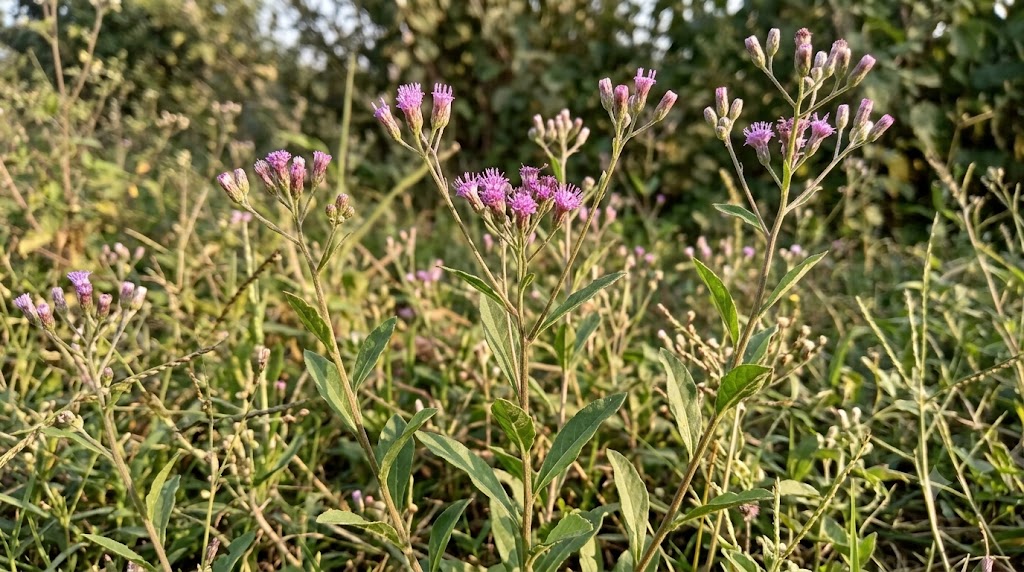
    Sahadevi

    Botanical Name : Vernonia cinerea (Linn)Less.

    Family : Compositae; Asteraceae.

    Identification No.: SDACH/HG/086

    Introduction :

    This plant used for ‘Anjanam’

    Latin name: Vernonia = of the spring: cineria = cinder coloured

    Names in different Indian languages :

    English : Ash coloured Fleabane, Purple Fleabane.

    Hindi : Sahadevyi, sadodi

    Kannada : Sahadevyi, sadodi

    Malayalam : puvamkurunnila

    Sanskrit : Sahadevi

    Tamil : Naichotte Poonde, puvamkuruntil, naycitti

    Telugu : Gharitikamini, garitikamma.

    Synonyms :

    सहदेवी सुरश्रेणिः शतपुष्पा शताग्रिका।

    वृष्या तीक्ष्णोष्णवीर्या च कृमिपाण्डुविनाशिनी॥

    Uttamkanyaka, jwara hara, Dandotpalaa,

    Morphology :

    This herb grows 15 -30 cms. in high. Stalk is thin, with sharp borders and bristly hairs.

    Leaves –simple,  different sizes with bristly hair on them and absence of stalk. Flowers blue. purple, appear in rainy season.

    Fruits – in winter.

    Varieties : Two – I) white flowers and 2) blue flowers.

    Distribution & Habitat :

    All over India.

    Chemical constituents :

    luteolin-7-monobeta- D-glucopyranoside, betaamyrin, acetate, lupeol acetate, betaamyrin ,  lupeol

    Properties :

    Guna: laghu, ruksha, katu;

    Guna:laghu

    Virya: ushna;

    Vipaka : Katu

    Prabhav: jwaraghna (antipyretic).

    Karma : jwarahara, netrya

    diaphoretic, blood purifier, anti fungal, anti bacterial, diuretic , anthelmintic, antiflatulent, antispasmodic;

    Indication :

    leucorrhoea, dysuria, spasm of  bladder,  dysuria, leucoderma, psoriasis, cough, skin disease

    Part used :

    Whole plant

    Dosage :

    Leaf juice 10-15 ml

    Powder 2-4 g

    Decoction 50-100 ml

    Externally, it is used in quaternary fever by tying its root with scalp hair and rubbing its juice on the skin. Paste of the leaves is applied on conjunctivitis and guinea worm. Its laxative, anthelmintic, blood purifying and diaphoretic properties make it useful in piles, intestinal worms, blood disorders, skin diseases, fever and renal calculi. Insects do not stay around this plant.

    Amayika Prayoga / Therapeutic Uses

    External:

    Paste applied in skin conditions and swelling

    Decoction used for washing wounds

    Internal:Juice/decoction used in fevers, worm infestations, anemia, and general debility

    Used as adjuvant in deworming and anti-inflammatory therapy

    IUCN Status: Not Evaluated (NE)

    Research Updates (Past 5 Years):

    1. 2020 – Anti-inflammatory and antioxidant activity validated in experimental models.

    2. 2021 – Effective in promoting weight loss and reducing oxidative stress in lifestyle disorders.

    3. 2023 – Evaluated for hepatoprotective and antipyretic effects in animal studies.


    About Sahadevi

    Botanical Name

    Cyanthillium cinereum (L.) H.Rob.

    Family

    Asteraceae (Compositae)

    Identification No.

    SDACH/HG/086

    Parts Used

    Whole plant

    Habitat

    India

    IUCN Status

    Not Evaluated

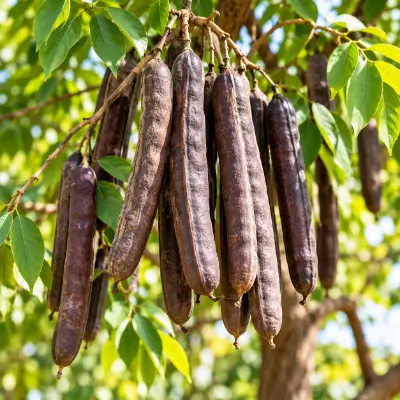
    Plant Photos
    Ayurvedic Properties

    Rasa

    Tikta, Katu

    Guna

    Laghu, Ruksha

    Virya

    Ushna

    Vipãka

    Katu

    Contact Now

    Have queries? Contact Us.

    Have queries? We’re here to help you every step of the way.

    Contact us to get the right guidance for your academic journey at Shri Dhanwantry Ayurvedic College.

  • SHWETA SAIREYAK

    SHWETA SAIREYAK

    About SHWETA SAIREYAK

    Botanical Name

    Barleria cristata L.

    Family

    Acanthaceae

    Identification No.

    SDACH/HG/084

    Parts Used

    Leaves, Roots

    Habitat

    India

    IUCN Status

    Not Evaluated

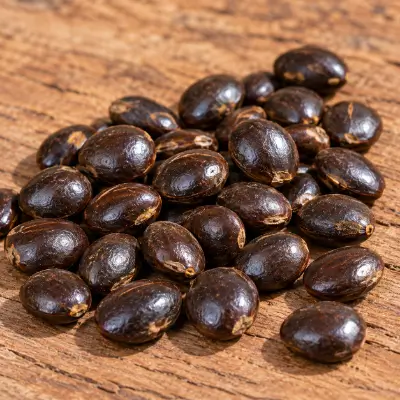
    Plant Photos
    Ayurvedic Properties

    Rasa

    Tikta, Kashaya

    Guna

    Laghu, Ruksha

    Virya

    Shita

    Vipãka

    Katu

    Contact Now

    Have queries? Contact Us.

    Have queries? We’re here to help you every step of the way.

    Contact us to get the right guidance for your academic journey at Shri Dhanwantry Ayurvedic College.

  • Patha

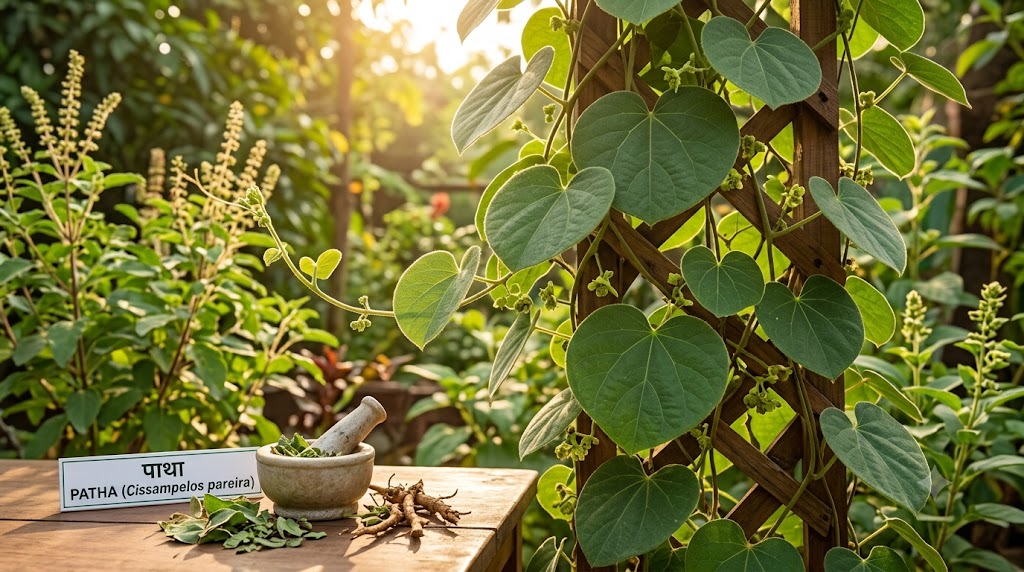
    Patha

    Botanical Name : Cissampelos pareira Linn

    Family : Menispermaceae

    Identification No.: SDACH/HG/083

    Introduction :

    In North india Cissampelos pareira used as patha, in south Cyclea peltata used as patha. It is one of the best brain tonic used in Ayurveda along with other drugs. In the Vedic literature Pãthã is described as ‘Pãtã’

    Names in different Indian languages :

    English : Velvet-Leaf Pareira, PareiraBrava.

    Malayalam : malathaghi

    Tamil : Paadakkizhangu, Appatta.

    Unani : Paathaa

    Synonyms :

    पाठा गजवाहिनी च चन्द्रिका चन्दनोपमा।

    अम्लपित्तहराः श्रेष्ठा दीपनी चोष्णवीर्यका॥

    Paathaa, Ambashthaa, Varatiktaaa, Vriki, Aviddhakarni,Piluphalaa, Shreyashi

    Classification according to Charaka, Susrutha & Vagbhata :

    Charaka

    Sandhãniya, Jvarahara, Stanyasödhana

    Susrutha

    Mustãdi, Aragvadhadi, Pippalyadi, Ambasthadi, Brahatyadi, Patolädi

    Vagbhata

    Mustadi, Aragvadhadi, Ambasthdi, Patolädi, Vatsakãdi

    Varieties & adulterants – (CV – controversy, AD – adulterants) :

    1. Cyclea peltata  – [AD]

    2. C. burmani – [AD]

    3. Stemphania hernandifolia – [AD]

    4. Rivea hypocrateriformins – [AD]

    5. R. ornata. – [AD]

    6. Raja patha – Cyclea peltata

    7.  laghu patha –  Cissampelos pariera

    8. Cyclea peltata – south India

    9. Stephania hernandifolia

    Morphology :

    It is a climbing shrub; branches pubescent.

    Leaves- peltate, 3.8-10 cm diameter.

    Flowers- minute, yellowish. Male flowers in axillary cymes, peduncle 18mm long. Sepals 4, hairy, obovate- oblong. Petals combined into a cyathiform corolla, half the length of the sepals. Filaments longer than Corolla. Female flowers in elongate, solitary or twin, axillary racemes; pedicles very short; bracts foliaceous or nearly sessile, orbicular or reniform. Sepal 1, ovate-oblong. Petal 1, sub rotund.

    Fruit drupe, subglobose, hairy, red, endocarp transversely ridged. Distribution- Found throughout tropical & subtropical India.

    C. peltata- It is a climber, Leaves- peltate, hairy,

    Flowers- very small. Male flowers in panicles, very long.

    Fruit- drupe. reniform.

    Note— The species of this plant are easily distinguished by the cup-shaped calyx and corolla. Cissampelos has the corolla alone cup-shaped.

    Distribution & Habitat :

    All over India

    Chemical constituents :

    Hayatine, methiodide and methochloride, cissamine, pareirine, cycleanine,bebeerine, hayatidin, (+) quercitol

    Properties :

    RASA-tikta

    GUNA-laghu, tikshna

    VIRYA-ushna

    VIPAKA-katu

    Karma : Vata-Kaphahara, Visaghna, Grãhi, Balya

    Amayika Prayoga / Therapeutic Uses

    External uses :

    Being wound healer. antidote and Kushthaghna, paste of leaves and root is used in purities, skin disorders and snake poison. Juice or powdered roots are used as a nasya.

    Internal uses :

    Digestive System : Being an appetizer, digestive, laxative, astringent and anthelmintic, it is useful in anorexia. indigestion, abdominal pain, diarrhoea and dysentery

    Circulatory System : It is a blood purifier and has anti-inflammatory properly, so it is used in blood disorders, heart disorders and inflammation.

    Respiratory System : Being an expectorant, is is used in cough and dyspnoea.

    Reproductive System : Since it purifies breast milk it is used in various disorders ot breast milk secretion.

    Urinary System : diuretic, hence useful in dysuria and haematuria.

    Skin : Kushthaghna, Useful in skin disorders.

    Temperature : Being febrifuge and refrigerant, it is used in jwara. fever related diarrhoea and burning disorders.

    Satmikaran : Antidote and tonic – bitter tonic.

    Indication :

    Atisãra, Chardi, süla, Jvara, Kustha, Kandü, Krmi, Hrdroa, Gulma, Yöni röga.

    Root astringent, antispasmodic (used for cramps, painful menstruation), analgesic, antipyretic, diuretic, antilithic and emmenagogue. Prescribed for diarrhoea, dysentery, piles, urogenital affections (cystitis, nephritis, menorrhagia)

    Part Used :

    root

    Dosage :

    1-2 gm

    Important Yogas or Formations :

    Pusyanuga curna,saddharana yoga, padathi kashaya                       

    Therapeutic Uses :

    (1) ArthaVabhedaka – Root juice of Pãtha shall be used as Nasya (G.N.)

    (2) Lavanameha— Decoction of Pãthã and Aguru is useful (S.S.Ci. 11)

    (3) Arsas— Pãthã is taken with butter-milk (A.H.Ci.8)

    (4) Root paste is applied topically on scabies and eruptions on the body.

    (5) Also used for preventing miscarriage.

    IUCN Status: Not Evaluated (NE)

    Research Updates (Past 5 Years)

    1. 2020 – Antidiarrheal activity of Cissampelos pareira root extract confirmed in animal models

    2. 2021 – Demonstrated immunomodulatory and anti-inflammatory potential

    3. 2022 – In vitro antimicrobial efficacy against intestinal pathogens

    About Patha

    Botanical Name

    Cissampelos pareira L.

    Family

    Menispermaceae

    Identification No.

    SDACH/HG/083

    Parts Used

    Root

    Habitat

    India, Nepal, Bangladesh, Pakistan, Sri Lanka

    IUCN Status

    Not Evaluated

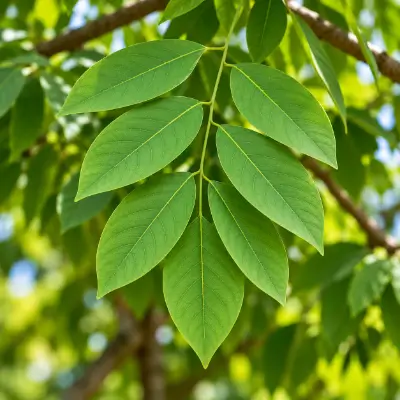
    Plant Photos
    Ayurvedic Properties

    Rasa

    Tikta

    Guna

    Laghu, Tikshna

    Virya

    Ushna

    Vipãka

    Katu

    Contact Now

    Have queries? Contact Us.

    Have queries? We’re here to help you every step of the way.

    Contact us to get the right guidance for your academic journey at Shri Dhanwantry Ayurvedic College.
  • Udumbara

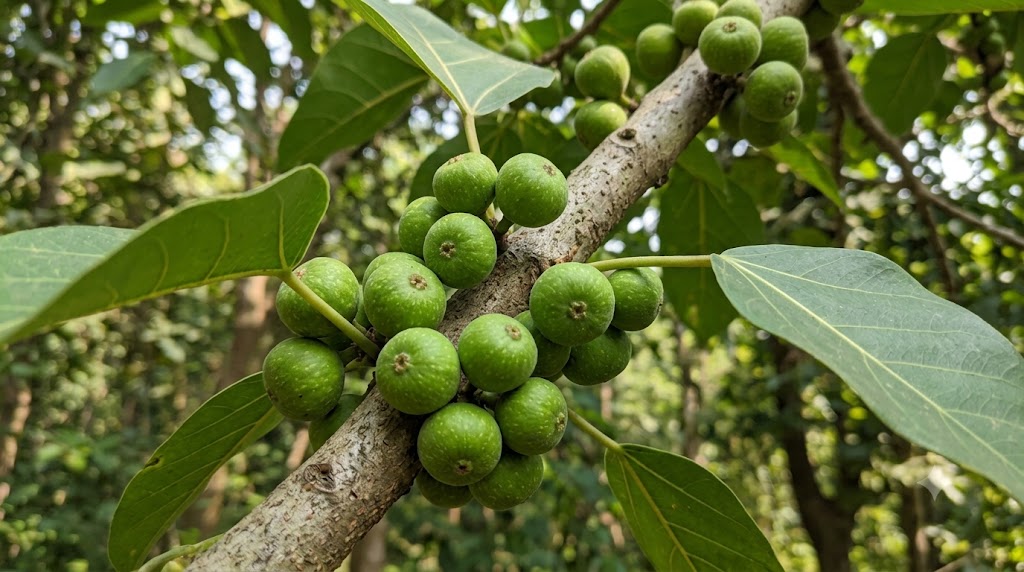
    Udumbara

    Botanical Name : Ficus racemosa Linn.

    Family : Moraceae

    Identification No.: SDACH/HG/082

    Introduction :

    Udumbara is one of the few extensively described plants in the vedic literature. Atharva veda quotes that Udumbara Mani dhãrana enhances the strength of human body.

    Scientific classification: Figs constitute the genus Ficus, of the family Moraceae. The common commercial fig is classified as Ficus carica, Ficus racemosa, the sycamore fig as ficus sycomorus, and the pipal, or sacred fig, as Ficus religiosa. The common rubber plant is classified as Ficus elastica, and the banyan tree, or Indian fig, as Ficus bengalensis. The two figs native to the subtropical United States are classified as Ficus aurea and Ficus citrifolia.

    Names in different Indian languages :

    English: Cluster Fig

    Hindi: Gular, umar

    Kannada: Atti

    Malayalam: Atti

    Sanskrit: Udumbarah, sadaphalah

    Tamil: Attiu

    Telugu: Udambarah, paidi

    Unani: Anjir-e-Aadam, Anjir-e-Ahmak, Gular

    Synonyms :

    Sadaaphala, Hema-daudhaka, Jantuphala, Yagyaanga.

    Ficus glomerata Roxb.

    Classification according to Charaka, Susrutha & Vagbhata :

    Charaka

    Mütrasangrahaniya, Kasãya skañdha

    Susrutha

    Nyagrodhadi gana

    Vagbhata

    Nyagrodhãdi

    Varieties & adulterants – (CV – controversy, AD – adulterants) :

    1. Udumbara (F. glomerata)

    2. Kãhodumbara/Kakodumbara (F. hispida)

    3. Nadyodumbara-F. carica   [CV]

    Ficus krishnae

    Ficus virens

    Morphology :

    A moderate to large deciduous tree, 10 – 12 m. high.

    Bark— smooth, reddish-grey.

    Leaves— 3-veined, elliptic, ovate or ovate-lanceolate.

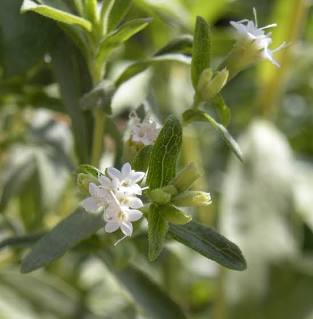
    Fruits— borne in large clusters on short leaflet branches derived from the trunk and main branches, subglobose or pyriform, 2.5-5.5 cm diameter red when ripe.

    Habitat & Distribution :

    Almost throughout India.

    Chemical composition :

    Gluacol,beta-sitosterol, lupeol acetate, friedelin,  phytosterols

    Tree contains tannins,wax, rubber and ash which contains silica and phosphoric acid.

    Leaves & Fruits— gluacol

    Fruits— beta Sitosterol, lupeol acetate, friedelin, phytosterols etc.

    Bark—beta  sitosterol, ceryl behenate, lupeol, friedelin

    Properties :

    Rasa Kasäya

    Guna Guru, Rüksa

    Virya sita 

    Vipãka Katu

    Karma : Pitta-kaphahara, Vrana ropana-swedhana, varnya

    astringent, carminative, digestive, stomachic

    Indications— svitra, Vãtarakta, Vrana, Rakta vikãra, Murchã, Kandabhagna, Dãha, Yoniroga, Raktapitta, Atisära etc

    menorrhagia, leucorrhoea, urinary disorders, skin diseases, swellings, boils, haemorrhages, diarrhoea, dyspepsia, dysentery

    Parts used :

    Bark, fruit, latex and roots.

    Dosage :

    powder 5-10 g. decoction  50 -100 ml., latex 5-10 drops

    Amayika Prayoga / Therapeutic Uses

    External uses :

    Reduces oedema – its latex is used as liniment for swelling and pain. For wound healing its raw stem is used in the form of liniment. A thick decoction of bark is applied locally for stomatitis. Topical use reduces burning sensation. Extract of bark is used as mouthwash and gargling in pharingitis and stomatitis udumbarsar.

    Internal uses :

    Digestive system : Agnisadak and astringent. Ripe fruits are anthelmintic. Because of the astringent property, decoction of bark is given in dysentery and diarrhoea associated with bleeding per rectum and spruce raw fruits are given as cooked vegetables. The latex with sugar is used for infantile diarrhea and teething problems. In case of bhasmak roga. the powder or bark is given with human milk and water. Fruit juice is given for hiccups.

    Circulatory system : Udumbar is raktagarni, so bark and fruits are used in haemorrhagic disorders. Hall a leaf is given with betel leaves for treating jaundice.

    Reproductive system : Decoction of the bark is useful in menorrhagia and leucorrhoea. In Uttar basti a decoction is given. It is also used for fetal nutrition. Its latex along with sugar or sugar preparation known as batasa is recommended in sperm debility. Regular consumption of ripe fruits causes sterility.

    Urinary system : It is an antidiuretic. In prameha . the decoction of bark and ripe fruits is given. In diabetes, juice of fruits or roots is given.

    Temperature : Ripe fruits being refrigerant, are given for treating fever.

    Parts used : Bark, fruit, latex. It is believed that water is found near the udumbar tree which may mean that udumbar free grows near a water source. Ripe fruits are very good in healing, burning sensation and wounds. The burning sensation on the fingers of Narasimha when he tore open Hiranyakashyapu’s stomach was ameliorated by the fruits of udumbara.

    It is believed that water is found near the udumbar tree which may mean that udumbar tree grows near a water source. Ripe fruits are very good in healing, burning sensation and wounds. The burning sensation on the fingers of Narasimha when he tore open Hiranyakashyapu’s stomach was ameliorated by the fruits of udumbara.

    Important Yogas or Formations :

    udumbarãdi taila, Pañcavalkaja Kvãtha

    Therapeutic Uses :

    (1) Garbhapata— Udumbara fruit decoction is mixed with säli rice powder and sugar is administered with honey (R.M.).

    (2) Hikkä— Ash of Udumbara bark is mixed with honey and ghee and given (S.S.Ut. 50).

    (3) Prameha pitikã— Udumbaraksira is applied external, (G.N.).

    (4) Pumsavana— Vandãka growing on Udumbara tree is given with goats milk — (V. D.).

    IUCN Status: Least Concern (LC)

    Research Updates (Past 5 Years):

    1. 2021 – Anti-diabetic and nephroprotective effect of Ficus racemosa bark in streptozotocin-induced rats.

    -incision models.

    3. 2022 – Antibacterial and anti-inflammatory effects of fruit extract studied for urinary tract infections.


    About Udumbara

    Botanical Name

    Ficus racemosa Linn.

    Family

    Moraceae

    Identification No.

    SDACH/HG/082

    Parts Used

    Bark, Fruit, Latex, Roots

    Habitat

    India

    IUCN Status

    Least Concern

    Plant Photos

    Ayurvedic Properties

    Rasa

    Kashaya

    Guna

    Guru, Ruksha

    Virya

    Sita

    Vipãka

    Katu

    Contact Now

    Have queries? Contact Us.

    Have queries? We’re here to help you every step of the way.

    Contact us to get the right guidance for your academic journey at Shri Dhanwantry Ayurvedic College.
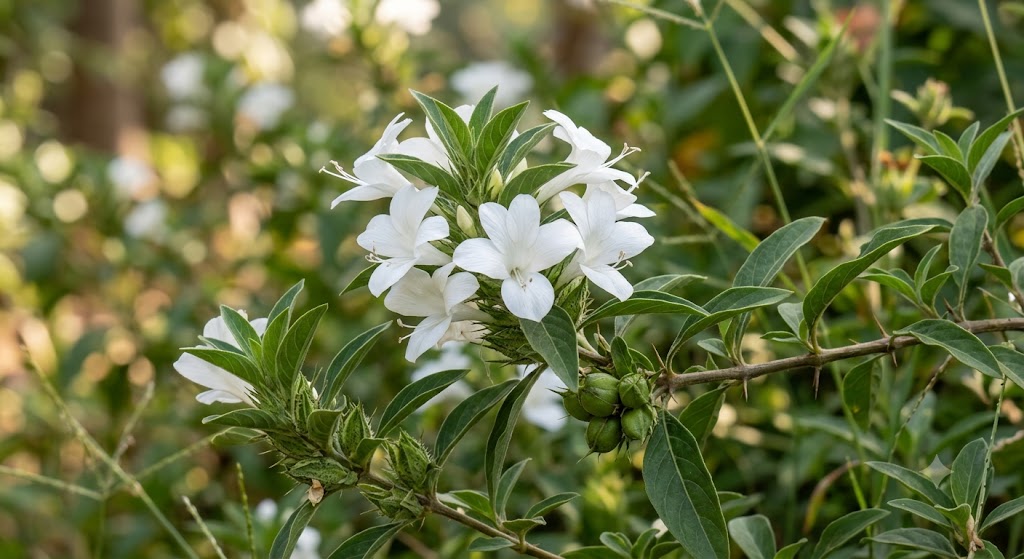
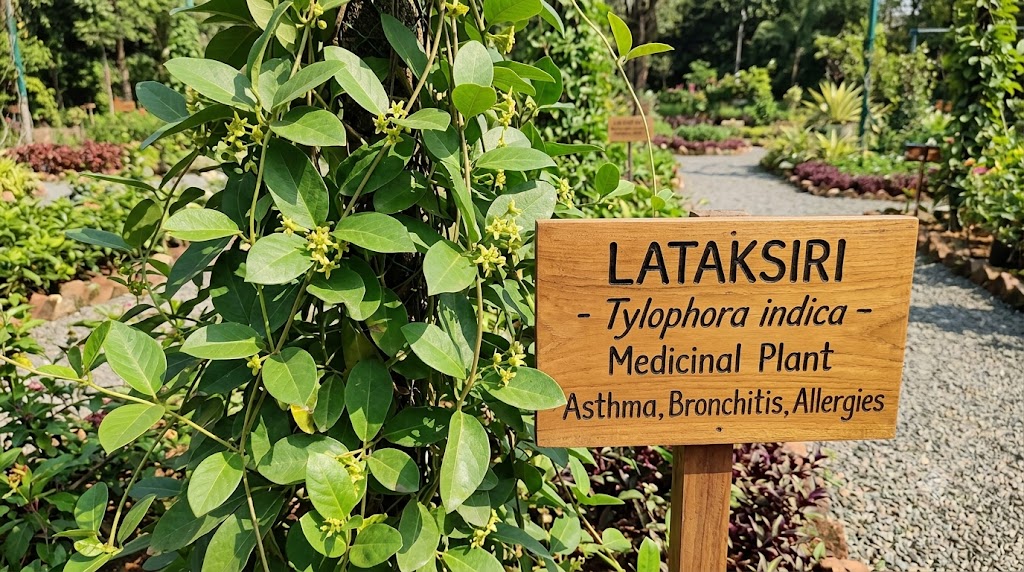
  • Lataksiri

    Lataksiri

    Botanical Name : Tylophora indica (Burm. f.) Merrill.

    Family : Asclepiadaceae

    Identification No.: SDACH/HG/081

    Introduction :

    In folk it is used for whooping cough and asthma.

    Names in different Indian languages :

    English : Emetic Swallow Wort, Indian Ipecacuanha, Country Ipecacuanha

    Hindi : Jamgli pikvam, antamul

    Kannada : Nipaladaberu, antamula

    Malayalam : Vallippala

    Sanskrit : Lataksiri

    Tamil : Nay Palai, Nangilaippiratti, nancharuppan

    Telugu : Vettipala, verripala, tellayadala, kakapala

    Synonyms :

     लताक्षीरी क्षीरीदुग्धा स्तन्यदा बलदा स्मृता।

    श्वेतगन्धा गुरु स्निग्धा मधुरा शीतला शुभा॥

    Antamuula, Muulini, Arkaparni.

    Tylophora asthamatica Wight & Arn.

    Morphology :

    It is a lactiferous slender, climber

    Leaves – simple, opposite, oblong-ovate

    Flower- yellowish, umbel

    Fruits – fusiform

    Distribution & Habitat :

    All over India

    Chemical constituents :

    tylophorine, tylphorinine, desmethyl tylophorine,desmethyl tylophorinine, kaempferol. tylophorinidine and gamma-fagarine.

    Karma :

    Anti cancerous, emetic, aromatic, purgative, expectorant

    Chemical named Desmethyltylophorine gave good results in leukemia.

    Indication : Asthma, gout, ulcer, piles, whooping cough

    Part used : Whole plant

    Dosage :

    Leaf juice 10-15 ml

    Powder 2-4 g

    Decoction 50-100 ml

    Therapeutic Uses :

    Decoction useful in whooping cough.

    IUCN Status: Least Concern (LC)

    Research updates:

    1. Singh et al. (2022). Tylophora asthmatica leaf extract shows significant anti-asthmatic activity via mast cell stabilization. Journal of Ethnopharmacology.

    2. Roy et al. (2021). Evaluation of immunomodulatory effects of Tylophora indica in experimental models. Phytomedicine.

    3. Kumar et al. (2020). Comparative phytochemical profiling of Tylophora species using HPTLC and LC-MS. Indian Journal of Natural Products.

    About Lataksiri

    Botanical Name

    Tylophora indica (Burm. f.) Merrill.

    Family

    Asclepiadaceae

    Identification No.

    SDACH/HG/081

    Parts Used

    Whole plant

    Habitat

    India

    IUCN Status

    Least Concern

    Plant Photos

    Ayurvedic Properties

    Rasa

    Tikta

    Guna

    Laghu, Ruksha

    Virya

    Sita

    Vipãka

    Madhura

    Contact Now

    Have queries? Contact Us.

    Have queries? We’re here to help you every step of the way.

    Contact us to get the right guidance for your academic journey at Shri Dhanwantry Ayurvedic College.
  • Lataksiri

    Lataksiri

    Botanical Name : Tylophora indica (Burm. f.) Merrill.

    Family : Asclepiadaceae

    Identification No.: SDACH/HG/081

    Introduction :

    In folk it is used for whooping cough and asthma.

    Names in different Indian languages :

    English : Emetic Swallow Wort, Indian Ipecacuanha, Country Ipecacuanha

    Hindi : Jamgli pikvam, antamul

    Kannada : Nipaladaberu, antamula

    Malayalam : Vallippala

    Sanskrit : Lataksiri

    Tamil : Nay Palai, Nangilaippiratti, nancharuppan

    Telugu : Vettipala, verripala, tellayadala, kakapala

    Synonyms :

     लताक्षीरी क्षीरीदुग्धा स्तन्यदा बलदा स्मृता।

    श्वेतगन्धा गुरु स्निग्धा मधुरा शीतला शुभा॥

    Antamuula, Muulini, Arkaparni.

    Tylophora asthamatica Wight & Arn.

    Morphology :

    It is a lactiferous slender, climber

    Leaves – simple, opposite, oblong-ovate

    Flower- yellowish, umbel

    Fruits – fusiform

    Distribution & Habitat :

    All over India

    Chemical constituents :

    tylophorine, tylphorinine, desmethyl tylophorine,desmethyl tylophorinine, kaempferol. tylophorinidine and gamma-fagarine.

    Karma :

    Anti cancerous, emetic, aromatic, purgative, expectorant

    Chemical named Desmethyltylophorine gave good results in leukemia.

    Indication : Asthma, gout, ulcer, piles, whooping cough

    Part used : Whole plant

    Dosage :

    Leaf juice 10-15 ml

    Powder 2-4 g

    Decoction 50-100 ml

    Therapeutic Uses :

    Decoction useful in whooping cough.

    IUCN Status: Least Concern (LC)

    Research updates:

    1. Singh et al. (2022). Tylophora asthmatica leaf extract shows significant anti-asthmatic activity via mast cell stabilization. Journal of Ethnopharmacology.

    2. Roy et al. (2021). Evaluation of immunomodulatory effects of Tylophora indica in experimental models. Phytomedicine.

    3. Kumar et al. (2020). Comparative phytochemical profiling of Tylophora species using HPTLC and LC-MS. Indian Journal of Natural Products.

    About Lataksiri

    Botanical Name

    Tylophora asthmatica (L.f.) Wight & Arn.

    Family

    Asclepiadaceae

    Identification No.

    SDACH/HG/081

    Parts Used

    Leaves, Root

    Habitat

    India

    IUCN Status

    Not Evaluated (NE)

    Plant Photos

    Ayurvedic Properties

    Rasa

    Tikta

    Guna

    Laghu, Ruksha

    Virya

    Sheeta

    Vipãka

    Madhura

    Contact Now

    Have queries? Contact Us.

    Have queries? We’re here to help you every step of the way.

    Contact us to get the right guidance for your academic journey at Shri Dhanwantry Ayurvedic College.
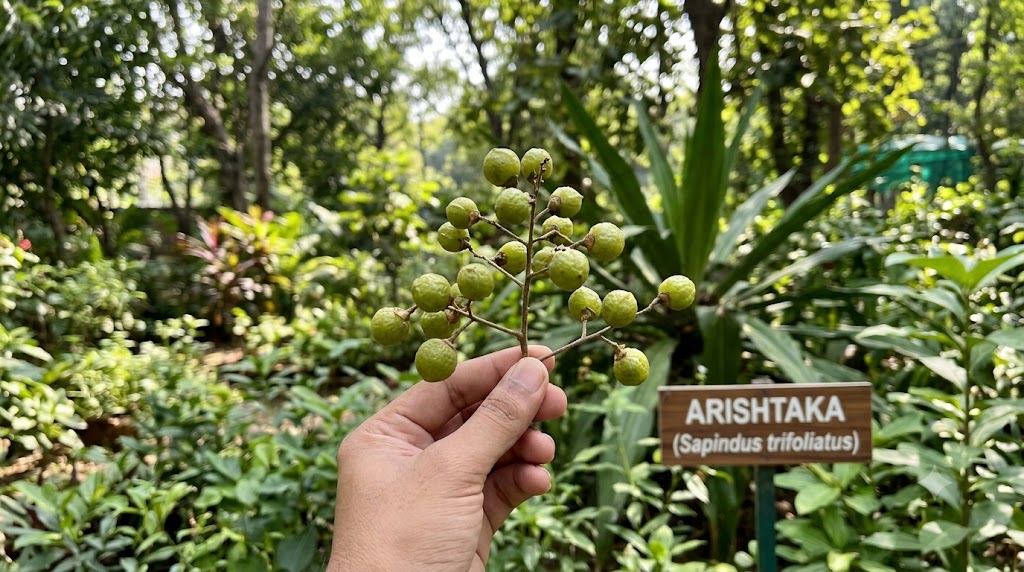
  • Arishtaka

    photo genrate

    Arishtaka

    Botanical Name : Sapindus mukorossi Vahl.

    Family : Sapindaceae

    Identification No.: SDACH/HG/080

    Introduction :

    Sapindaceae (a group from which soap is derived).

    Latin name : Sapindus = which yields soap; trifoliate = having three leaves,

    Soapberry, common name for a medium-size family of mostly woody flowering plants widely distributed in tropical areas, and for its representative genus.

    The soapberry family includes important tropical timber, such as akee, native to West Africa. This species has been introduced in the West Indies, where the ripe fruit is fried and eaten with fish (the unripe fruit is highly toxic). Several tropical fruits, such as the litchi, are members of the soapberry family. The representative genus contains about 13 species; 2 occur in the United States, and the fruits of both are poisonous.

    Flowers of the order to which the soapberry family belongs are characteristically functionally unisexual, small, and insect pollinated. The order contains about 5400 species placed in 15 families; the two largest are the rue family, with about 1700 species, and the soapberry

    Names in different Indian languages :

    English: Soapnut tree of South India.

    Hindi: Reethaa

    Kannada: Kugatemara, antawala

    Malayalam: Urunci, uruvanchi

    Sanskrit: Arishtaka, phenilah

    Tamil: Puvamkottai, Mani pungu.

    Telugu: Kunkutikaya, kumkuticettu, phenilamu

    Unani: Reethaa

    Synonyms :

    अरिष्टकः फेनिलश्च कठोरः कुथरोऽपि च।

    वायसानक इत्युक्तः सुतुम्बुरु इति स्मृतः॥

    Arishtaka, Phenila, Raktabeeja, Reethaakaranja, Garbhapaatana.

    Sapindus trifoliatus auct. non Linn.

    Morphology :

    This tree is 8 to 10 mtrs. high and has many branches with leaves and leaflets- 2, 3 pair-oblong-lanceolate,

    Flowers are white. Fruits are round, t occur in spring.

    Distribution & Habitat :

    Throughout India

    Chemical constituents :

    Saponin , genins, methylhedragenate, sapindic acid ,methyl oleanolate

    Properties :

    Guns: laghu, snigdha, tikshna;

    Rasa : katu, tikta;

    Vipaka katu;

    Veerya: ushna;

    Prabhav : vamak (emetic);

    Karma :

    Garba padi, vamanakam, lekhana

    astringent, emetic, detergent, anthelmintic

    Indication :

    Kushta, kandu, visha

    migraine, epilepsy , hysteria,  gout, rheumatism and paralysis

    Part used :

    Whole plant

    Dosage :

    Leaf juice 10-15 ml

    Powder 2-4 g

    Decoction 50-100 ml

    External use : Anti-inflammatory.

    Internal uses : It purifies vitiated kapha and pittá by emetic and purgative actions whereas alleviates vata by snigdha and ushna properties. Seed is intoxicant, while fruit rind has oxytropic action. In migraine, its water or powder is used as a nasya. In morphine poisoning, it is given orally to induce emesis.

    IUCN Status:

    Sapindus mukorossi – Least Concern (LC)

    Sapindus trifoliatus – Not Evaluated (NE)

    Research Updates (Past 5 Years):

    1. 2021 – Evaluation of antifungal and antidandruff activity of Sapindus mukorossi extract.

    2. 2020 – Saponin-rich fractions showed significant anti-inflammatory and anti-psoriatic effects in in vivo models.

    3. 2023 – In vitro study on antibacterial and cytotoxic properties against skin pathogens and cancer cells.


    About Arishtaka

    Botanical Name

    Sapindus mukorossi Vahl.

    Family

    Sapindaceae

    Identification No.

    SDACH/HG/080

    Parts Used

    Whole plant

    Habitat

    India

    IUCN Status

    Least Concern

    Plant Photos

    Ayurvedic Properties

    Rasa

    Katu, Tikta

    Guna

    Laghu, Snigdha, Tikshna

    Virya

    Ushna

    Vipãka

    Katu

    Contact Now

    Have queries? Contact Us.

    Have queries? We’re here to help you every step of the way.

    Contact us to get the right guidance for your academic journey at Shri Dhanwantry Ayurvedic College.
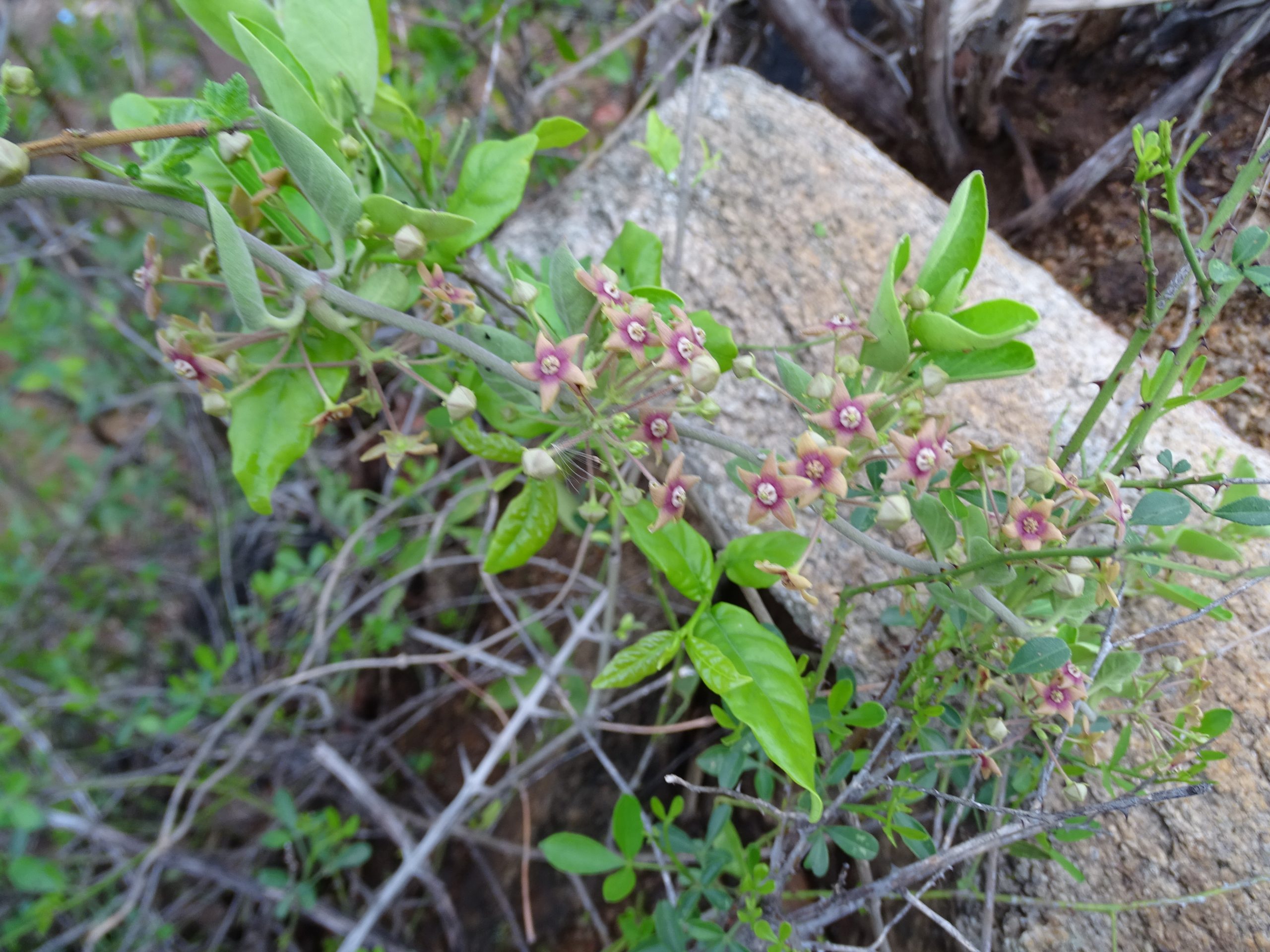
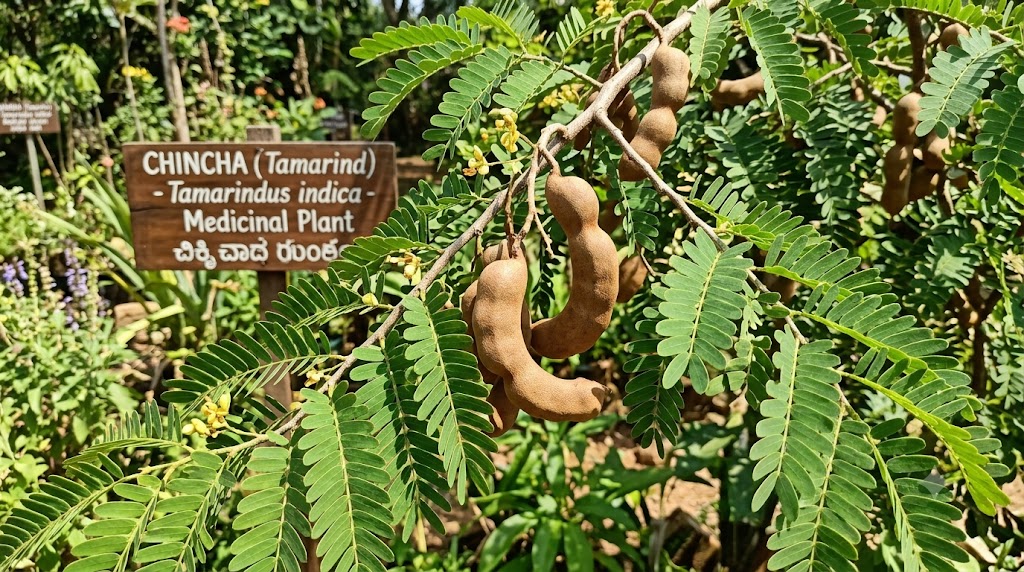
  • Chincha

    Chincha

    Botanical Name : Tamarindus indica Linn.

    Family : Fabaceae

    Identification number:– SDACH/HG/ 079

    Introduction :

    Latin name Tamarindus = the distorted form of the Arabic nametamarindus – hind meaning ‘ripe date of India’; indica Indian

    Scientific classification: The tamarind belongs to the subfamily Caesalpinioideae, family Fabaceae (formerly Leguminoseae). It is classified as Tamarindus indica.

    Names in different Indian languages :

    English : Tamarind tree

    Hindi : Amli, imli

    Kannada : Huli, amli

    Malayalam : Puli, kolpuli, valanpuli

    Sanskrit : Amlikaa, chincha

    Tamil : Puli, amilam

    Telugu : Cintapandu, amlaki, cintacettu

    Unani : Tamar

    Synonyms :

    चिंचा चञ्चला चारीका आम्लिका च कटुत्वचा।

    अम्लिका कषायाम्ला स्वादुका हृद्यरोगनुत्॥

    Amli, Amlikaa, Suktaa, Chukraa, Chukrikaa, Chinchaa, Chandikaa, Tintidika

    Tamarindus  occidentalis Gaertn.

    Tamarindus  officinalis HK.

    Morphology :

    It is a fast growing tall tree and is known by these names — chincha, tintini, mali, ambalt. chinch, tamarind.

    Leaves — compound, teaflet 20 to 40. round in shapa Flowers – in bunches, yellow in colour and boat shaped. Legume— 7 to 12 cm. Long Seeds are called as chinchoke in Marathi.

    Distribution & Habitat :

    Throughout India

    Chemical constituents :

    Tartaric. citric. malic, acetic, potassium tartarate. etc. In the seed there is 65% carbohydrates. orientin, vitexin, iso-orientin and iso-vitexin, tamarindienal

    Properties :

    Guna guru. ruksha:

    Rasa amla;

    Veerya : ushna:

    Vipaka: amla

    Karma :

    Grahi, deepana, ruchyam, hridyam, sulaghnam kaphaghni

    Laxative, carminative, digestive,astingent,cooling,diuretic, antimicrobial, antifungal, anthelmintic, antiviral, antipyretic, anti-inflammatory

    Indication :

    Pandu, vataroga, vrana, sopha, ajirna

    Anaemia, ulcers, wounds, fever, skin disease, cough, piles

    Part used :

    Whole plant

    Dosage :

    Leaf juice 10-15 ml

    Powder 2-4 g

    Decoction 50-100 ml

    Uses :

    Tamarind and its seeds are applied externally on inflammation. Fruit is very good in taste and is used in anorexia, polydipsia, indigestion and liver disorders- In heart diseases, sherbet is given. Kshara is used in retention of urine and abdominal pain . Pulp and sherbet reduce the complication in fever. In cholera, tablets of traits of tamarind and Semecarpus anacardium + salt are very useful

    IUCN Status: Least Concern (LC)

    Research Updates (Past 5 Years):

    1. 2021 – Tamarindus indica extract showed hepatoprotective activity in CCl₄-induced liver injury models.

    2. 2020 – Antioxidant and lipid-lowering activity of tamarind pulp evaluated in hyperlipidemic rats.

    3. 2023 – Clinical study on tamarind leaf extract in managing joint inflammation and osteoarthritis symptoms.

    About Chincha

    Botanical Name

    Tamarindus indica Linn.

    Family

    Fabaceae

    Identification No.

    SDACH/HG/079

    Parts Used

    Whole plant

    Habitat

    India

    IUCN Status

    Least Concern

    Plant Photos

    Ayurvedic Properties

    Rasa

    Amla

    Guna

    Guru, Ruksha

    Virya

    Ushna

    Vipãka

    Amla

    Contact Now

    Have queries? Contact Us.

    Have queries? We’re here to help you every step of the way.

    Contact us to get the right guidance for your academic journey at Shri Dhanwantry Ayurvedic College.