Shri Dhanwantry Ayurvedic College

Category: Dravyaguna Vigyan Blogs

  • Bhringaraaja

    Bhringaraaja

    Botanical Name : Eclipta alba (Linn.) Hassk.

    Family : Compositae; Asteraceae

    Identification No.: SDACH/HG/058 

    Introduction :

    This drug used as hair tonic at present its hepatoprotective  role is well established and used in hepatitis. Caraka, Susruta & Vagbhata did not classify this herb

    Names in different Indian languages :

    Hindi : Bhangra, mocakand, Bari

    Telugu : Guntagalagaraku

    Tamil : Kayanthakara, kaikesi

    English : Trailing eclipta

    Bengali : Kesuriya

    Punjabi : Bhangra

    Marathi : Maka

    Gujarati : Bhangaro

    Kanada : Garagada soppu

    Malayalam : Kannunni, kayyonni, kayunni

    Sanskrit : Bhringaraaja

    Unani : Bhangraa

    Synonyms :

     “Bhṛṅgarājaḥ keśarājaḥ keśarañjanaḥ | 

     Maṅgalyā bhṛṅgaḥ śveto raktas tathā pīta eva ca ||”

    (Bhav Prakash Nighantu, Guduchyadi Varga, Shloka 195) 

    Bhringa, Bhringaja, Bhrngaaraka, Bhrngaara, Maarkava, Kesharaaja, Keshranjana

    Eclipta  prostrate (L) L.

    Verbesina prostrataL.J

    Varieties & adulterants – (CV – controversy, AD – adulterants) :

    1. Pita Bhgarãja used in Kerala.

    2. Rakta Bhrngarãia – Flaviera rependa.

    3. Wedelia calendulacea

    4. White (Sveta bhrangaraja) – E. alba

    5. Yellow(Pita bhrngaraja)   – Wedelia chinensis – [CV]

    6. Blue  – no identity

    Morphology :

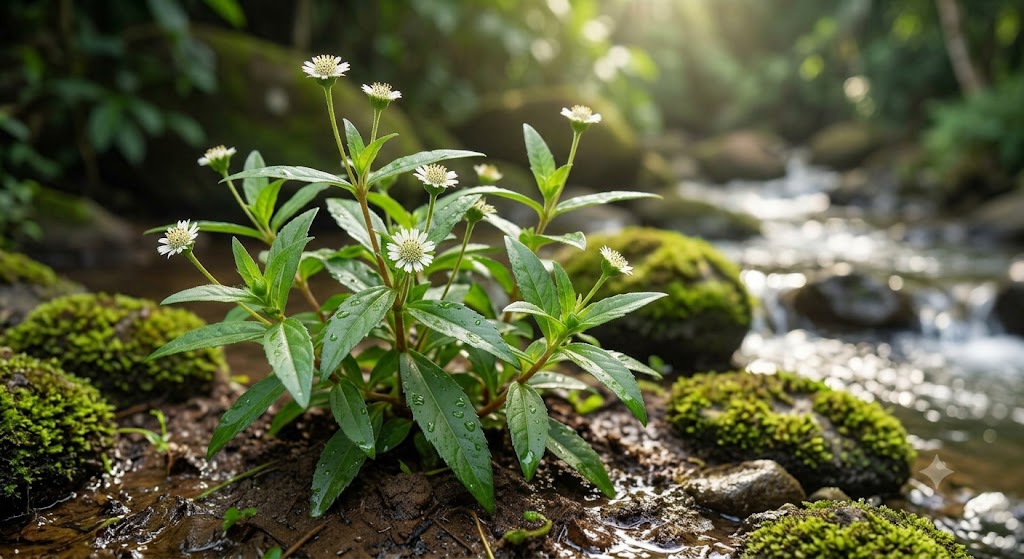
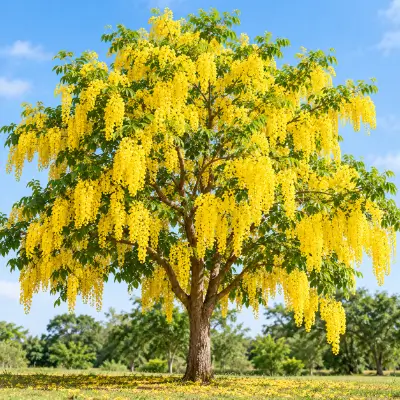
    An erect annual herb having height 8-10 fingers. Rooted nodes.

    Leaves- simple, opposite, sessile, 2.5-7.5 cm long, variable in breadth, oblong- lanceolate, subentire, acute or subacute, strigose.

    Flowers- white, in heads 6-8 mm. diameter, solitary or two on unequal axillary peduncles. Involucres bracts about 8. Ray-flowers ligulate, white. Disk-flowers tubular, corolla 4-toothed

    Fruit- achene, cuneate, compressed and with a narrow wing.

    W. calendulacea

    Leaves – 3- 5 cm in length. 1.5—2 cm. in breadth, having serrated margins.

    Flower stalk- elongated having white flower on its tip.

    Seed – black, elongated. like black cumin seed. A single fruit has many seeds. These herbs grow in rainy season and bear flowers and fruits in autumn. Maka should be used in autumn or after that Annual, erect or prostrate herb, rooting at the nodes.

    Distribution & Habitat :

    All over India in moisture, especially near the fields and water sources.

    Chemical Composition :

    It contains resin Ecliptal, wedelolactone, desmethyl wedelolactone, stigmasterol; heptacosanol, hentriacontaflol, sixteen polyacetylenic thiophenes etc.

    Properties :

    Rasa Katu, Tikta

    Guna Ruksa, Laghu

    Virya Usna

    Vipaka Katu

    Karma : Kapha-vãta hara, Kesya, Rasayana, Balya, Caksusya, Dantya.

    Anti inflammatory, diuretic, antihepatotoxic, anticatarrhal, febrifuge

    Part Used :

    Whole plant

    Dosage :

    Fresh juice 5-10 ml.

    Indications : Pãndu, Kãmalã, Svãsa, Kasa, Netra roga, Hrdroga, Krmi, Kustha, sotha, sirah süla.

    anorexia, jaundice, hypertension, otalgia, anorexia, cephalgia, pruritis, blackening and strengthening of the hair, it is believed that its seeds are good for increasing sexual vigour.

    External uses :

    The herb alleviates swelling and pain, cleans and heals wounds, enhances complexion. But its man action is to promote hair growth and hair dye. Its paste reduces swelling and pain when applied over filariasis, glands, wounds and chronic ulcers. It helps in healing wounds and gives natural complexion to the skin. Drops of its juice are put in eyes and ear. It relieves conjunctivitis if applied in eyes and earache, if applied in car. The juice is applied over head to relieve headache. In migraine, bhrungaraj juice and goat’s milk are used as nasal drops. Grey hair turns to black, if juice is applied over scalp.

    Internal uses :

    Central nervous system : Alleviates vata and acts as an analgesic. It is used in diseases like headache, vertigo etc. Bhrungaraj is effective in various vata disorders.

    Eyes : It improves vision. It is used in night blindness and myopia.

    Digestive system : Bhrungaraj is an excellent appetizer, digestant and liver stimulant. Its main action is on liver (and spleen). It improve the bilious flow. It is ama digestant, anthelmintic and

    Properties (gunas) can be recognized by actrities (karmas) and dravyas are recognized by their gunas.

    A mixture of Eclipta  juice and castor oil is a good vermicide. It reduces mucous in the stool and foul smell. Overall. Eclipta can be described as a best medicine for digestive system.

    Circulatory system : As it purifies blood, increases blood, reduces blood pressure and oedema.’ it is useful in blood disorders, anaemia. oedema and hypertension.

    Respiratory system : Being an expectorant and raktagami. it is used in cough and asthma.

    Urinary system Kaphamedagami – It acts as a diuretic by alleviating kapha and meda. It reduces burning micturation. Mixture of roots and leaves + ajamoda is useful in all urinary disorders.

    Reproductive system : Its seeds are shukragami and spermatogenic. Hence it is used for virilisation.

    Satmikaran : It promotes immunity and has rejuvenating action in anaemia and lipid disorders But blue bhrungaraj should be used for rejuvenation.

    Skin : It has diaphoretic action because it is rasa, rakta,. Useful in skin disorders, kilas urticaria, kshudrarogas. Also enhances complexion.

    Temperature : Diaphoretic. Being ama digestant and being febrifuge, it is effective in many fevers like typhoid and malarial fever.

    Important Yogas or Formations :

    Bhrungaraj taila, Shadbindutaila, Bhrungarajadi churna, Bhrungarajghrit. Bhrungarajasava. Nilibhrngadi taila, adbindu taila

    Important research work going on :

    (1) antiviral activity

    (2) toxic hepatic injury

    (3) in vitro

    (4) Action on liver

    Therapeutic Uses :

    (1) Garbhasthãpana- Cow milk with equal quantity of Bhrnga rãja svarasa should be given to pregnant woman (Vai.Ma.).

    (2) Svitra- Bhrngaraja is fried with oil in an iron vessel is consumed and after that milk boiled with Bijaka shall be given as Anupãna (A.H.Ci.20).

    (3) Naktäñdhyatva- Matsyãndas boiled in Bhrñgaraja svarasa when consumed for a period of seven days will cure night blindness (C.D.).

    IUCN Status: Least Concern. 

    Research Updates (Past 5 Years): 

    1. Hepatoprotective effects of Eclipta alba (2020, J. Ethnopharmacol.) 

    2. Wedelolactone for hair regrowth (2021, Phytomedicine) 

    3. Antioxidant properties (2022, IJPR)
    About Bhringaraaja

    Botanical Name

    Eclipta alba (L.) Hassk.

    Family

    Asteraceae (Compositae)

    Identification No.

    SDACH/HG/058

    Parts Used

    Whole plant

    Habitat

    India

    IUCN Status

    Least Concern

    Plant Photos
    Ayurvedic Properties

    Rasa

    Katu, Tikta

    Guna

    Ruksha, Laghu

    Virya

    Ushna

    Vipãka

    Katu

    Contact Now

    Have queries? Contact Us.

    Have queries? We’re here to help you every step of the way.

    Contact us to get the right guidance for your academic journey at Shri Dhanwantry Ayurvedic College.

  • Aparajita

    Aparajita

    Botanical Name : Clitoria ternatea Linn

    Family : Papilionaceae; Fabaceae.

    Identification No.: SDACH/HG/057 

    Introduction :

    This plant’s root is specially used for leucoderma. It is also considered as Visahara. Brhat Trayi texts  do not come across the term Aparãjita. However it is found in one contest in Su. U.

    Names in different Indian languages :

    Hindi : Aparajita

    English : Clitoria

    Telugu : Dintena

    Tamil : Kannikotti, Girikarnika

    Malayalam : sangu pushpam, Aral,Malayamukki

    Kanada : Shankapuspa, Karnika

    Unnani : Mezereon

    Folk : Koyal ( Punjab)

    Synonyms :

    “Aparājitā śvetapuṣpā vishnukrāntā mahāśhvētā” 

    (Bhav Prakash Nighantu, Pushpa Varga, Shloka 45) 

    Asphota, Girikarni, Visnukrãntã, sankhapuspi, Sephanda, svetã, Mahã svetã

    Bavaprakash , dhanvatarinighandu, raja nighandu – 3 varieties

    1.  Aparajitha

    2.  Girikarnika

    3.   Adrikarni

    Classification according to Charaka, Susrutha & Vagbhata :

    Charaka

    Sirovirechanopaga

    Varieties & adulterants – (CV – controversy, AD – adulterants) :

    1. blue flowers

    2. white flowers ( Both are identified as C. ternatea Linn. )

    3. Sveta aparajitha – sreyi now it identified as Rasna

    4. mahasevta aparajitha

    5. katabhi – Albizza procera

    6. Ksudra Sveta – C. ternatea

    7. Canscora decussate   [AD]

    8. convolvulus pluricaulis  [AD]

    9. Evolvulus alsinodes   [AD]

    10. sankhini and sankapushpi

    In north india, sankapushpi used as Canscora decussate

    Morphology :

    It is a perennial climber – Herb.

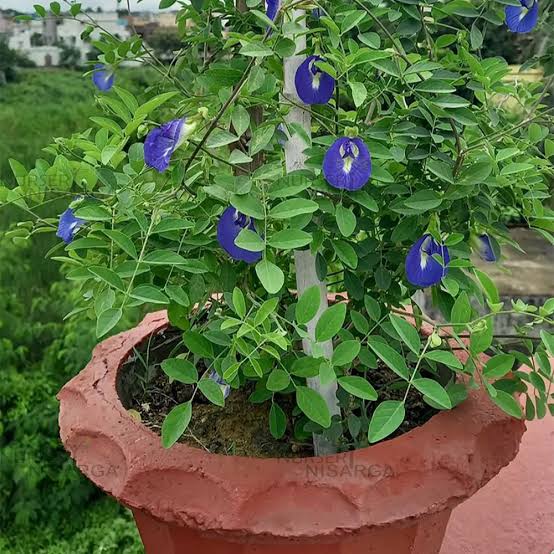
    Leaves- compound,pinnate 5-9 foliolate.

    Flowers- showy, blue or white, petals unequal, style bearded below the stigma.

    Fruits- pods, linear, compressed.

    Seeds- 6-10, yellowish brown (Flowers in rainy season and fruits in winter).

    Distribution & Habitat :

    All over India

    Chemical constituents :

    Aparajitin, taraxerol, taraxerone, a— and I— sitosterols, robinin, quercetin, kaempferol; ternatins,

    Properties :

    Rasa- Katu, Tikta, Kasaya

    Guna- Laghu, Rüksa

    Virya-Sita

    Vipãka- Katu

    Karma :

    Tridosahara, Medhya, Visaghna, Cakusya

    Root—cathartic like jalap. Roots cause gripe and tenesmus, hence not recommended as purgative. Used in ascites.

    Rootbark—diuretic (infusion used in irritation of bladder and urethra).

    Root juice—given in cold milkto liquefy phlegm in chronic bronchitis.

    The root, bark, seeds and leaves—used for gastric acidity.

    External uses :

    It alleviates swelling and pain. It has haemostatic action hence it is ued in piles specially bleeding piles. Piles are cleaned with the decoction and the paste of whole plant is applied over it. Leaf juice is used as nasal drops in headache. Oil boiled with dhamasa is used for massage in rheumatoid arthritis.

    Decoction is used for gargling in stomatitis and for cleaning wounds. It prevents pus formation

    Internal uses :

    Nervous system : It has a tranquillizing effect on the brain hence it is used in symptoms like syncope, vertigo and brain weakness.

    Digestive system : It is an antiemetic. mild-laxative and cholagogue Therefore it is used in emesis. dyspepsia, constipation jaundice and piles. Kapha and pitta work together in the lower part of the stomach. It is used in healing ulcers of pylorus duodenum etc.

    Circulatory system : Being haemostatic and blood purifier, it is useful in haemorrhagic disorders and vatarakta. Hot infusion of dhamasa is given to prevent small pox.

    Respiratory system: It is used in common cold, cough, asthma as it acts as an expectorant and reduces the irritation of respiratory organs. Besides this, whole plant is used for smoking. Decoction is used for gargling in throat manifestations

    Mansavaha srotas : Paste of this applied over neck stiffness.

    Urinary system : It increases urination. Decoction is used in dysuria.

    Reproductive system : Being spermatogenic, it is given in semen debility.

    Skin : It can be used in various skin disorders by.

    Temperature: Febrifuge and refrigerant by bitter and cold properties. Bitter taste is the best for fever. It can be used for cooling effect. It alleviates symptoms like vomiting, thirst and burning sensation etc. which are caused by vata and kapha in fever.

    Satmikaran: It increases the physical strength and weight

    Indications :

    Kustha,  Unmãda, Vrana, süla, ascites. , diuretic , bronchitis, Brian tonic, tubular glands, diuretic, amentia, ophthalmic, Hemorrhoids, migraine, psychoneurosis and mania.

    Roots – Laxative but not used as purgative because it causes gripe and tenesmus 

    Part Used :

    Root/root bark, seeds , leaves

    Dosage :

    Root powder 2-3g,

    seed powder 1-2 g.

    Important Yogas  or  Formations:

    Garbhapalaras                     

    Therapeutic Uses:

    (1) Dañta süla- Root of Aparãjita along with Marica is kept in the mouth.

    (2) Sopha- Paste of Girikarnikã leaves is used internally/orally (V.S.).

    (3) Manasaroga- Root of white flowered Aparãjitã is pounded with rice-water and used as Nasya by mixing with ghee (R. M.).

    (4) The root is administered with honey as a general tonic to children for improving mental faculty.

    IUCN Status: Not Evaluated.

    Research Updates (Past 5 Years): 

    1. Nootropic effects of Aprajita root (2020, J. Ayurveda Integr. Med.) 

    2. Antioxidant activity of flower extract (2021, IJNPR) 

    3. Anti-anxiety properties (2022, Phytomedicine). 

    About Aparajita

    Botanical Name

    Clitoria ternatea L.

    Family

    Fabaceae (Papilionaceae)

    Identification No.

    SDACH/HG/057

    Parts Used

    Root, root bark, seeds, leaves

    Habitat

    India

    IUCN Status

    Not Evaluated

    Plant Photos

    Ayurvedic Properties

    Rasa

    Katu, Tikta, Kashaya

    Guna

    Laghu, Ruksha

    Virya

    Sita

    Vipãka

    Katu

    Contact Now

    Have queries? Contact Us.

    Have queries? We’re here to help you every step of the way.

    Contact us to get the right guidance for your academic journey at Shri Dhanwantry Ayurvedic College.

  • Bilva

    Bilva

    Botanical Name : Aegle marmelos (L.) Correa ex Roxb.

    Family : Rutaceae

    Identification No.:  SDACH/HG/056 

    Introduction :

    This plant have religious background in India & Nepal. Bilva is called Siva Druma (Lord Siva’s favorite tree) is held sacred by Hindus, the leaves being offered in prayers to Siva & Pãrvati.

    Names in different Indian languages :

    English : Bael tree, Bengal Quince

    Hindi : Bel

    Kannada : Bilapatre

    Malayalam : Vilvam or kuvalam

    Sanskrit : Bilva

    Tamil : Vilvam or kuvalam

    Telugu : Maredu

    Unani : Bael

    Synonyms :

    “Bilvam mahendra vṛkṣaṁ ca śrīphalaṁ śāṇḍilyaṁ mālūraṁ sadāphalaṁ” 

    (Bhav Prakash Nighantu, Guduchyadi Varga, Shloka 1) 

    Shriphala, Shaandilya, Shailuusha, Shalya, Sadaaphala, Mahaakapitha , Maaluura, Rudrajataa, Rudranirmaalya, Shivajataakhya

    Classification according to Charaka, Susrutha & Vagbhata :

    Charaka

    Sothahara, Arsoghna, Asthãpanopaga

    Susrutha

    Varunãdi, Ambasthãdi, Brhat Pancamüla

    Vagbhata

    Varunãdi, Ambasthãdi, Brhat Pancamüla

    Varieties & adulterants – (CV – controversy, AD – adulterants) :

    No controversy about this plant.

    Aduleteration: Bel fruit pulp is adulterated by adding kapitiha fruit pulp. Bel fruit pulp has cavities unlike kapittha.

    Morphology :

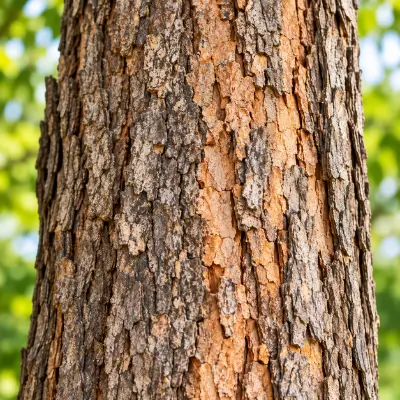
    It is a medium to fairly large sized deciduous and glabrous tree up to 6-8 high and 1-1.2 m in girth. Branches armed with straight sharp, axillary 2.5 cm long spines. Bark soft, corky, light grey.

    Leaves alternate, trifoliate, occasionally digitately pentafoliate. Leaflets ovate or ovate lanceolate, crenate, acuminate, lateral sessile, terminal long petioled.

    Flowers large, greenish white, sweet scented in short axillary panicles.

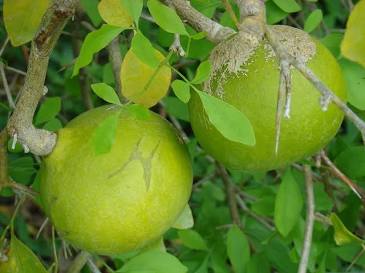
    Fruits globose, grey or yellow, rind woody.

    Seeds- numerous, oblong, compressed, em-bedded in sacs covered with thick orange coloured sweet pulp.

    Distribution & Habitat :

    found almost throughout India.

    Chemical constituents :

    xanthotoxol , alloimperatorin methyl ether, rutin and marmesin, alpha-fagarine,

    Fruit pulp contains mucilage, pectin, sugar, tannin, volatile oil, gum. bitter principle and 2% ash, It contains an active principle known as marmelocin. Fresh leaves contain an essential oil- Seeds contain oil which is laxative. Roots, leaves and bark contain an astringent principle.

    Root—xanthotoxin, umbelliferone, marmesin, marmin, skimmin etc.

    Heart wood— furoquinoline, marmesin, beta—sitosterol etc. Leaves— essential oil , beta phellandrene, rutin, marmesinin, aegelin, aegelenine, etc.

    Ripe fruits—xanthotoxol, marmesin, skimmin etc.

    Unripe fruits—marmeline, aegeline, imperatorin, alloimperatorin and xanthotoxol etc.

    Properties :

    The properties of unripe and ripen fruit are tabulated:

    Ripen fruit

    Unripen Fruit

    1. Sweet, aromatic, cooling, alterative, nutritive and laxative.

    1.Astringent, digestive, stomachic little constipative (antidiarrhoeal) stimulant, antipyretic, antiscorbutic, bitter and pungent.

    2. Acrid, bitter, sweet, appetizer, binding tonic, febrifuge, causes biliousness and removes vata & kapha, good for heart (Ref. From: Kirtikar & Basu)

    2. Oily, bitter, acrid, sour, tasty but difficult to digest, appetizer, binding, cures dysentery, removes pain (Ref. From:  kirtikar & Basu).

    (Apakva phala)

    Rasa Kasãya, Tikta

    Guna Laghu, Ruksa

    Virya Usna

    Vipãka Katu

    Karma : Vata-kapha hara, Grãhi, Dipana-Pacana

    Indication :

    Atisãra, Grahani, Prameha, , Agnimandya , Arsas

    Part used :

    Fruit, leaves, root

    Mainly unripe fruit

    Dosage :

    Leaf juice 10-15 ml

    Powder 2-4 g

    Decoction 50-100 ml

    External uses :

    In conjunctivitis, leaf juice is put in the eyes and paste of leaves is applied over the eyelids, In disease conditions like swelling, pain in the ribs.

    Main action : Roots are useful in vata disorders, fruit iv disorders of internal channel. Bel, durva and tulasi re used in vata, pitta and kapha disorders especially.

    Internal uses :

    Nervous system : root tranquilizes the nerves hence it is used in vata disorders, insomnia, epilepsy and hysteria.

    Digestive system: Unripe fruit is an appetizer, digestant and astringent. Ripe fruit is astringent and a sweet, mild laxative. An excess dose causes constipation. It is very heavy 10 digest and vitiates doshas, gives bad odour to flat, is. Leal juice is live, stimulant. Root bark, unripe fruit are useful in loss of appetite. diarrhoea. dysentery, pain in abdomen. Unripe fruit ground to a paste and cooked with sugar is very beneficial in bleeding piles.

    Circulatory system : It is a cardiac tonic, haemostatic and alleviates swelling, hence the root is used in cardiac debility and palpitations. Fruit has haemostatic property. Root bark and leaf juice are used to alleviate oedema.

    Respiratory system: It is kaphashamak hence used in cold, cough. dyspnoea. Decoction of leaves is given for cold.

    Urinary system: Juice of bel leaves helps in reducing blood sugar. Leaf juice is given in ikshumeha. Mixture of fresh fruit pulp and kankol is used in gonorrhoea. It alleviates swelling and pain. Mixture of bark juice and sweet cumin seeds is beneficial in shukrameha.

    Reproductive system: Bilva root alleviates the inflammation of uterus, hence it is used in pregnancy. leucorrhoea and puerperal disorders.

    Temperature : Bilva root and leaves are febrifuge. Decoction of roots is given in intermittent fever while leaf juice can be given in all types of fever.

    Satmikaran : it is a bitter tonic. Its root and leaves have an anabolic effect on all body tissues. Since the ripe fruit is sweet to taste, it also acts as a tonic.

    Important Yogas or Formations :

    Vilwadi gutika, Dasamula kasaya, Dasamula grita,Bilvamooladi gutiks etc.

    Therapeutic Uses :

    (1) Pittãtisära— Fruit pulp of Bilva and Madhuka are mixed with sugar and honey and administered with rice-water (S.S.Ut.40).

    (2) Grahani— Paste of unripen fruit of Bilva is given with sunthi and Guda while the patient is on butter milk as diet (V.M.).

    (3) Kãmalã—Leaf juice of Bilva is given along with Triktu

    (C.S.Ci.16)

    IUCN Status: Least Concern. 

    Research Updates (Past 5 Years): 

    1. Antidiabetic activity of Bilva leaves (2021, J. Ethnopharmacol.) 

    2. Gastroprotective effects of fruit pulp (2022, IJPR) 

    3. Antimicrobial properties of root extract (2023, AJAY) 

    About Bilva

    Botanical Name

    Aegle marmelos (L.) Corrêa

    Family

    Rutaceae

    Identification No.

    SDACH/HG/056

    Parts Used

    Root, bark, leaves, flowers, unripe fruit, ripe fruit

    Habitat

    India, Bangladesh, Nepal, Pakistan, Sri Lanka

    IUCN Status

    Least Concern

    Plant Photos
    Ayurvedic Properties

    Rasa

    Kashaya, Tikta

    Guna

    Laghu, Ruksha

    Virya

    Ushna

    Vipãka

    Katu

    Contact Now

    Have queries? Contact Us.

    Have queries? We’re here to help you every step of the way.

    Contact us to get the right guidance for your academic journey at Shri Dhanwantry Ayurvedic College.

  • Naadihingu

    Naadihingu

    Botanical Name : Gardenia gummifera Linn. f.

    Family : Rubiaceae

    Identification  No.: SDACH/HG/055 

    Introduction :

    Latin name: Gardenia = (cape jasmin) American Dr. Garden (Gardinca was the favourite buttonhole of Edwardians); gummifera = oozing latex.

    Scientific classification: Gardenias belong to the family Rubiaceae. The Cape jasmine is classified as Gardenia jasminoides. The two common greenhouse shrubs of the United States are classified as Gardenia thunbergia and Gardenia rothmannia. The dwarf species from Japan is classified as Gardenia radicans floreplana

    Names in different Indian languages :

    English : Gummy Cape Jasmine

    Hindi : Dikamali

    Kannada : Bikkegidha

    Malayalam : Somanadikayam, gandharajan

    Sanskrit : Naadihingu

    Tamil : Dikkamalli, Kambil, Sinna Kambil.

    Telugu : Cittamalli, bikki

    Unani : Dikaamaali.

    Synonyms :

    Venupatrikaa, Naadihingu, Hingushi vaatikaa. Hingupatrikaa, Hingupatri

    Gardenia  arborea Roxb.

    Gardenia  inermis Dietr.

    Varieties & adulterants – (CV – controversy, AD – adulterants) :

    Gardenia resinifera

    Morphology :

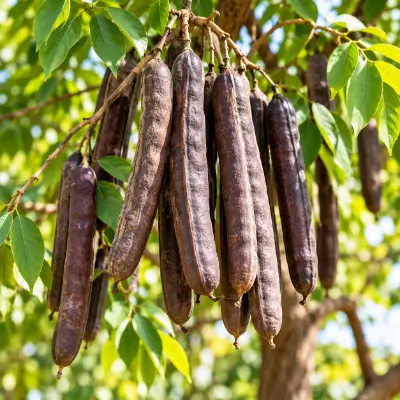
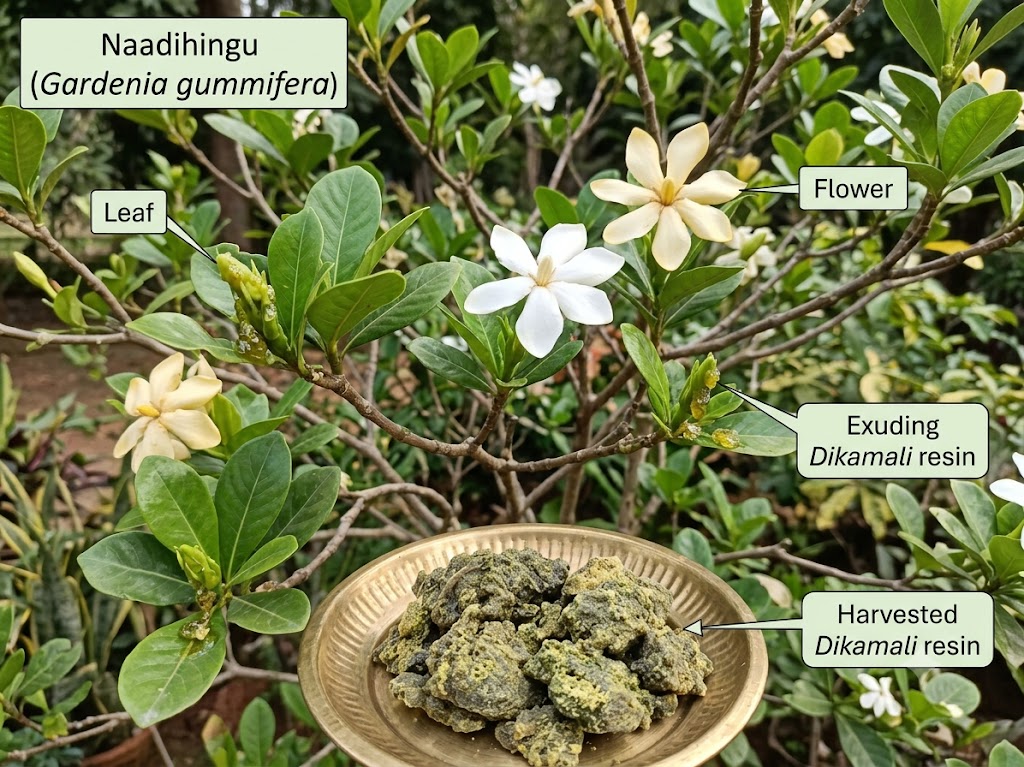
    The shrub is small, leaves resembling guava leaves but are slightly big and long. A yellow coloured latex oozes out from its branches on piercing the bark and from the angles of leaf stalks. It solidifies on exposure to air. Since it has an odour similar to asafoetida, it is called hingupatri. A small tablet of dikamali held in the mouth does not dissolve easily.

    Leaves – simple, elliptic-oblong

    Flower – white, axillary

    Fruit – berry

    Distribution & Habitat :

    Throughout India

    Chemical constituents :

    gardenin, de-Me-tangeretin , nevadensin; wogonins, isoscutellarein, apigenin , de-MeO-sudachitin

    Properties :

    Guns: laghu, ruksha, tikshna;

    Rasa: katu, tikta;

    Virya: ushna;

    Vipaka:katu

    Karma :

    Hridya, kapha vatahara, dipanam

    carminative, antispasmodic, stimulant, diaphoretic, anthelmintic, antiseptic, expectorant

    Indication :

    Manoroga, medas,

    Nervous  disorder, Ulcers, wounds, fever, skin disease, cough

    Part used :

    Resin

    Dosage :

    Powder 1-2 g

    External uses :

    It is antimicrobial, wound healing and analgesic. It is useful in toothache and teething problems of children (robbing latex to the gums).and anthelmintic.

    Internal uses :

    It is an appetite, indigestion, constipation, flatulence. ascites. piles, intestinal parasites etc. It is one of the best medicine . for the alimentary tract, It is useful in tape worms. Latex with lemon juice is useful in cardiac disorders and splenomegaly by expelling vata and enhancing peristalsis. It is also useful in chronic cough, breathlessness, hiccups and skin diseases. In malaria, it is used fur reducing the fever, cold and rigors. It is a lipolytic and therefore used in lipid disorders

    About Naadihingu

    Botanical Name

    Gardenia gummifera L.f.

    Family

    Rubiaceae

    Identification No.

    SDACH/HG/055

    Parts Used

    Resin

    Habitat

    India

    IUCN Status

    Least Concern

    Plant Photos
    Ayurvedic Properties

    Rasa

    Katu, Tikta

    Guna

    Laghu, Ruksha, Tikshna

    Virya

    Ushna

    Vipãka

    Katu

    Contact Now

    Have queries? Contact Us.

    Have queries? We’re here to help you every step of the way.

    Contact us to get the right guidance for your academic journey at Shri Dhanwantry Ayurvedic College.

  • Vansha

    Vansha

    Botanical Name : Bambusa Arundinacea

    Family : Poaceae.

    Identification No.:SDACH/HG/054

    Introduction:

    Latin name : Bambusa = Indian name; bambos = derived froro the name bamboo’.

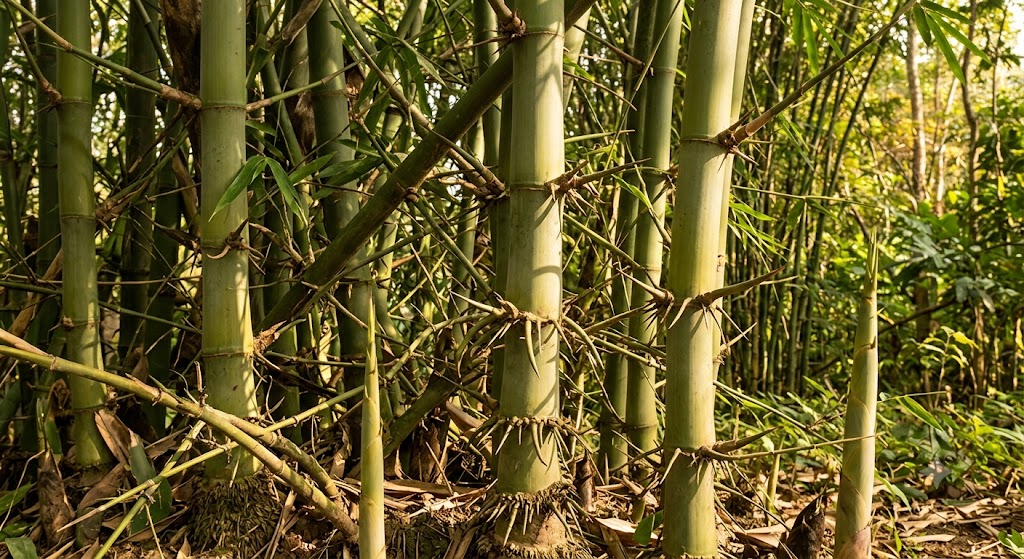
    Bamboo, common name for about 45 genera and about 480 species of perennial, woody, usually shrubby or treelike plants of the grass family. Bamboos occur mostly in tropical and subtropical areas, from sea level to snow-capped mountain peaks, with a few species reaching into temperate areas. They are most abundant in southeastern Asia, with some species in the Americas and Africa and none in Australia. The plants range from stiff reeds about 1 m (about 3 ft) tall to giants reaching 50 m (164 ft) in height and 30 cm (12 in) in diameter near the base. Most bamboos are erect, but some are viny, producing impenetrable thickets in some areas.

    stamens, and two stigmas typical of most grasses. In addition, although many bamboos flower annually, many others flower only at intervals of 10 to 100 years. All members of a particular species flower at the same time, and the plants die shortly after flowering and setting their seed. The individual species are perpetuated by the seed or by new culms sprouted from rhizomes.

    Bamboos are among the plants most widely used by humans. In the tropics they are used for constructing houses, rafts, bridges, and scaffolding. Split and flattened culms can be used as flooring and interwoven to make baskets, mats, hats, fish traps, and other articles; culms of large species may be used as containers for liquids. Paper is made from bamboo pulp, and fishing rods, water pipes, musical instruments, and chopsticks from other parts. Many bamboos are planted as ornamentals, and young shoots are eaten as a vegetable. The grain is also a food.

    Names in different Indian languages :

    English: Spiny Bamboo, Thorny Bamboo

    Hindi : Bams, kantabams

    Kannada : Bedru

    Malayalam : Mula, illi

    Sanskrit: Vansha, venuh

    Tamil : Moongil, Moongiluppu

    Telugu : Vedurubiyyam, veduruppu

    Unani : Qasab, Tabaashir

    Synonyms :

    Vansha, Venu, Kichaka, Trinadhwaj, Shatparvaa, Yavphala. Vanshalochana, Vansharochanaa,  Shubhaa, tugaa, Tugaakshiri, Tvakkshiri

    Bambusa  arundinaceae (Retz.) Roxb.

    Arundo bambos L.

    Classification according to Charaka, Susrutha & Vagbhata :

    Charaka

    Susrutha

    Vagbhata

    Varieties & adulterants – (CV – controversy, AD – adulterants) :

    Substitute

    Maranta  arundinacea Linn

    Curcuma angustifolia Roxb

    Morphology :

    In female variety of bamboo, white juice gets accumulated in its hollow cavity, which is called as ‘Vanshalochan’(bamboo manna). This tree grows 15-20 mtrs. high usually on islands. Stem – circumference is 30-40 cms. with distant nodes and the cavity between two nodes is hollow.

    Leaves – long with tapering ends; flowers and Fruits – occur after 30 yrs. flower stalk – long and branched.

    Flowers – homosexual. Fruit – resembles yava fruit and known as Vanshayav. It bears flowers and fruits in summer.

    Distribution & Habitat :

    All over India, hut mainly in Assam, Brahmadesh. Java and Sumatra

    Chemical constituents :

    Vanshalochan (Ayurveda) contains 90% silica. potash, calciun carbonate, aluminium and yeast. (Artificial vanshalochan is available in the market which is not useful.)

    taxiphyllin

    Properties :

    Plant

    Rasa : madhur, kashaya:

    Guna : ruksha, laghu, Tiksna;

    Virya : sheeta but tender leaves and fruits – ushna.

    Vipaka -katu

    Karma :

    Vasti sodanam, chedayam, sopha haram

    Vanshalochan

    Rasa-Kasäya, madhur

    Guna-ruksha

    Virya-  sheeta

    Vipaka-madhura

    Balyam, vrisyam, grahi, dadhuvardati, vrana hara

    Bamboo Grains

    Rasa : madhur, kashaya:

    Guna : ruksha

    Virya : sheeta

    Vipaka -madhura

    Balyam, pushtim, pittaharam

    Root – kaphapittashamak. tender leaves and fruits – pittavardhak, vanshalochan – vatapittashamak

    carminative, digestive,astingent,bitter, aphrodisiac, decreses lipid cholestrol level, blood purifier, antipyretic, ,antimicrobial, antifungal, anthelmintic, antiviral, anti-inflammatory, antifertility, hypoglycaemic

    Indication :

    Raktapittam, daham, trishna, vranam, mutrakrichram, kushtam, pandu, swasa, kasa

    fever, skin disease, cough, piles, leucorrhoea,vomiting, dysentery,gout, burning sensation,dyspepsia,cephalgia, worm infection

    Part used :

    Vanshalochan , root, leaves

    Dosage :

    Vanshalochan 1-2 gm

    Decoctions – 15 to 100 ml

    Therapeutic Uses :

    Paste or ash of the roots is used locally in skin disorders. ringworm infection and dermatoses. Vanshalochan is used in vomiting, diarrhoea, heart disease, bleeding disorders. cough, asthma, chronic fever, general debility. Decoction of leaves is useful is dysmenorrhoea and ammenorrhoea.

    Fruit acts on meda dhatu and is useful in fat metabolism and obesity Decoction of roots is given in rabies.

    Important Yogas or Formations :

    Sitopaladi churna, Talisadi churna.

    IUCN Status; 

    – Not Evaluated.

    Research Updates (Past 5 Years) 

    1. 2019: Bamboo silica for osteoporosis (Journal of Ayurveda). 

    2. 2020: Antioxidant properties (Phytotherapy Research). 

    3. 2021: Wound-healing effects (Indian Journal of Pharmacology). 


    About Vansha

    Botanical Name

    Bambusa bambos (L.) Voss

    Family

    Poaceae

    Identification No.

    SDACH/HG/054

    Parts Used

    Vanshalochan, Root, Leaves

    Habitat

    India, Myanmar, Indonesia

    IUCN Status

    Not Evaluated (NE)

    Plant Photos

    Ayurvedic Properties

    Rasa

    Madhura, Kashaya

    Guna

    Ruksha, Laghu, Tikshna

    Virya

    Sheeta

    Vipãka

    Katu

    Contact Now

    Have queries? Contact Us.

    Have queries? We’re here to help you every step of the way.

    Contact us to get the right guidance for your academic journey at Shri Dhanwantry Ayurvedic College.

  • Punarnava

    Punarnava

    Botanical Name : Boerhavia diffusa Linn.

    Family : Nyctaginaceae

    Identification No.:SDACH/HG/053

    Introduction :

    This drug used as diuretic. It is also used as a Rasãyana. Some people says this plant is not punarnava it is varshabu, according to them  punarnava and varshabu are different.

    Names in different Indian languages :

    English : Spreading Hog weed,pig weed

    Bengali : Punanava

    Panjabi : Itsit

    Marathi : Ghetuli

    Kanada : sandika

    Malayalam : Thazhutama

    Hindi : Sant,gadahpurna

    Telugu : Attamamidi

    Unani : Itsit,Bishkhaparaa

    Sanskrit : Punarnava,sophaghni

    Tamil : Mukaratte-Kirai

    Synonyms :

    Rakta-punarnavaa, Punarnavaa, Katthilla, Shophaghni, Shothaghni. Varshaabhu

    Boerhavia  repens Linn.

    Boerhavia  procumbens Roxb

    Classification according to Charaka, Susrutha & Vagbhata :

    Charaka

    Vayahsthpana, Kasahara, Anuvusanopaga, Svedopaga

    Susrutha

    Susruta Vidarigandhadi

    Vagbhata

    Varieties & adulterants – (CV – controversy, AD – adulterants) :

    1. Rakta – B. diffusa

    2. Sveta Punarnavä – Trianthema portulacastrum

    3. B. erecta – white coloured species

    4. B.repens

    5. T. monogyna

    6. Boerhavia verticillata – substitute

    Trianthema protulacastrum

    Trianthema protulacastrum

    B.repens

    Morphology :

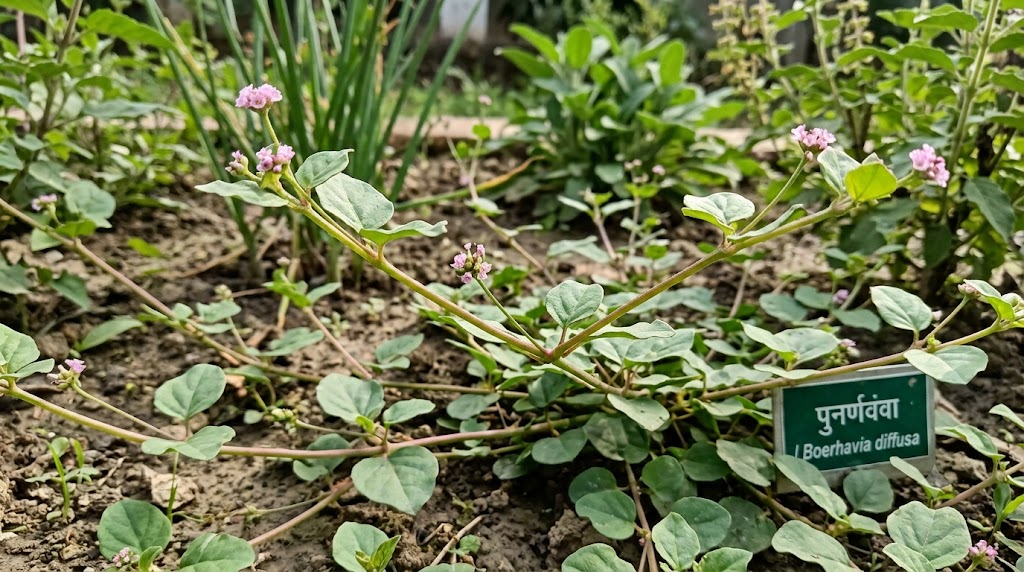
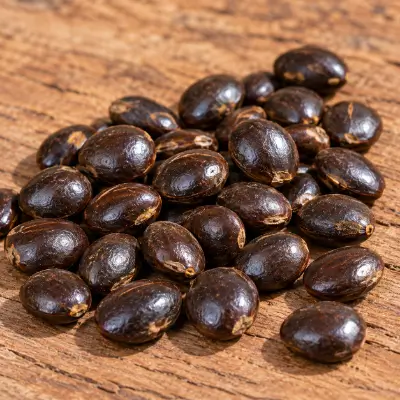
    A perennial creeping herb with procumbent branches.

    Root— stout, many procumbent , woody. Branches— diffuse.

    Leaves— opposite, unequal pair,sub cordate, glabrous, .

    Flowers— pale rose or white  small or minute, borne in small umbels arranged in axillary and terminal panicles.

    Fruits— 5-ribbed, spherical, glandular, 1-1.5  cm long.

    Flowering and fruiting occur during winter.

    Chemical Constituents :

    xanthone, beta-ecdysone. arbinofuranoside, Hentriacontane, beta-sitosterol, oxalic acid. D-glucose, punarnavoside. punarnavine-I. punarnavine-2. boeravinones A, B, C etc.

    Properties :

    Rasa  Madhura  Tikta  Kasäya

    Guna Laghu, Rüksa

    Virya  Usna

    Vipaka Katu

    Karma : Kapha-vata hara, sothahara, tarpana, rasayana, balya, Dipana

    Diuretic, anti-inflammatory, antiarthritic, spasmolytic, antibacterial, cardiac stimulant,  laxative, expectorant, anti inflammatory, analgesic, expectorant, CNS depressant,  abortifacient.

    Indications :

    sopha, Pandu, Visaroga, Raktapitta, Vriddhi, Udara, Hridroga, svãsa, mutrachrichra

    inflammatory renal diseases, nephrotic syndrome,leucorrhoea, scabies, urinary tract infection, cough, constipation, myalgia, anaemia, bronchitis.

    Part Used :

    Whole plant, root, leaf.

    Dosage :

    Fresh juice 5-10 ml, powder 1-3 g.

    External uses :

    Punarnava is used for local application in the form of poultice or fomentation in edema. The juice of its leaves is used in the eyes for topical application.

    Internal uses :

    Digestive system : It is given internally in agnimandya, toxicity, ascites and constipation. A dose of 3 grains is used to induce vomiting.

    Circulatory system : Useful in heart disease, anaemia, oedema. Leaves vegetable is consumed to reduce oedema.

    respiratory system : Useful in cough, asthma and urahkshat.

    Reproductive system : Menorrhagia, (root decoction of red variety is used). Seeds are, aphrodisiac. Eye diseases: Cataract, chronic conjunctivitis, blepharitis, (roots rubbed in honey is locally applied).

    Urinary system : Acts as a diuretic in dysurea.

    Skin : Useful in reducing swelling and foul smelling in skin disorders.

    Temperature : Antipyretic, especially in quaternary fever.

    Satmikaran : As a rasayan therapy in- general debility.

    Antidote to snake poison and rat bite (used internally).

    Important Yogas or Formations :

    Punarnavadi Kvãtha, Punamavarista, Punarnavãdi mandura, Punãrnavadi taila, Punarnavã rasayana. Punarnavashtak, Punarnavasav

    Important research work going on :

    (1) cholesterol and blood sugar level

    (2) haemostatic effect

    (3) diuretic activity

    (4) anti-inflammatory activity

    (5) Cardio tonic effect

    (6) fibrinolytic activity

    (7) chronotropic effects

    (8) hepatoprotective activity

    (9) effect on calcium channel

    Therapeutic Uses—

    (1) Nidränãsa— Decoction of Punarnavã is very useful (H. S.).

    (2) Sotha— Ghee prepared with the decoction and paste of Punarnava is given (C.D.).

    (3) Alarka visa— sveta Punarnavã is given with Dhattüra fruits (A.S.Ut. 46)

    (4) Plihodara— sveta punarnáva root is pounded with rice- water and given orally.

    IUCN Status 

    – Least Concern. 

    Research Updates (Past 5 Years) 

    1. 2020: Hepatoprotective effects (Journal of Ethnopharmacology). 

    2. 2021: Diuretic activity in clinical trials (Ayurveda Research Paper). 

    3. 2022:Anti-inflammatory properties (Phytomedicine).                                                       Identification

    About Punarnava

    Botanical Name

    Boerhavia diffusa L.

    Family

    Nyctaginaceae

    Identification No.

    SDACH/HG/053

    Parts Used

    Whole plant, Root, Leaves

    Habitat

    India, Nepal, Bangladesh, Pakistan, Sri Lanka

    IUCN Status

    Least Concern

    Plant Photos
    Ayurvedic Properties

    Rasa

    Madhura, Tikta, Kashaya

    Guna

    Laghu, Ruksha

    Virya

    Ushna

    Vipãka

    Katu

    Contact Now

    Have queries? Contact Us.

    Have queries? We’re here to help you every step of the way.

    Contact us to get the right guidance for your academic journey at Shri Dhanwantry Ayurvedic College.

  • Kadamba

    Kadamba

    Botanical Name : Neolamarckia cadamba.

    Family : Rubiaceae

    Identification No.: SDACH/HG/052

    Introduction :

    Latin name: Anthocephalus – anthos = flower, cephalus = like the head, it has round flowers; indicus = Indian.

    Names in different Indian languages :

    English : Kadam

    Hindi : Kadamb

    Kannada : Kaduavalatige, arsenatige

    Malayalam : Kadambah, attutekku

    Sanskrit : Kadamba

    Tamil : Venkadambu, Vellai Kadambam

    Telugu : Rudrakskamba

    Synonyms :

    Kadamba, Priyaka, Vrtta-pushpa, Nipa, Halipriya.

    Neolamarckia cadamba (Roxb.) Bosser

    Anthocephalus  indicus A. Rich.

    Anthocephalus  chinensis (Lam.) A. Rich. Ex Walp.

    Anthocephalus indicus

    Varieties & adulterants – (CV – controversy, AD – adulterants) :

    Kadambaka is equated with Adina cordifolia.

    Morphology :

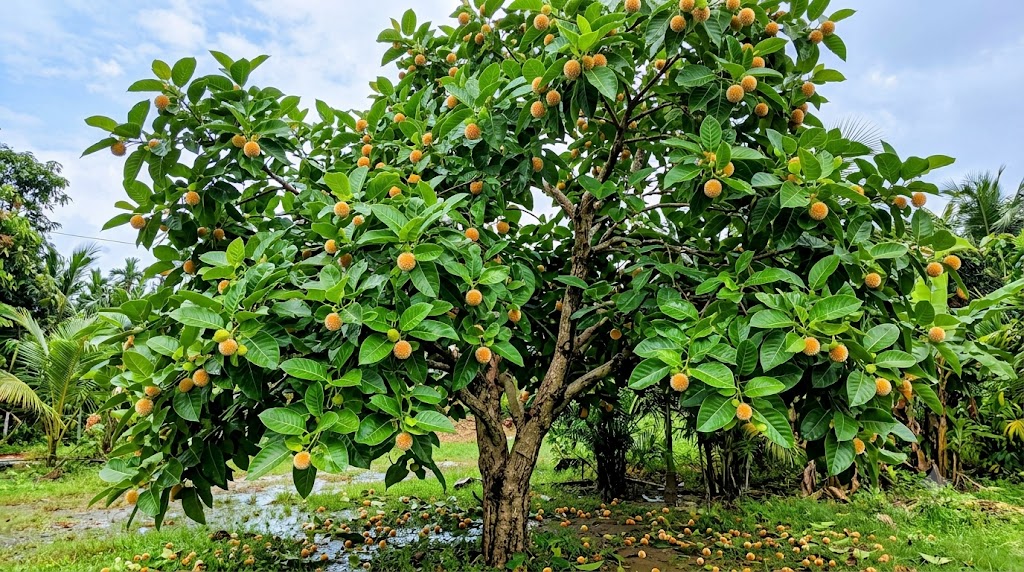
    A tree of 15 to 20 mtrs. high. densed and shady.

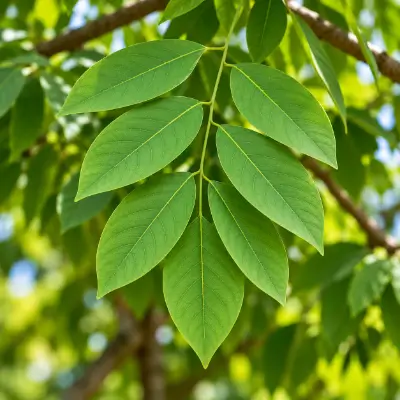
    Leaves – shiny, simple, elliptic-oblong, resemble the leaves of madhook with dark venations. Flowers- small, yellowish orange.

    Fruits . like small balls, hard and taste sweet and sour when ripe.

    Distribution & Habitat :

    Assam, Bengal, southwards to Andhra Pradesh and western Ghats.

    Chemical constituents :

    alkaloids, steroids, reducing sugars , tannins

    Properties :

    RASA- katu, kashaya. tikta

    GUNA- laghu. ruksha

    VIRYA- sheeta

    VIPAKA-madura

    Prabhav: vishaghna

    Karma :

    febrifugal, antidiuretic, anthelmintic, hypoglycaemic. ,cooling; anticatarrhal, blood purifier, analgesic,abortifacient.

    Indication :

    Ulcers, fever, skin disease, cough, piles, leucorrhoea, mouth ulcers,Eczema, diabetes ,leucoderma,anorexia

    Parts used :

    Bark, leaves and fruits.

    Dose :

    Bark powder . 0.5 to 1 gm; fruit juice 12 to 24 ml; leaf juice – 12 to 24 ml.

    External uses : Warm leaves are lied on wounds to reduce inflammation. In conjunctivitis. the paste of bark is applied to eyelids. Wounds are washed and cleaned by the decoction of its leaves.

    Internal use : Decoction of leaves and gum are analgesic, In diarrhoea, bleeding per rectum and colitis, decoction of the ba is used. Juice or powder of bark + jeerak ‘I’ sugar, is effective in vomiting.

    Excessive thirst in fever is reduced by fruit juice.

    It is used in bleeding disorders, oedema and cough. Decoction of roots is useful in calculi, and dysuria, In spermatorrhoea and vaginal disorders, decoction of bark is used, Menorrhagia is treated by leaf juice or decoction. Fruit juice promotes breast milk. In various skin diseases, bark paste is applied locally. Its bark is the best medicine to reduce burning sensation in fever It is also useful in general debility and toxicity.

    – Least Concern (widely cultivated). 

     Research Updates (Past 5 Years)

    1. 2019: Antipyretic activity of bark (Journal of Ayurveda). 

    2. 2020: Diuretic effect in rats (Indian Journal of Pharmacology). 

    3. 2021: Anti-inflammatory properties of flowers (Phytomedicine). 

    About Kadamba

    Botanical Name

    Neolamarckia cadamba (Roxb.) Bosser

    Family

    Rubiaceae

    Identification No.

    SDACH/HG/052

    Parts Used

    Bark, Leaves, Fruits

    Habitat

    India

    IUCN Status

    Least Concern

    Plant Photos
    Ayurvedic Properties

    Rasa

    Katu, Kashaya, Tikta

    Guna

    Laghu, Ruksha

    Virya

    Sheeta

    Vipãka

    Madhura

    Contact Now

    Have queries? Contact Us.

    Have queries? We’re here to help you every step of the way.

    Contact us to get the right guidance for your academic journey at Shri Dhanwantry Ayurvedic College.
  • SATALA

    SATALA

    Botanical Name : Acacia concinna (Willd.) DC.

    Family : Mimosaceae

    Identification No.– SDACH/HG/051

    Names in different Indian languages :

    English : Soap nut acacia

    Hindi : Shikakai

    Kannada : Sege

    Malayalam : chaemalanta

    Sanskrit : satala

    Tamil : Shikaakaai

    Telugu : Shikaya

    Unani : Shikaakaai,  Kharunb Nabti.

    Synonyms :

    Saptalaa, Shitalaa,

    Saatalaa, Shrivalli, Kantvalli

    A. sinuata (Lour.) Merrill;

    A. rugata (Lamk.) Ham.

    Morphology :

    Acacia concinna has been used traditionally for hair care in the Indian Subcontinent since ancient times. It is one of the Ayurvedic medicinal plants. The fruit is known in India as shikakai (Hindi: शिकाकाई, śikākāī; Kannada: ಸಿಗೆಕಾಯಿ; Tamil: சிகைக்காய் – literally “hair-fruit”, sigai=tresses and kaay=fruit;) “fruit for hair” in its use as a traditional shampoo.  In order to prepare it the fruit pods, leaves and bark of the plant are dried, ground into a powder, then made into a paste. While this traditional shampoo does not produce the normal amount of lather that a sulfate-containing shampoo would, it is considered a good cleanser. It is mild, having a naturally low pH, and doesn’t strip hair of natural oils. Usually no conditioner is needed, for shikakai also acts as a detangler. An infusion of the leaves has been used in anti-dandruff preparations.

    A. concinna extracts are used in natural shampoos or hair powders and the tree is now grown commercially in India and Far East Asia.[7] The plant parts used for the dry powder or the extract are the bark, leaves or pods. The bark contains high levels of saponins, which are foaming agents found in several other plant species used as shampoos or soaps. Saponin-containing plants have a long history of use as mild cleaning agents. Saponins from the plant’s pods have been traditionally used as a detergent, and in Bengal for poisoning fish; they are documented to be potent marine toxins

    Substitute/ Adulterant : –

     Substitute: Reetha (Sapindus mukorossi) 

    – Adulterant: Rarely adulterated due to distinct pod shape. 

    Phytochemicals : Saponins (natural cleanser), tannins, alkaloids, flavonoids.

    Raspanchaka-

    – Rasa:Kashaya (Astringent), Tikta (Bitter) 

    – Guna: Laghu (Light), Ruksha (Dry) 

    – Virya: Sheeta (Cooling) 

    – Vipaka: Katu (Pungent) 

    – Prabhava: Keshya (Hair rejuvenation) 

    – Dosha Shamakta: Balances Pitta and Kapha. 

    Karma- Rogaghnata

    Hair care, skin diseases, itching, wound healing.

    Hair wash (prevents dandruff, promotes hair growth). 

      – Paste for skin inflammation. 

    – Internal:

      – Mild laxative in small doses. 

    Part Used

    – Pods, leaves. 

    Dose

    – Powder: 3–5 grams (external use). 

    – Decoction: 50–100 ml. 

     Yoga/Formulations – Shikakai hair churna, Khadirarishta . 

     IUCN Status : Not evaluated . 

     Research Updates

    1. 2020:Study on saponins for antifungal properties (Journal of Ethnopharmacology). 

    2. 2021: Hair growth promotion in animal models (Ayurveda Research Paper). 


    About SATALA

    Botanical Name

    Acacia concinna (Willd.) DC.

    Family

    Fabaceae (Mimosaceae)

    Identification No.

    SDACH/HG/051

    Parts Used

    Pods, Leaves

    Habitat

    India

    IUCN Status

    Not Evaluated (NE)

    Plant Photos

    Ayurvedic Properties

    Rasa

    Kashaya, Tikta

    Guna

    Laghu, Ruksha

    Virya

    Sheeta

    Vipãka

    Katu

    Contact Now

    Have queries? Contact Us.

    Have queries? We’re here to help you every step of the way.

    Contact us to get the right guidance for your academic journey at Shri Dhanwantry Ayurvedic College.
  • Rakta Chandan

    Rakta Chandan

    Botanical Name : Pterocarpus santalinus Linn. f.

    Family : Papilionaceae; Fabaceae

    Identification No.: SDACH/HG/50

    Introduction :

    Latin name: Pterocarpus = ptero = winged, arpus fruit: santalinus = sandal wood.

    Names in different Indian languages :

    English : Red Sandalwood, Red Sanders.

    Hindi : Laal-chandan

    Kannada : Raktachandana

    Malayalam : Raktachandanam

    Sanskrit : Raktachandana, rakta sara

    Tamil : Shivappu chandanam

    Telugu : Raktagandhamu, yerragandhamu

    Unani : Sandal Surkh

    Synonyms :

    रक्तचन्दनमाख्यातं रक्ताङ्गं क्षुद्रचन्दनम् । तिलपर्ण रक्तसारं तत्प्रवालफलं स्मृतम् ॥१६॥ रक्तं शीतं गुरु स्वादुच्छर्दितृष्णाऽस्त्रपित्तहृत् । तिक्तं नेत्रहितं वृष्यं ज्वरन्त्रणविषापहम् ॥१७॥

    Raktachandana, Raktasaara, Kuchandan, Lohit, Harichandan, Raktasar, Tamrasar, Kshudrachandan, Arkachandan, Ranjan, Pravalphala, Surakta

    Morphology :

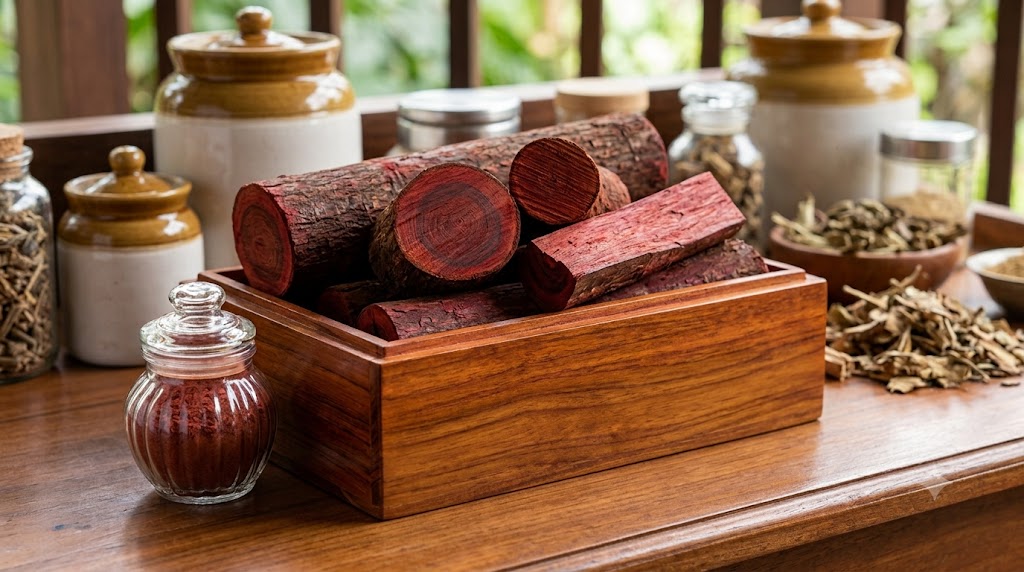
    A tree growing to a height of 5- 10 mtrs. Bark is blackish grey. Trunk – externally white but red inside. Stalk bears flowers in all the directions.

    Leaves – compound, leaflets 3, ovate,

    Flower- yellow, axillary, raceme

    Legumes- 6 to 9 containing red seeds, flowering and fruiting occurs in summer.

    Distribution & Habitat :

    South India

    Chemical constituents :

    eudesmol, iso-pterocarpolone, pterocarpol, cryptomeridiol, pterocarptriol, pterocarpdiolone, santalins A and B

    Properties :

    Guna: guru .ruksha;

    Rasa: madhur. tikta:

    Vipaka: katu:

    Virya: sheeta:

    Karma :

    Netrya, varnya, balyam, vrishyam

    antibilious, anti-inflammatory, hypoglycaemic, astringent, diaphoretic, febrifuge

    Indication :

    Kusta, jwara, visha, rakta dosha,

    Ulcers, wounds, fever, skin disease, cough, piles, leucorrhoea, mouth ulcers, Eczema

    Part used :

    Heart wood

    Dosage :

    Powder 2-4 g

    Decoction 50-100 ml

    Aamayika Prayoga

    • External Application – Styptic Anti inflammatory properties.
    • Cures burning sensation. Indicated in
    • burning sensation, swelling, headache, skin disorders etc.
    • Internal administration-
    • Digestive System – indicated in vomiting, excessive thirst, Diarrhea, etc.
    • Excretory System – Increases urine output. indicated in Dysuria, UTI etc.
    • Circulatory system – Indicated in bleeding disorders, acts as a blood purifier
    • Tvak Indicated in skin disorders
    • Tapakrama – Indicated in fever associated with burning sensation
    • Satmikarana – Anti poisonous

    Yoga/Formulations: Asanadi Kashayam, Guduchyadi Kashayam, Tarunarka Rasa, Chandanadi Lauh    

    IUCN Status: Pterocarpus santalinus is listed as Endangered under criteria A2cd.

    Research updates

    1. Physio-chemical analysis
    2. Santalinus bark and heartwood are rich in flavonoids and protect the liver against chemical-induced toxicity. Studies showed that aqueous (45 mg/mL) and ethanol (30 mg/mL) bark extracts of P. santalinus restored CCl4-induced liver damage in rats.


    About Rakta Chandan

    Botanical Name

    Pterocarpus santalinus L.f.

    Family

    Fabaceae (Papilionaceae)

    Identification No.

    SDACH/HG/050

    Parts Used

    Heartwood

    Habitat

    India

    IUCN Status

    Endangered (EN)

    Plant Photos

    Ayurvedic Properties

    Rasa

    Madhura, Tikta

    Guna

    Guru, Ruksha

    Virya

    Sheeta

    Vipãka

    Katu

    Contact Now

    Have queries? Contact Us.

    Have queries? We’re here to help you every step of the way.

    Contact us to get the right guidance for your academic journey at Shri Dhanwantry Ayurvedic College.
  • Parijata

    Parijata

    Botanical Name : Nyctanthes arbor-tristis

    Family : Oleaceae; Nyctanthaceae   

    Identification No.: SDACH/HG/049

     Introduction :

    Latin name: Nydanthus (Nyct = night; anthus = flowering (night flowering); arbortristis = (Arbor )

    tristis = weeping, gloomy, flowers dropping like tears).

    Red stalks of flowers are cut, dried in the sun end stored to be usedfor dying clothes and as a colouring agent for sweets and other eatables. Poets in India have compared the tips of beautiful women to the flowers of this tree

    Names in different Indian languages :

    English : Tree of Sorrow,Night Jasmine,Coral Jasmine

    Hindi : Harsimgar,parja

    Kannada : Parijata

    Malayalam : Pavilamalli,parijatham

    Sanskrit : Paarijaata

    Tamil : Pavazha mattigai

    Telugu : pavilamalligai

    Unani : Harasingaar,swetasarasa

    Synonyms :

    Paarijaata, Shephaali, Shephaalikaa, Mandaara

    Morphology :

    A tree of 3 – 10 mtrs height.

    Leaves – simple, opposite,  facing forwards, 10 to 12.5 cm long. 5 to 6.25 cm broad, rough. Upper surface is green and the lower surface is white. Petals are yellowish red and very attractive in appearance. Therefore it is compared to the lips of a young lady.

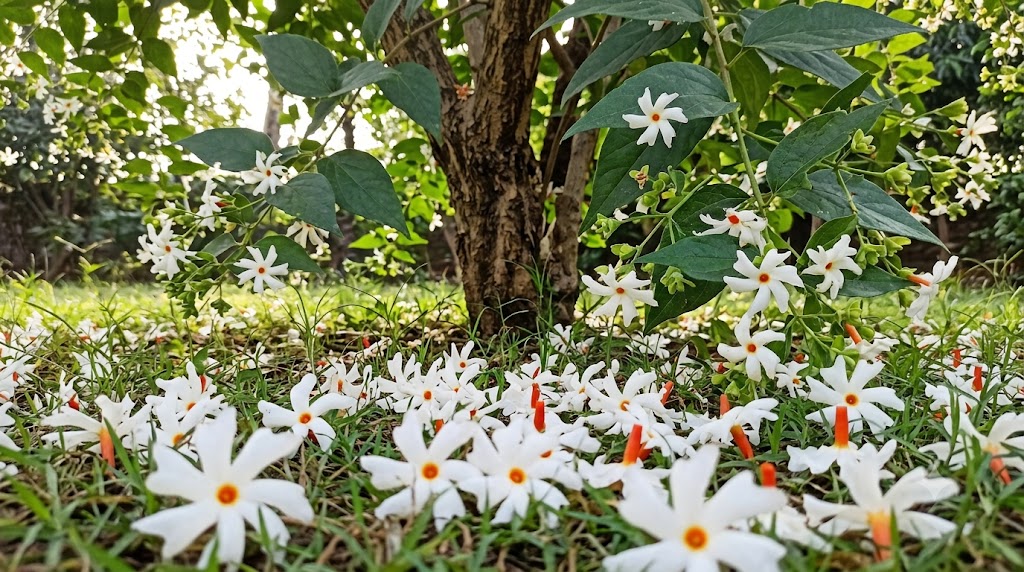
    Flowers –  white, fragrant and delicate, flowers bloom in the night and fall off in the morning on the ground below the tree. Ovary is flat, bilobular with two seeds. (Children play with these seeds and call them as coins).

    Distribution & Habitat :

    All over India

    Chemical constituents :

    Iridoid glycosides, mannitol, beta-amyrin, beta-sitosterol, hentriacontane, benzoic acid, astragalin, nicotiflorin, oleanolic acid, nyctanthic acid, friedelin and lupeol.

    Properties :

    RASA- tikta

    GUNA- laghu. ruksha

    VIRYA-ushna

    VIPAKA-katu

    Karma :

    bitter tonic, cholagogue, febrifuge, anti-inflammatory, antispasmodic, hypotensive, respiratory stimulant, laxative, diuretic

    Indication :

    fevers, gout, sciatica, pruritus, cough, asthma

    Part used :

    Leaves, flower, seed, bark

    Dosage :

    2-4 g

    Amayika prayoga

    Internal uses :

    Seeds are used as antihelminthics and in alopecia. Rough leaves are used for scrapping the margins of wounds. Leaf juice is used in loss of appetite, piles, liver disorders, biliary disorders and intestinal worms. Powder prepared from leaves or bark is given in cough and asthma. Also useful in dysuria, chronic fever and snake poisoning.

    Therapeutic Uses :

    Decoction of leaves is very useful in fever with rigors

    IUCN Status: Not Evaluated (NE)

    Research updates (past 5 years):

    1. A 2021 study highlighted significant anti-inflammatory and anti-arthritic effects of Parijatha leaf extract.

    2. A 2020 in vitro study confirmed antimalarial activity of ethanolic extracts.

    3. A 2023 research demonstrated its hepatoprotective and immunomodulatory potential in animal models.

    About Parijata

    Botanical Name

    Nyctanthes arbor-tristis L.

    Family

    Oleaceae

    Identification No.

    SDACH/HG/049

    Parts Used

    Leaves, Flowers, Seeds, Bark

    Habitat

    India

    IUCN Status

    Not Evaluated (NE)

    Plant Photos

    Ayurvedic Properties

    Rasa

    Tikta

    Guna

    Laghu, Ruksha

    Virya

    Ushna

    Vipãka

    Katu

    Contact Now

    Have queries? Contact Us.

    Have queries? We’re here to help you every step of the way.

    Contact us to get the right guidance for your academic journey at Shri Dhanwantry Ayurvedic College.