Shri Dhanwantry Ayurvedic College

Author: admin

  • Rudraksha

    Rudraksha

    Rudraksha

    Botanical Name :

    Elaeocarpus ganitrus

    Family :

    Elaeocarpaceae

    Identification No. : SDACH/HG/169

    Synonyms- रुद्राक्षश्च शिवाक्षश्च शर्माक्षो भूतनाशनः |

    पावनो नीलकण्ठाक्षो हराक्षश्च शिवप्रियः १८६

    रुद्राक्षमम्लमुष्णं च वातघ्नं कफनाशनम् |

    शिरोऽर्तिशमनं रुच्यं भूतग्रहविनाशनम् १८७ राजनिघण्टु – आम्रादिवर्ग

    Introduction :     

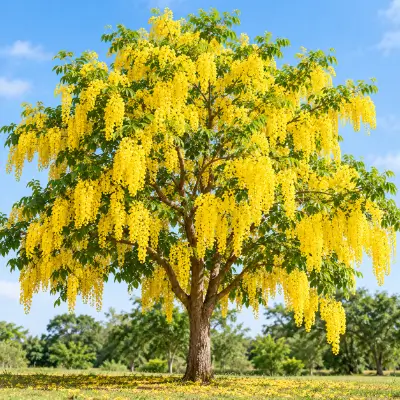
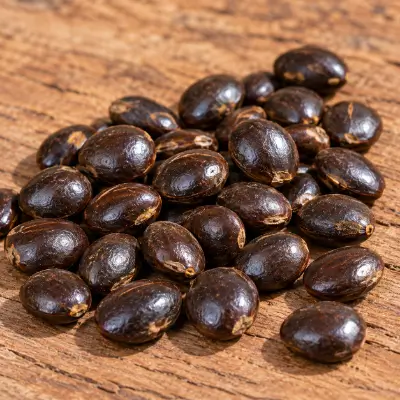
    Elaeocarpus ganitrus, is a large evergreen broad-leaved tree whose seed is traditionally used for prayer beads in Hinduism.

    The seeds are known as rudraksha, or rudraksh, Sanskrit: rudrākṣa (“Rudra’s teardrops”).

    Rudraksha may be produced by several species of Elaeocarpus, however E. ganitrus is the principal species used in the making of mala.

    DESCRIPTION :

    Elaeocarpus ganitrus grows in the area from the Gangetic plain in the foothills of the Himalayas to South-East Asia, Indonesia, New Guinea, Guam, and Hawaii.

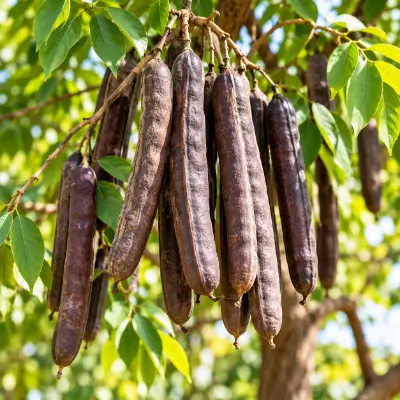
    Rudraksha seeds are covered by an outer husk of blue colour when fully ripe, and for this reason are also known as blueberry beads. The blue colour is not derived from pigment but is structural.

    It is an evergreen tree that grows quickly.

    The rudraksha tree starts bearing fruit in three to four years.

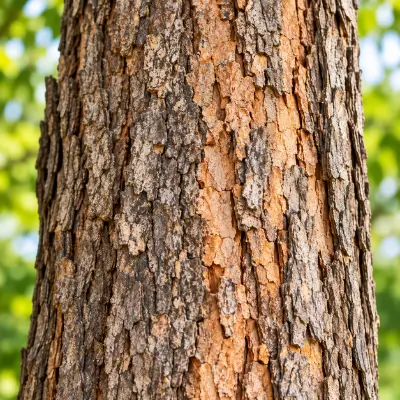
    As the tree matures, the roots buttress rising up narrowly near the trunk and radiating out along the surface of the ground

    CHEMICAL CONSTITUENTS :

    Chemical constituents present in E. ganitrus are elaeocarpidine, isoelaeocarpine, epiisoelaeocarpiline, rudrakine, flavonoids, quercetin, phytosterols, fat, alkaloids, carbohydrates, ethanol, proteins, tannins, gallic acid and ellagic acid

    THERAPEUTIC USES :

    Rudraksha have many Ayurvedic properties that refer to this wonderful bead and gives details of rudraksha for increase body constitutions. The beads, bark and leaves of Rudraksha all are used to cure various ailments like mental disorders, headache, fever, skin diseases etc.

    Rudraksha may be worn either on arm, wrist or other parts of the body.

    For improving memory power : Rudraksha can be used for improving memory power when taken with milk.

    For all brain diseases : Rudraksha can be used for treating all brain diseases like brain fever etc.

    As a blood purifier : Rudraksha shall be used for treating the blood impurities and strengthens the body substance.

    As antibacterial : Rudraksha can be used for treating the burns and marks.

    It can also be used for curing cough and breathing problems.

    For controlling epilepsy : By using pulp of Rudraksha fruit or bark, can be used for controlling epilepsy.

    For curing liver related problems, jaundice, and stomachache

    Rudraksha can be used for treating stomach pain and liver problems.

    For blood pressure : Rudraksha can be used to treat high blood pressure, heart diseases etc

    Substitute/ Adulterant: Desmostachya bipinnata and Wrightia tinctoria.

    Raspanchaka

    Rasa – Madhura, Guna– Guru, Snigdha, virya– sita, vipaka– Madhura, prabhava-,

    dosha shamakta– Raktabharashamak

    Karma– Rogaghnata- Rakshoghna, Arogyaprada, Medhya, Hrdyam (Saumanasya Kara)

    Amayika Prayoga/Therapeutic Uses

    External – Dhahshaman, mansik roga in the form of mala

    Internal – Matisuddhikara, Uccharaktachapa, Prajnaparadha, Hrdaya Roga,

    Romantika, Manasa Roga, Anidra

    Part used– Phala-ashthi, seed

    Dose: 1-2 gm internally

    Yoga/Formulations: Gorocanadi Vati, Cukkumtippalyadi Gutika, Dhanvantara

    Gutika, Svarnamukladi Gutika, Mrtasanjivani Gutika

    IUCN Status- not mentioned

    Research updates

    1. Antiulcerogenic activity: The benzene, petroleum ether, acetone, chloroform and ethanol, extracts of dried fruit of Elaeocarpus sphaericus, showed antiulcerogenic activities in rat.
    2. A combination of bark, leaf and stem of Elaeocarpus floribundus has been used as mouth wash and fruits has been used as antiseptic. Elaeocarpus grandis indolizidine alkaloids grandisine A and isoelaeocarpiline compounds combine to opoid receptor and have analgesic effect.

    About Rudraksha

    Botanical Name

    Elaeocarpus ganitrus

    Family

    Elaeocarpaceae

    Identification No.

    SDACH/HG/169

    Parts Used

    Phala-ashthi, seed

    Habitat

    South-East Asia, Indonesia, New Guinea, Guam, and Hawaii

    IUCN Status

    not mentioned

    Plant Photos

    Ayurvedic Properties

    Rasa

    Madhura

    Guna

    Guru, Snigdha

    Virya

    Sita

    Vipãka

    Madhura

    Contact Now

    Have queries? Contact Us.

    Have queries? We’re here to help you every step of the way.

    Contact us to get the right guidance for your academic journey at Shri Dhanwantry Ayurvedic College.

  • Kakanasa Bhed

    Kakanasa Bhed

    Kakanasa Bhed

    Sanskrit name

    Kaknasa

    Identification No.

    SDACH/HG/168

    Botanical name

    Asclepias curassavica

    Family name

    Asclepiadaceae (Apocynaceae subfamily)

    Vernacular names

    Hindi: Kaknasa
    English: Wild cotton
    Tamil: Vellikkanthal
    Malayalam: Kakkonam
    Kannada: Kakkanasa

    Synonyms (Bhav Prakash)

    काकनासा तु काकाङ्गी काकतुण्डफला च सा ॥२४८॥काकनासा कषायोष्णा कटुका रसपाकयोः । कफघ्नी वामनी तिक्ता शोथार्शश्वित्रकुष्ठहृत् ॥२४९॥

    Classification


    Bhav Prakash: Mentioned in guduchyadi Varga

    Habitat & Distribution

    Found in tropical and subtropical regions of India, especially in Rajasthan, Gujarat, Madhya Pradesh, and parts of southern India. It grows in dry, arid zones and hedges.

    Morphology

    A twining or scrambling shrub with slender, wiry branches. Leaves are ovate-lanceolate, opposite. Flowers small, greenish-purple in axillary clusters. Fruits are slender, fusiform follicles with seeds having silky hairs.

    Substitute / Adulterant

    No major substitutes or adulterants documented. Sometimes confused with similar twining Asclepiadaceous plants.

    Phytochemicals

    Alkaloids, Triterpenoids, Flavonoids, Saponins, Glycosides

    Raspanchaka

    Rasa: Tikta, Kashaya
    Guna: Laghu, Ruksha
    Virya: Sheeta
    Vipaka: Katu
    Prabhava: Nasarogahara
    Dosha shamakta: Pitta-Kapha hara

    Karma (Rogaghnata)

    Shwasahara (relieves asthma), Kaphaghna, Kandughna (anti-pruritic), Nasarogahara (beneficial in nasal disorders), Krimighna (anthelmintic)

    Amayika Prayoga / Therapeutic Uses

    External: Useful in skin diseases, nasal applications, and swelling
    Internal: Used in cough, asthma, nasal congestion, and internal worm infestations

    Part used

    Root, leaves, and whole plant

    Dose

    Powder: 1–3 grams; Decoction: 20–50 ml

    Yoga/Formulations

    Used in Nasya oils, decoctions for cough and asthma, and formulations for skin and nasal diseases

    IUCN Status

    Not Evaluated (NE)

    Research Updates

    2020: Antimicrobial efficacy against skin pathogens (Journal of Ethnobotany)
    2021: Anti-inflammatory and analgesic properties of root extract (Phytomedicine Research)
    2022: Phytochemical screening and antioxidant activity reported (Indian Journal of Natural Products)

    About Kakanasa Bhed

    Botanical Name

    Asclepias curassavica

    Family

    Asclepiadaceae (Apocynaceae subfamily)

    Identification No.

    SDACH/HG/168

    Parts Used

    Root, leaves, and whole plant

    Habitat

    Rajasthan, Gujarat, Madhya Pradesh, and parts of southern India

    IUCN Status

    Least Concern

    Plant Photos

    Ayurvedic Properties

    Rasa

    Tikta, Kashaya

    Guna

    Laghu, Ruksha

    Virya

    Sheeta

    Vipãka

    Katu

    Prabhava

    Nasarogahara

    Dosha shamakta

    Pitta-Kapha hara

    Contact Now

    Have queries? Contact Us.

    Have queries? We’re here to help you every step of the way.

    Contact us to get the right guidance for your academic journey at Shri Dhanwantry Ayurvedic College.

  • Krshna Datura

    Krshna Datura

    Krshna Datura

    Botanical Name : Datura stramonium

    Family : Solanaceae

    Identification No.-SDACH/HG/167

    Introduction :

    Datura stramonium, known by the common names thorn apple, jimsonweed (jimson weed) or devil’s snare, is a species of flowering plant in the nightshade family Solanaceae. Its likely origin was in Central America,and it has been introduced in many world regions. It is an aggressive invasive weed in temperate climates across the world. D. stramonium has frequently been employed in traditional medicine to treat a variety of ailments. It has also been used as a hallucinogen (of the anticholinergic/antimuscarinic, deliriant type), taken entheogenically to cause intense visions.It is unlikely ever to become a major drug of abuse owing to effects upon both mind and body frequently perceived subjectively as highly unpleasant, giving rise to a state of profound and long-lasting disorientation with a potentially fatal outcome. It contains tropane alkaloids which are responsible for the deliriant effects, and may be severely toxic

    Morphology :

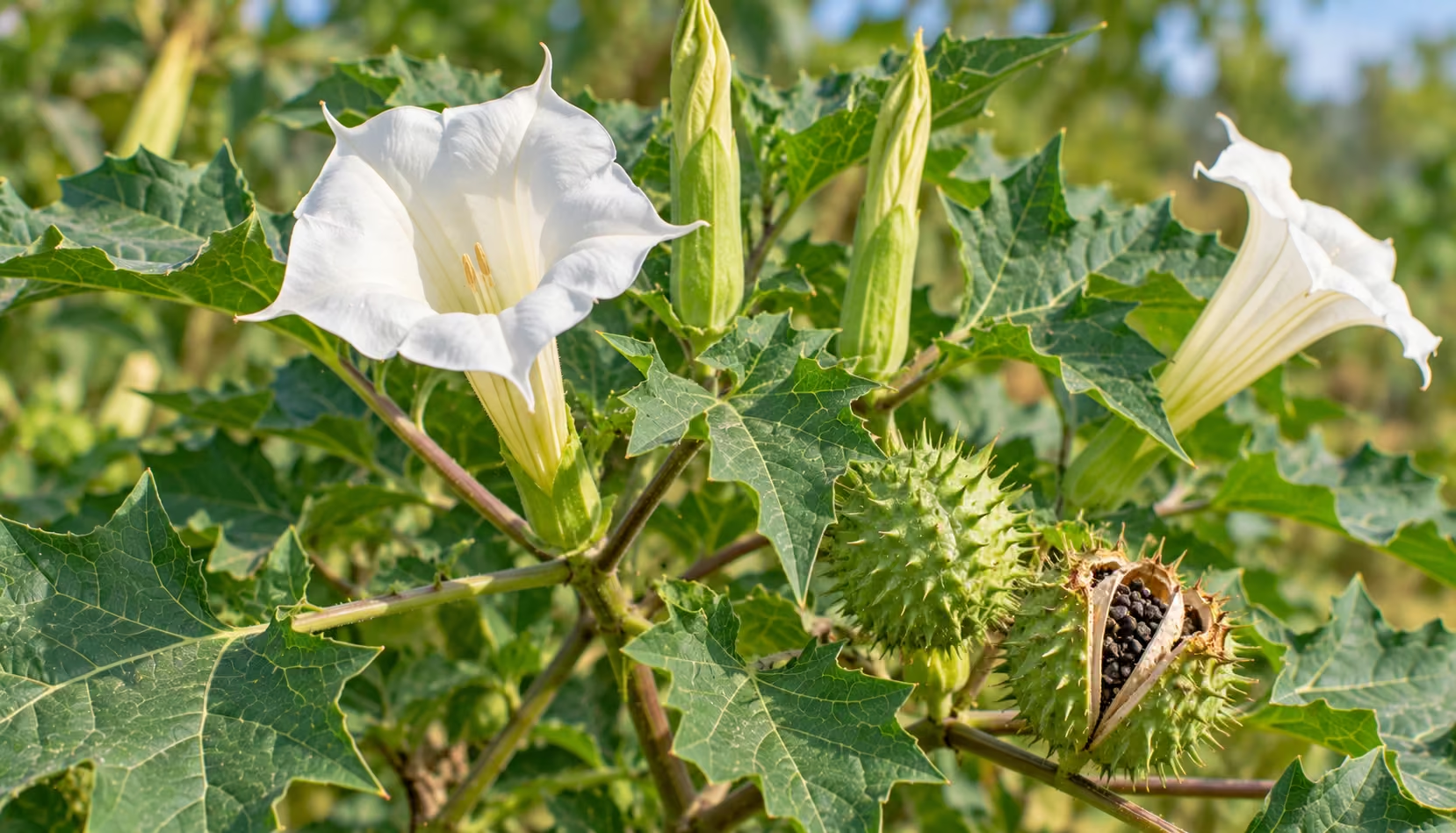
    Datura stramonium is an ill-smelling, erect, annual, freely branching herb that forms a bush up to 60 to 150 cm (2 to 5 ft) tall.

    The root is long, thick, fibrous, and white. The stem is stout, erect, leafy, smooth, and pale yellow-green to reddish purple in color. The stem forks off repeatedly into branches and each fork forms a leaf and a single, erect flower.

    The leaves are about 8 to 20 cm (3–8 in) long, smooth, toothed,soft, and irregularly undulated.

    The upper surface of the leaves is a darker green, and the bottom is a light green. The leaves have a bitter and nauseating taste, which is imparted to extracts of the herb, and remains even after the leaves have been dried.

    Datura stramonium generally flowers throughout the summer. The fragrant flowers have a pleasing odor; are trumpet-shaped, white to creamy or violet, and 6 to 9 cm (2+1⁄2–3+1⁄2 in) long; and grow on short stems from either the axils of the leaves or the places where the branches fork. The calyx is long and tubular, swollen at the bottom, and sharply angled, surmounted by five sharp teeth. The corolla, which is folded and only partially open, is white, funnel-shaped, and has prominent ribs. The flowers open at night, emitting a pleasant fragrance, and are fed upon by nocturnal moths.

    The egg-shaped seed capsule is 3 to 8 cm (1–3 in) in diameter and either covered with spines or bald. At maturity, it splits into four chambers, each with dozens of small, black seeds.

    Due to following characteristics, datura is beneficial in a respiratory diseases and pain disorders.

    Synonyms-

    धत्तूरधूर्तधुत्तूरा उन्मत्तः कनकाह्वयः |

    देवता कितवस्तूरी महामोही शिवप्रियः |

    मातुलो मदनश्चास्य फले मातुलपुत्रकः Bhav Prakash

    Classification

    Charaka- Visa Cikitsa and in Kustha chikitsa (Madhvasava)

    Sushruta- In Alarka visa (rabies), Sushruta described it as Unmatta twice (S.S.Ka.7/54 & S.S.Ut. 21/6) and Dhuttura thrice (S.S. Ci. 17; S.S.Ka. 7/52 & 53).

    Vagbhata quoted it twice each as Dhatturaka (A.H.Ut. 24/30 & 38/37) and Kanaka (A.H.Ut. 32/31 & 39/18).

    Bhav Prakash- Mentioned in Guduchayadi Varga

    Uses :

    Analgesic or Anodyne

    Antispasmodic

    Expectorant

    Sedative

    Hypnotic

    Cardiac stimulant

    Bronchodilator

    Uterine stimulant

    Soporific (Sleep inducing)

    Intoxicant

    Emetic

    Digestive

    Varieties: Two varieties of Datura

    Datura stramonium – Shweta white variety

    Datura Metal- Krishna black variety

    5 varieties of Dhatura- Shweta (white), Neela (blue), Krishna (black), Rakta (red) and Peeta (yellow) according to Rajanighantu

    The following species of Datura genus are available at present: Datura metel; Datura stramonium (Datura Tatula Linn) & Datura innoxia Mill.

    Substitute/ Adulterant: Datura innoxia

    Phytochemicals: – Alkaloids (Hyoscine) and two withanolide Glucosides (Dhatura metel in

    A & B)

    Raspanchaka

    Rasa- Tikta, Katu, guna- Laghu, Ruksha, Vayvahi, Vikashi, virya- Ushna, vipaka- Katu, prabhava- Madak, dosha shamakta- Kapha-Vata rog

    Karma: Kapha-vata hara

    Rogaghnata: Vishaghna, Kasahara, Madaka, Varnya, Vatakaraka, Jwaraghna, Kusthaghna, Swasaghna, Krimiguna

    Amayika Prayoga/Therapeutic Uses:

    External:

    1) In sotha a paste of leaves is applied.

    2) Krmi- Juice of Dhattura leaves mixed with mercury or juice of heated leaves singly destroys ticks and lice on local application.

    3) Juice of Mandukaparni and paste of Dhatura root destroys the boils.

    Internal:

    1) Alarkavisha- Dhatura and Sweta Punarnava combination is a very effective remedy (S.S.Ka. 7).

    2) In jwara which is given with curd.

    Part used: Seed, Leaves, Roots

    Dose: Seed powder 50- 100 mg

    Yoga/Formulations: Kankasava, Ekangavira Rasa, Puspadhanva Rasa,

    Tribhuvana Kirti Rasa, Sri Jayamangala Rasa, Laghu Visagarbha Taila, Visatinduka Taila,

    Dhattura Taila

    IUCN Status: Not listed

    Research updates-

    1) Alcoholic extract of whole plant of D. metel showed anthelmintic activity against Ascardia galli. It also possessed anti-cancer activity against human epidermal carcinoma of the nasopharynx in tissue culture (Dhar et al., 1968).

    2) Scopalamine obtained from D. innoxia (5, 8, or 10 µg/kg), given i.v. in man mainly impairs acquisiton of new informa tion but has less effect on retrival of information (Psychop-harmacol. 1977, 52, 283).

    3) Atropine, hyoscine and total alkaloids obtained from D. metel (100 µg/ml, each) caused 9, 14.7 & 15.2% inhibition of MAO and 8, 9.3 & 8.9% inhibition of 5-HTP decarboxylase re-spectively (Ind. J. Med. Sci. 1970, 24, 13).

    About Krshna Datura

    Botanical Name

    Datura stramonium

    Family

    Solanaceae

    Identification No.

    SDACH/HG/167

    Parts Used

    Seed, Leaves, Roots

    Habitat

    India, Central America

    IUCN Status

    Not listed

    Plant Photos

    Ayurvedic Properties

    Rasa

    Tikta, Katu

    Guna

    Laghu, Ruksha, Vayvahi, Vikashi

    Virya

    Ushna

    Vipãka

    Katu

    Contact Now

    Have queries? Contact Us.

    Have queries? We’re here to help you every step of the way.

    Contact us to get the right guidance for your academic journey at Shri Dhanwantry Ayurvedic College.

  • Krshnasariva

    Krshnasariva

    Krshnasariva

    Botanical Name : Ichnocarpus frutescens

    Family : Apocynaceae

    Identification No.- SDACH/HG/166

    Names in Different Languages :

    Common name : Black Creeper

    Bengali : shyama lata 

    Gujarati : shyamlata

    Hindi : dirgha-mula

    Kannada : gauriballi,

    Konkani : kante bhonvri, krishnasarwa

    Malayalam : nannari,palvalli

    Marathi : kate bhowari

    Nepali : dudhe lahara

    Odia :  mahila

    Sanskrit : krishnasariva

    Tamil : utar-koti

    Synonyms-

    कृष्णा तु शारिवा श्यामा गोपी गोपवधूश्च सा ॥२३६॥

    Morphology :

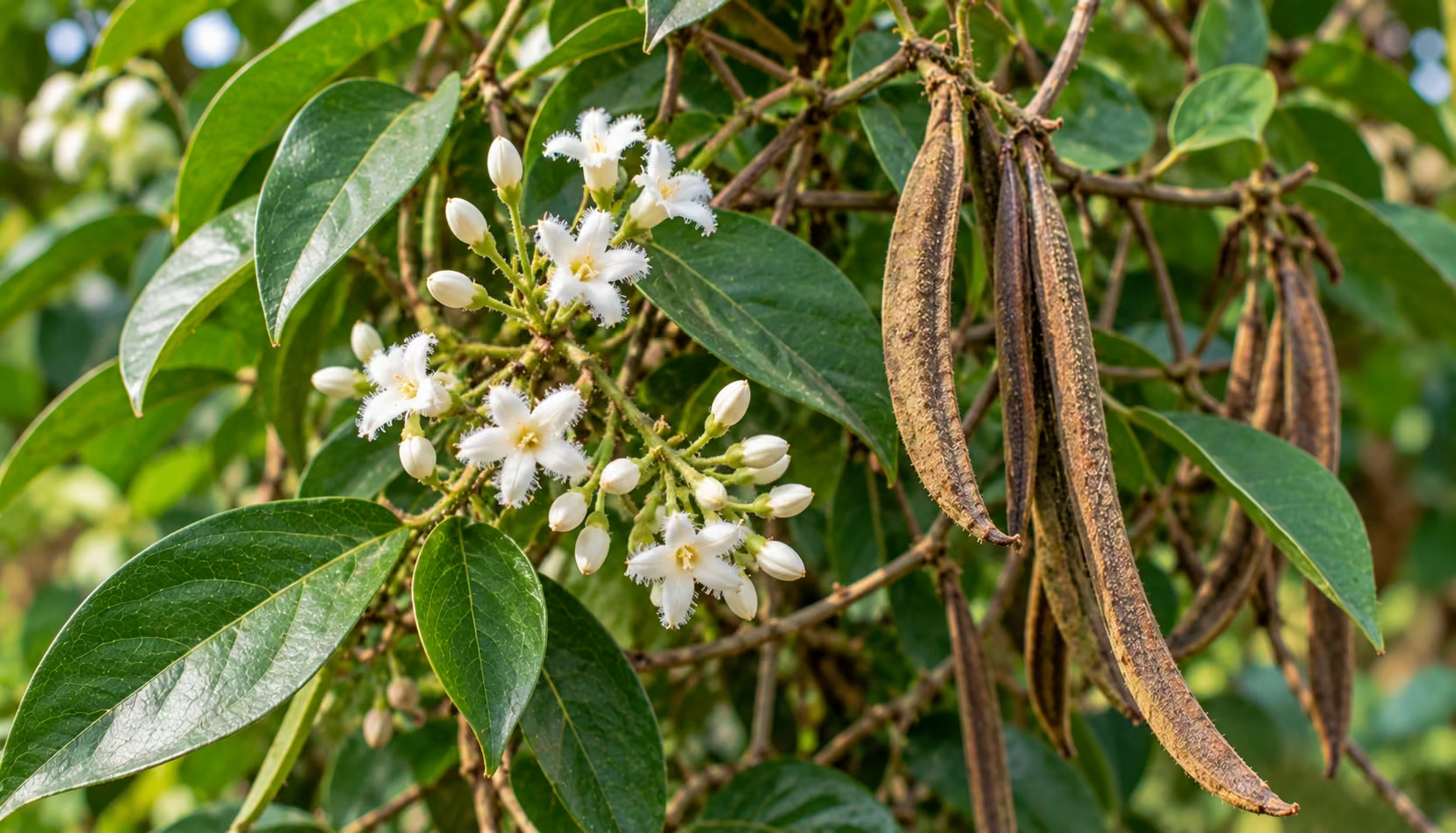
    Black Creeper is an evergreen woody twiners, with branches smooth or rust, velvety when young, with milky sap. Probably, because of the rust colored stems, this creeper earned the names black creeper, श्यामलता Shyamalata etc. Leaves are elliptic oblong or lance-shaped, tip pointed or tapering, base rounded or narrow, 4-10 cm long, 1.5-5 cm wide. Leaves are smooth and dark green above, and paler beneath, with 2.5-5 mm long stalks. Flowers are borne in many flowered clusters, 3-8 cm across. The stalks carrying the flowers and the flower clusters are hairy. Flowers are white, about 1 cm across. Sepals are ovate, blunt, velvety, about 1 mm long. Flower tube is about 2.5 mm long, much thickened at the mouth. Petals are 1.5 mm long, with long hairs on the margin. Follicles are solitary or paired, 10-15 x 0.5 cm, straight or curved, rusty pubescent when young. Seeds very slender, 1-2 cm long.

    Flowering : August-December.

    Uses :

    The plant has a large number of traditional medicinal uses, including for rheumatism, asthma, cholera, and fever.

     Some in vitro and rodent studies have suggested that extracts of the plant may inhibit tumors,protect liver cells from damage in acetaminophen overdose,and reduces complications of hyperlipidemia in diabetic rats.

    There have been no published studies testing any of these effects in humans.

    Yoga/Formulations: Sarivadi vati, Sarivadyavaleha, Sarivadyasav. Pinda taila, Saribadyasava, Mahatiktakaghrta, Pippalyadi ghrta, Amrta ghrta.

    IUCN Status: Not mentioned

    Research updates

    Antidiabetic Activity: Studies have indicated that extracts from the plant may have antidiabetic properties, potentially due to their antioxidant activity and ability to reduce blood glucose levels in diabetic rats.

    About Krshnasariva

    Botanical Name

    Ichnocarpus frutescens

    Family

    Apocynaceae

    Identification No.

    SDACH/HG/166

    Habitat

    India

    IUCN Status

    Not mentioned

    Plant Photos

    Contact Now

    Have queries? Contact Us.

    Have queries? We’re here to help you every step of the way.

    Contact us to get the right guidance for your academic journey at Shri Dhanwantry Ayurvedic College.

  • KULANJAN

    KULANJAN

    KULANJAN

    Sanskrit Name

     कुलञ्जन

    Botanical Name

    Alpinia galanga (Linn.) Willd.

    Family Name

    Zingiberaceae

    Identification No.: SDACH/HG/165

    Vernacular Names

    • Hindi: कुलंजन
    • English: Greater Galangal
    • Marathi: वडालवण

    Classification

    • Bhavaprakasha: Haritkyadivarga

    Habitat & Distribution

    Native to Southeast Asia; cultivated in India, especially in southern regions. Found in moist, tropical climates.

    Morphology

    • Plant: Perennial herb with thick, aromatic rhizomes
    • Leaves: Long, lanceolate, smooth margins
    • Flowers: White with red streaks, in dense spikes
    • Rhizome: Brownish outside, reddish inside, aromatic and pungent in taste

    Varieties

    No classical varieties mentioned; often compared with Alpinia officinarum (Lesser Galangal)

    Substitute/Adulterant

    Adulterated with rhizomes of Alpinia officinarum, Kaempferia galanga, or Zingiber officinale

    Phytochemicals

    Galangin, eugenol, cineole, kaempferide, β-sitosterol, diarylheptanoids, flavonoids, essential oils

    Raspanchaka

    • Rasa: Tikta, Katu
    • Guna: Laghu, Ruksha,Tikshan
    • Virya: Ushna
    • Vipaka: Katu
    • Prabhava: Shwasahara
    • Doshashamaka: Kapha-Vatahara

    Karma (Rogaghnata)

    • Deepana
    • Shwasahara
    • Shoolaprashamana
    • Kaphanulomana
    • Mutrala
    • Aamapachaka
    • Hridya

    Amayika Prayoga / Therapeutic Uses

    External

    • Rhizome paste applied on swellings and rheumatic joints
    • Used in medicated oils for respiratory congestion

    Internal

    • Used in respiratory disorders like asthma, cough, and bronchitis
    • Improves digestion and appetite
    • Beneficial in urinary disorders and colic pain
    • Acts as a cardiac and nervine tonic

    Part Used

    Rhizome

    Dose

    • Churna: 1–3 g
    • Kwatha: 30–50 ml
    • Arka/Asava: As per formulation

    Yoga / Formulations

    • Dashamoola Kwatha
    • Chitrakadi Vati
    • Hingwastak Churna
    • Agastya Haritaki Rasayana
    • Pippalyadi Ghrita

    IUCN Status

    Not Evaluated

    Research Updates

    • Bronchodilator and antiasthmatic activity: Extracts of Alpinia galanga have shown significant improvement in airway dilation and reduction of bronchospasm, supporting its traditional use in asthma and respiratory conditions.
    • Antimicrobial efficacy: Rhizome extracts have demonstrated strong antibacterial and antifungal effects, particularly against E. coli, S. aureus, and Candida albicans, validating its role in infections and gastrointestinal issues.
    • Cognitive enhancement: Experimental studies indicate nootropic and neuroprotective properties, with improvements in memory retention and learning capacity in animal models.

    About Kulanjan

    Botanical Name

    Alpinia galanga (Linn.) Willd.

    Family

    Zingiberaceae

    Identification No.

    SDACH/HG/165

    Parts Used

    Rhizome

    Habitat

    India

    IUCN Status

    Not Evaluated

    Plant Photos

    Ayurvedic Properties

    Rasa

    Tikta, Katu

    Guna

    Laghu, Ruksha,Tikshan

    Virya

    Ushna

    Vipãka

    Katu

    Prabhava

    Shwasahara

    Doshashamaka

    Kapha-Vatahara

    Contact Now

    Have queries? Contact Us.

    Have queries? We’re here to help you every step of the way.

    Contact us to get the right guidance for your academic journey at Shri Dhanwantry Ayurvedic College.

  • Chakramarda

    Chakramarda

    Chakramarda

    Botanical Name : Senna tora (L.) Roxb.

    Family : Fabaceae

    Identification No.: SDACH/HG/164

    Introduction :

    Senna tora (originally described by Linnaeus as Cassia tora) is a plant species in the family Fabaceae and the subfamily Caesalpinioideae. Its name is derived from its Sinhala name tora

    Names in different Indian languages :

    English : Pot Cassia

    Hindi : Chakunda

    Kannada : Chagate

    Malayalam : Takara

    Sanskrit : Chakramarda

    Tamil : Tagrai

    Synonyms :

    चक्रमर्दः प्रपुन्नाटो दद्रुघ्नो मेषलोचनः । पद्माटः स्यादेडगजश्चक्री पुन्नाट इत्यपि ॥२१०॥ चक्रमर्दो लघुः स्वादु रूक्षः पित्तानिलापहः । हृद्यो हिमः कफश्वासकुष्ठदद्द्रुकृमीन्हरेत् ॥२११॥

    Prapunnaad, edagaja, dadrugna

    Morphology :

    Senna tora is an herbaceous annual foetid herb. The plant can grow 30–90 centimetres (12–35 in) tall and consists of alternative pinnate leaves with leaflets mostly with three opposite pairs that are obovate in shape with a rounded tip. The leaves grow up to 3–4.5 centimeters long. The stems have distinct smelling foliage when young. The flowers occur in pairs in axils of leaves with five petals and pale yellow in colour. The stamens are of unequal length. The pods are somewhat flattened or four angled, 10–15 cm long and sickle shaped, hence the common name sickle pod. There are 30–50 seeds within a pod.

    Distribution & Habitat :

    All over India

    Chemical constituents :

    Anthroquinones, chrysophanol,Emodin, obtusifolin, obtusin, chryso-obtusin, auranto-obtusin,and their glycosides.

    Properties :

    Guna : laghu, ruksha;

    Rasa : katu

    Virya : ushna:

    Vipaka: katu

    Karma :

    Vatapitta hara,

    Srotogamitva :

    Dosha : pittanila hara

    Dhatu : Rakta

    Mala : srsta vinmootra

    Indication :

    dadrugna,jvaragna, swasa hara, mehahara

    Part used :

    Seed, leaves

    Dosage :

    Leaf juice 5-10 ml

    Seed Powder 1-3g

    Decoction 50-100 ml

    Uses :

    The root is used in snakebite.

    The dried and fresh leaves are used in northern Nigeria in the treatment of ulcers, ring worm and other parasitic skin diseases. In cultures, the leaf extracts of the plant showed anti-bacterial activity. Antiviral activity, particularly against Newcastle disease virus and Vaccinia virus.

    The Cassia Tora Seed, ripe seed of sickle pod, is a highly valued ancient Chinese herb. As defined in Ayurveda these seeds of Cassia Tora are great laxatives, ophthalmics, anthelmintics and expectorants. Its main constituents include derivatives of anthraquinone, chrysophanol, emodin, rhein and fixed oil. Due to the cold nature of the fruit from which they are extracted, the Cassia Tora seeds are the excellent sources for cooling down the body. Used as aperients and purgatives the seeds are help to loosen the bowels to relieve constipation.

    Traditionally, the leaves of Chakvad are popular as potherb. It is used as a natural pesticide in the organic farms of India. It has been reported that Cassia tora contains chrysophanic acid-9-anthrone which is an important fungicide. The intake of these seeds can cure skin diseases like ring worm, itch and psoriasis. These herbal seeds can also remove intense heat from the liver and improve the acuity of sight and loosen the bowels to relieve constipation.

    Yoga / Formulations

    • Chakramarda Taila
    • Chakramarda Lepa
    • Used in various krimighna and kushtaghna yogas

    IUCN Status : Not Evaluated (NE)

    Research Updates :

    • Antifungal and antibacterial activity: Leaf and seed extracts of Cassia tora have shown significant inhibition against fungal strains like Candida albicans and bacterial strains like Staphylococcus aureus, validating its traditional use in skin disorders.
    • Hepatoprotective effects: Experimental models have shown that Cassia tora seed extract offers liver protection against toxin-induced damage by enhancing antioxidant enzyme levels.
    • Antidiabetic potential: Studies indicate that ethanolic extract of Cassia tora seeds improves insulin sensitivity and lowers blood glucose levels in diabetic animal models.

    About Chakramarda

    Botanical Name

    Senna tora (L.) Roxb

    Family

    Fabaceae

    Identification No.

    SDACH/HG/164

    Parts Used

    Root bark, Leaves, Flowers, Fruit pulp

    Habitat

    All over India

    IUCN Status

    Least Concern

    Plant Photos

    Ayurvedic Properties

    Rasa

    katu

    Guna

    laghu, ruksha

    Virya

    ushna

    Vipãka

    katu

    Contact Now

    Have queries? Contact Us.

    Have queries? We’re here to help you every step of the way.

    Contact us to get the right guidance for your academic journey at Shri Dhanwantry Ayurvedic College.

  • Gunja

    Gunja

    Gunja

    Botanical Name : Abrus precatorius

    Family : Fabaceae

    Identification No.: SDACH/HG/163

    Introduction :

    Size and weight of this seeds used for compare weight. seed and roots of white variety usually uses. Abrus = delicate leaves, precatorius = of prayers = seeds of this plant are used for making rosaries

     Names in different Indian languages :

    English : Indian Wild Liquorice, Jequirity, Crab’s Eye,  Precatory Bean.

    Hindi : Gunci,batti,gunacaci

    Kannada : Gurugunji

    Malayalam : kunni

    Sanskrit : Gunja

    Tamil : Kuntumani, kunri

    Telugu : guruginja

    Synonyms :

    श्वेता गुञ्जओच्चटा प्रोक्ता कृष्णला चापि सा स्मृता । रक्ता सा काकचिञ्ची स्यात्काकणन्ती च रक्तिका ॥१२५॥

    Gunjaa, Gunjaka, Chirihintikaa, Raktikaa, Chirmiti, Kakanti, Kabjaka, Tiktikaa, Kaakananti, Kaakchinchi , Choodamani Raktaphalika, Kakanantika, Kakachinchi, Krushnaraktika

    Morphology :

    A creeper with many branches.

    Leaves resemble tamarind leaves, pinnate,  having 20-40 leaflets, leaflets oblong

    flowers are pink, bluish and appear in cluster.

    Fruit: pod, Legumes are 1.5 – 3.5 cm, long containing red, white and black coloured dseeds. Red coloured or white coloured seeds have black spot on their tips.

    Root and leaves are sweet. It is  3 varieties – white , red and black (roots and leaves of all these 3 varieties are used in medicines). A small woody twiner with a long, woody, tortuous branched root reaching inch or more in diameter. Stems slender, cylindrical, branched, with a smooth or wrinkled, brown bark. Leaves alternate, shortly stalked, spreading, 2—6 inches long, abruptly pinnate, stipules small, subulate; leaflets on very short pilose petioles, opposite, in about 8—15 closely placed pairs, inch long, oblong, very blunt at both ends, but often apiculate at the truncate apex, entire, thin, smooth on both sides, articulated and readily falling, with two minute stipell at the base of each pair. Flowers small, shortly stalked, in small clusters arranged on large tuberosities along the outer side of a stiff curved rachis, and forming a secund racemose inflorescence terminating a thick, horizontal branch which is naked above, but usually with several closely placed leaves near the base. Calyx small, cup-shaped, truncate at the mouth, with 5 very shallow teeth, membranous, finely pilose. Corolla papilionaceous, rose- coloured, standard ovate, erect, with a short broad claw, wings narrow, falcate-oblong, keel-petals united except the claws, longer than the wings. Stamens 9, the filaments united into a split sheath, the free portions with 5 longer ones alternating with 4 shorter, anthers uniform. Ovary shortly stalked, very small, downy; style curved glabrous, stigma capitate. Pod about I inch long, broadly oblong, shortly beaked, somewhat compressed, 2-valved, with imperfect septa between the seeds. Seeds 4—6, globular-ovoid, about inch long, testa hard, bright and shining, brilliant scarlet, with a black patch at one end round the hilum, cotyledons plane-convex, no endosperm.

    Distribution & Habitat :

    All over India

    Chemical constituents :

    abrin, a toxalbumin,indole derivatives, anthocyanins, sterols, terpenes,

    The roots contain precol, abrol, glycyrrhizin and alkaloids—abrasine and precasine. The roots also contain triterpenoids—abruslactone A, methyl abrusgenate and abrusgenic acid.

    Properties :

    Seed

    RASA-tikta,  kashaya;

    GUNA-laghu, ruksha, tikshna;

    VIRYA-ushna

    VIPAKA-katu

    Root : madhur and snigdha.

    Karma – vatha pitha hara

    Srotogamitva :

    Dosha: Kaphavata (seed). tridoshasamak (leaves and roots).

    Dhatu: Muscles (hoarseness of voice – milk boiled with the leaves); shukra (milk boiled with the leaves – aphrodisiac).

    Mala: Mutra (dysuria – milk boiled with leaves), keshya – enhances hair growth.

    Indication :

    Uterine stimulant, abortifacient, toxic, skin disease, alopecia, leucoderma, asthma, stomatitis

    Seeds—teratogenic. A paste of seeds is applied on vitiligo patches.

    Part used :

    Root and seeds

    Dosage :

    Seed powder. 1 to 2 ratti: root powder – 0.5 to 1 gm

    Internal uses :

    Digestive system:

    Purgative, gastric irritant , emetic

    Renal System:

    Diuretic

    Therapeutic Uses :

    Seeds ground in a paste are applied over skin disorders, dermatoses. chronic ulcers and alopecia. Paste of the leaves is applied over inflammations and wounds. Oil boiled with the leaves is used for massage in vata disorders. Nasya of powdered seeds is given in headache. Milk boiled with the leaves is given in hoarseness of voice, impotency, dysuria and general debility. Powdered seeds in excess dose causes toxic symptoms like cardiac arrest etc. Seeds are purified by boiling them in kanji or cows milk for three hours

    Yoga / Formulations :

    • Gunja Taila
    • Gunja Lepa
    • Shodhit Gunja Churna
    • Mentioned in several lepa and taila formulations for external applications

    IUCN Status : Not Evaluated (NE)

    Research Updates:

    • Hair growth stimulant: Ethanolic extract of Abrus precatorius seeds has shown promising hair growth-promoting activity in animal models, supporting its traditional use in baldness and alopecia.
    • Anthelmintic and anti-parasitic properties: Purified seed extracts demonstrated significant activity against intestinal parasites and helminths, validating its classical krumighna effect.
    • Anticancer potential: Studies indicate that abrin, a ribosome-inactivating protein from Abrus precatorius, exhibits selective cytotoxicity against cancer cells, suggesting potential for therapeutic applications after detoxification and formulation.

    About Gunja

    Botanical Name

    Abrus precatorius

    Family

    Fabaceae

    Identification No.

    SDACH/HG/163

    Parts Used

    Root and seeds

    Habitat

    All over India

    IUCN Status

    Not Evaluated (NE)

    Plant Photos

    Ayurvedic Properties

    Rasa

    tikta, kashaya

    Guna

    laghu, ruksha, tikshna

    Virya

    ushna

    Vipãka

    katu

    Contact Now

    Have queries? Contact Us.

    Have queries? We’re here to help you every step of the way.

    Contact us to get the right guidance for your academic journey at Shri Dhanwantry Ayurvedic College.

  • Guggulu

    Guggulu

    Guggulu

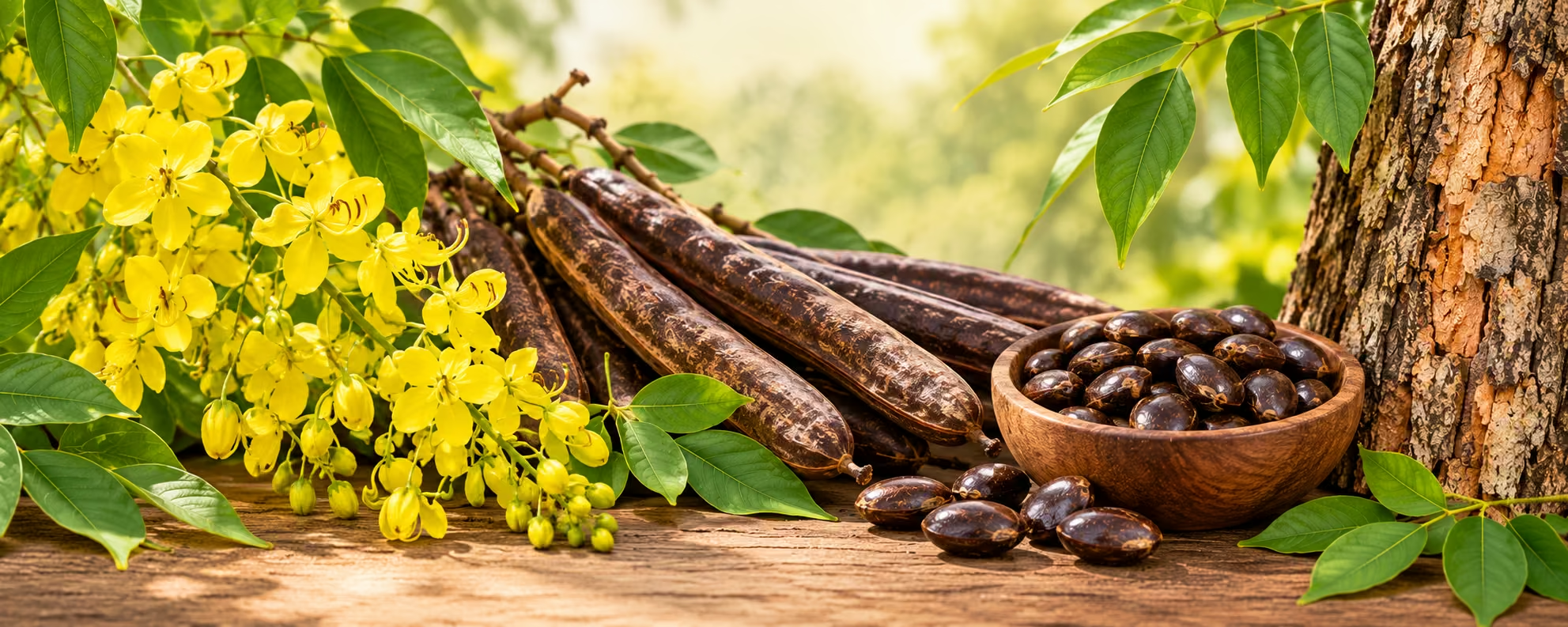
    Botanical Name : Commiphora mukul (Hook. ex Stocks) Engl.

    Family : Burseraceae

    Identification No.: SDACH/HG/162

     Introduction :

    Gulggulu is described as ‘Agni sthãna’ and used for ‘Dhupa’. It show antibacterial activity. Resin of this plant uses.

    Names in different Indian languages :

    English : Indian Bdellium,

    Sanskrit : Guggulu

    Hindi : Gugal

    Malayalam : Gulgulu

    Tamil : Erumaikan, Kungiliyam

    Synonyms :

    गुग्गुलुर्देवधूपञ्च जटायुः कौशिकः पुरः । कुम्भोलूखलकं क्लीबे महिषाक्षः पलङ्कषः ॥३२॥

    Balsamodendron mukul Hook. ex Stocks.

    Guggul, Devadhoop, Kaushika, Pur, Mahishaaksha, Palankash, Kumbha, Uluukhala.

    Varieties & adulterants – (CV – controversy, AD – adulterants)

    1. Mahishaksha – (Mhashya guggul).black. for human use

     2. Mahaneed- blue.

    3. Kurnud – white.

    4. Padma – brown, for animal use,

    5. Kanak – (Kanaguggul) – yellow, for human use.

    6. Kana guggul – it is found in marwar, greenish yellow, soft and grannular,

    7. Ehaisa (Mhasha) guggul – it is found in Sindh and Kutch. greenish yellow but brittle and soft.

    8.  Hirayca, In absence of guggul,  Commiphora myrrh is used.

     Morphology :

    It is a small tree or shrub with spinescent branches.

    Leaves- unifoliate, alternate or crowed at the end of short branches, cuneate-obovate, rhomboidal or oval, acute, deeply serrate, smooth and shining.

    Flowers- small, sub sessile, 2-3 together, unisexual. Males with ovary short and barren; females with short stamens and imperfect anthers. Calyx cylindrical. Petals 4-5, star-shaped, brownish red, trips curled back.

    Fruit- red drupes, ovate, acuminate, separating into 2 fleshy valves, leaving the nut enveloped by a 4-cleft yellow pulp. Nuts ovoid, acute, splitting into two, each 1-celled. (Flowers in March-April and Fruits later).

     Distribution & Habitat :

    Rajasthan, Madhya Pradesh, Assam, Andhra Pradesh, Karnataka.

    Chemical constituents :

     Gugglsterones Z and E, guggulsterols I– V, diterpenoids; volatile oil, Gum- guggullignans I & II; guggulu tetrols; mukulol;allylcembrol; c-27 guggulusterols I, II & III; Z-and E-guggulusterol

    Identification test for purity :

    Pure guggul is singdha, soft, sticky with sweet smell, bitter taste, yellowish tinge, soluble in water, not contaminated with mud or sand. Any variety other than these qualities should be considered as impure. Potency lasts for twenty years

    Properties :

    RASA – Tikta, katu

    GUNA – Laghu, Ruksa, Visada, Süksma, Sara (old) Snigdha

    VIRYA – Uhsna

    VIPAKA – katu

    Karma : Tridosahara, Rasayana, Vrsya (new), Lekhana (old)

    inhibits platelet aggregation, exhibits anti-inflammatory activity

    Srotogamitva :

    Dosha : tridoshaghna

     Dhatu : Mansa, meda {brihan – increases body weight), asthi – promotes union of fractures, shukra promotes fertility, rasayan- old -medokarshan.

     Organ : liver, skin

    Indication :

    Medoroga, Amavãta, Vãta vyadhi, Prameha, Apaci, Gandamãlã, Sotha, Pitakã, Ars, Kustha

    obesity , rheumatoid arthritis, osteoarthritis, sciatica.

    The gum is also used in hemiplegia and atherosclerotic disorders; as a gargle in pyrrhoea aveolaris, chronic tonsillitis and pharyngitis. Fumes are recommended in hay fever, chronic bronchitis and nasal catarrh.

    Part used : Resin

    Dosage : 1-2 g

    External uses :

    Anti inflammatory, analgesic, clearing of wound and healing due to antibacterial action . Paste of guggul is locally applied in rheumatoid arthritis, cervical lymphadenitis, skin diseases, piles etc. It reduces foul smell and swelling of wound. Its vapours are useful as deodorant and disinfectant in the house.

    Internal uses :

    Nervous system : Valashamak, analgesic, nervine tonic, so guggul is useful in neuralgia, rheumatoid arthritis, sciatica, facial paralysis. hemiplegia and gout etc. It is welt known and popular medicine for vata disordess. Triphala + guggul is a popular medicine given internatty in wound

    Digestive system : It is an appetizer by pungent and bitterness: laxative by snigdha. pichchila and tikshna; liver stimulant. antihaemorrboidal and anthetmintic by bitter and ushna gunas. Hence guggul is useful in loss of appetite constipation, liver diseases, piles and worms

    Circulatory system : It is a cardiac tonic. It increases haemoglobin and leucocyte count and enhances blood quality.

    Respiratory system : Expectorant being snigdha and pichchila. It is deodorant. anthelmintic. Useful in chronic cough and chronic asthma.

    Urinary system : Lithotryptic due to tikshna and diuretic properties. Also useful in dysuria and gonorrhoea.

    Reproductive system : Guggul is ushna, tikshna, increases sexual power and acts as an emmenagogue. It is also useful in oligosperima, impotency. dysmenorrhoea, Leucorrhoea and other gynaecological diseases ,infertility.

    Important Yogas or Formations :

    Shatdharana yoga, Yogaraja guggulu, Pañca Tikta Guggulu ghritam, Simhanãda guggulu, Cañdraprabhävati, Arogyavardhini Rasa, Navaka Guggulu, Amritãdi guggulu, Guggulu Tikta Kasaya, Kãncanãra guggulu, Kaisora guggulu, Goksurãdi guggulu.                                             

    Therapeutic Uses :

    (1) Udara- Guggulu shall be used (C.S.Ci.13).

    (2) Kröshtuka sirsha vãta— Guggulu may be used with Triphalã decoction (V. M & V. S.)

    (3) Urustambha—Guggulu to be taken with cow’s urine (V.M.).

    (4) Amavãta—Haritaki, Guggulu and silajatu may be given with urine (A.H.Ci.21).

    IUCN Status : Near Threatened (NT)

    Research Updates :

    • Hypolipidemic activity: Guggulsterones in Commiphora mukul have been clinically shown to reduce total cholesterol, LDL, and triglycerides, making it beneficial in the management of dyslipidemia and obesity.
    • Anti-inflammatory and anti-arthritic effect: Standardized Guggulu extract significantly reduced inflammation, pain, and stiffness in osteoarthritis patients, comparable to NSAIDs with fewer side effects.
    • Thyroid-modulating action: Preclinical studies indicate that guggulsterones enhance thyroid activity by increasing iodine uptake and improving T3/T4 conversion, supporting its traditional use in hypothyroidism.
    About Guggulu

    Botanical Name

    Commiphora mukul (Hook. ex Stocks) Engl.

    Family

    Burseraceae

    Identification No.

    SDACH/HG/162

    Parts Used

    Resin

    Habitat

    Rajasthan, Madhya Pradesh, Assam, Andhra Pradesh, Karnataka

    IUCN Status

    Near Threatened (NT)

    Plant Photos

    Ayurvedic Properties

    Rasa

    Tikta, katu

    Guna

    Laghu, Ruksa, Visada, Süksma, Sara (old) Snigdha

    Virya

    Uhsna

    Vipãka

    katu

    Contact Now

    Have queries? Contact Us.

    Have queries? We’re here to help you every step of the way.

    Contact us to get the right guidance for your academic journey at Shri Dhanwantry Ayurvedic College.

  • Raktaphala

    Raktaphala

    Raktaphala

    Botanical Name : Lycopersicon esculentum MILL.

    Family : Solanaceae

    Identification No.: SDACH/HG/161

    Introduction :

     Tomato, flowering plant of the nightshade family (Solanaceae), cultivated extensively for its edible fruits. Labelled as a vegetable for nutritional purposes, tomatoes are a good source of vitamin C and the phytochemical lycopene. The fruits are commonly eaten raw in salads, served as a cooked vegetable, used as an ingredient of various prepared dishes, and pickled.

    Names in different Indian languages :

    English : tomato

    Hindi : tamatar

    Malayalam : takkali

    Sanskrit : raktaphala

    Tamil : seemay tekkali

    Synonyms :

    Raktamaci, raktavardhak, belavaangi

    Lycopersicon lycopersicum (L.) KARST.

    Morphology :

    This is an annual herb with indeterminate growth. It grows up to 1 m in height. The stem is much branched and prostrate, green with hairy surface. The leaves are compound, ovate, alternate, petiolate, up to 7.0 cm long and 4.0 cm wide, margin serrated, apex acute, base oblique.The fruit is a berry, deep green when immature, red when mature, up to 12 cm in diameter, flattened to slightly flattened, multilobed and strongly depressed, pistil scar irregular and blossom end shape indented.

    Distribution & Habitat :

    Throughout India

    Chemical constituents :

    Ascorbic acid, biotin, folic, nicotinic acid riboflavin

    Properties :

    Guns:lagu, snigdha

    Rasa:madura, amla

    Virya: ushna;

    Vipaka:katu

    Part used :

    fruit

    Uses :

    Mild aperient, blood purifier, cholagogue, digestive. Used in homoeopathy for treating rheumatic conditions, colds, chills, digestive disorders, diabetes, obesity, leucorrhoea, metrorrhagia.

    Tomato is a powerful deobstruent. It promotes flow of bile; mildly laxative, especially when taken raw. Tomato stimulates torpid liver and kidneys and helps to wash away toxins. Tomato is recommended for diabetics. It is a major dietary source of carotenoid lycopene.

    Tomato juice inhibits carcinogenic N-nitrosocompound formation chiefly in the stomach. Most of the inhibition of formation of N-nitrosomorpholine by phenolic fraction of tomato juice was due to chlorogenic acids. The ascorbate fraction of the juice also contains compounds that inhibit nitrosation.

    Consumption of tomato juice can significantly increase serum lycopene levels.

    Yoga / Formulations

    Not used in classical formulations; incorporated in Pathyahara (dietary therapeutics)

    IUCN Status : Not evaluated

    Research Updates

    • Antioxidant effects: Lycopene extracted from tomato has shown strong antioxidant properties, reducing oxidative stress and protecting against cellular damage, especially in cardiovascular and cancer-related studies.
    • Cardioprotective action: Regular intake of tomato juice was found to significantly reduce blood pressure and LDL cholesterol levels in individuals with hypertension, suggesting cardioprotective benefits.
    • Anti-inflammatory and skin protection: Topical and oral use of tomato extracts demonstrated anti-inflammatory effects and protection against UV-induced skin damage, supporting its role in dermatological health.

    About Raktaphala

    Botanical Name

    Lycopersicon esculentum MILL.

    Family

    Solanaceae

    Identification No.

    SDACH/HG/161

    Parts Used

    fruit

    Habitat

    Throughout India

    IUCN Status

    Not evaluated

    Plant Photos

    Ayurvedic Properties

    Rasa

    madura, amla

    Guna

    lagu, snigdha

    Virya

    ushna

    Vipãka

    katu

    Contact Now

    Have queries? Contact Us.

    Have queries? We’re here to help you every step of the way.

    Contact us to get the right guidance for your academic journey at Shri Dhanwantry Ayurvedic College.

  • Strikutaja

    Strikutaja

    Strikutaja

    Botanical Name : Wrightia tinctoria

    Family : Apocynaceae

    Identification No.: SDACH/HG/160

    Introduction :

    Wrightia tinctoria is a flowering plant species in the genus Wrightia found in India, southest Asia and Australia. It is found in dry and moist regions in its distribution. Various parts of the plant have medicinal properties.

    Names in different Indian languages :

    Kannada : Kodamurki

    Hindi : Dudhi, Karayaja

    Malayalam : Aiyappala, Kampippaala

    Tamil : Veppalai

    Telugu : Amkuda

    Sanskrit : Stri Kutaja

    English : Pala Indigo, Sweet indrajao

    Synonyms

    कुटजः कूटजः कौटो वत्सको गिरिमल्लिका ॥११६॥कालिङ्गः शक्रशाखी च मल्लिकापुष्प इत्यपि । इन्द्रो यवफलः प्रोक्तो वृक्षकः पाण्डुरद्रुमः ॥११७॥

    Properties :

    Rasa : Tikta (Bitter), Kashaya (Astringent)

    Guna : Laghu (Light), Ruksha (Dry), Tikshna (Sharp)

    Veerya : Ushna (Hot)

    Vipaka : Katu (Pungent)

    Karma : Kapha, Vata hara

    Morphology :

    Deciduous trees; upto 15 m; bark 8-10 mm thick, grey, smooth; outer layer thin, inner layer thick, brittle, creamy; blaze greenish-yellow; latex milky white.

    Leaves simple, opposite, distichous, estipulate; petiole 2-5 mm long, stout, glabrous; lamina 3.5-11 x 2-4 cm, oblong-lanceolate or elliptic-ovate; base acute; apex acuminate or caudate acuminate; margin entire, glabrous, glaucous beneath, chartaceous; lateral nerves 5-10 pairs, slender, arched, pinnate, prominent, intercostae reticulate.

    Flower bisexual, white, scented, in terminal cymes appearing along with new leaves; pedicel 1.5 mm long, bracts 2, minute; calyx lobes 5, with membranous margin, 2 mm, ovate, obtuse, ciliate, glandular inside; corolla salver shaped, lobes 5, broad lobes 12 x 5 mm, oblong, obtuse, throat with 1-2 series of erect, fimbriate corona scales, tube 1.5-2 mm; stamens 5, insrerted on the mouth of the tube, anthers sagitate, spurred at base, conniving and adhering to the stigma; disc absent; carpels 2, free, many ovuled, style filiform, stigma ovoid, usually with a toothed basal ring.

    Fruit of 2 follicular mericarps, 15-45 cm long, slender, smooth, green, cylindric, cohering at the tip; seed 16 mm long, black, commate at one end.

    Chemical Constituents :

    Wrightial–Triterpenoid chemical,Cycloartenol,Cycloeucalenol,Beta-Amyrin,Beta Sitosterol

    Properties :

    Anthelmintic: Used as a treatment to destroy parasitic worms.

    Anodyne: It is used as a painkiller.

    Antipyretic: Remedy for fever.

    Aphrodisiac: Used to stimulate sexual desire.

    Astringent: Used for skin related problems.

    Carminative: Gastric problems.

    Depurative: Purifies your body from wastes and toxins.

    It is used as a tonic.

    Piles & Skin Diseases – It is also used in the treatment of piles and skin diseases like ringworm, leprosy, etc.

    Medicine : Decoction of Bark of the plant mixed with sunthi is used for curing piles. For skin diseases, it is used externally.

    The bark of the plant, when mixed with cows urine and applied on skin, turns out to be very effective.

    Urinary Problems :It is used as an effective remedy for urinary problems

    Arthritis : It is used in the treatment of Rheumatoid Arthritis and Osteoarthritis.

    Psoriasis : It is an effective treatment for Psoriasis and any other non-specific skin problems.

    Karma (Rogaghnata)

    • Kushtaghna
    • Atisāraghna
    • Krimighna
    • Raktaprasadana
    • Shothahara
    • Vranaropaka

    Amayika Prayoga / Therapeutic Uses

    External

    • Latex applied to eczema, psoriasis, and chronic non-healing wounds
    • Leaf paste used in skin eruptions and abscesses

    Internal

    • Bark decoction in diarrhea and IBS
    • Powder or extract used in skin disorders and helminthic infections
    • Traditionally used in leprosy and non-healing ulcers

    Part Used

    Bark, Latex, Leaves

    Dose

    • Churna: 1–3 g
    • Kwatha: 30–50 ml
    • Latex: 1–3 drops (external use)
    • Fresh leaf juice: 10–15 ml

    Yoga / Formulations

    • Shwethakutaja Churna
    • Shwethakutaja Ghana Vati
    • Used in several Ayurvedic formulations for skin and digestive disorders

    IUCN Status : Least Concern

    Research updates

    • Anti-psoriatic activity: Ethanolic extract of Wrightia tinctoria leaves showed significant improvement in psoriasis-like lesions in animal models, attributed to its anti-inflammatory and immune-modulatory effects.
    • Antidiarrheal potential: Studies demonstrate that bark extract inhibits intestinal hypermotility and reduces stool frequency in experimentally induced diarrhea, validating its classical use in atisara.
    • Wound healing and antimicrobial action: Latex of Wrightia tinctoria exhibits strong antimicrobial and wound-healing activity when applied topically, due to presence of triterpenoids and flavonoids.

    About Strikutaja

    Botanical Name

    Wrightia tinctoria

    Family

    Apocynaceae

    Identification No.

    SDACH/HG/160

    Parts Used

    Bark, Latex, Leaves

    Habitat

    India, southest Asia and Australia

    IUCN Status

    Least Concern

    Plant Photos

    Ayurvedic Properties

    Rasa

    Tikta (Bitter), Kashaya (Astringent)

    Guna

    Laghu (Light), Ruksha (Dry), Tikshna (Sharp)

    Virya

    Ushna (Hot)

    Vipãka

    Katu (Pungent)

    Contact Now

    Have queries? Contact Us.

    Have queries? We’re here to help you every step of the way.

    Contact us to get the right guidance for your academic journey at Shri Dhanwantry Ayurvedic College.