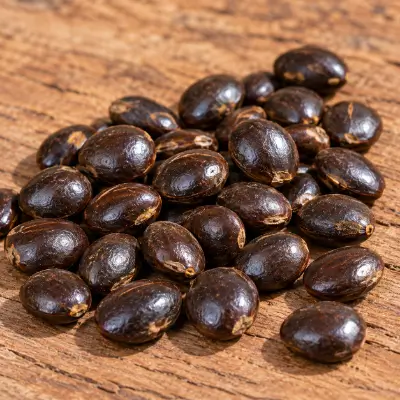
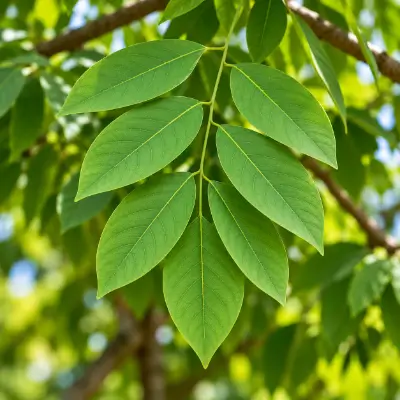
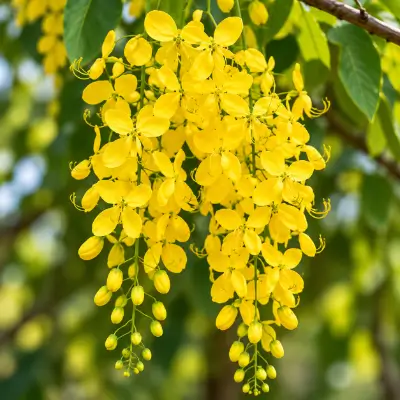
Shri Dhanwantry Ayurvedic College

Author: admin

  • Agastyah

    Agastyah

    Agastyah

    Botanical Name : Sesbania grandiflora (L.) Poir.

    Family : Papilionaceae; Fabaceae

    Identification No. – SDACH/HG/149

    Introduction :

    Papilionaceae (like butterfly).

    Latin name Sesbenia name of a botanist grandiflora (grandi = big, flora= flower).

    Names in different Indian languages  :

    English : Agati Sesban,Swamp Pea

    Hindi : Agasti, hathya,hadga

    Kannada : Agasi

    Malayalam : Agasti,akatti,akatti chira

    Sanskrit : Agastyah

    Tamil : Agatti,attikkirai

    Telugu : Avesi,avasinara

    Synonyms :

    “अगस्त्यः पुष्पकः शुक्लः वृत्तपुष्पः तु वल्गुजः। 

    शीतो हृद्यो गुरुः स्वादुः कफपित्तहरः परम्॥” 

    Agastya, Agasti, Munidrum, Munitaru, Muni, Vangasena, Vakrapushpa, Kumbha

     Agati grandiflora Desv

    Varieties & adulterants

    (CV – controversy, AD – adulterants) 

    There are 4 types 1) white 2) yellow 3) blue and 4) red.

    The white variety is most effective in night blindness and chronic 
    rhinitis. Agasti is very useful in Vitamin A deficiency diseases.

    Morphology :

    Early growing free 8 to-l0 mtrs high. Branches are wide spread. Leaves – have 41 to 61 leaflets.

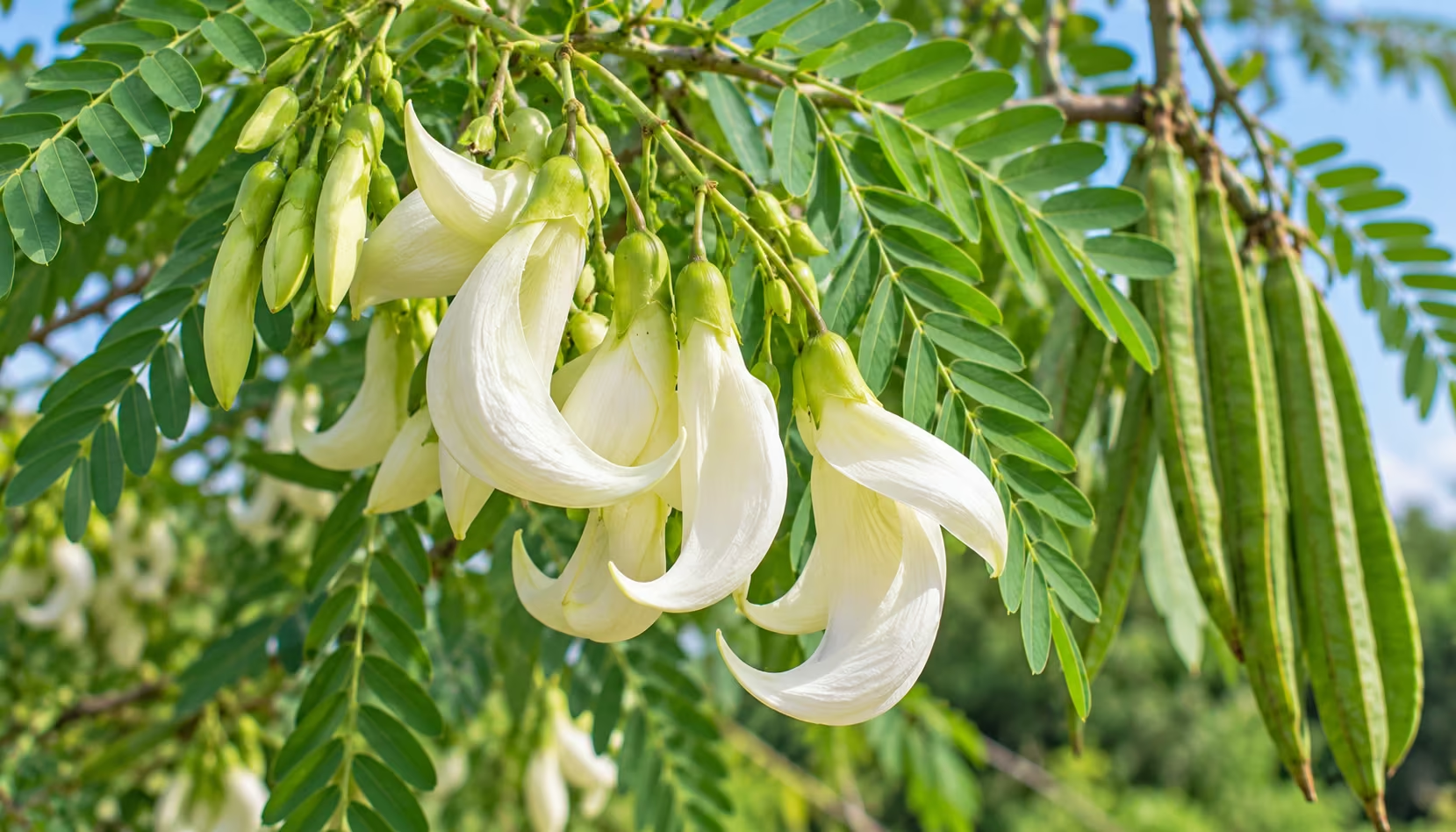
    Flowers – white, boat shaped, long, flower in August. Legume -30 cm.in length, oval in shape, having 4 angles. In India flowers and legumes are used as vegetables and for making pickles:

    Distribution & Habitat :

    Throughout India

    Chemical constituents :

    methyl ester, oleanolic acid, nonacosan-3-one and kaempferol, rutinoside, galactomannan, saponin

     Properties :

    RASA : tikta;

    GUNA : laghu, ruksha;

    VIPAKA : madhur;

    VEERYA sita ;

    Karma :

    Vishaghna, raktapittahara, krimighnam, kaphaghnam, kandughnam

    astringent, antihistaminic, febrifuge.

    Srotogamitva :

     Dosha : Kaphaghna, pittaghna, vatavardhak. 

    Dhatu : Majja (medhya). asthi – majja (chaturthik jwar).

     Mala : Purisha leaves; flowers vegetables — reduces constipation).

    Organs : Uterus — leucorrhoea, respiratory system.

     Indication :

    Sopha, gulma, kusta, krimi, agirna,  grandhi

    fevers, catarrh, cough, consumption

    Part used :

    Whole plant

    Dosage : 

    Leaf juice 10-15 ml

    Powder 2-4 g

    Decoction 50-100 ml

    Amayika Prayoga (Therapeutic Uses) 

    External uses : Bark and leaves are useful in inflammation andwounds.

    Internal uses : Juice of leaves is useful in ‘Virechan nasya. flowers are useful in ophthalmic disorders. Agastee is a brain tonic and antitoxic.

    Digestive system : Vegetable of flowers and leaves is useful inconstipation. The juice of the bark is used in chronic intestinal disorders with honey. Juice of flowers is used in purification of silver. It is also used in loose motions.

    Respiratory system : Pleurisies, cough, cold. In kapha , sannipatik jvara, nasal administration of leaf Juice is done.

    Reproductive system : Useful in leucorrhoea.

    IUCN

    – Not Evaluated (NE) 

    Research Updates (Past 5 Years)

    1. Anti-inflammatory (2023):Flower extract showed COX-2 inhibition (J Ethnopharmacol) 

    2. Hepatoprotective (2022): Protected against liver damage (Phytomedicine) 

    3. Antimicrobial (2021): Effective against skin pathogens (J Ayurveda Integr Med) 

    About Agastyah

    Botanical Name

    Sesbania grandiflora (L.) Poir.

    Family

    Papilionaceae; Fabaceae

    Identification No.

    SDACH/HG/149

    Parts Used

    Whole plant

    Habitat

    Throughout India

    IUCN Status

    Not Evaluated (NE)

    Plant Photos

    Ayurvedic Properties

    Rasa

    tikta

    Guna

    laghu, ruksha

    Virya

    sita

    Vipãka

    Madhura

    Contact Now

    Have queries? Contact Us.

    Have queries? We’re here to help you every step of the way.

    Contact us to get the right guidance for your academic journey at Shri Dhanwantry Ayurvedic College.

  • Hamsapadi

    Hamsapadi

    Hamsapadi

    Botanical Name : Adiantium Lunilatum.

    Family :Polypodiaceae    

    Identification No.: SDACH/HG/148                          

    Introduction :

    A fern found in moist places, generally on hill slopes, ascending up to an elevation of about 1500 m throughout the greater parts of India.

    Names in different Indian languages :

    English : Maiden Hair

    Hindi : Hanspadee,Hansaraj

    Kannada : Hamsapadi

    Sanskrit :  Hamsapadi

    Assam : Sharul arj

    Telugu : Hamsapadi

    Gujarati : Hansaraja

    Bengali : Kali Jhat

     Morphology :

    A Perennial fern found in cooler places.

    Root – Cylindrical, 10 to 15 cm in length and up to 0.5 mm in diameter; tortuous, brittle, thin, wiry, at places swollen, and branched, profusely covered with long, twisted, yellow coloured hair; colour dark brown . Odour nil; taste astringent.

    Frond – 8 to 10, tufted, spreading and arching over, simple pinnate rarely ending in a terminal fan shaped leaflet, 30 to 50 x 3 to 3.5 cm; rachis shiny, reddish-black in colour, simple pinnate; pinna 12 to 20 pairs, 2.5 to 4 x 0.5 to 1.5 cm, gradually become smaller towards the tip of the frond, alternate and closely placed showing forked venation; attached to the rachis by a pointed base, stipe 0.5 to 1.2 cm in length; sori marginal, 9 to 12 per pinna, one per each secondary lobe, 3 to 6 mm long.

     Distribution & Habitat :

    A fern found in moist places, generally on hill slopes

    Chemical constituents :

     Chlorophyll degradation products ; higher carotenoids

     Properties :

    RASA-Kashaya

    GUNA- Guru

    VIRYA-Sitha

    VIPAKA-Madhura 

    Karma –Visaghna

    Dosha : Kaphpithahara

     Indication :

    Visarpa, Daha , Vrana, Atisara , Rakta Vikara

     Part used :

     Whole plant

     Dosage : 

    1-3 g

    Therapeutic Uses :

    Wound healing , erysipelas , dyspnoea and cough

    IUCN Status : Not evaluated

    Research updates

    In-vitro Neuro-2a cytotoxicity analysis and molecular docking investigation on potential anti-amyloid agents from Adiantum lunulatum 2024

    A new triterpenoid from the fern Adiantum lunulatum and evaluation of antibacterial activity 2001

    About Hamsapadi

    Botanical Name

    Adiantium Lunilatum.

    Family

    Polypodiaceae

    Identification No.

    SDACH/HG/148

    Parts Used

    Whole plant

    Habitat

    moist places, generally on hill slopes

    IUCN Status

    Not evaluated

    Plant Photos

    Ayurvedic Properties

    Rasa

    Kashaya

    Guna

    Guru

    Virya

    Sitha

    Vipãka

    Madhura

    Karma

    Visaghna

    Dosha

    Kaphpithahara

    Contact Now

    Have queries? Contact Us.

    Have queries? We’re here to help you every step of the way.

    Contact us to get the right guidance for your academic journey at Shri Dhanwantry Ayurvedic College.

  • Lavanga

    Lavanga

    Lavanga

    Botanical Name:

    Syzygium aromaticum (Linn.)Merr. & Perry.

    Family : Myrtaceae

    Identification No. –SDACH/HG/147

    Introduction :

    Lavanga is relatively a less utilized herb during the Bhat Trayi period. we come across the utility of Lavañga in therapeutics in yoga books. It is mainly used for the correction of digestive problems. Application of clove oil for dental caries, relieve joint pains and head ache

    Names in different Indian languages :

    Hindi : Laung

    Telugu : Lavangamu, devakusumam

    Tamil : Kirambu

    English : Clove

    Kanada : lavanga

    Malayalam : Grampu,karayampu

    Sanskrit : Lavangam, devakusumam

    Unani : Qaranful,Laung

    Synonyms :

    “लवङ्गं श्रीप्रियं देवकुसुमं वरंगकम्। 

    शीतं तिक्तं कटु स्वादु कफवातहरं परम्॥” 

    Lavanga, Devakusum, Devapushpa, Shrisangya, Shriprasuunaka. Grahanihara,  Divyagandhã, Vãrija, sriprasünaka, srisanjnaka, sri, Candana puspa, Bhrñgangi, sekhara.

    Morphology :

    It is a pyramidal  evergreen tree, 8-10m high or more.

    Leaves- simple, lanceolate, ,  gland-dotted, fragrant.

    Flowers-buds— cyme,  small clusters of branches, greenish; pink at maturity, aromatic.

    Fruits- fleshy, dark pink drupes.

    Seeds- oblong, grooved in one side.

    (Flowers between January-June and fruits later).

    Distribution Cultivated mainly in Tamil Nadu and Kerala

    Habitat  & Distribution :

    Originally from Malaya – Sailibius island. At present it is being cullivated in Sumatra) Malakka, Zanjibar. Penang. Mauritius, Bornia, Brazil) Guyana. West Indies and Travancore in Southern India 

    Chemical Composition :

    Gum and volatile oil 16-20%. resin 6%, euginine or cariophyllin, tanin, gum. Clove oil contains 85-92% eugenol. aryophyllene, eugenol, furfural, methyl alcohol, methylbenzoate, valeraldehyde, vanillin, eugenitine, isoeugenitol, eugenine, eugenone, naphthalene, caryophellene oxide etc.

    Properties :

    Rasa  : Tikta, Katu

    Guna  : Laghu, Snigdha

    Virya  : sita

    Vipãka : Katu

    Karma :

    Kapha-pitta hara, Rucya,Dipana-Pacana, Netryam
    (Caksusyam)

    Appetizer, expectorant, emollient, febrifuge, diuretic, Carminative, antiinflammatory, antibacterial

    Indications :

    Trisnã, chardi, Adhmána, sula, kãsa, svãsa, Hikkã.

    cough, asthma, diuretic, burning sensation, fever, vomiting, hyper acidity, odontalgia, helminthiasis, cephalagia, neuralgia, lumbago, nostalgia, dental caries, inflammation in  oral and pharyngeal mucosa

    Part Used : Floral bud, clove oil

    Dosage : Powder 2-4g; oil 1-2 drops

    Amayika Prayoga (Therapeutic Uses)

    External uses : It is stimulant, antimicrobial and tikshna, so it is applied locally in headache and sinusitis. Chewing of dove is useful in stomatitis and skin disorders. Clove oil is used for massage in rheumatoid arthritis, sciatica, backache

    Internal uses :

    Digestive system : it is an appetizer and digestive. it stimulates salivating glands to increase salivary secretion. Carminative , analgesic ,liver stimulant. It is useful in anorexia, loss of appetite, flatulence, abdominal colic, hyperacidity, nausea.

     Circulatory. system : Stimulates heart and circulation, increases blood pressure, syphilis. Useful in blood disorders because of pungent and sheeta properties.

    Respiratory system : Reduces cough, tuberculosis, foul smell and breathlessness, simulates respiration mucosa causing expectoration.

    Reproductive system : Aphrodisiac, purifies breast milk.

    Skin : Clove is useful in many skin disorders by its stimulating action on skin.

    Temperature: Useful in fever to reduce temperature. Clove boiled in water is a good remedy for fever.

    Satmikaran :  Katu. tikta. so used in tuberculosis and general debility as a tonic.

    Srotogamitva :
    Dosha : Decreases kapha and pitta. vatanashak.

    Dhatu : Rakta (bleeding disorders).

    Mala Purisha
    Note : Effective in morning sickness.

    Important Yogas or Formulations :

    Avipattikaracurnam;Lavangadivati,khadirãdiguika,DevakusumãrkaLavangadicürna,Lavangacatuhsam, Lavangodaka.

    Therapeutic Uses:
    1.
    pain— Lavangais pounded and applied with warm water externally

    2. Visücikã— water boiled with clove is filtered and given (V.M.)

    3. Trisnã— Fresh juice of Lavanga may be useful (G.N.)

    IUCN Status

    – Least Concern (LC)

    Research Updates (Past 5 Years)

    1. Antimicrobial (2023):* Effective against dental pathogens (J Ethnopharmacol)

    2. Antioxidant (2022):* Eugenol showed neuroprotective effects (Phytomedicine)

    3.Anti-diabetic (2021):* Improved glucose metabolism (J Ayurveda Integr Med)
    About Lavanga

    Botanical Name

    Syzygium aromaticum (Linn.)Merr. & Perry.

    Family

    Myrtaceae

    Identification No.

    SDACH/HG/147

    Parts Used

    Floral bud, clove oil

    Habitat

    West Indies and Travancore in Southern India

    IUCN Status

    Least Concern (LC)

    Plant Photos

    Ayurvedic Properties

    Rasa

    Tikta, Katu

    Guna

    Laghu, Snigdha

    Virya

    Sita

    Vipãka

    Katu

    Contact Now

    Have queries? Contact Us.

    Have queries? We’re here to help you every step of the way.

    Contact us to get the right guidance for your academic journey at Shri Dhanwantry Ayurvedic College.

  • Nilini

    Nilini

    Botanical Name : Indigofera tinctoria Linn.

    Family : Fabaceae

    Identification No. –SDACH/HG/146

    Introduction :

    Indigo Plant, common name for any of a genus of shrubs or perennial herbs The genus has about 700 species, most native to tropical regions. Indigo plants have compound leaves and bear purple, pink, or white flowers. Their fruit consists of pods. Various Asian species contain the glycoside indican, which can be oxidized to produce the dyestuff indigo. Of a long-lasting, deep-blue color, indigo was an important Indian, Egyptian, and Roman dye during antiquity. It was first introduced into Europe during the 16th century. Most indigo dye today is synthetically manufactured.

    Latin name : Indigofera = Indigo = blue. fera = offering:tincloria = of the dyer’s.

    Indigo plants constitute the genus Indigofera, of the family Papilionoideae.

    Names in different Indian languages :

    English : Indigo

    Hindi : Nilam

    Kannada : Nili

    Malayalam : Nilamari, amari

    Sanskrit : nilini

    Tamil : Nili, Averi, Asidai, Attipurashadam.

    Telugu : nili

    Unani : Habb-ul-Neel.

    Synonyms :

    “नीलिनी नीलपुष्पी च नीलिका तुवरा तथा। 

    शिताभ्रा रञ्जनी चैव कालाक्षी च प्रकीर्तिता॥”

    Nilikaa, Nilaa, Nila, Nili, Nilini, Nilapushpa, Ranjani, Shaaradi, Tutthaa.

    Varieties & adulterants – (CV – controversy, AD – adulterants) :

    Indigofera aspalathoides

    Morphology :

    A shrub 2 to 2.5 mtrs. high with white trunk.

    Leaves – compound, tender leaves bluish

    Flowers- blue or rose coloured.

    Fruit –pod, 1 to 2 fingers in length. bent at the tip containing 8-10 seeds.

    Distribution & Habitat :

    Cultivated in India

    Chemical constituents :

    Indicine , flavonoids, apigenin, kaempferol, luteolin and quercetin

    Properties :

    Guna: laghu, ruksha;

    Rasa : tikta;

    Vipaka: katu;

    Virya : ushna;

    Karma :

    kushtaghna, vishaghna, keshyam

    antiseptic, hepatoprotective, hypoglycaemic, nervine tonic.

    Indication :

    enlargement of liver and spleen, skin diseases, leucoderma, burns, ulcers, piles, nervous disorders, epilepsy, asthma, lumbago, gout, hair fall

    Part used :

    Whole plant

    Dosage :

    decoction -. 60 to 100 ml.

    Amayika Prayoga (Therapeutic Uses)

    External uses :

    Its lekhan property is useful for treating catarad and other eye conditions (seed powder).It is used as an analgesic in piles and rheumatoid arthritis, It is also useful in wound healing and skin diseases. Alcohol extract kills mites and lice. Leaves are used to dye and nourish hair. Internal uses: It is useful in fainting, delirium, constipation, rheumatoid arthritis, hiccups. hepatosplenomegaly, worms, colic, gout, oedema, cough, breathlessness, calculus and anuria. In dog bite, 60 gms. of leaf juice with equal quantity of cow’s milk is given to prevent hydrophobia. Root decoction is used in arsenic poisoning.

    Important Yogas or Formations :

    Neelitulasasi tailam, neeli tailm      

    Therapeutic Uses :

    Leaf paste useful in insect bite

    IUCN

    Least Concern (LC) 

    Research Updates (Past 5 Years)

    1. Anti-cancer (2023): Indirubin showed anti-leukemic activity (J Ethnopharmacol) 

    2. Hepatoprotective (2022): Protected liver against toxins (Phytomedicine) 

    3. Anti-microbial (2021):Effective against skin pathogens (J Ayurveda Integr Med) 

    About Nilini

    Botanical Name

    Indigofera tinctoria Linn.

    Family

    Fabaceae

    Identification No.

    SDACH/HG/146

    Parts Used

    Root bark, Leaves, Flowers, Fruit

    Habitat

    Cultivated in India

    IUCN Status

    Least Concern (LC)

    Plant Photos

    Ayurvedic Properties

    Rasa

    laghu, ruksha

    Guna

    tikta

    Virya

    katu

    Vipãka

    ushna

    Contact Now

    Have queries? Contact Us.

    Have queries? We’re here to help you every step of the way.

    Contact us to get the right guidance for your academic journey at Shri Dhanwantry Ayurvedic College.

  • Maricha

    Maricha

    Maricha

    Botanical Name : Piper nigrum Linn.

    Family : Piperaceae

    Identification No. – Sdach/HG/145

    Introduction :

    Maricha used as appetizer, carminative and anti-microbial also used in kitchens. There have white Varity that describing in Samhitas it may be the seeds of M.pterygosperma.

    Scientific classification: Peppers make up the family Piperaceae of the order Piperales. Its representative genus is Piper. Pepper elders constitute the genus Peperomia. The pepper plant is classified as Piper nigrum. Chili and sweet peppers are derived from plants of the genus Capsicum, of the family Solanaceae. The Polynesian beverage kava is produced from the plant classified as Piper methysticum. The lizard’s-tail family is Saururaceae. The yerba mansa is classified as Anemopsis californica. The other family in the order Piperales is Chloranthaceae

    Names in different Indian languages :

    Hindi : Kali Mirchi

    Telugu : Miriyalu

    Tamil : Milaku, marisam

    English : Black pepper

    Marathi : Mirin

    Gujrati : Kalamari

    Bengali : Golmarich

    Kannada : Karemanesu, ollimonasu, miri

    Malayalam : Kurumulaku

    Sanskrit : Maricha

    Unani : Filfil Siyaah, Safed

    Synonyms :

    “मरिचं कोलकं वेल्लं कृष्णं उषणमेव च। 

    तीक्ष्णगन्धं च तीक्ष्णोष्णं कटुपाकरसं लघु॥”

    Vellaja, Uushna, Suvrrita, Krishnaa.

    Classification according to Charaka, Susrutha & Vagbhata :

    Charaka

    Dipaniya, sulaprasamana, Krimighna, sirovirecanopaga

    Susrutha

    Pippalyãdi, Tryusana

    Vagbhata

    Pippalyãdi (AS.); Vatsakãdi (A.H.)

    Varieties & adulterants – (CV – controversy, AD – adulterants) :

    1. Black – processed

    2. White – un-processed

    3. Ksupaja Marica – unknown

    4. Sveta(white) seeds of M.pterygosperma. [CV]

    Piper alba

    Morphology :

    A branching & climbing perennial shrub. Branches stout, trailing and rooting at the nodes.

    Leaves— simple, entire, 12.5-17.5 cm x 5.0-12.5 cm. glaucous beneath base acute, cordate.

    Flowers— minute, borne in spike, usually dioecious, but the female often bears anthers and the male a pistillode. Fruiting spikes variable in length and rachis glabrous.

    Fruits – globes or avoid, one seeded, bright red when ripe.

    Seeds— globose, testa thin, perisperm hard

    Flowers in rainy season and fruits in autumn.

    Habitat & Distribution :

    Mainly south-western India. Cultivated in Assam, Karnataka, Maharashtra and Kerala.

    Chemical Constituents :

    Piperene, piperethint, piperolein A & B, feruperine, dihydroferuperine, citronellol, cryptone. dihydrocarveol,  beta – pinene, piperonal. camphene, beta-caryophyllene. Beta -alanine, pipecolic acid, carotene, ascorbic acid, pipercide etc.

    Properties :

    Rasa Katu

    Guna  Laghu. Tikshna

    Virya Usna

    Vipäka  Katu

    Karma : Kapha-vatahara, Avrsya. Dipana,pachana,krimighna, kasaghna

    Carminative, anti periodic, digestive, anthelmintic, stomachic, diuretic, Stimulant, anticholerin, sialagogue, bechic, antiasthmatic.

    Indications :

    Pinasa, Kãsa, Pravahiak, Hrdroga, Krimi, sväsa, süla.

    Useful in arthritis, asthma,  fever, cough, catarrh, haemorrhoids, dysentery, dyspepsia, flatulence, indigestion

    Part Used :

    Fruit .

    Dosage :

    Powder 0.5-1 g.

    Important Yogas or Formations :

    Maha Marcyãdi taila, Maricyãdi taila, Teka rãja Marica, Agnitundivati, Maricyãdi cürna

    Amayika Prayoga (Therapeutic Uses) 

    External Uses:

    – Oil: Marichadi Taila for joint pain 

    – Paste: With honey for skin diseases 

    Internal Uses:

    – Powder:1-3g with honey for cough 

    – Decoction: For indigestion 

    – Trikatu Churna:With ginger & long pepper 

    IUCN

    – Not Evaluated (NE (widely cultivated) 

    Research Updates (Past 5 Years) 

    1. Bioavailability Enhancer (2023): Piperine increases absorption of nutrients (Phytotherapy Research) 

    2. Anti-inflammatory (2022):Reduced arthritis symptoms (J Ethnopharmacol) 

    3. Neuroprotective (2021): Improved cognitive function (CNS Neurol Disord)

    About Maricha

    Botanical Name

    Piper nigrum Linn.

    Family

    Piperaceae

    Identification No.

    Sdach/HG/145

    Parts Used

    Fruit

    Habitat

    Assam, Karnataka, Maharashtra and Kerala

    IUCN Status

    Not Evaluated (NE (widely cultivated)

    Plant Photos

    Ayurvedic Properties

    Rasa

    Katu

    Guna

    Laghu. Tikshna

    Virya

    Usna

    Vipãka

    Katu

    Contact Now

    Have queries? Contact Us.

    Have queries? We’re here to help you every step of the way.

    Contact us to get the right guidance for your academic journey at Shri Dhanwantry Ayurvedic College.

  • Bada Nimbu

    Bada Nimbu

    Botanical Name : Citrus maxima (Burm. f.) Osbeck

    Family : Rutaceae

    Identification No. – SDACH/HG/144

    Names in different Indian languages :

    English : Pamelo, Pomelo, Pommelo, Jabong, Shaddock, Chinese fruit, etc

    Hindi : Sadaphal, Batawi nimbu, Cakotaraa

    Manipuri : Nobab

    Tamil : Pambalimasu

    Malayalam : Pamparamasan

    Telugu : Pampara

    Bengali : Chakotra

    Konkani : Toranji

    Sanskrit : Madhukarkati

    Synonyms :

    Aurantium corniculatum Mill.

    Aurantium decumana (L.) Mill.

    Aurantium distortum Mill.

    Aurantium maximum Burm.

    Aurantium vulgare (Risso) M. Gómez

    Citrus aurantiifolia murgetana Garcia Lidón et al.

    Citrus aurantium aurantiifolia (Christm.) Guillaumin

    Citrus aurantium crassa Risso

    Citrus aurantium daidai Makino

    Citrus aurantium decumana (L.) Tanaka

    Citrus aurantium decumana L.

    Citrus aurantium dulcis Hayne

    Citrus aurantium fetifera Risso

    Citrus aurantium grandis (L.) M.Hiroe

    Citrus aurantium grandis L.

    Citrus aurantium lusitanica Risso

    Citrus aurantium vulgaris (Risso) Risso & Poit.

    Citrus costata Raf.

    Citrus decumana L.

    Citrus grandis (L.) Osbeck

    Citrus humilis (Mill.) Poir.

    Citrus hystrix acida Engl.

    Citrus obovoidea Yu.Tanaka

    Citrus pompelmos Risso

    Citrus sabon Siebold

    Citrus sabon Siebold ex Hayata

    Citrus sinensis brassiliensis Tanaka

    Citrus sinensis crassa (Risso) Rivera, et al.

    Citrus sinensis fetifera (Risso) Rivera, et al.

    Citrus sinensis lusitanica (Risso) Rivera, et al.

    Citrus sinensis sanguinea (Engl.) Engl.

    Citrus sinensis sekkan Hayata

    Citrus sinensis suntara (Engl.) Engl.

    Citrus yamabuki Yu.Tanaka

    Morphology :

    Tree of 16-50 ft (5-15 m) tall, with somewhat crooked trunk of 4-12 inches.

    Leaves: large evergreen oblong to elliptic leaves, 10.5 to 20 cm (4 to 8in) long. Frequently emarginated, Pubescent beneath. Acute apex, Asymmetric base, entire margin, characteristic odour.

    Petioles: broadly winged

    Flowers: Large, White

    Stamens: 16-24

    Fruit: large, pale yellow, globose or pyriform, rind thick, pulp varying in colour from crimson to pale pink or yellow.

    Distribution & Habitat :

    North eastern region up to 1,500 m in Assam and Tirupura. It is indigenous to East of India

    Chemical constituents :

    Alkaloids, Amino Acids, Carbohydrates, Carotenoids, Coumarins, Flavonoids, Monoterpenes, Sesquiterpenes, Steroids.

    Traditional Uses :

    Leaves: Epilepsy, chorea, Convulsive cough and also in the treatment of hemorrhage disease. Oil from fresh leaves posses anti dermatophytic activity, Fungicidal activity.

    Flower: Used as sedative in nervous affection

    Fruits: Leprosy, Asthma, Cough, hiccough, mental aberration, Epilepsy, cardiotonic.

    Rind: Antiasthmatic, sedative in nervous affection, Brain tonic, Useful in vomiting, griping of abdomen, diarrhea, Headache and eye troubles.

    Root and Bark: Antimicrobial activity

    Yoga/Formulations

    1. Mausambi Swarasa (fresh juice therapy)

    2. Nimbuka Taila (peel oil)

    3. Panaka (traditional summer drink)

    IUCN  

    -Not Evaluated (NE) (widely cultivated)

    Research Updates (Past 5 Years) 

    1. Antioxidant (2023): Peel extract showed radical scavenging activity (Food Chemistry)

    2. Hepatoprotective (2022): Juice protected liver in alcohol toxicity (J Ethnopharmacol)

    3. Antidiabetic (2021): Flavonoids improved insulin sensitivity (Phytotherapy Research)

    About Bada Nimbu

    Botanical Name

    Citrus maxima (Burm. f.) Osbeck

    Family

    Rutaceae

    Identification No.

    SDACH/HG/144

    Parts Used

    Leaves, Flowers, Fruit

    Habitat

    Assam and Tirupura

    IUCN Status

    Not Evaluated (NE) (widely cultivated)

    Plant Photos

    Contact Now

    Have queries? Contact Us.

    Have queries? We’re here to help you every step of the way.

    Contact us to get the right guidance for your academic journey at Shri Dhanwantry Ayurvedic College.

  • Katu

    Katu

    Botanical Name : Vernonia amygdalina 

    Family : Asteraceae (Sunflower family).

    Identification No. – SDACH/HG/143

    Names in different Indian languages :

    English: Bitter Leaf, Bitter-tea vernonia.

    Synonyms :

    Vernonia randii

    Vernonia giorgii

    Vernonia vogeliana

    Vernonia weisseana

    Morphology :

    Bitter Leaf is a shrub or small tree. Leaves are lanceshaped to narrowly elliptic, usually about 4 times as long as wide, hairless or with sparse hairs; leaf-stalk short, up to 2 cm; net-veining prominent; margin entire or finely toothed. Flower-heads forming clusters up to 15 cm, creamy white, occasionally tinged with mauve; sweetly scented, particularly at night. The small fruits have both small glands and hairs as well as a pappus of bristly hairs. Bitterleaf is a highly appreciated vegetable in West and Central Africa and can be consumed in various dishes. Leaves are sometimes sold in the market after being shredded, parboiled and made into fist-sized balls. In Cameroon the processed leaves are cooked with meat and/or prawns mixed with ground peanuts to make a famous dish called ‘ndole’.

    Distribution & Habitat :

    All over India

    Uses :

    Bitter Leaf is commonly used in traditional medicine. Leaf decoctions are used to treat fever, malaria, diarrhoea, dysentery, hepatitis and cough, as a laxative and as a fertility inducer. They are also used as a medicine for scabies, headache and stomach-ache. Root extracts are also used as treatment against malaria and gastrointestinal disorders.

    IUCN

    Not Evaluated

    About Katu

    Botanical Name

    Vernonia amygdalina

    Family

    Asteraceae (Sunflower family).

    Identification No.

    SDACH/HG/143

    Parts Used

    Root bark, Leaves

    Habitat

    All over India

    IUCN Status

    Not Evaluated

    Plant Photos

    Contact Now

    Have queries? Contact Us.

    Have queries? We’re here to help you every step of the way.

    Contact us to get the right guidance for your academic journey at Shri Dhanwantry Ayurvedic College.

  • Lahasun Bel

    Lahasun Bel

    Botanical Name : Mansoa alliacea (Lam.)

    Family : Bignoniaceae (Jacaranda family)

    Identificaion No. – SDACH/HG/142

    Introduction :

    Native to South America, Garlic Vine is one of the most rewarding, flowering vines that you can grow. Interestingly enough it smells like garlic. However, it doesn’t smell if the plant is left alone, only when the leaves are crushed. It can either be described as a shrub or a vine since it produces numerous woody vines from the root that grow only 2-3 m tall and form a shrub-like appearance. It produces bright green leaves up to 15 cm long. Its compact habitat and pretty continuos flowers make it a popular ornamental plant in gardens in the tropics. Flowering twice a year you will find it quite often covered with flowers. Flowers start off purple with white throat and change to a lighter shade of lavender with age. Eventually fading to almost white. You will see 3 different color of flowers at the same time on the plant. It can be grown in containers and should be trimmed after the flowers are gone.

    Names in different Indian languages :

    English: Garlic Vine

    Kannada: Bellulli balli

    Manipuri: Chanamlei

    Bengali: Lata parul

    Synonyms :

    Adenocalymma alliaceum (Lam.) Miers

    Adenocalymma sagotii Bureau & K.Schum.

    Bignonia alliaceae Lam.

    Pachyptera alliacea (Lam.) A.H.Gentry

    Pseudocalymma alliaceum (Lam.) Sandwith

    Pseudocalymma sagotii (Bureau & K.Schum.) Sandwith

    Uses :

    The plant is anodyne, antibacterial, anticholesterolemic, antifungal, antiinflammatory, antioxidant, antirheumatic, antispasmodic, antitussive, antiviral and febrifuge. The plant has been recommended as a vermifuge.

    Bejuco de Ajo is widely used by many of the indigenous peoples of the Amazon, with almost all parts of the plant being used. Most consider the plant to be ‘magical’ or ‘spiritual’ and suspend bunches of the leaves around the home for good luck or in order to drive away evil spirits. The leaves are burned as smudge over people or in houses to ‘cleanse the spirit’ or to bring good luck.

    The plant has also become a popular treatment in modern herbal medicine in S. America, where it is widely used for treating arthritis, rheumatism, body aches and pain, and muscle aches, injuries and pain.

    The plant contains a number of medically active compounds. These include several of the main sulphur compounds that garlic contains, including aliin and allyl sulphides. It is these compounds which are responsible for the garlic-like odour and taste. These compounds are known to lower blood-cholesterol levels and inhibit absorption of cholesterol in the intestines.

    The wood of the vine is reported to contain two lapachone chemicals which are well known plant chemicals of the Bignoniaceae family and documented with anticancer and antimicrobial actions.

    The leaves and/or flowers contain the known anti-inflammatory and antibacterial plant steroids beta sitosterol, stigmasterol, daucosterol, and fucosterol.

    A water extract of the leaves has been shown to have an antioxidant effect which has been attributed to the anthocyanin compounds found in the plant.

    Research has confirmed the plant’s long standing use for treating arthritis and rheumatism, reporting that the plant is capable of inhibiting COX (an enzyme required in the inflammatory process).

    The plant has also been reported with antimicrobial actions against fungi, plant viruses, and bacteria, which may help explain its long standing use for colds, flu, pneumonia and other upper respiratory infections.

    Both the bark (in an infusion) or the leaves (in a decoction) are used as a treatment for rheumatism, arthritis, colds, uterine disorders, inflammation and epilepsy.

    The root is prepared in a cane alcohol tincture as an overall regenerative whole body tonic.

    The bark is used as a poultice on bumps, swellings and inflammatory conditions of the skin.

    The leaves are used in the treatment of colds and as an aid to fertility.

    They are commonly added to baths in order to treat feverish conditions, flu, body aches, cramps and fatigue.

    IUCN Status– Not Evaluated

    Research updates:

    1. Aquino R, De Tommasi N, Morelli I. Antimicrobial and antioxidant activity of Mansoa alliacea leaf extracts. J Ethnopharmacol.
    2. Cáceres A, Cano O, Samayoa B. Ethnopharmacologic survey of medicinal plants in Guatemala. Part III: Screening of Mansoa alliacea. J Ethnopharmacol.
    3. Gamboa-León R, Aranda E, Waliszewski S. Anti-inflammatory effects of Mansoa alliacea extracts in experimental models. Pharm Biol.

    About Lahasun Bel

    Botanical Name

    Mansoa alliacea (Lam.)

    Family

    Bignoniaceae (Jacaranda family)

    Identification No.

    SDACH/HG/142

    Habitat

    South America

    IUCN Status

    Not Evaluated

    Plant Photos

    Contact Now

    Have queries? Contact Us.

    Have queries? We’re here to help you every step of the way.

    Contact us to get the right guidance for your academic journey at Shri Dhanwantry Ayurvedic College.

  • Jangal Jalebi

    Jangal Jalebi

    Botanical Name : Pithecellobium dulce (Roxb.)Benth.

    Family : Mimosaceae (touch-me-not family)

    Identification No. – SDACH/HG/141

    Introduction :

    Madras Thorn is a large, nearly evergreen tree that grows up to 20 m or more in height, Madras Thorn has a broad crown, up to 30 m across, and a short trunk, up to 1 m thick, At the base of each leaf is normally found a pair of short, sharp spines, though some specimens are spineless. Leaves are deciduous but foliage is persistent, as the new leaves appear while the old ones are being shed, so that the tree looks like an evergreen. Flowers are borne in small spherical glomerules of about 1 cm in diameter, forming short axillary panicles of 5-30 cm in length. Flowers are white-greenish slightly fragrant 1.0-1.5 mm in diameter, with a hairy corolla, 50 thin stamina, connate in a tube at their basis, surrounded by the green calyx. Pods are greenish-brown to red or pinkish, rather thin, 10-15 cm long x 1-2 cm wide. There are about 10 seeds per pod. Pods are irregularly in shape and flattened, set in a spirals of 1 to 3 whorls and strangled between the seeds – looks like the north Indian sweet, Jalebi, hence its common Hindi name.

    Names in different Indian languages :

    English : Manilla Tamarind, Madras Thorn, Sweet tamarind

    Hindi : Jangal Jalebi

    Kannada : Seeme hunase

    Marathi : Vilayatichinch

    Tamil : Kodukkappuli

    Gujarati : Vilayati ambli

    Synonyms :

    Acacia obliquifolia M.Martens & Galeotti

    Albizia dulcis (Roxb.)F.Muell.

    Feuilleea dulcis (Roxb.)Kuntze

    Inga camatchili Perr.

    Inga dulcis (Roxb.)Willd.

    Inga javana DC.

    Inga javanica DC.

    Inga lanceolata Sensu Blanco, non Kuntze

    Inga leucantha C.Presl

    Inga pungens Willd.

    Mimosa dulcis Roxb.

    Mimosa edulis Gagnep.

    Mimosa pungens (Willd.)Poir.

    Mimosa unguis-cati Blanco

    Pithecellobium littorale Record

    Morphology :

    Tree Type: Deciduous

    Canopy: Semi

    Leaf Type: Kaggli like

    Flower: In terminal or axillary panicled spikes; cream. Flowering from December-February.

    Fruit: A strap-shaped pod, moniliform, circinate or falcate; seeds orbicular, shiny, with white aril. Fruiting February onwards.

    Field tips: Bark ash-coloured with many spines throughout.

    Leaf Arrangement: Alternate-spiral

    Leaf Type: Bipinnate

    Leaf Shape: Oblong-oblanceolate

    Leaf Apex: Obtuse

    Leaf Base: Obtuse

    Leaf Margin: Entire

    Distribution & Habitat :

    Dry, brushy or thinly forested plains or hillsides, often in coastal thickets, at elevations from sea level to 500 metres.

    Amayika Prayoga (Therapeutic Uses)  :

    The bark is used as an astringent for dysentery in India.

    It is said to have been used as an antipyretic in India (information originally from 1933), used for eye inflammation, although an anecdote from Sri Lanka claims the bark contains a substance that causes eye infections and swelling of the eyelids.

    The Huastec people of northern Veracruz and San Luis Potosí in Mexico used different parts of the tree to treat gum ailments, toothache and cancer.

    The leaves are said to be used in a poultice with alcohol to treat bile, as well as being used to prevent abortions/miscarriage, although the leaves are also said to be used to cause abortions.

    The pulp from the fruits is said to be astringent and hemostatic, and used for hemoptysis.

    The ground seed is sometimes traditionally used to clean ulcers.

    Non-specified parts of the plant are said to be used extract is also used against hemorrhages, chronic diarrhea, and tuberculosis.

    IUCN Status

    – Not Evaluated (NE)– Widely cultivated, no conservation concerns. 

    Research Updates (Past 5 Years)

    1. Antidiabetic Potential (2023)

      Study confirmed hypoglycemic effects of fruit pulp in diabetic rats (Journal of Ethnopharmacology). 

    2. Antimicrobial Properties (2022)

       – Leaf extracts showed antibacterial activity against E. coli (Asian Pacific Journal of Tropical Biomedicine). 

    3. Eco-Friendly Dye (2021) 

       – Seed coat used as natural textile dye(Sustainable Chemistry). 

    About Jangal Jalebi

    Botanical Name

    Pithecellobium dulce (Roxb.)Benth.

    Family

    Mimosaceae (touch-me-not family)

    Identification No.

    SDACH/HG/141

    Parts Used

    Root bark, Leaves, Flowers, Fruit

    Habitat

    Dry, brushy or thinly forested plains or hillsides

    IUCN Status

    Not Evaluated (NE)– Widely cultivated, no conservation concerns

    Plant Photos

    Contact Now

    Have queries? Contact Us.

    Have queries? We’re here to help you every step of the way.

    Contact us to get the right guidance for your academic journey at Shri Dhanwantry Ayurvedic College.

  • AHIPHENA BHEDA

    AHIPHENA BHEDA

    Botanical Name : Papaver rhoeas L.

    Family : Papaveraceae

    Identification No. – SDACH/HG/140

    Introduction :

    Papaver rhoeas L. (Papaveraceae), commonly known as corn poppy, is a cosmopolitan weed and edible plant capable of possessing biological properties, thus positive correlating with human health. The plant is also known as field poppy, flanders poppy or shirley poppy. It can be consumed raw or cooked, and has been traditionally used to treat nervousness, insomnia, digestive and respiratory disorders, baldness, eye infections, as well as measles treatment.

    Names in different Indian languages :

    Assamese : Rokta-posto

    English : Common Poppy, Red Poppy, Flanders Poppy, Field Poppy, Corn Poppy

    Hindi : Khas-khas

    Others : Red Poppy, Flanders Poppy, Corn Poppy, Kaba (Manipuri), Common Poppy, Field Poppy

    Synonyms :

    Papaver commutatum Fisch., C.A.Mey. & Trautv.

    Papaver insignitum Jord.

    Papaver intermedium Becker

    Papaver rhoeas var. strigosum Boenn.

    Papaver rhoeas subsp. strigosum Simonk.

    Papaver roubiaei Vig.

    Papaver strigosum Schur

    Papaver tenuissimum Fedde

    Papaver trilobum Wallr.

    Papaver tumidulum Klokov

    Morphology :

    Erect annual herbs, about 30-50 cm tall. Stem simple or sparsely branched, setose, caulescent, hirsute, covered with stiff bristles, about 1-3 mm long or rarely glabrous. Leaves pinnatisect, pinnatipartite and pinnatifid about 6-20 x 3-9 cm across, basal leaves pinnatisect, ovate in outline, margin ciliate, dentate, segments linear, apex acute, terminal lobes larger than the lateral lobes, basal and lower leaves, larger and less segmented, and petiolate, upper cauline leaves becoming smaller, base amplexicaul, more dissected, sessile towards the shoots. Peduncles erect, hirsute or coarsely tuberculate hairy, about 12-25 cm long. Flowers bisexual, solitary, terminal, bowl shaped, about 6-10 cm across, red with black at the base, flower buds obovoid, somewhat cup shaped or blunt at the apex, bristly about 1.5-3 x 1-2 cm across, Sepals 2, free, deciduous, ovate-orbicular, early caducous, bristly, petals 4, broadly obovate, suborbicular, red with black blotch at the base, about 3-5 x 3-6 cm across. Stamens numerous, about 10 mm long, filaments filiform, slender, purplish, anthers elliptic, about 1 mm long. Ovary ovoid, unilocular, superior, glabrous, about 7-10 mm long, ovules numerous, stigmatic rays disc yellow, opposite to placentas, about 8-13. Fruits capsules, oblong-obovoid, cylindrical, about 10-18 x 6-9 mm across, dehiscing by subapical pores or persistent disc. Seeds many, bean shaped, reniform, dark brown.

    Distribution & Habitat :

    Cultivated, found near roadsides and fields.

    Uses :

    It has been traditionally used to treat nervousness, insomnia, digestive and respiratory disorders, baldness, eye infections, as well as measles treatment.

    About Ahiphena Bheda

    Botanical Name

    Papaver rhoeas L.

    Family

    Papaveraceae

    Identification No.

    SDACH/HG/140

    Habitat

    Cultivated, found near roadsides and fields.

    Plant Photos

    Contact Now

    Have queries? Contact Us.

    Have queries? We’re here to help you every step of the way.

    Contact us to get the right guidance for your academic journey at Shri Dhanwantry Ayurvedic College.