Shri Dhanwantry Ayurvedic College

Author: Khushal

  • Sirisa

    Sirisa

    Botanical Name : Albizia lebbeck (Linn.)Benth.

    Family : Mimosaceae

    Identification No.: SDACH/HG/064

    Introduction :

    Vedic literature extensively quoted sirisa among the Sãnta Vrksas. In sustra stana describes it is one of the best plants for Danta Kãsthas (tooth brushes).

    Scientific classification : The albizias are members of the subfamily Mimosoideae, family Fabaceae (formerly Leguminosae). The silk tree is classified as Albizia julibrissin, and the plume albizia is classified as Paraserianthes lophantha.

    Names in different Indian languages :

    English : Siris tree

    Hindi : Siris

    Kanada : Begemara

    Sanskrit : SIRISA

    Malayalam : Nenmenivaka, vaka

    Tamil : Vakai, siridam

    Telugu : Dirisana

    Marathi : Siras

    Punjabi : siri

    Gujarathi : sarsado

    Bengali : sirosh

    Synonyms :

    “Śirīṣaḥ śītalaḥ kāṣṭhaḥ śvetapuṣpaḥ suvarnakaḥ” 

    (Bhav Prakash Nighantu, Vatadi Varga, Shloka 45) 

    Kapitanch; Mridu pupa, Bhandi, Bhandirah, Sukataru, Suka priya,Suka pupa,  Bhandila, Shitapushpa, Mridupushpa, Kapitana

    Classification according to Charaka, Susrutha & Vagbhata :

    Charaka

    Visaghna, Vedanãsthapana, sirovirecana, Kasãya skañdha

    Susrutha

    Sãlasärãdi

    Vagbhata

    Asanãdi

    Varieties & adulterants – (CV – controversy, AD – adulterants) :

    1. Albizia amara (Roxb.) Boiv. – Krsa Sirisa

    2. A. odoratissima Benth. – Krsa Sirisa

    3. A.  procera (Roxb.) –  sveta sirisa

    4. A.lucida Benth

    5. Kantaki sirisa.

    6. Albizzia julibrissin

    Albizia julibrissin rosea

    Morphology :

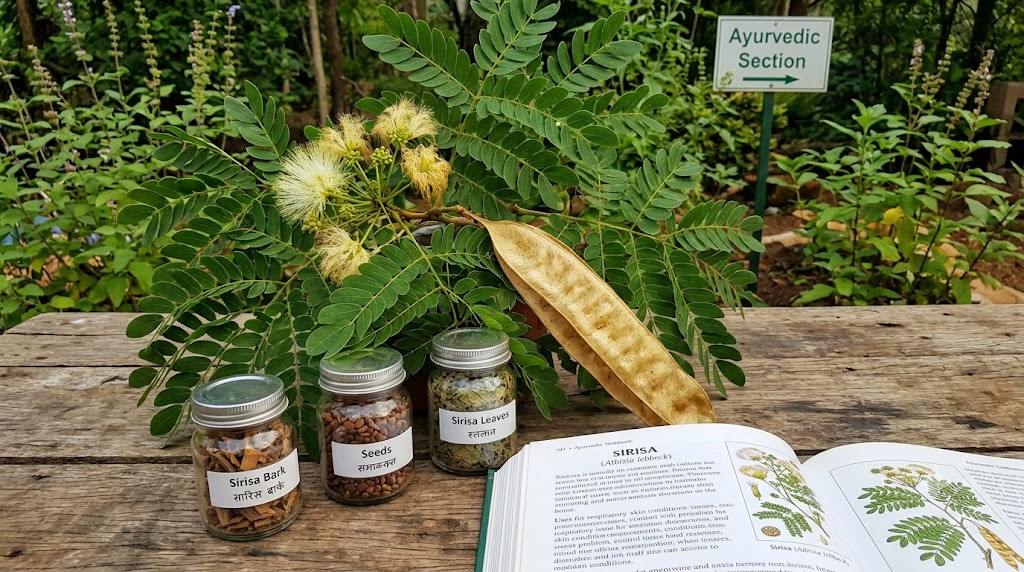
    It is a deciduous, erect, spreading tree, growing to 18 -20 m. height.  With umbrella shaped crown.

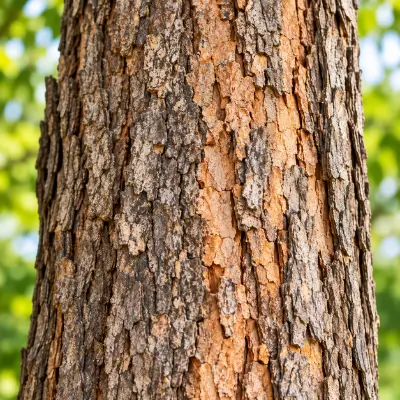
    Bark- rough cracked, dark-brown to greenish-black with transverse and longitudinal striations inside.

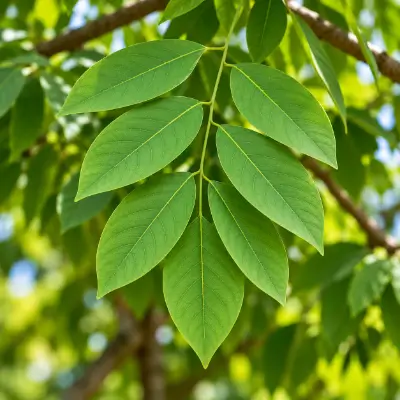
    Leaves- compound, bipinnate 2-4 pairs, with 8-18 leaflets , glands between the bases.

    Flowers – Inflorescence- in globose heads of greenish-yellow flowers,

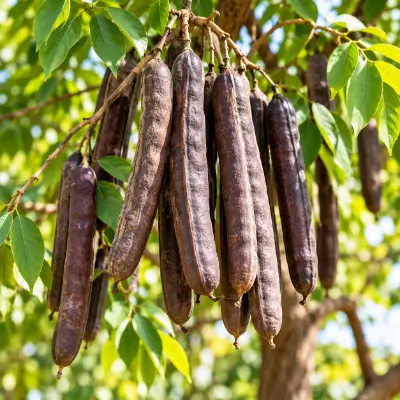
    Fruits- pods, yellowish-brown, with 6-10 seeds.

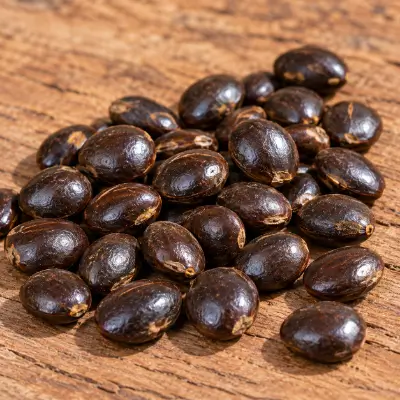
    Seeds- 4-12, pale brown, ellipsoid, oblong, compressed

    (Flowers during rainy season and fruits during winter).

    Distribution & Habitat :

    All over India, from the plains up to 1800m. the Himalayas; also in the Andamans

    Chemical constituents :

    Triterpenoids , triterpenoid saponins; oleanolic acid, albigenic acid, albigenin, acacic acid.

    Bark- condensed tannins viz., D-catechin, lebbecacidin, (-) melacacidin, friedelin,  beta-sitosterol.

    Heart wood- Lebbecacidin, leucopelargonidin, melacacidin, melanoxetin, okanin, (+) pinitol

    Seeds- Proteins, amino acids

    Flowers- benzyl alcohol, benzok acid, p-nitrobenzoate etc.

    Leaves- caffeic acid, kaempferol, mynicitrin, reynoutnin etc.

    Properties :

    Rasa  – Kasaya, Tikta, Madhura

    Guna -Laghu, Ruksa, Tiksna

    Vipãka-Katu

    Virya- Usna (Anusna)

    Karma : Tridosahara, Varnya, Visaghna, sotha hara,

    Expectorant, anti – inflammatory, Antiseptic, antibacterial, antiallergic, antidermatosis, antidysenteric

    Indications :

    Visa roga, Kãsa, Vrana, Visarpa, Kustha, Krimi, pamara kushta,

    asthma, leucoderma, erysipelas, sprains, ulcers, neuralgia, diarrhea, catarrh, seminal weakness,piles, bronchitis, tropical pulmonary eosinophilia, skin disease

    Part Used :

    Stem bark, seeds, flower, leaves

    Dosage :

    Powder 3-6 g; decoction 50-100 ml; fresh juice 10-15 ml.

    External uses :

    Anti-inflammatory, analgesic. antitoxic. beneficial to complexion, and beneficial to eyes. Seed paste is applied in kushtta – dermatoses and in wounds, bark paste is applied. In toothache and looseness of tooth – gargling with bark decoction is done. It is also applied externally in various types of poisoning & eyes diseases like night blindness.

    Internal uses :

    Digestive system : Astringent, but in high doses vomiting occurs. Bark powder gives strength to the gums.

    Circulatory system : Purifies blood, anti-inflammatory, useful in blood diseases, herpes. inflammation, lymphadenopathy. In all these diseases, bark decoction or seed powder is given.

    Respiratory system: Shirovirechan (nasya) and kaphaghna. Therefore used in cough etc. In chronic kaphaja jwar seed powder is used for pradhama nasya (nasal administration). In asthma. flowers reduces the headache in migraine.

    Reproductive system : In poor semen quality, seed powder with milk is given for vitalization. Powers are used in delayed menstruation or delaying ejaculation.

    Skin : In dermatitis  seed powder is used.

    Satmikaran Antitoxic : In organic and inorganic poisoning, bark decoction or seed powder

    Important Yogas or Formulations :

    sirisãrista, Panca sirisa ghrta, Pañcasirisagadah; Mahashireesh Agad, Shireesharishla.

    Therapeutic Uses :

    (1) Sarpavisa– sveta Marica soaked in sirisa flower juice for 7 days is used for Nasya, Pänna and Anjana (C.S.Ci.33 & Vr.Mã.).

    (2) Suryavarta & Ardhãvabhedaka- Nasya of the seeds of sirisa & Mulaka may be useful (S.S.Ut.26 & V.M.)

    (3) Kustha- Paste of the bark of sirisa is useful (C.S.Ci.7 & A.H.Ci.19).

    IUCN Status: Least Concern. 

    Research Updates: 

    1. Anti-allergic effects (2020, J. Ethnopharmacol.) 

    2. Antivenom properties (2021, Toxicon) 

    3. Bronchodilatory activity (2022, IJPR) 
    About Sirisa

    Botanical Name

    Albizia lebbeck (L.) Benth.

    Family

    Fabaceae (Mimosaceae)

    Identification No.

    SDACH/HG/064

    Parts Used

    Stem bark, seeds, flowers, leaves

    Habitat

    India, Pakistan, Nepal, Bangladesh, Myanmar

    IUCN Status

    Least Concern

    Plant Photos
    Ayurvedic Properties

    Rasa

    Kashaya, Tikta, Madhura

    Guna

    Laghu, Ruksha, Tikshna

    Virya

    Ushna (Anushna)

    Vipãka

    Katu

    Contact Now

    Have queries? Contact Us.

    Have queries? We’re here to help you every step of the way.

    Contact us to get the right guidance for your academic journey at Shri Dhanwantry Ayurvedic College.

  • Swarnaksiri

    Swarnaksiri

    Botanical Name : Argemone mexicana Linn.

    Family : Papaveraceae

    Identification No.: SDACH/HG/063 

    Introduction :

    Latin name : Argemone – Gk word Argema = cataract of the eye. This was a reputed cure; mexicana = of Mexico. English name Yellow thistle, Prickly or Mexican poppy.

    Names in different Indian languages :

    English : Prickly Poppy, Mexican Poppy

    Hindi : Bhatbhamt, pharamgi dhattura

    Kannada : Arasina, unmatta, datturigida

    Malayalam : Ponnummattu, kanddankattari

    Sanskrit : Swarnaksiri, brahmadanti

    Tamil : Piramathandu, Kudiyotti

    Telugu : Brahmadandicettu

    Unani : Satyaanaashi

    Synonyms :

    “Svarṇakṣīrī brahmadaṇḍāḥ katviḥ pītā satyanāśikā” 

    (Bhav Prakash Nighantu, Guduchyadi Varga, Shloka 210) 

    Katuparni, Svarnkshiri, Kaanchan-kshiri, Pitadugdhaa. Hemaahvaa, Himaavati, Hemavati

    Varieties & adulterants – (CV – controversy, AD – adulterants) :

    Tricholepis glaberrima – CV

    Morphology :

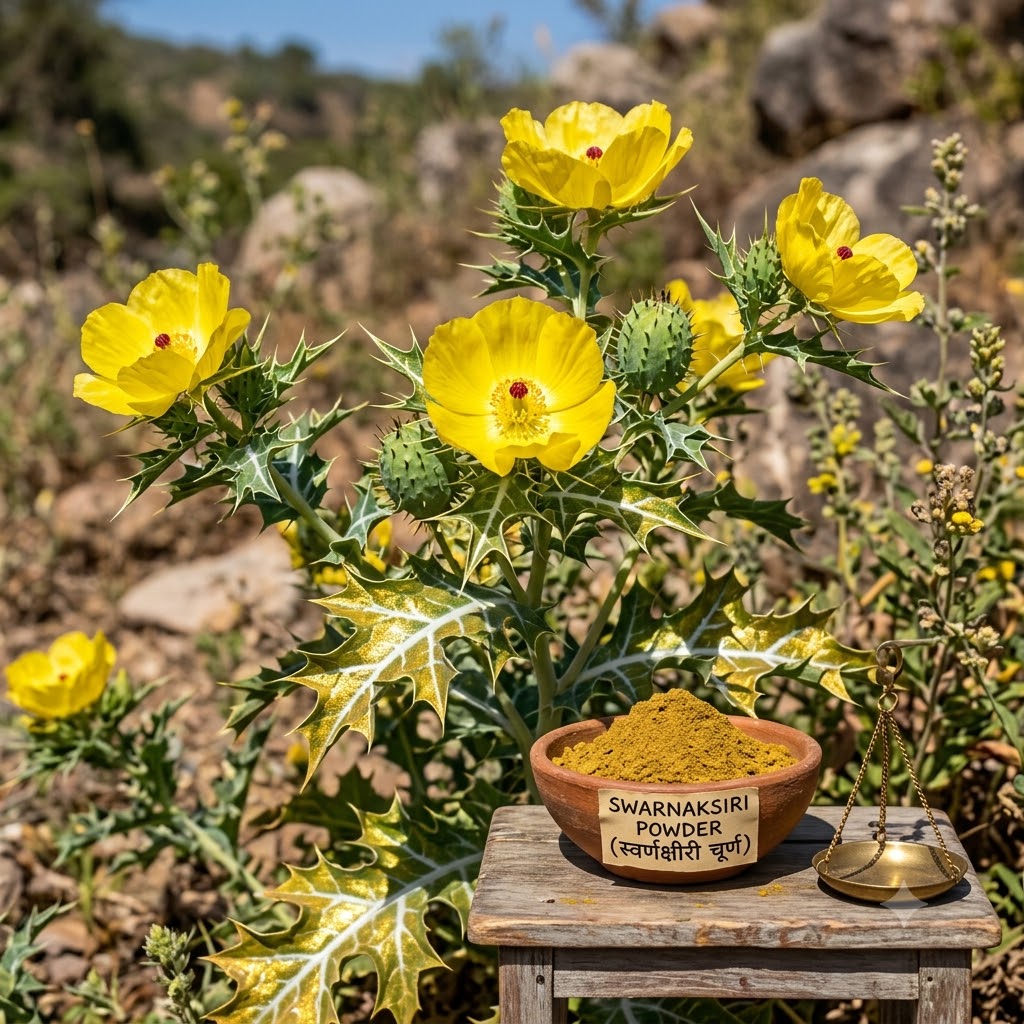
    A thorny shrub 6-9 cms. high and oozes yellow latex if cut anywhere:

    Leaves – long, thorny with irregular margins and white striations. Flowers – yellow with fivetender petals.

    Fruit – round, 4-6 cms. in size.

    Seed – like mustard seeds, black and numerous. They make noise like alcotol when put in the fire

    This annual veedy herb, grows to a height of from i to 3 feet. Root long, subcylindrical ; stem erect, branching, prickly-bristled, and furnished, as the rest of the plant, with a gamboge-yellow milky juice. Leaves sessile, broadly lanceolate in general outline, sinuate lobed, spiny toothed, and blotched or striped with white along the principal veins. Iifloreseenee solitary in the axils of the upper leaves, and terminal; bads erect, pqdunculate flowers large, yellow, or rarely white., roundish, acuminate, often prickly, very fugacious. Petals 4 to 6, 2. e., twice as many as the sepals, roundish, more or less crumpled in the bud. Stamens indefinitely numerous; filaments filiform, greatly attenuated at the apex; anthers large, innate. Ovary strictly 1-celled; style almost none;, stellate-radiate, purple, velvety on the receptive surface; lobes reflexed. .P’-uit an oblong-ovate, prickly pod, opening by 3 to 6 valves at the apex, leaving a skeleton of from 3 to 6 filiform placentm in the shape of the original pod; seeds globular, crested, and pitted

    Distribution & Habitat :

    All over India, but mainly on islands.

    Chemical constituents :

    Isoquinoline, berberine , protopine, Sanguinarine

    Properties :

    RASA-tikta

    GUNA-laghu, sara

    VIRYA-ushna

    VIPAKA-katu

    Karma : virechan, kanduvinasaka,

    epidemic dropsy, diarrhea, induces toxicity, purgation, sedative

    Indication :

    Kandu, krimi, sopham,, vataraktam

    Latex. is useful in blood disorders, syphillis, oedema, dysuria. pyuria. caculi. dermatoses and typhoid.

    Powdered seeds – useful in cold, cough and asthma.

    Part used :

    Latex, seed, oil

    Dosage :

    Powdered roots – 1 to 2 gms; powdered

    seeds – 2 to 3 gms; latex – 10 to 12 drops; oil – 25 to 40 drops and juice -5 to 10 ml.

    External uses :

    Latex, juice and seed oil has wound cleaning and healing properties and cure dermatoses. Root ground into paste is applied on inflammation and scorpion sting. Local application of an oil or paste of seeds is useful in osteoarthritis.

    Mixture of 1 drop of latex and ghee is used as an eye drops in nightbindness and ulcers in the eye -Gana Nighantu.

    Internal uses :

    Being a laxative, extract of the whole plant or seed oil is used in constipation. flatulence and abdominal pain. 3 to 4 gms of powdered roots is given in tapeworm infestation. (It dose not develope laxation always but causes nausea and sometimes vomiting.)

    IUCN Status: Least Concern. 

    Research Updates: 

    1. Antimicrobial latex properties (2019, J. Ayurveda Integr. Med.) 

    2. Toxicity studies (2021, IJNPR) 

    3. Wound healing activity (2023, AJAY)


    About Swarnaksiri

    Botanical Name

    Argemone mexicana L.

    Family

    Papaveraceae

    Identification No.

    SDACH/HG/063

    Parts Used

    Latex, seeds, seed oil

    Habitat

    India, Mexico

    IUCN Status

    Least Concern

    Plant Photos
    Ayurvedic Properties

    Rasa

    Tikta

    Guna

    Laghu, Sara

    Virya

    Ushna

    Vipãka

    Katu

    Contact Now

    Have queries? Contact Us.

    Have queries? We’re here to help you every step of the way.

    Contact us to get the right guidance for your academic journey at Shri Dhanwantry Ayurvedic College.

  • Karpur

    Karpur

    Botanical Name : Cinnamomum camphora (Linn.) Nees & Eberm.

    Family : Lauraceae

    Identification No.: SDACH/HG/062

    Introduction :

    Karpura used for external application (Anulepana) and for offerings to god. It show sedative action on CNS. It is better to use small quantity, large quantity will be act as poison.

    Names in different Indian languages :

    English : Camphor tree

    Hindi : Kapur

    Kannada : karpura

    Malayalam : Karpuram,pacca karpuram

    Sanskrit : karpurah

    Tamil : karpuram

    Telugu : Karpuramu,pacca karpuram

    Unani : Kaafoor

    Synonyms :

    “Karpūraḥ śītalaḥ śveto ghanasāraḥ sugandhikaḥ | 

    Himavalukaḥ śītarūkaḥ śītavarṇo himāśayaḥ ||”

    (Bhav Prakash Nighantu, Karpuradi Varga, Shloka 1) 

    Ghanasaara, Chandra, Chandra Prabhaa, Sitaabhra, Hima-valukaa, Himopala, Himakara, Shashi, Indu, Tushaara, Gandhadravya, Shitalraja.

    Varieties & adulterants – (CV – controversy, AD – adulterants) :

    1. Bhimseni or Barãs Karpüra (D. camphora).

    2. Cmi or Japani Karpura (Cinnamomum camphora)

    3. Patri or Nagi KarpUra — Blumea balsamifera;

    4. Krtrima Karpura— Synthetic variety

    5. Blumea lacera;

    6. Blumea densifiora

    7. Ocimum kilimandscharicum

    8. Limnophila gratioloides

    9. Potãsa

    10. Bhimasena

    11. sitakara

    12. sankaravasa

    13. Pamgu

    14. Pinja

    15. Abdosãra

    16. Himayuta

    17. Vãlukã

    18. Jãtikã

    19. Tusãra

    20. Hima

    21. Sitala

    22. Pakkika.

    23. Pachaa karpuram.

    Camphor and Camphor Oil— Camphor is formed in the oil cells distributed in all parts of the tree. These cells are filled with clear yellow oil from which camphor is slowly deposited. The oil progressively becomes colourless and volatile, and irregular light masses of camphor appear. Due to loss of resistance to permeability, the oil passes through the cell walls into other cavities in the tissues. Camphor can be distilled from all parts of the tree i.e., from chips of wood, stem, root, branches, twigs and leaves (even from fallen leaves).

    Morphology :

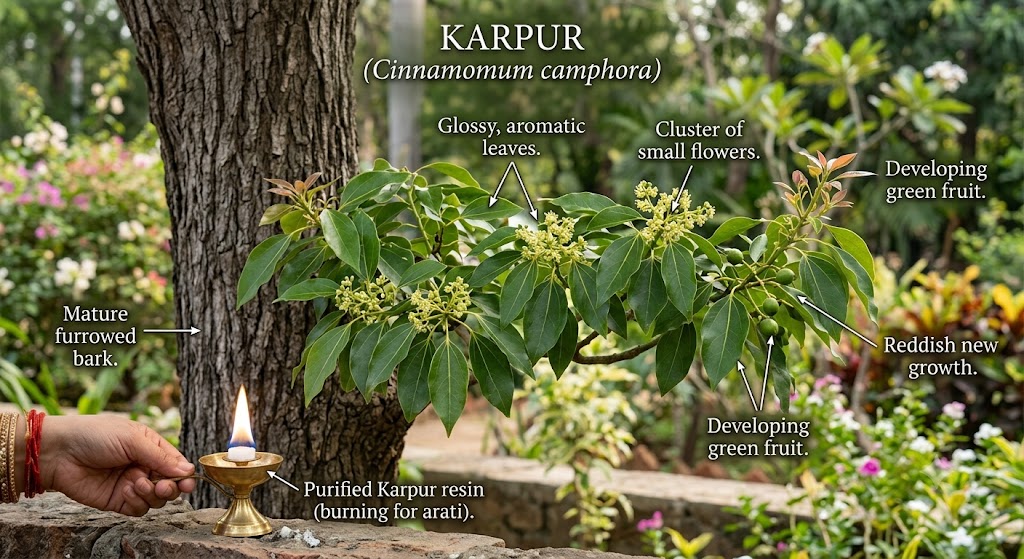
    A large ever green tree, 30 m high

    Bark— aromatic. Wood moderately hard, yellowish-brown;

    Leaves— Coriaceous, glaucous, aromatic, 3-veined, 5-10 cm long.

    Flowers— small, unisexual (female larger than male flowers).

    Fruit— dry, globose, ovoid.

    Flowering and fruiting during March-April.

    Habitat & Distribution :

    Native of China, Japan and Taiwan— Introduced into India as ornamental plant and as a source of camphor. Now being cultivated in India.

    Chemical Constituents :

    Campher, campherol, cineol, pinene. camphene, dipentene, terpineol, candinene, safrole, camphoracene, laurolitsine, reticuline etc.

    Properties :

    Rasa Tikta, Katu, Madhura

    Guna Laghu, Ruksa

    Virya  sita

    Vipäka Katu

    Karma Kaphahara, Pãcana, Hrdya, Vrsya, Caksusya, Visaghna, Madakãri

    carminative, expectorant , stimulant of heart and circulation , sedative and nervous depressant

    Indications :

     Krimi, Kustha, Kandü, Mukha vairasya, Netra Vikara.

    convulsions, hysteria, epilepsy, chorea, rheumatism, cough, asthma

    Part Used :

    Niryasa (extract)

    Dosage :

    125-375 mg.

    External use :

    Local application of karpoor is sharp deodorant, analgesic and beneficial to the eyes Initially it stimulates the local blood vessels but then it constricts them, so one experiences a feeling of cold, It can be used in the form of ointment in wounds; camphor oil mixed with various oils is used for massage in amavata (arthritis), joint pains, cough, chest pain and other diseases like pneumonia. It is also useful in skin disorders like oedema. Solution of camphor and peppermint etc. helps in local pain for e.g. stinging pain). Various kajals which are used in eye disorders contain camphor; tooth powders are made with camphor or camphor solution is used in pyorrhoea, toothache. Nasya helps in chronic rhinitis. Inhalation of camphor helps too. Paste made in milk relieves fever , and headache caused by pitta. Various balms used in headaches contain camphor.

    Internal use :

    Nervous system : In a low dose it is a brain tonic and an analgesic. When administered it causes an initial excitation but then ads as a sedative, thus relieving convulsions. Camphor is used as a respiratory stimulant. It is also used in impairment of brain function. vata disorders, hysteria and convulsions.

    Digestive system : Being fragrant, it relieves bad breath. In the mouth it first feels cold then warm. It increases salivation and improves taste. Also improves appetite and digestion by stimulating digestive glands in the stomach. Being vermicidal, it is used in helmenthiasis. Higher doses cause nausea and vomiting. It is used in various oral disorders. In addition to diarrhoea, colitis, cholera, it Is also used in renal diseases. (Amritadhara – camphor, Asmantara – thymol).

    Circulatory system : Cardiac stimulant and protective. It is a vasoconstrictor so it increases the blood pressure. It regulerises the heart rate in cardiac arrhythmia or brachycardia. It dilates the subcutaneous vessels, so it is used as a cardiac tonic in cardiac hypertrophy and sannipata jwara  i. e. fever caused by all the three doshas.

    Respiratory system : It increases the blood circulation in the mucus membrane of the respiratory system and is an expectorant; thus it acts as a demulcent. 

    Urinary system : As it is excreted through urinary tract, it increases the volume of urine. Being a diuretic and antiseptic, camphor is used in dysuria and gonorrhoea.

    Reproductive system : Aphrodisiac in lower dose but higher dose causes the reverse action. It should be given In a lower dose in infertility. Paste is applied on the breast or it is used orally in galactorrhoea.

    Skin : It is used In burning of skin and skin diseases Ointment of camphor and sulphur is used in scabies.

    Temperature : Due to its diaphoretic properly, it is used either internally or externally in fever. To alleviate thirst induced by fever, camphor is put in drinking water.

    Satmikaran : It has a soaping action by laghu and tikshna gunas It is also an antidote. It is used in lipid disorders and various toxicities either external or internal.

    Excretion Skin, lungs and urinary tract.

    Mode of administration : It is given in milk with sugar, these being the best anupanas of camphor. Excess camphor develops pain in abdomen, nausea, vomiting, giddiness, blindness, convulsions, cyanosis. urine retention, coma and death too. Camphor takers for many days causes weakness and anaemia. In the toxicity of camphor, emesis, stomach wash and purgation should be given. Then stimulants like kasturi, amber etc. are given.

    Important Yogas or Formations :

    Karpoorasav, Amritadhara, Amritahindu, Candraprabhavat; Hingu Karpiravati, Karpurãdi taila.

    Important research work going on :

    (1) Diarrhoea and dysentery

    (2) Antifungal activity

    (3) Diaphoretic and antihelmintic action

    (4) Action on  spleen and liver

    (5) Anti-bacterial activity

    (6) Sedative action

    (7) Antispasmodic action

    Therapeutic Uses :

    (1) Avrana sukla— Camphor is mixed with Vata ksira and applied as Anjana (V.S.)

    (2) Mutrãghata— Camphor is to be introduced into the urethra (C.D.).

    (3) Svãsa— Camphor is made into pills with jaggery and taken orally (S.B.M.)

    (4) Sadyo Vrana— Camphor and ghee are mixed and applied over the wound ant bandage is applied over it (R.M.).

    IUCN Status: Least Concern. 

    Research Updates (Past 5 Years): 

    1. Antimicrobial activity of camphor oil (2020, J. Ethnopharmacol.) 

    2. Neuroprotective effects (2021, Phytomedicine) 

    3. Anti-inflammatory properties (2022, IJPR) 


    About Karpur

    Botanical Name

    Cinnamomum camphora (L.) J.Presl

    Family

    Lauraceae

    Identification No.

    SDACH/HG/062

    Parts Used

    Niryasa (Camphor extract)

    Habitat

    China, Japan, Taiwan, India

    IUCN Status

    Least Concern

    Plant Photos
    Ayurvedic Properties

    Rasa

    Tikta, Katu, Madhura

    Guna

    Laghu, Ruksha

    Virya

    Sita

    Vipãka

    Katu

    Contact Now

    Have queries? Contact Us.

    Have queries? We’re here to help you every step of the way.

    Contact us to get the right guidance for your academic journey at Shri Dhanwantry Ayurvedic College.

  • Gambhari

    Gambhari

    Botanical Name : Gmelina arborea Roxb.

    Family : Verbenaceae

    Identification No.: SDACH/HG/061

    Introduction :

    Kãsmarya is important among the trees used in Yajña. one of the plants in dasamoola. Its fruit is one among the ‘Madhura Triphalã (three sweet fruits).It is Brmhana, Vrsya and Rasãyana in nature.  Its fruit consider as the substitute for draksha, if it is available more. Now a days draksha is more available than fruit of kasmira. The name gambari popular among in tribal people in Bihar.

    Names in different Indian languages :

    Hindi : Gambhari, Gambhara, gamari

    Telugu : Gummadi, Peggumudu

    Tamil : Kumadi, perumkumadi, Umi-thekku

    English : Comb teak, cashmere tree

    Marathi : Shivana

    Kanada : kumbalamara

    Malayalam : Umilu, kumpil, kumil

    Bengali : Gamar

    Punjabi : Gambhari

    Gujarati : Savan

    Sanskrit : Gambhari, kasmari

    Synonyms :

    “Gambhārī kāśmarī proktā madhuparṇī kṛṣṇavṛntikā” 

    (Bhav Prakash Nighantu, Guduchyadi Varga, Shloka 150) 

    Kaashmarya, Sarvatobhadraa, Bhadra, Mahaabhadraa, Sadaabhadraa, Madhuparnikaa, Sriparni, Pitarohini, Hiraa,  Bhadraparni, Trishati.

    Premna arborea Roth

    Classification according to Charaka, Susrutha & Vagbhata :

    Charaka

    srothahara, Dãhaprasamana, Virecanopaga

    Susrutha

    Sãrivãdi, Brhat Pancamula

    Vagbhata

    Sarivadi

    Morphology :

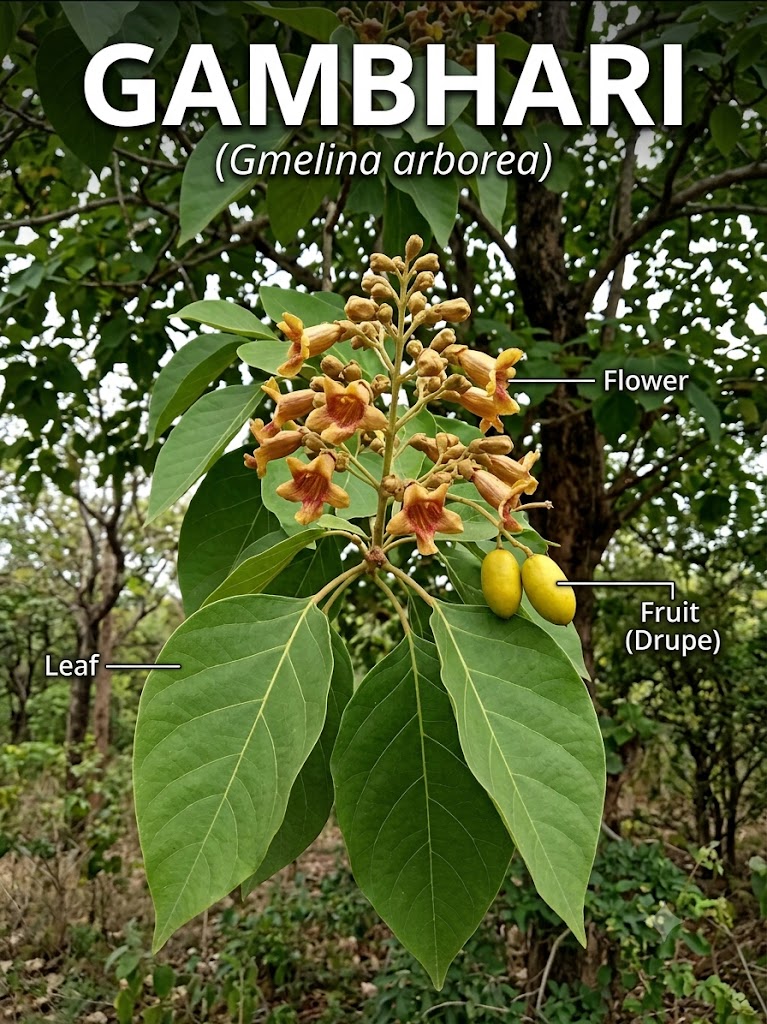
    A large deciduous tree,16- 20 m high, with whitish grey corky lenticellate bark, exfoliating thin flakes .

    Leaves— simple, opposite, glabrous above, large tomentose underneath. cordate-ovate, acuminate.

    Flowers— yellow, tinged with brown, in terminal and axillary racemifom paniclcs, composed of lateral cymes.

    Fruits— drupes, yellow when ripe.

    seeds— oblong. Flowering in February-April & fruiting in April-July.

    Habitat & Distribution :

    Found throughout India

    Chemical Constituents :

    arborone, 7-oxodihydrogmelinol, paulownin acetate and epieudesmin, beta-sitosterol, ceryl alcohol, gmelinol; butyric & tartaric acids: apigenin, premnazole, arborone, arhoreol, isoarboreol, cutytyl ferulate, epieudesmin, gmelanore, gmelafuran. gummadiol, non-saponifiable fraction, saponifiable- fraction, apiosylskimmin, octacosanol etc.

    Properties :

    Rasa Tikta, Kasaya. Madhura

    Guna  Guru

    Virya Usna

    Vipäka Katu

    Karma :

    Vata-pittahara, Bhedana, Sothahara, Dipana-pãcana, Medhya

    stomachic, laxative, antibilious, demulcent, galactagogue, anticephalalgic.

    Indications :

    Bhrama, Sotha, Trsnã, AmaüIa, Aras, Visa roga, Dãha, Jvara

    Roots are acrid, bitter, laxative. Oedema, dysuria, haemorrhagic diseases Useful in fever, hallucination, haemorrhoids, burning sensation. Flowers are useful in skin disease, fruits are astringent, diuretic. It promotes the growth of hair, useful in anaemia, leucorrhoea.   

    Fruit—Raktapittahara mentioned by caraka

    Flower— Vrsya, Balya, Raktapittahara

    Part Used :

    Root, fruit, flower, leaves

    Dosage :

    Root bark decoction 50-100 ml, fruit powder 2-4 g.

    External uses :

    Because of cooling and soothing actions, the leaves relieve burning and pain. In such cases, leaves are tied to the affected part. Paste of the leaves is applied over the forehead in case of headache caused by fever.

    Internal uses :

    Central Nervous system : It is used in vertigo, brain debility and vata disorders. It is also a brain tonic.

    Digestive system : Fruit- relieves excessive thirst; roots aperients, improves appetite and digestion, so used in diarrhoea, constipation and haemorrhoids.

    Circulatory system : The bark of the root is used internally in oedema due to any cause, as it relieve oedema. Its  fruit is cardiotonic. Its juice is useful in caydiac disorders and the mixture of roots of gambhari + gunja leaves + yashtimadhu + sugar with milk is a good galactogoque

    Respiratory system : Ripe fruit is a nutritive tonic, so useful in tuberculosis and cachexia.

    Urinary  system : Fruits and leaves are diuretic, The juice is given in dysuria, gonorrhoeae  and cystitis. In such cases if the juice is given along with cow’s milk and sugar, it increases urination, relieves pain and swelling.

    Reproductive system : Besides being a galactagogue, the fruit is aphrodisiac Fruits are used in semen debility and to prevent miscarriage. Decoction of the root bark is given in postpartum disorders. It relieves uteritis, fever and other symptoms and promotes breast milk. A tampon of oil derived from gambhari juice is kept for breast development.

    Temperature : Relieves fever and burning.

    Satmikaran The bark is a bitter tonic having nutritive and rejuvenating properties. It is also an antidote. The bark is used in post pyrexial debility. It is also used externally and internally in scorpion and snake bite.

    Parts used Root and fruit (one of the brihath panchamool).

    Important Yogas or Formations :

    Dasamülarista, sriparni taila; Drãksãdi Kvãtha, Kãmaryãdi pänaka, Kamarya rasãyana, Kamarya taila Shriparnyadi kwath. Shriparni taila, Brihath panchamooladi katha.

    Important research work going on :

    (1) hypoglycemic activity

    (2) anti-viral activity

    (3) anti-inflammatory activity

    Therapeutic Uses :

    (1) Stanya Vardhana.- Oil prepared with Gambhäri patra is used for external application

    (2)Raktapitta— Flowers of Kovidãra, Kasmarya & Sãlmali

    are useful as diet (C.S.Ci. 4).

    IUCN Status: Least Concern. 

    Research Updates: 

    1. Anti-arthritic effects (2020, J. Ayurveda Integr. Med.) 

    2. Neuroprotective properties (2021, IJNPR) 

    3. Antipyretic activity (2023, AJAY) 


    About Gambhari

    Botanical Name

    Gmelina arborea Roxb. ex Sm.

    Family

    Lamiaceae

    Identification No.

    SDACH/HG/061

    Parts Used

    Root, Fruit, Flower, Leaves

    Habitat

    India, Sri Lanka, Nepal

    IUCN Status

    Least Concern

    Plant Photos
    Ayurvedic Properties

    Rasa

    Tikta, Kashaya, Madhura

    Guna

    Guru

    Virya

    Ushna

    Vipãka

    Katu

    Contact Now

    Have queries? Contact Us.

    Have queries? We’re here to help you every step of the way.

    Contact us to get the right guidance for your academic journey at Shri Dhanwantry Ayurvedic College.

  • Dhanyakam

    Dhanyakam

    Botanical Name : Coriandrum sativum Linn.

    Family : Umbelliferae; Apiaceae

    Identification No.: SDACH/HG/060

    Introduction :

    It is the one of the important herb used in fever & indigestion.

    Scientific classification: Coriander belongs to the family Apiaceae (formerly Umbelliferae). It is classified as Coriandrum sativum.

    Names in different Indian languages :

    Hindi : Dhaniya

    Telugu : Dhaniyalu

    Tamil : Kottamalli

    English : Coriander

    Kanada : kottambri

    Bengali : Dhane

    Gujarati : Dhana

    Malayalam : Kottamalli

    Sanskrit : Dhanyakam, dhanaka

    Unnani : Kishneez

    Synonyms :

    “Dhanyākaṁ dhānakaṁ vitunnakaṁ kustumburu”  (Bhav Prakash Nighantu, Shaka Varga, Shloka 45) 

    Kustumburu, Dhaanyeyaka, Dhanika, Dhanikaa, Dhaanaa, Dhaanya, Dhaniyaa, Kunati, Chhatraa, Vitunnaka.

    Classification according to Charaka, Susrutha & Vagbhata :

    Charaka

    Trsnaprasamana, sitaprasamna

    Susrutha

    Guducyãdi

    Vagbhata

    Guducyãdi

    Morphology :

    A glabrous aromatic, Annual plant, 40-80 cm. high.

    Leaves- Decompound, two kinds, the lower ones petioled, imparipinnate into 3-4 pairs of cruciform, obtuse, incised-dentate segments, :the upper ones short-petioled or sub sessile,

    Flowers- small,  white or pinkish purple, terminal umbels 5-10 rayed.

    Fruits: fruits yellowish brown, globular, ribbed, separating into two halves each containing a seed.

    Distribution & Habitat :

    Widely cultivated in North India

    Chemical composition :

    Seeds contain volatile oil ,stable oil,  resin, astringent principle, malic acid and alkaloids, coriander oil contains coriandrol, cirenyol and vebriniol, Carotene cugenol, bergapten, coriandrinol (glucoside), citronellol, coriandrin, dihydrocoriandrin, coriandrone A & B gnaphalosides A & B etc.

    Properties :

    Rasa Kasãya, Tikta,

    Guna Laghu, Snigdha

    Virya Usna.

    Vipäka. Madhura

    Karma : Tridosahara, Dipana- pachana, Grahi

    Stimulant, stomachic, carminative, antispasmodic, diuretic, hypoglycaemic ,anti-inflammatory

    Part Used :

    Fruits, whole plant (leaves mainly)

    Dosage :

    Fruit powder 3-6g:

    Indications :

    Jvara, Dãha, Trsnã, Chardi, Kãsa, svãsa, Krimi, Arsas

    hiccough, piles, jaundice, thermogenic, digestive, diuretic, anti pyrectic, anorexia, burning sensation, conjunctivitis, epitasis erysipelas, fever, gout, giddiness.

    External use :

    Local application Of coriander seeds alleviates swelling and pains. Paste of green coriander has very good action on headache caused by pitta. Externally, powdered green coriander alleviates burning sensation and pain in diseases like inflammation caused by pitta. erysipelas and lymphadenopathy.

    Internal use :

    Central nervous system : Tonic for majja dhatu. Only-pulp from coverless coriander should be taken and boiled with milk. This milk cures vertigo, syncope and memory loss.

    Digestive system : Being antidypsetic, appetizer, digestive, astringent, liver stimulant and anthelmintic. Repeated administration of coriander water is effective in distaste,, anorexia, indigestion, dysentery, diarrhoea abdominal pain, piles

    Circulatory system : Green coriander is effective in bleeding disorders.

    Respiratory system : Useful in cough and dyspnoea induced by kapha .

    Urinary system : It is the best diuretic. it is effective in dysuria and retention of urine which commonly occurs in summer season.

    Reproductive system : It is an astringent because of which it reduces shukra dhatu.

    Temperature : Febrifuge and refrigerant. In fever, to alleviate fever and thirst, coriander water

    Important Yogas or Formations :

    Dhanyakadi Hima, Dhanyapanchaka, Dhanyachatushka.

    Therapeutic Uses :

    (1) Amavãta— Decoction prepared with Dhanyaka & sunthi is useful for Dipana &. Pãchana. In combination with Erandamula it allivates the pain in arthritis.

    (2) Jvara— Decoction of Dhãnyaka & Amalaki and Lavana dravyas is useful (S.S.Ut.49/30).

    (3) Chardi— Dhanyaka mixed with Amla and Lavana dravyas is useful (S.S.Ut.49/30).

    IUCN Status: Least Concern. 

    Research Updates: 

    1. Antimicrobial activity of coriander oil (2020, J. Food Sci.) 

    2. GI motility enhancement (2021, IJPR) 

    3. Anti-diabetic effects (2022, Phytother. Res.) 


    About Dhanyakam

    Botanical Name

    Coriandrum sativum L.

    Family

    Apiaceae (Umbelliferae)

    Identification No.

    SDACH/HG/060

    Parts Used

    Fruits, Whole plant (mainly leaves)

    Habitat

    India

    IUCN Status

    Least Concern

    Plant Photos
    Ayurvedic Properties

    Rasa

    Kashaya, Tikta

    Guna

    Laghu, Snigdha

    Virya

    Ushna

    Vipãka

    Madhura

    Contact Now

    Have queries? Contact Us.

    Have queries? We’re here to help you every step of the way.

    Contact us to get the right guidance for your academic journey at Shri Dhanwantry Ayurvedic College.

  • Peeta Bhrngaraja

    Peeta Bhrngaraja

    Botanical Name : Wedelia chinensis (Osbeck) Merrill

    Family : Compositae; Asteraceae

    Identification No.: SDACH/HG/059

    Introduction :

    Mainly using in siddha

    Morphology :

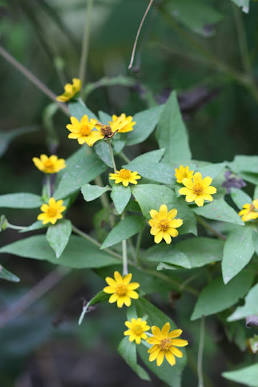
    A perennial herb grows up to 40-60 cm height

    Leaves-simple, opposite, linear-oblong , hairy

    Flower – yellow, axillary

    Fruits-achenes

    Distribution & Habitat :

    All over India, waste lands

    Chemical constituents :

    oleanolic acid, saponins, coumestans, wedelolactone,  demethyl wedelolactone

    Properties :

    RASA-katu,tikta, kashaya

    GUNA-laghu

    VIRYA-ushna

    VIPAKA-katu

    Karma –kesya, mutrala, sveda janana, hridya, vrishya

    Cardio tonic, anti inflammatory, diuretic, thermogenic

    Srotogamitva :

    Dosha : kapha vataghna

    Dhatu :raktha

    Mala :mutrala

    Organ : liver

    Indication : Karnamaya, mutrakrichra, pandu, krimi

    Ulcer, otalgia, liver and spleen disorder, hair fall, fever, general weakness, greyness of hair.

    Part used :

    Whole plant

    IUCN Status: Not Evaluated. 

    Research Updates: 

    1. Anti-inflammatory effects (2019, J. Ayurveda Integr. Med.) 

    2. Wound healing activity (2021, IJNPR) 

    3. Hepatoprotective properties (2023, AJAY) 


    About Peeta Bhrngaraja

    Botanical Name

    Wedelia chinensis (Osbeck) Merrill

    Family

    Asteraceae (Compositae)

    Identification No.

    SDACH/HG/059

    Parts Used

    Whole plant

    Habitat

    India

    IUCN Status

    Not Evaluated (NE)

    Plant Photos

    Ayurvedic Properties

    Rasa

    Katu, Tikta, Kashaya

    Guna

    Laghu

    Virya

    Ushna

    Vipãka

    Katu

    Contact Now

    Have queries? Contact Us.

    Have queries? We’re here to help you every step of the way.

    Contact us to get the right guidance for your academic journey at Shri Dhanwantry Ayurvedic College.

  • Bhringaraaja

    Bhringaraaja

    Botanical Name : Eclipta alba (Linn.) Hassk.

    Family : Compositae; Asteraceae

    Identification No.: SDACH/HG/058 

    Introduction :

    This drug used as hair tonic at present its hepatoprotective  role is well established and used in hepatitis. Caraka, Susruta & Vagbhata did not classify this herb

    Names in different Indian languages :

    Hindi : Bhangra, mocakand, Bari

    Telugu : Guntagalagaraku

    Tamil : Kayanthakara, kaikesi

    English : Trailing eclipta

    Bengali : Kesuriya

    Punjabi : Bhangra

    Marathi : Maka

    Gujarati : Bhangaro

    Kanada : Garagada soppu

    Malayalam : Kannunni, kayyonni, kayunni

    Sanskrit : Bhringaraaja

    Unani : Bhangraa

    Synonyms :

     “Bhṛṅgarājaḥ keśarājaḥ keśarañjanaḥ | 

     Maṅgalyā bhṛṅgaḥ śveto raktas tathā pīta eva ca ||”

    (Bhav Prakash Nighantu, Guduchyadi Varga, Shloka 195) 

    Bhringa, Bhringaja, Bhrngaaraka, Bhrngaara, Maarkava, Kesharaaja, Keshranjana

    Eclipta  prostrate (L) L.

    Verbesina prostrataL.J

    Varieties & adulterants – (CV – controversy, AD – adulterants) :

    1. Pita Bhgarãja used in Kerala.

    2. Rakta Bhrngarãia – Flaviera rependa.

    3. Wedelia calendulacea

    4. White (Sveta bhrangaraja) – E. alba

    5. Yellow(Pita bhrngaraja)   – Wedelia chinensis – [CV]

    6. Blue  – no identity

    Morphology :

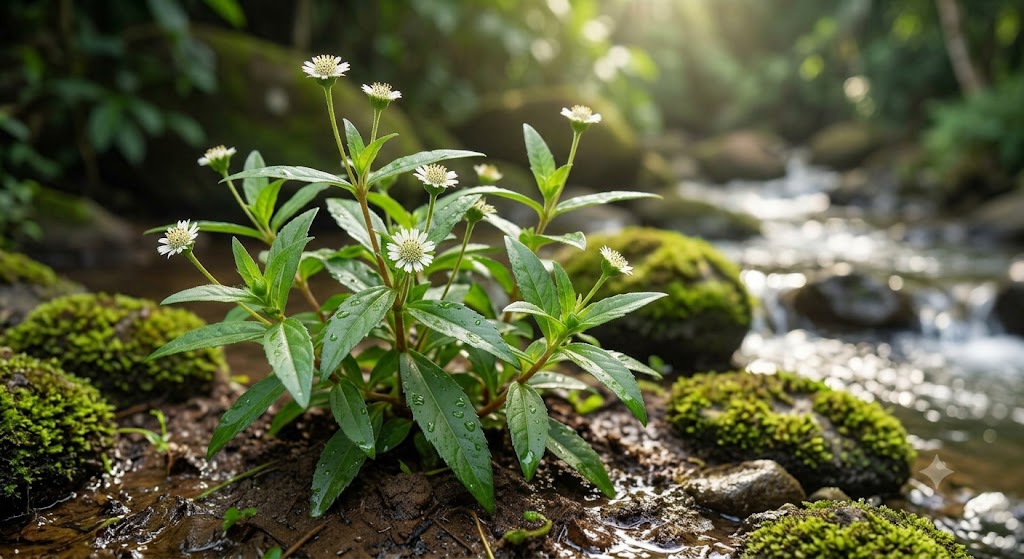
    An erect annual herb having height 8-10 fingers. Rooted nodes.

    Leaves- simple, opposite, sessile, 2.5-7.5 cm long, variable in breadth, oblong- lanceolate, subentire, acute or subacute, strigose.

    Flowers- white, in heads 6-8 mm. diameter, solitary or two on unequal axillary peduncles. Involucres bracts about 8. Ray-flowers ligulate, white. Disk-flowers tubular, corolla 4-toothed

    Fruit- achene, cuneate, compressed and with a narrow wing.

    W. calendulacea

    Leaves – 3- 5 cm in length. 1.5—2 cm. in breadth, having serrated margins.

    Flower stalk- elongated having white flower on its tip.

    Seed – black, elongated. like black cumin seed. A single fruit has many seeds. These herbs grow in rainy season and bear flowers and fruits in autumn. Maka should be used in autumn or after that Annual, erect or prostrate herb, rooting at the nodes.

    Distribution & Habitat :

    All over India in moisture, especially near the fields and water sources.

    Chemical Composition :

    It contains resin Ecliptal, wedelolactone, desmethyl wedelolactone, stigmasterol; heptacosanol, hentriacontaflol, sixteen polyacetylenic thiophenes etc.

    Properties :

    Rasa Katu, Tikta

    Guna Ruksa, Laghu

    Virya Usna

    Vipaka Katu

    Karma : Kapha-vãta hara, Kesya, Rasayana, Balya, Caksusya, Dantya.

    Anti inflammatory, diuretic, antihepatotoxic, anticatarrhal, febrifuge

    Part Used :

    Whole plant

    Dosage :

    Fresh juice 5-10 ml.

    Indications : Pãndu, Kãmalã, Svãsa, Kasa, Netra roga, Hrdroga, Krmi, Kustha, sotha, sirah süla.

    anorexia, jaundice, hypertension, otalgia, anorexia, cephalgia, pruritis, blackening and strengthening of the hair, it is believed that its seeds are good for increasing sexual vigour.

    External uses :

    The herb alleviates swelling and pain, cleans and heals wounds, enhances complexion. But its man action is to promote hair growth and hair dye. Its paste reduces swelling and pain when applied over filariasis, glands, wounds and chronic ulcers. It helps in healing wounds and gives natural complexion to the skin. Drops of its juice are put in eyes and ear. It relieves conjunctivitis if applied in eyes and earache, if applied in car. The juice is applied over head to relieve headache. In migraine, bhrungaraj juice and goat’s milk are used as nasal drops. Grey hair turns to black, if juice is applied over scalp.

    Internal uses :

    Central nervous system : Alleviates vata and acts as an analgesic. It is used in diseases like headache, vertigo etc. Bhrungaraj is effective in various vata disorders.

    Eyes : It improves vision. It is used in night blindness and myopia.

    Digestive system : Bhrungaraj is an excellent appetizer, digestant and liver stimulant. Its main action is on liver (and spleen). It improve the bilious flow. It is ama digestant, anthelmintic and

    Properties (gunas) can be recognized by actrities (karmas) and dravyas are recognized by their gunas.

    A mixture of Eclipta  juice and castor oil is a good vermicide. It reduces mucous in the stool and foul smell. Overall. Eclipta can be described as a best medicine for digestive system.

    Circulatory system : As it purifies blood, increases blood, reduces blood pressure and oedema.’ it is useful in blood disorders, anaemia. oedema and hypertension.

    Respiratory system : Being an expectorant and raktagami. it is used in cough and asthma.

    Urinary system Kaphamedagami – It acts as a diuretic by alleviating kapha and meda. It reduces burning micturation. Mixture of roots and leaves + ajamoda is useful in all urinary disorders.

    Reproductive system : Its seeds are shukragami and spermatogenic. Hence it is used for virilisation.

    Satmikaran : It promotes immunity and has rejuvenating action in anaemia and lipid disorders But blue bhrungaraj should be used for rejuvenation.

    Skin : It has diaphoretic action because it is rasa, rakta,. Useful in skin disorders, kilas urticaria, kshudrarogas. Also enhances complexion.

    Temperature : Diaphoretic. Being ama digestant and being febrifuge, it is effective in many fevers like typhoid and malarial fever.

    Important Yogas or Formations :

    Bhrungaraj taila, Shadbindutaila, Bhrungarajadi churna, Bhrungarajghrit. Bhrungarajasava. Nilibhrngadi taila, adbindu taila

    Important research work going on :

    (1) antiviral activity

    (2) toxic hepatic injury

    (3) in vitro

    (4) Action on liver

    Therapeutic Uses :

    (1) Garbhasthãpana- Cow milk with equal quantity of Bhrnga rãja svarasa should be given to pregnant woman (Vai.Ma.).

    (2) Svitra- Bhrngaraja is fried with oil in an iron vessel is consumed and after that milk boiled with Bijaka shall be given as Anupãna (A.H.Ci.20).

    (3) Naktäñdhyatva- Matsyãndas boiled in Bhrñgaraja svarasa when consumed for a period of seven days will cure night blindness (C.D.).

    IUCN Status: Least Concern. 

    Research Updates (Past 5 Years): 

    1. Hepatoprotective effects of Eclipta alba (2020, J. Ethnopharmacol.) 

    2. Wedelolactone for hair regrowth (2021, Phytomedicine) 

    3. Antioxidant properties (2022, IJPR)

    About Bhringaraaja

    Botanical Name

    Eclipta alba (L.) Hassk.

    Family

    Asteraceae (Compositae)

    Identification No.

    SDACH/HG/058

    Parts Used

    Whole plant

    Habitat

    India

    IUCN Status

    Least Concern

    Plant Photos
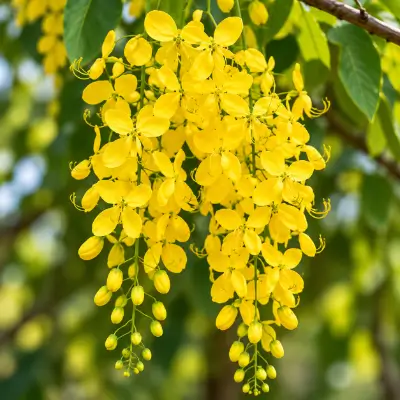
    Ayurvedic Properties

    Rasa

    Katu, Tikta

    Guna

    Ruksha, Laghu

    Virya

    Ushna

    Vipãka

    Katu

    Contact Now

    Have queries? Contact Us.

    Have queries? We’re here to help you every step of the way.

    Contact us to get the right guidance for your academic journey at Shri Dhanwantry Ayurvedic College.
  • Aparajita

    Aparajita

    Botanical Name : Clitoria ternatea Linn

    Family : Papilionaceae; Fabaceae.

    Identification No.: SDACH/HG/057 

    Introduction :

    This plant’s root is specially used for leucoderma. It is also considered as Visahara. Brhat Trayi texts  do not come across the term Aparãjita. However it is found in one contest in Su. U.

    Names in different Indian languages :

    Hindi : Aparajita

    English : Clitoria

    Telugu : Dintena

    Tamil : Kannikotti, Girikarnika

    Malayalam : sangu pushpam, Aral,Malayamukki

    Kanada : Shankapuspa, Karnika

    Unnani : Mezereon

    Folk : Koyal ( Punjab)

    Synonyms :

    “Aparājitā śvetapuṣpā vishnukrāntā mahāśhvētā” 

    (Bhav Prakash Nighantu, Pushpa Varga, Shloka 45) 

    Asphota, Girikarni, Visnukrãntã, sankhapuspi, Sephanda, svetã, Mahã svetã

    Bavaprakash , dhanvatarinighandu, raja nighandu – 3 varieties

    1.  Aparajitha

    2.  Girikarnika

    3.   Adrikarni

    Classification according to Charaka, Susrutha & Vagbhata :

    Charaka

    Sirovirechanopaga

    Varieties & adulterants – (CV – controversy, AD – adulterants) :

    1. blue flowers

    2. white flowers ( Both are identified as C. ternatea Linn. )

    3. Sveta aparajitha – sreyi now it identified as Rasna

    4. mahasevta aparajitha

    5. katabhi – Albizza procera

    6. Ksudra Sveta – C. ternatea

    7. Canscora decussate   [AD]

    8. convolvulus pluricaulis  [AD]

    9. Evolvulus alsinodes   [AD]

    10. sankhini and sankapushpi

    In north india, sankapushpi used as Canscora decussate

    Morphology :

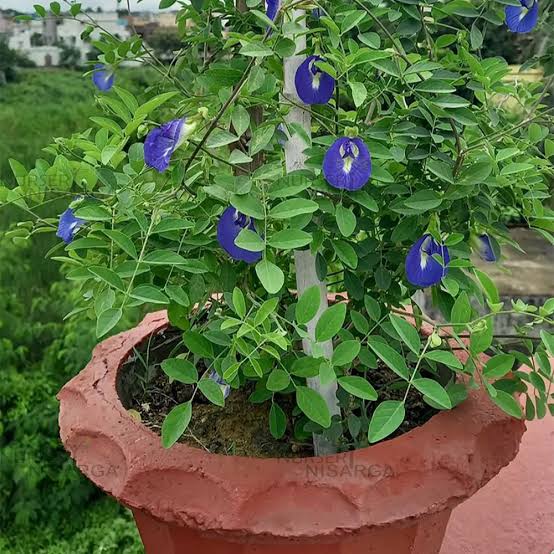
    It is a perennial climber – Herb.

    Leaves- compound,pinnate 5-9 foliolate.

    Flowers- showy, blue or white, petals unequal, style bearded below the stigma.

    Fruits- pods, linear, compressed.

    Seeds- 6-10, yellowish brown (Flowers in rainy season and fruits in winter).

    Distribution & Habitat :

    All over India

    Chemical constituents :

    Aparajitin, taraxerol, taraxerone, a— and I— sitosterols, robinin, quercetin, kaempferol; ternatins,

    Properties :

    Rasa- Katu, Tikta, Kasaya

    Guna- Laghu, Rüksa

    Virya-Sita

    Vipãka- Katu

    Karma :

    Tridosahara, Medhya, Visaghna, Cakusya

    Root—cathartic like jalap. Roots cause gripe and tenesmus, hence not recommended as purgative. Used in ascites.

    Rootbark—diuretic (infusion used in irritation of bladder and urethra).

    Root juice—given in cold milkto liquefy phlegm in chronic bronchitis.

    The root, bark, seeds and leaves—used for gastric acidity.

    External uses :

    It alleviates swelling and pain. It has haemostatic action hence it is ued in piles specially bleeding piles. Piles are cleaned with the decoction and the paste of whole plant is applied over it. Leaf juice is used as nasal drops in headache. Oil boiled with dhamasa is used for massage in rheumatoid arthritis.

    Decoction is used for gargling in stomatitis and for cleaning wounds. It prevents pus formation

    Internal uses :

    Nervous system : It has a tranquillizing effect on the brain hence it is used in symptoms like syncope, vertigo and brain weakness.

    Digestive system : It is an antiemetic. mild-laxative and cholagogue Therefore it is used in emesis. dyspepsia, constipation jaundice and piles. Kapha and pitta work together in the lower part of the stomach. It is used in healing ulcers of pylorus duodenum etc.

    Circulatory system : Being haemostatic and blood purifier, it is useful in haemorrhagic disorders and vatarakta. Hot infusion of dhamasa is given to prevent small pox.

    Respiratory system: It is used in common cold, cough, asthma as it acts as an expectorant and reduces the irritation of respiratory organs. Besides this, whole plant is used for smoking. Decoction is used for gargling in throat manifestations

    Mansavaha srotas : Paste of this applied over neck stiffness.

    Urinary system : It increases urination. Decoction is used in dysuria.

    Reproductive system : Being spermatogenic, it is given in semen debility.

    Skin : It can be used in various skin disorders by.

    Temperature: Febrifuge and refrigerant by bitter and cold properties. Bitter taste is the best for fever. It can be used for cooling effect. It alleviates symptoms like vomiting, thirst and burning sensation etc. which are caused by vata and kapha in fever.

    Satmikaran: It increases the physical strength and weight

    Indications :

    Kustha,  Unmãda, Vrana, süla, ascites. , diuretic , bronchitis, Brian tonic, tubular glands, diuretic, amentia, ophthalmic, Hemorrhoids, migraine, psychoneurosis and mania.

    Roots – Laxative but not used as purgative because it causes gripe and tenesmus 

    Part Used :

    Root/root bark, seeds , leaves

    Dosage :

    Root powder 2-3g,

    seed powder 1-2 g.

    Important Yogas  or  Formations:

    Garbhapalaras                     

    Therapeutic Uses:

    (1) Dañta süla- Root of Aparãjita along with Marica is kept in the mouth.

    (2) Sopha- Paste of Girikarnikã leaves is used internally/orally (V.S.).

    (3) Manasaroga- Root of white flowered Aparãjitã is pounded with rice-water and used as Nasya by mixing with ghee (R. M.).

    (4) The root is administered with honey as a general tonic to children for improving mental faculty.

    IUCN Status: Not Evaluated.

    Research Updates (Past 5 Years): 

    1. Nootropic effects of Aprajita root (2020, J. Ayurveda Integr. Med.) 

    2. Antioxidant activity of flower extract (2021, IJNPR) 

    3. Anti-anxiety properties (2022, Phytomedicine). 

    About Aparajita

    Botanical Name

    Clitoria ternatea L.

    Family

    Fabaceae (Papilionaceae)

    Identification No.

    SDACH/HG/057

    Parts Used

    Root, root bark, seeds, leaves

    Habitat

    India

    IUCN Status

    Not Evaluated

    Plant Photos

    Ayurvedic Properties

    Rasa

    Katu, Tikta, Kashaya

    Guna

    Laghu, Ruksha

    Virya

    Sita

    Vipãka

    Katu

    Contact Now

    Have queries? Contact Us.

    Have queries? We’re here to help you every step of the way.

    Contact us to get the right guidance for your academic journey at Shri Dhanwantry Ayurvedic College.
  • Bilva

    Bilva

    Botanical Name : Aegle marmelos (L.) Correa ex Roxb.

    Family : Rutaceae

    Identification No.:  SDACH/HG/056 

    Introduction :

    This plant have religious background in India & Nepal. Bilva is called Siva Druma (Lord Siva’s favorite tree) is held sacred by Hindus, the leaves being offered in prayers to Siva & Pãrvati.

    Names in different Indian languages :

    English : Bael tree, Bengal Quince

    Hindi : Bel

    Kannada : Bilapatre

    Malayalam : Vilvam or kuvalam

    Sanskrit : Bilva

    Tamil : Vilvam or kuvalam

    Telugu : Maredu

    Unani : Bael

    Synonyms :

    “Bilvam mahendra vṛkṣaṁ ca śrīphalaṁ śāṇḍilyaṁ mālūraṁ sadāphalaṁ” 

    (Bhav Prakash Nighantu, Guduchyadi Varga, Shloka 1) 

    Shriphala, Shaandilya, Shailuusha, Shalya, Sadaaphala, Mahaakapitha , Maaluura, Rudrajataa, Rudranirmaalya, Shivajataakhya

    Classification according to Charaka, Susrutha & Vagbhata :

    Charaka

    Sothahara, Arsoghna, Asthãpanopaga

    Susrutha

    Varunãdi, Ambasthãdi, Brhat Pancamüla

    Vagbhata

    Varunãdi, Ambasthãdi, Brhat Pancamüla

    Varieties & adulterants – (CV – controversy, AD – adulterants) :

    No controversy about this plant.

    Aduleteration: Bel fruit pulp is adulterated by adding kapitiha fruit pulp. Bel fruit pulp has cavities unlike kapittha.

    Morphology :

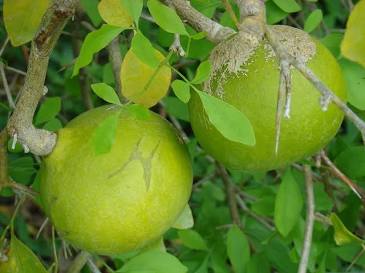
    It is a medium to fairly large sized deciduous and glabrous tree up to 6-8 high and 1-1.2 m in girth. Branches armed with straight sharp, axillary 2.5 cm long spines. Bark soft, corky, light grey.

    Leaves alternate, trifoliate, occasionally digitately pentafoliate. Leaflets ovate or ovate lanceolate, crenate, acuminate, lateral sessile, terminal long petioled.

    Flowers large, greenish white, sweet scented in short axillary panicles.

    Fruits globose, grey or yellow, rind woody.

    Seeds- numerous, oblong, compressed, em-bedded in sacs covered with thick orange coloured sweet pulp.

    Distribution & Habitat :

    found almost throughout India.

    Chemical constituents :

    xanthotoxol , alloimperatorin methyl ether, rutin and marmesin, alpha-fagarine,

    Fruit pulp contains mucilage, pectin, sugar, tannin, volatile oil, gum. bitter principle and 2% ash, It contains an active principle known as marmelocin. Fresh leaves contain an essential oil- Seeds contain oil which is laxative. Roots, leaves and bark contain an astringent principle.

    Root—xanthotoxin, umbelliferone, marmesin, marmin, skimmin etc.

    Heart wood— furoquinoline, marmesin, beta—sitosterol etc. Leaves— essential oil , beta phellandrene, rutin, marmesinin, aegelin, aegelenine, etc.

    Ripe fruits—xanthotoxol, marmesin, skimmin etc.

    Unripe fruits—marmeline, aegeline, imperatorin, alloimperatorin and xanthotoxol etc.

    Properties :

    The properties of unripe and ripen fruit are tabulated:

    Ripen fruit

    Unripen Fruit

    1. Sweet, aromatic, cooling, alterative, nutritive and laxative.

    1.Astringent, digestive, stomachic little constipative (antidiarrhoeal) stimulant, antipyretic, antiscorbutic, bitter and pungent.

    2. Acrid, bitter, sweet, appetizer, binding tonic, febrifuge, causes biliousness and removes vata & kapha, good for heart (Ref. From: Kirtikar & Basu)

    2. Oily, bitter, acrid, sour, tasty but difficult to digest, appetizer, binding, cures dysentery, removes pain (Ref. From:  kirtikar & Basu).

    (Apakva phala)

    Rasa Kasãya, Tikta

    Guna Laghu, Ruksa

    Virya Usna

    Vipãka Katu

    Karma : Vata-kapha hara, Grãhi, Dipana-Pacana

    Indication :

    Atisãra, Grahani, Prameha, , Agnimandya , Arsas

    Part used :

    Fruit, leaves, root

    Mainly unripe fruit

    Dosage :

    Leaf juice 10-15 ml

    Powder 2-4 g

    Decoction 50-100 ml

    External uses :

    In conjunctivitis, leaf juice is put in the eyes and paste of leaves is applied over the eyelids, In disease conditions like swelling, pain in the ribs.

    Main action : Roots are useful in vata disorders, fruit iv disorders of internal channel. Bel, durva and tulasi re used in vata, pitta and kapha disorders especially.

    Internal uses :

    Nervous system : root tranquilizes the nerves hence it is used in vata disorders, insomnia, epilepsy and hysteria.

    Digestive system: Unripe fruit is an appetizer, digestant and astringent. Ripe fruit is astringent and a sweet, mild laxative. An excess dose causes constipation. It is very heavy 10 digest and vitiates doshas, gives bad odour to flat, is. Leal juice is live, stimulant. Root bark, unripe fruit are useful in loss of appetite. diarrhoea. dysentery, pain in abdomen. Unripe fruit ground to a paste and cooked with sugar is very beneficial in bleeding piles.

    Circulatory system : It is a cardiac tonic, haemostatic and alleviates swelling, hence the root is used in cardiac debility and palpitations. Fruit has haemostatic property. Root bark and leaf juice are used to alleviate oedema.

    Respiratory system: It is kaphashamak hence used in cold, cough. dyspnoea. Decoction of leaves is given for cold.

    Urinary system: Juice of bel leaves helps in reducing blood sugar. Leaf juice is given in ikshumeha. Mixture of fresh fruit pulp and kankol is used in gonorrhoea. It alleviates swelling and pain. Mixture of bark juice and sweet cumin seeds is beneficial in shukrameha.

    Reproductive system: Bilva root alleviates the inflammation of uterus, hence it is used in pregnancy. leucorrhoea and puerperal disorders.

    Temperature : Bilva root and leaves are febrifuge. Decoction of roots is given in intermittent fever while leaf juice can be given in all types of fever.

    Satmikaran : it is a bitter tonic. Its root and leaves have an anabolic effect on all body tissues. Since the ripe fruit is sweet to taste, it also acts as a tonic.

    Important Yogas or Formations :

    Vilwadi gutika, Dasamula kasaya, Dasamula grita,Bilvamooladi gutiks etc.

    Therapeutic Uses :

    (1) Pittãtisära— Fruit pulp of Bilva and Madhuka are mixed with sugar and honey and administered with rice-water (S.S.Ut.40).

    (2) Grahani— Paste of unripen fruit of Bilva is given with sunthi and Guda while the patient is on butter milk as diet (V.M.).

    (3) Kãmalã—Leaf juice of Bilva is given along with Triktu

    (C.S.Ci.16)

    IUCN Status: Least Concern. 

    Research Updates (Past 5 Years): 

    1. Antidiabetic activity of Bilva leaves (2021, J. Ethnopharmacol.) 

    2. Gastroprotective effects of fruit pulp (2022, IJPR) 

    3. Antimicrobial properties of root extract (2023, AJAY) 

    About Bilva

    Botanical Name

    Aegle marmelos (L.) Corrêa

    Family

    Rutaceae

    Identification No.

    SDACH/HG/056

    Parts Used

    Root, bark, leaves, flowers, unripe fruit, ripe fruit

    Habitat

    India, Bangladesh, Nepal, Pakistan, Sri Lanka

    IUCN Status

    Least Concern

    Plant Photos

    Ayurvedic Properties

    Rasa

    Kashaya, Tikta

    Guna

    Laghu, Ruksha

    Virya

    Ushna

    Vipãka

    Katu

    Contact Now

    Have queries? Contact Us.

    Have queries? We’re here to help you every step of the way.

    Contact us to get the right guidance for your academic journey at Shri Dhanwantry Ayurvedic College.
  • Naadihingu

    Naadihingu

    Botanical Name : Gardenia gummifera Linn. f.

    Family : Rubiaceae

    Identification  No.: SDACH/HG/055 

    Introduction :

    Latin name: Gardenia = (cape jasmin) American Dr. Garden (Gardinca was the favourite buttonhole of Edwardians); gummifera = oozing latex.

    Scientific classification: Gardenias belong to the family Rubiaceae. The Cape jasmine is classified as Gardenia jasminoides. The two common greenhouse shrubs of the United States are classified as Gardenia thunbergia and Gardenia rothmannia. The dwarf species from Japan is classified as Gardenia radicans floreplana

    Names in different Indian languages :

    English : Gummy Cape Jasmine

    Hindi : Dikamali

    Kannada : Bikkegidha

    Malayalam : Somanadikayam, gandharajan

    Sanskrit : Naadihingu

    Tamil : Dikkamalli, Kambil, Sinna Kambil.

    Telugu : Cittamalli, bikki

    Unani : Dikaamaali.

    Synonyms :

    Venupatrikaa, Naadihingu, Hingushi vaatikaa. Hingupatrikaa, Hingupatri

    Gardenia  arborea Roxb.

    Gardenia  inermis Dietr.

    Varieties & adulterants – (CV – controversy, AD – adulterants) :

    Gardenia resinifera

    Morphology :

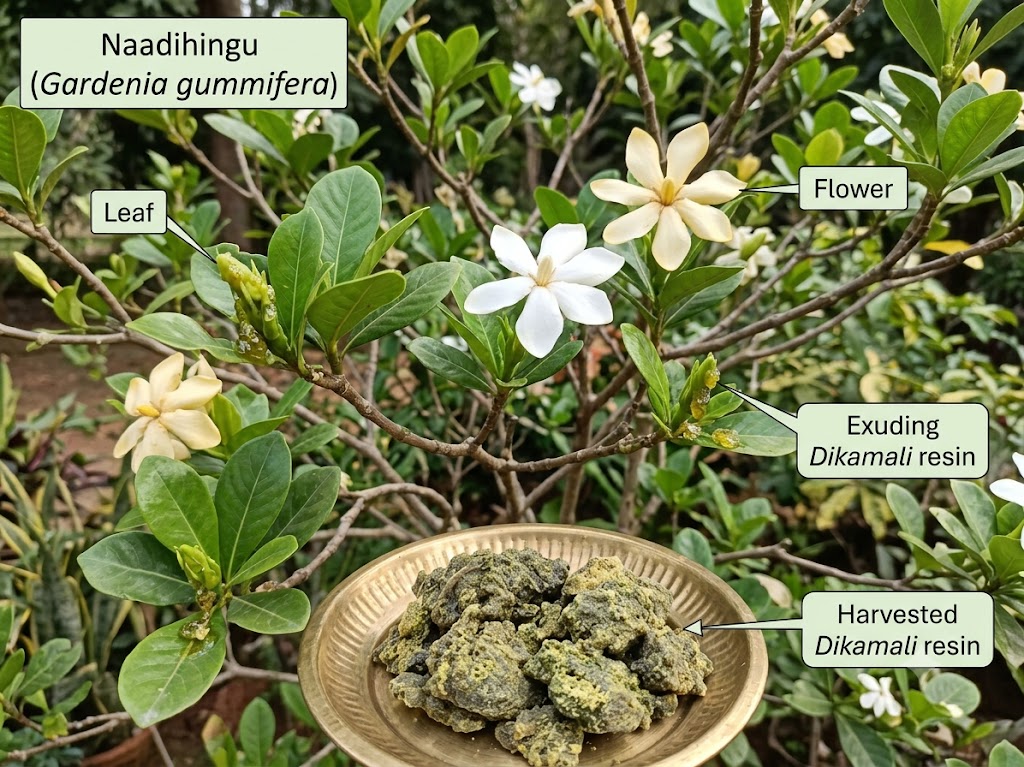
    The shrub is small, leaves resembling guava leaves but are slightly big and long. A yellow coloured latex oozes out from its branches on piercing the bark and from the angles of leaf stalks. It solidifies on exposure to air. Since it has an odour similar to asafoetida, it is called hingupatri. A small tablet of dikamali held in the mouth does not dissolve easily.

    Leaves – simple, elliptic-oblong

    Flower – white, axillary

    Fruit – berry

    Distribution & Habitat :

    Throughout India

    Chemical constituents :

    gardenin, de-Me-tangeretin , nevadensin; wogonins, isoscutellarein, apigenin , de-MeO-sudachitin

    Properties :

    Guns: laghu, ruksha, tikshna;

    Rasa: katu, tikta;

    Virya: ushna;

    Vipaka:katu

    Karma :

    Hridya, kapha vatahara, dipanam

    carminative, antispasmodic, stimulant, diaphoretic, anthelmintic, antiseptic, expectorant

    Indication :

    Manoroga, medas,

    Nervous  disorder, Ulcers, wounds, fever, skin disease, cough

    Part used :

    Resin

    Dosage :

    Powder 1-2 g

    External uses :

    It is antimicrobial, wound healing and analgesic. It is useful in toothache and teething problems of children (robbing latex to the gums).and anthelmintic.

    Internal uses :

    It is an appetite, indigestion, constipation, flatulence. ascites. piles, intestinal parasites etc. It is one of the best medicine . for the alimentary tract, It is useful in tape worms. Latex with lemon juice is useful in cardiac disorders and splenomegaly by expelling vata and enhancing peristalsis. It is also useful in chronic cough, breathlessness, hiccups and skin diseases. In malaria, it is used fur reducing the fever, cold and rigors. It is a lipolytic and therefore used in lipid disorders

    About Naadihingu

    Botanical Name

    Gardenia gummifera L.f.

    Family

    Rubiaceae

    Identification No.

    SDACH/HG/055

    Parts Used

    Resin

    Habitat

    India

    IUCN Status

    Least Concern

    Plant Photos

    Ayurvedic Properties

    Rasa

    Katu, Tikta

    Guna

    Laghu, Ruksha, Tikshna

    Virya

    Ushna

    Vipãka

    Katu

    Contact Now

    Have queries? Contact Us.

    Have queries? We’re here to help you every step of the way.

    Contact us to get the right guidance for your academic journey at Shri Dhanwantry Ayurvedic College.